The short answer
Research each species before you buy: adult size, temperament, water needs and group size, checked against your tank. Cycle the tank first (sources differ on how long), then “only buy a few fish at a time” (Aqueon), at least a week apart in a new tank. If a fish does not work out, never release it (USGS, Sea Grant).
Where sources give different numbers, we show each with its source and do not average them.
Fish first or tank first?
LiveAquaria, a live-fish retailer, says to “build the aquarium around the chosen fish species, not the other way around.” Habitattitude, a public campaign sponsored by the Pet Advocacy Network, the U.S. Fish and Wildlife Service and NOAA, says “Choosing your fish and aquarium go hand in hand”.
What to look up for every species
- Scientific name
- Care level
- Adult size and minimum tank
- Temperament
- Temperature range
- pH range and hardness
- Diet
- Group size, or whether it lives alone
Our tip: the scientific name, which Aqueon, an aquarium maker, gives beside the common name (“Panda cory, (Corydoras panda)”), shows two sources mean the same fish.
Checks that matter most
Our call: these are the checks that, if skipped, can leave a fish in the wrong tank, with the wrong company, in unsafe water or bring disease in; the extras further down help a community settle.
Adult size, not shop size
Aqueon says “Remember that the fish you buy will probably grow”. The Deep, a UK public aquarium backing the Big Fish campaign: “Despite the misconception that fish will only grow to the size of their tank, this is untrue and can lead to health problems for the animal.” The RSPCA, a UK animal welfare charity, names examples: “Some adult fish grow very large, making them unsuitable as pets – for example, some catfish varieties (the red tail, shovelnose, pangasius), giant gourami and pacu.”
A tank sized and shaped for the adults
- Size. Aqueon: “Buy the largest aquarium you can afford or have space for. Larger aquariums are more stable and easier to maintain.” The RSPCA: “Bigger is better when it comes to aquariums, so go for more space than the minimum required.” It says to “Only get a tank larger than 45 x 30 x 30cm (about 40 litres)”, about 17.7 x 11.8 x 11.8 inches or 10.6 US gallons (our conversion). For a first tank, Aqueon says “unless you’re starting out with a betta, consider an aquarium kit of at least 10 gallons”. These are floors for a tank, not a size every species is fine in (our reading); bettas have their own figures in our betta tank size guide.
- Shape. Aqueon says “Wider aquariums give active fish, like danios and barbs, the space to spread out”, while tall, narrow tanks “should be used for less active fish like discus, angelfish and gouramis.”
How many fish? Four sources weigh in, none of them a saltwater guide, each with its own scope:
| Source | Rule | Its own caveat |
|---|---|---|
| CDC (US health agency) | “a good standard is 1 inch of fish per gallon of water” | None on the page |
| Aqueon (maker) | “one inch of adult size fish per net gallon of aquarium capacity” | “but territorial fish need even more space” |
| RSPCA (UK charity) | “Allow 1.5–2 litres of water per 1cm of tropical fish length (excluding their tails)” | “these should only be used as guidelines” |
| TFH Magazine (owned by Aqueon’s parent, Central Garden & Pet) | “Stocking levels are best determined by monitoring your waste levels, especially nitrate.” | “The old-fashioned “inch per gallon” rule is often cited but has too many flaws to be truly useful.” |
The RSPCA figure is about 1.0 to 1.3 US gallons per inch (our conversion; the RSPCA measures without the tail, the others do not say). Its reason for the caveat: “water quality is affected by many factors, including temperature, water source, filtration power, how well you tend to the tank and more.” Aqueon adds that “a 30 gallon aquarium doesn’t actually hold 30 gallons of water when you factor in internal dimensions, gravel and decorations”. Our reading: the inch figures are a ceiling for a tank, not a number to stock up to, and not safe for every fish (the RSPCA’s goldfish floor is 60 litres each; see below). TFH says to work out “the maximum stocking level of your new aquarium early on and be careful to never exceed this.”
Temperament and tank mates
Habitattitude: “some species are peaceful by nature, others are more aggressive and territorial”. LiveAquaria also asks “Does it nip the fins of other fish?” and “Does it eat live plants?”
- Size against size. Aqueon: “Always purchase fish that are roughly the same size as those in your aquarium.”
- Fish kept alone. Aqueon: “Some species of fish are known for not getting along well and these should be kept individually. Some examples are redtail and rainbow sharks, Bettas, most knifefish, males of many cichlid species, and others.”
- No guarantees. Aqueon says many pairings “can go either way depending on a variety of factors” and to “be prepared to separate fish that do not get along.”
Water needs that match yours and the other fish
LiveAquaria asks: “What kind of water does it require (pH, hardness, temperature, etc.)?”
- Hardness and pH. TFH: “While most commonly sold species, having been captive bred, will adapt readily to a wide range of water conditions, some are fairly exacting in their requirements.” Its example: “combining Tanganyikan cichlids with discus would not be your best choice.” Our guides to lowering pH or raising it, and to softening water and lowering GH and KH, cover changing them.
- Temperature. The RSPCA: “You must research the temperature requirements of the fish species you want to keep.” Its example: “guppies can tolerate 22–28ºC, while loaches need to be kept at 18–26ºC” (about 72–82°F and 64–79°F; our conversion). Our fish tank temperature guide lists ranges by fish type.
To know your own water, our test kit roundup says: “Start with the API Freshwater Master Test Kit for ammonia, nitrite, nitrate and pH, add the API GH & KH Test Kit if hardness matters for your fish or plants” (it also names a strip kit for quick checks).
| # | Preview | Product | Price | Link |
|---|---|---|---|---|
| 1 |  | API Freshwater Master Test Kit 800-Test Freshwater Aquarium…Test kit: pH, ammonia, nitrite, nitrate | Check on Amazon | |
| 2 | 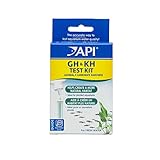 | API GH & KH TEST KIT Freshwater Aquarium Water Test Kit…Hardness add-on: GH and KH | $11.98 Prime | Check on Amazon |
Group size
Sources differ, and none gives a number that suits every species:
- Aqueon: its do’s and don’ts say “Always purchase schooling fish like tetras, barbs, rasboras and danios in groups of 6 or more to ensure their health and well-being.” Its fish-care article says “preferably 10 or more” and “If your tank won’t accommodate that many, consider a different kind of fish.”
- Aqueon’s beginner list (5 to 10 gallons): for Serpae or Black Phantom tetras, “A small group of 4-6 will look nice as individuals”; for neons, “go for a minimum of 12 fish”.
- The RSPCA names “danios, tetras, rainbowfish, rasboras and many catfishes” and says to keep them “in groups of six or more, otherwise they may feel stressed.”
- TFH, for harlequin rasboras, cherry barbs, zebra danios and cory cats: “For group-living fish, six or more of the same species is ideal, but three to five of each of the above species is also reasonable.”
A cycled tank, then a few fish at a time
How long a new tank needs depends on the method, and sources differ:
- Settle first (Aqueon): let the tank “settle” for “at least 48 hours before buying your first fish.” Its reason: “This will give you time to make sure the temperature is set and make adjustments to decorations, etc.” Its do’s and don’ts say “2 to 3 days”. Aqueon’s water-quality page adds: “Simply allowing your aquarium to run for 24 to 48 hours after first setting it up is not cycling.”
- Cycling with the first fish (Aqueon): its nitrogen-cycle page says “The whole process typically takes three to eight weeks.” Its 60-day guide: “Resist the temptation to add too many fish at once! Your filter won’t be able to process a lot of waste at first and this could cause harmful ammonia and nitrite to rise to unsafe levels.” and “Test your aquarium water for ammonia and nitrite. Even if you do everything right, these levels may begin to rise until the nitrifying bacteria in your filter catch up.” Then: “Once ammonia and nitrite levels return to zero your aquarium has completed its first cycle. You may now introduce additional fish.”
- Fishless cycling (RSPCA): it strongly advises it: “Only add fish when there has been a spike in the levels of ammonia and nitrite, followed by a return to zero. There is no exact rule for how long cycling will take but it will be at least two weeks.”
- The Merck Veterinary Manual (a veterinary reference), professional page: “It can take up to 8 weeks for a biofilter in a tropical fish tank to become established.” and “Once no ammonia or nitrite is present, fish can be added safely.” Of a slower method: “Another method is to slowly add several fish to the tank over several months, although this can result in high ammonia or nitrite concentrations if not done carefully, and this practice can be inhumane.”
Our cycling guide covers the methods. After that, the pace differs too. For a new tank, Aqueon’s 60-day guide: “Always test water before purchasing new fish, and only buy a few fish at a time. Wait at least a week between new fish additions.” For small fish in a 10-gallon tank, TFH suggests that initially you add them “in small groups every couple of weeks”. For an established tank, LiveAquaria: “Try to add more than one fish at a time to an established aquarium. The chance of one particular individual being singled out and harassed will be minimized.” Our guide to adding new fish covers the steps.
Quarantine new arrivals
TFH: “it’s of the utmost importance to quarantine any new fishes for at least four weeks before introducing them to your display tank”. LiveAquaria: “A quarantine tank is a vital piece of equipment that should be used by all aquarists.” The CDC, a US health agency: “Consider purchasing a second aquarium to be used when you’re cleaning your first tank, or to house new fish before you place them in your established tank.” Times differ by source; our quarantine guide sets them side by side.
Diet and care you can keep up with
Habitattitude asks “Diet – carnivores, herbivores or omnivores?” and says to “Take note of whether your species feeds at the top, mid-tank or on the bottom.” For bottom feeders, Aqueon says “it is important to feed them directly and not just depend on them getting leftovers from feeding other fish.” The CDC: “Know that some fish can require more extensive care than others, and some fish can live a very long time.”
Dangerous and regulated fish
The CDC: “Some fish are dangerous and even venomous and are not safe to keep. Just because you can buy a fish doesn’t mean that it’s safe or legal to own.” Habitattitude says to “Check with your state fish and wildlife agency or natural resources agency to find out more about regulated species in your area.”
Healthy fish at the store
The Merck Veterinary Manual’s pet-owner page, by two University of Florida veterinary college vets: “Healthy fish generally have smooth, unblemished scales, fins, and skin surfaces. Skin and fins should be intact, not bloody or ragged. Eyes should be bright, not cloudy.” The CDC: “Don’t select fish from a tank that has a high number of dead fish.” This is a buying check only; if your own fish look unwell, test your water, and the CDC says to “Talk to a veterinarian experienced in fish medicine if you have questions about your pet’s health.”
Helpful extras
- Spread across the water column. TFH: “you’ll have fewer territorial squabbles to contend with if your fishes are spread out among the different niches in the water column”. The RSPCA: “Choose species that are happy to live at different depths of the aquarium to maximise the available space.”
- Peaceful species first. TFH: “if you introduce specimens starting with the most peaceful species, the more easy-going specimens will have a chance to settle in and establish territories before any bullies come along”. LiveAquaria: “It is advisable to add smaller, more passive fish first, gradually working up to larger, more territorial fish.” Aqueon differs for territorial fish added later: “When mixing territorial fish, newcomers should be at least the same size as the largest or most aggressive fish already in the tank.”
What changes the list
- Tanks of 5 to 10 gallons. Aqueon: fish “should be small, generally between ½” and 2” at most. The bigger they are, the fewer you want to keep.” It adds that “these size tanks do not lend themselves to schools of fish.” Our 10-gallon stocking guide lists species sources suggest.
- Goldfish. The RSPCA says “Goldfish require more space” and gives “2 litres of water per 0.5cm of goldfish length” (about 2.7 US gallons per inch; our conversion), a figure it says “should only be used as guidelines because water quality is affected by many factors”. On the same page: “goldfish require at least 60 litres of water each” (about 16 US gallons; our conversion). Aqueon, a maker, says: “In aquariums, adult common goldfish, comets and shubunkins should have at least 20 gallons of water per fish, while adult fancy goldfish should have at least 10 gallons per adult fish.” Sources differ; Aqueon’s figures are per adult fish and the RSPCA’s 60 litres is per fish. The RSPCA also says “Don’t keep single and twin-tailed varieties together, because the twin-tailed fish are slower moving and so will often miss out on food.”
- Saltwater and reef tanks. The stocking figures, school sizes and cycling times above come from freshwater, tropical-fish or general pet-fish pages, not saltwater guides. The CDC says “Saltwater tanks need more maintenance than freshwater tanks.” Habitattitude: “Most saltwater fish need a minimum of 29-gallon tanks”, though “Dartfish, Gobies and Damselfish (Indo-Pacific species) can be kept in smaller marine aquaria” (it gives no size) and the Gray Angelfish “can reach 20 inches as an adult, requiring an aquarium as large as 200 gallons.”
If a fish does not work out: never release it
The USGS, a US science agency that tracks non-native fish, says “releasing exotic fish into local waters is not a good idea. For one thing, it may be illegal.” It ends: “Do not release it into a natural body of water.” Pennsylvania Sea Grant, a NOAA and Penn State partnership, warns that unwanted aquarium species “are often released into the natural environment where they can establish and become invasive.” Habitattitude says to “make sure that the fish you choose are not considered invasive in your area.”
Alternatives: the USGS lists returning it to a pet shop or giving it to another hobbyist or a public aquarium. Pennsylvania Sea Grant: “Contact a retailer for proper handling advice or for possible returns.” and “Give/trade with another aquarist, pond owner, or water gardener, or donate to a local aquarium society, school, or aquatic business.” It adds: “If your plant or animal finds a new home with one of these locations, be sure to emphasize “Don’t Release” into the environment.”
The RSPCA: “We don’t recommend releasing fish into outdoor ponds as they can cause damage to wildlife through hunting and could easily spread disease.” If no new home is found, Pennsylvania Sea Grant says: “Contact a veterinarian or pet retailer for guidance about humane disposal of animals. Disposal of live organisms should be considered as the last resort.” The CDC: “Do not release your fish outdoors. Most fish released into ponds or rivers will die, and some can threaten natural wildlife populations.”
Ready to buy?
Our tropical fish food roundup compares flakes, granules and pellets, and more species guides are in our Stocking section.
Frequently Asked Questions
Q. How long should a new fish tank run before adding fish?
It depends on the method (see the cycled-tank check): Aqueon says a 24-to-48-hour run “is not cycling” and puts cycling at “three to eight weeks”, Merck says “up to 8 weeks”, and the RSPCA says “There is no exact rule for how long cycling will take but it will be at least two weeks.”
Q. What fish is best for beginners?
No single species; our beginner fish guide compares ten that sources often suggest, with their tank sizes and limits.
Q. What is the most low-maintenance fish?
No source here ranks one fish as the lowest-maintenance. Habitattitude calls the rummynose tetra “easy to keep in a small freshwater aquarium”; on the same page, a general line says “Some species are sensitive to changes in water quality, and aquarium filters must be cleaned often along with regular water testing.”
Q. Is one inch of fish per gallon accurate?
A rough ceiling at best (see the table): the RSPCA says its version “should only be used as guidelines”, and TFH says the rule “has too many flaws to be truly useful”.
Sources (10)
- Aqueon (maker): Fish Compatibility; Do’s and Don’ts; Keep Your Pet Fish Alive; The First 60 Days; Freshwater Aquarium Water Quality; The Nitrogen Cycle; Beginner Fish by Tank Size
- TFH Magazine (magazine; Aqueon’s parent company): Fish Selection and Stocking Guide; Choosing Fish for a First Aquarium; Top 10 for the 10-Gallon Tank
- LiveAquaria (retailer): Choosing the Right Fish; Introducing New Fish
- RSPCA (UK charity): Choosing an Aquarium; Keeping Fish Together
- Habitattitude (campaign): Choosing the Species; Aquarium Fish
- Merck Veterinary Manual (vet reference): Selection of Fish; Management of Aquarium Fish
- CDC (US agency): Fish
- USGS (US agency): Release of Exotic Fish
- Pennsylvania Sea Grant (NOAA and Penn State): Tips for Aquarium Owners
- The Deep (UK public aquarium): Big Fish Campaign
Product prices and availability are accurate as of the date/time indicated and are subject to change. Any price and availability information displayed on Amazon.com at the time of purchase will apply to the purchase of this product.