The short answer
Keep new fish in a separate filtered, heated tank with its own net and siphon for at least 30 days, the Merck Veterinary Manual and Aqueon minimum; other sources differ. Seed its sponge filter in an established tank first, test ammonia and nitrite often, and if a fish looks sick, test the water, then call a fish vet.
This guide covers freshwater tanks only; for saltwater, ask an aquatic veterinarian.
This guide gives no medication, dip, salt or treatment advice. For any question about treating fish, ask an aquatic veterinarian.
How Long Should You Quarantine New Fish?
| Source | Period | Scope |
|---|---|---|
| Merck Veterinary Manual, a veterinary reference | 30 days minimum; “longer periods may be necessary” | Pet fish |
| Aqueon, an aquarium maker | “a minimum of 30 days” | New fish purchases |
| Dr. Edward Noga, NC State veterinary college (TFH, 2007) | Three to four weeks “is considered good” | Depends on the pathogens that pose a risk |
| Dr. Tim Miller-Morgan, aquatic vet, Oregon Sea Grant (TFH, 2007) | About a month | New arrivals in general |
| Merck Veterinary Manual | 30 days minimum at 75°F (24°C) | Koi only (see the FAQ) |
| UF/IFAS Extension, a university extension service | 1 to 8 weeks | Recirculating aquaculture facilities, when full quarantine is not possible |
Thirty days, the Merck and Aqueon minimum, is at or above the veterinary home-aquarium figures. Dr. Noga also told TFH there is “little scientific evidence” on the ideal period.
Two commenters on r/Aquariums give “1-2 weeks” and “6 weeks”; those are owner habits, not veterinary advice.
What You Need
- A tank, or a clear tub with a lid. The Merck manual describes “an inexpensive 10-gal. tank”, while Aqueon says “A 20-gallon aquarium works for most situations.” TFH adds that “larger or fast-swimming fish” need larger quarantine tanks. Aquarium Co-Op, an aquarium retailer, lists a “Clear plastic tub or aquarium with a lid”.
- A sponge filter and a small air pump, both on Merck’s list. Our fish tank filter roundup includes sponge filters; see also our air pump picks.
- A heater and a thermometer. Merck lists the heater and Aquarium Co-Op adds the thermometer; see our heater picks by tank size.
- Hiding places that clean easily. Aqueon suggests “plastic plants or other non-porous decorations that are easy to sterilize and/or clean”, and PVC fittings or pipe sections as hiding places.
- A net, siphon and buckets used only for this tank. Merck says quarantined fish “should have their own designated equipment (nets, buckets, siphons, etc)”.
- Water conditioner. Our water conditioner comparison weighs the options.
- A test kit for ammonia, nitrite and pH, the three readings Aqueon says to test before new fish go in.
- Gloves. The CDC says: “Wear gloves when cleaning fish tanks.”
How to Quarantine New Fish, Step by Step
Seed a sponge filter in an established tank before you buy
The Merck manual suggests running the disinfected sponge filter in a healthy established tank “to inoculate the sponge with nitrifying bacteria”, and says: “This practice will help avoid the common water quality problems that occur in newly set up aquaria.” Without one, our dark start cycling guide covers another way to cycle a tank.
Set the tank up away from your main tank
Aquarium Co-Op advises: “To avoid cross contamination, place the quarantine tank in a different room away from your main display tanks if possible.” Leave the bottom bare, since Aqueon says “Do not use gravel or substrate”, and add the hides; Miller-Morgan, quoted in TFH, wants “nothing porous, like lava rock”. On a tub, Aquarium Co-Op prepares the lid by “drilling some holes for air flow” and cutting a slot for cables and airline tubing. TFH says to “keep the lighting low”.
Fill it with conditioned water at your species’ temperature
Aqueon: “Always treat tap water with a water conditioner to neutralize chlorine and ammonia before adding it to the aquarium.” Set the heater to the temperature your fish’s species needs (check its care sheet); Practical Fishkeeping, a fishkeeping magazine, notes that a separate tank lets you “match water conditions and temperatures easily”. Then move the seeded sponge filter across and start the air pump.
Test before the fish go in
Aqueon: “Test the aquarium water for pH, ammonia and nitrite before adding new fish.” UF/IFAS Extension, in an aquaculture publication, says: “In healthy ponds and tanks, ammonia levels should always be zero.” Aqueon, an aquarium maker, says: “The only safe nitrite level is zero.” In a tank with no fish yet, zero ammonia and nitrite show clean water, not a cycled filter. Aqueon says a quarantine tank “should be fully cycled” before it is used for new fish; seeding the sponge in step 1 is Merck’s way to help, and step 7’s tests show how it is doing. If either reads above zero, hold off on buying; see our guides to lowering ammonia and lowering nitrites.
Buy with care and go straight home
Aqueon advises letting fish that just reached the store “settle in for a week or more before purchasing”, then taking new purchases “straight home”. The CDC says: “Pick fish that are active in their tanks in the pet store.” and “Don’t select fish from a tank that has a high number of dead fish.”
Acclimate the fish into the quarantine tank
The CDC says to float the intact bag at the surface “for about 30 minutes to an hour”; Aqueon gives “at least 30 minutes” for pH and temperature. The sources differ on the release. The CDC says to open the bag and pour it gently, warns “Do not remove the fish from the bag with a small net as this may injure the fish”, and adds: “Try not to pour too much water from the bag into your aquarium at home because of the possible germs it may contain.” Aqueon is stricter: “Don’t allow store water to enter your aquarium when adding new fish.”
Test ammonia and nitrite through the whole period
For a newly set-up tank, API, a test-kit maker, says to test ammonia “several times a week for 4-6 weeks when you start a new aquarium”, and: “Water should be tested for nitrite every other day when your aquarium or pond is first set up”. For a new aquarium, Aqueon advises: “Stock your new aquarium gradually, feed sparingly and test water regularly until ammonia and nitrite levels stabilize at zero.” If ammonia rises, our ammonia guide covers the water side; if either reading rises, keep testing and ask a fish vet about the fish.
Watch the fish every day
The CDC: “Check your fish daily for signs of illness. A sick fish may swim abnormally, have red, brown, or white splotches, not eat, or be swollen.” If you see any of these, test the water at once, as UF/IFAS Extension advises, then “Talk to a veterinarian experienced in fish medicine”, as the CDC puts it. The American Association of Fish Veterinarians runs a Find a Fish Vet map; it says the map “only supports fish vets located in North America”.
Keep the quarantine gear separate and work on that tank last
Merck says: “Quarantined animals should be handled only when contact with all other animals is finished for the day.” Aqueon: “Have a separate net, siphon hose, algae scraper and other equipment for your quarantine aquarium, and never use them in your display aquarium.”
Wash up, and keep tank water out of the kitchen
Aqueon: “After working in your quarantine aquarium, scrub your hands and lower arms with an anti-bacterial soap before working in your display tank.” The CDC says: “Dump tank water and clean aquarium items in a bathtub, laundry sink, or outside instead of a kitchen sink when possible.” and “Clean and disinfect sinks and bathtubs after using them to dump aquarium water or clean aquarium items.” It adds: “People with weakened immune systems should let others in the household care for the fish tank when possible. If this isn’t possible, they should wear gloves.” “Don’t let children younger than 5 years old clean or handle aquarium items.”
Move the fish when the period ends
Merck says “Quarantine is not useful for some pathogens, but that does not mean it should not be done”; a quiet quarantine does not prove the fish are healthy, so if any of the CDC’s signs appeared, ask a fish veterinarian before moving them. Acclimate them into the main tank as in step 6.
Disinfect and dry the gear
Merck: “Once fish have cleared quarantine, the tank and equipment should be disinfected and stored dry until needed again.” Aqueon disinfects quarantine equipment “in bleach water” and says to “rinse well”. Rinse off organic matter first: Miller-Morgan cautions in TFH that “organics do cause bleach to break down”. The CDC’s bleach page is written for household surfaces, not aquarium gear; its safety points apply to the bleach itself. It warns: “Never mix household bleach (or any disinfectants) with any other cleaners or disinfectants. This can release vapors that may be very dangerous to breathe in.” It says: “Use regular unscented household bleach.” and “Most household bleach contains 5%–9% sodium hypochlorite. Do not use a bleach product if the percentage is not in this range or is not specified.” Neither Merck nor Aqueon gives a dilution for aquarium equipment, so this guide gives none. The CDC adds: “Follow the label directions on the bleach product. Check to see if you need to wear any protective equipment, such as gloves or eye protection.” Work with “good ventilation” indoors.
Quarantine Mistakes and Fixes
| Mistake | Fix | Source |
|---|---|---|
| Unseeded filter | Seed a sponge in an established tank first | Merck |
| Shared nets and siphons | Give the quarantine tank its own | Merck, Aqueon |
| Ammonia or nitrite above zero | Feed lightly; keep testing until both read zero | Aqueon |
| A fish looks sick | Test the water; call a fish vet | UF/IFAS, CDC |
Test Kits for a Quarantine Tank
Both kits below are compared in our best aquarium test kits roundup. The roundup lists the API Freshwater Master Test Kit’s “Five liquid tests that cover a cycling tank”. The Tetra EasyStrips Complete Kit pairs six-in-1 strips with separate ammonia strips, but the box holds “Only 25 of each strip, which daily checks during cycling use up fast”.
| # | Preview | Product | Price | Link |
|---|---|---|---|---|
| 1 |  | API Freshwater Master Test Kit 800-Test Freshwater Aquarium…Liquid master kit | $35.98 Prime | Check on Amazon |
| 2 | 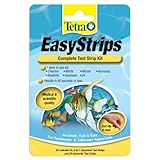 | Tetra EasyStrips Complete Aquarium Water Test Kit, 25 Count…Strip kit with ammonia | $9.99 Prime | Check on Amazon |
Ready to buy?
Our Water Care & Testing section gathers test kits and conditioners, and our Tank Setup & Care section has more setup guides.
Frequently Asked Questions
Q. Do I really need to quarantine new fish?
The Merck Veterinary Manual says “Quarantine is strongly recommended for pet fish”. Aqueon says it “may not be practical for every aquarist” but is “well worth the investment” for high-value fish such as discus.
Q. What should I treat new fish with in quarantine?
This guide gives no treatment advice. If a fish looks sick, test the water and call a fish veterinarian; the CDC says: “Talk to a veterinarian experienced in fish medicine if you have questions about your pet’s health.”
Q. Can I quarantine fish without a tank, in a bucket or a bowl?
Aquarium Co-Op says “any clean, food-safe container that is large enough will work in an emergency” and recommends “a container with clear sides”. None of the sources here describes an unfiltered bowl; Merck’s setup has a filter, air pump and heater.
Q. How do I quarantine new pond fish or koi?
The Merck manual says: “Koi should be quarantined for a minimum of 30 days at a temperature of 24°C (75°F).” It does this “to prevent introduction of koi herpesvirus (KHV), a serious and reportable disease”; it is Merck’s koi figure, not a rule for other fish. Ask a fish vet to plan a pond quarantine.
Sources (16)
- Merck Veterinary Manual, Management of Aquarium Fish (veterinary reference)
- Aqueon, Freshwater Aquarium Disease Prevention (maker)
- Aqueon, Aquarium Do’s and Don’ts (maker)
- Aqueon, Freshwater Aquarium Water Quality (maker)
- API, Ammonia Test Kit (test-kit maker)
- API, Nitrite Test Kit (test-kit maker)
- UF/IFAS Extension, Ammonia in Aquatic Systems (FA031) (university extension)
- UF/IFAS Extension, Fish Health Management Considerations in Recirculating Aquaculture Systems (FA101) (university extension)
- CDC, Healthy Pets: Fish (federal agency)
- CDC, Cleaning and Disinfecting with Bleach (federal agency)
- American Association of Fish Veterinarians, Find a Fish Vet (veterinary association)
- TFH Magazine, The Skeptical Fishkeeper: Quarantine (fishkeeping magazine, 2007)
- Practical Fishkeeping, 39 top tips for fishkeepers (fishkeeping magazine)
- Aquarium Co-Op, How to Quarantine Fish the Easy Way (retailer blog)
- r/Aquariums, How do you quarantine when buying new fish? (forum)
- r/Aquariums, How do you set up your Quarantine Tank? (forum)
Product prices and availability are accurate as of the date/time indicated and are subject to change. Any price and availability information displayed on Amazon.com at the time of purchase will apply to the purchase of this product.
