The short answer
It depends on the fish. The Spruce Pets says tropical fish generally need 75-80°F, and Aqueon’s temperature article gives the same range. Goldfish are cool-water fish: Aqueon gives fancy goldfish 68-74°F, and comets and shubunkins 60-70°F. Vet sources give bettas 76-81°F or 78-80°F; Aqueon says 76-85°F. Sources differ, so check your species and keep the temperature steady.
Aqueon, an aquarium equipment maker, says: “The temperature range that’s best for each creature depends on what part of the world they’re native to.” This guide covers freshwater fish only.
Temperature ranges by fish type
Each row is one source’s range; where sources differ, we show each and do not average them. The °C figures are the source’s own for The Spruce Pets and Tree of Life; the others are our conversions, rounded.
| Fish, as the source names them | Range | Source |
|---|---|---|
| Tropical fish | 75-80°F (24-27°C) | Aqueon, temperature article; The Spruce Pets (“generally”) |
| “Most tropical fish” | 74-80°F (23-27°C) | Aqueon, summer-heat article |
| Goldfish and other “cold-water” species | Below 70°F (21°C) | Aqueon, temperature article |
| Cool water fish, “usually” | 60-75°F (15-24°C) | The Spruce Pets |
| Fancy goldfish | 68-74°F (20-23°C) | Aqueon, goldfish guide and summer-heat article; Tree of Life |
| Comets and shubunkins | 60-70°F (16-21°C) | Aqueon goldfish guide |
| Common goldfish | 60-70°F (16-21°C) | Aqueon, summer-heat article |
| Common/comet goldfish | 65-72°F (18-22°C) | Tree of Life |
| Goldfish | 65-75°F (18-24°C) | PetMD |
| Bettas | 76-81°F (24-27°C) | University of Illinois; PetMD |
| Bettas | 78-80°F (25.5-26.5°C) | Tree of Life |
| Bettas | 76-85°F (24-29°C) | Aqueon betta guide |
| “Some fish like” discus, clown loaches, bettas, rams | “mid to upper 80’s” | Aqueon, summer-heat article |
The Spruce Pets is a pet-care publication; PetMD’s care sheets are written by veterinarians; Tree of Life is an exotic-pet vet clinic. The University of Illinois vet college’s column, reporting a zoological-medicine vet’s advice, says a betta tank “needs to be kept within a distinct range of 76°F to 81°F.”
Bettas are where the sources spread most: the vet sources stop at 81°F, and Aqueon’s own pages differ, its betta guide giving 76-85°F and its summer-heat article “mid to upper 80’s” for “some fish like” bettas. Is 90°F too hot? Aqueon’s betta guide stops at 85°F, and its temperature article says that above 90°F the beneficial bacteria “begin to die” (next section). The Spruce Pets puts bettas “towards the upper end of the scale”, and PetMD adds that “many bettas do best toward the warmer end of that range, but stability is more critical than absolute value”. For guppies, platies, tetras and other starter fish, our beginner fish guide lists each species’ range from two sources.
Why the range matters
Aqueon explains the warm end: “When it’s too warm, their metabolisms and breathing speed up, and they use more oxygen. The problem is, as water warms up it holds less oxygen, which further stresses the fish.” Our guide to increasing oxygen in a fish tank covers that side. Aqueon adds that “above 90°F, the beneficial bacteria that maintain balance in an aquarium begin to die, creating the potential for dangerous ammonia and nitrite spikes”; see what causes high ammonia.
Our rule: if fish look unwell, test the water with an aquarium test kit and contact an aquatic veterinarian. We do not diagnose or treat fish.
Why a steady temperature matters
The Spruce Pets says “Experts disagree about the need for a constant temperature that never wavers at all”, but “all experts agree that rapid and significant temperature changes, along with frequent fluctuations throughout the day, are stressful for fish.” For goldfish, PetMD says “A goldfish’s water temperature should not fluctuate more than +/- 2 degrees in 24 hours.”, and Aqueon that “Rapid changes in temperature or water chemistry can be harmful, if not fatal to goldfish.”
Aqueon: “Avoid placing your aquarium near sunny windows, exterior doorways, heating and air conditioning vents, fireplaces and drafty areas that can affect water temperature.”
Setting a heater to your fish’s range
Choose a heater sized for the tank
Aqueon: “Choose a quality heater that is designed for your tank size. (Large aquariums may require more than one heater.)” Our aquarium heater roundup sizes heaters by tank and room temperature.
Unplug, then place the heater and an aquarium thermometer
Fluval, an aquarium equipment maker, says in its AquaClear filter manual: “Always unplug or disconnect all appliances in the aquarium from electricity supply before placing hands in water, before putting on or taking off parts and while the equipment is being installed, maintained or handled.” Aqueon’s setup guide puts the heater “near the filter inlet or outflow or an air diffuser to ensure even heat distribution throughout the aquarium”, and says: “Install a thermometer at the opposite end of the aquarium from the heater.” Mind the depth. Fluval’s E-series heater manual: “Water must at all times cover the heater at least up to the MIN water level indicated.” Hydor, a heater maker, says in its Theo manual: “Always ensure the water level stays above the ‘Minimum water level’ mark shown on the heater”.
Set it when your manual says
Makers order this differently. Aqueon’s setup guide: “If your heater has a control dial, set it to the desired temperature (75° – 80° F for tropical fish) and install it in the aquarium.” and “Do not plug the heater in yet.” Fluval’s E manual has you plug in after its wait, then set the temperature, and says: “The heater is factory set at 25 °C / 77 °F.” That is above every goldfish range in the table.
Let it sit in the water before you plug it in
Waits differ too. Fluval: “Allow heater to acclimatize in the aquarium water temperature for 20 minutes before plugging it into the electrical outlet.” Hydor: “After immersing it in the water, wait a few minutes before switching it on, so that the thermostat can adjust to the temperature of the water.” Aqueon, after filling the new tank: “After 10 minutes, plug the heater in.” Aqueon’s Pro heater manual asks for it to stay submerged “for a minimum of 30 minutes prior to powering”, as quoted in our heater roundup. Follow your manual; with none, our reading: wait the longest time quoted here, at least 30 minutes. Fluval: “Be sure to arrange a drip loop for the heater cord and any other electrical item that is placed in or on the aquarium.” Never run it dry. Fluval: “This aquarium heater must never operate outside of water.” Hydor: “Do not connect the heater to the power supply when it is not submerged in water.”
Set it to the middle of your fish’s range, then check the thermometer
Aqueon: “Always set your heater for the middle of your fishes’ preferred temperature range and choose fish that share the same temperature requirements.” A heater that is set after plugging in, such as Fluval’s E, starts at its factory setting, so set it straight away (our reading). Where sources differ for bettas, our reading: stay inside the part of the betta ranges given in degrees that they share, 78-80°F. For goldfish, use the rows for your type. Aqueon also says to “Install an accurate thermometer and check it regularly to make sure your heater is maintaining the right temperature.”
Before a water change or lifting the heater out, unplug and wait
Unplug everything first (step 2). Fluval’s E manual: “If it has to be taken out of the water or when transferring or changing the water, disconnect the heater from the power source and wait for at least 30 minutes to allow it to cool down.” Hydor’s manual: “To avoid possible breakages due to thermal shock, the heater should be disconnected from the power supply at least 5 minutes before taking it out of the water or before adding or changing the water.” Hydor’s support page asks for “at least 30 minutes before any waterchange” (its two pages differ). Follow your heater’s manual; with none, our reading: for a planned water change or removal, wait the longest planned time quoted here, 30 minutes. The 1 hour below is Fluval’s wait for a heater that came out of the water while on. Fluval: “If the heater is accidentally removed from water while operating, DO NOT re-submerse it in water. Unplug it and let it cool down for at least 1 hour before reusing.” Aqueon: “When performing water exchanges, match the temperature of replacement water as closely as possible to your aquarium.” Plug back in only as Hydor says: “The Heater can ONLY then be turned back on when the Aquarium is full and the heater is completely submerged.”
Preset or adjustable heater?
A preset heater holds one figure; an adjustable one is set to your fish’s range. From our heater roundup: Aqueon presets its Preset 100 W “to 78°, accurate to +/- 1°”; the other two picks below are adjustable. Our reading of the table: 78°F is inside every tropical range and every betta range given in degrees, below Aqueon’s “mid to upper 80’s”, and above every goldfish and cool-water range.
| # | Preview | Product | Price | Link |
|---|---|---|---|---|
| 1 |  | Aqueon Aquarium Fish Tank Preset Heater For Up To 40…Preset heater, fixed at 78°F | $22.09 Prime | Check on Amazon |
| 2 | 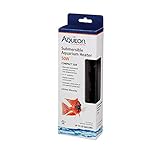 | Aqueon Submersible Aquarium Heater, 50 Watts, Up to 20…Adjustable heater, 68-88°F | Check on Amazon | |
| 3 |  | Fluval E200 Advanced Electronic Heater, Black, up to 65…Adjustable heater with readout | $64.99 Prime | Check on Amazon |
Too warm or too cold
Too warm. Aqueon suggests you “open the tank lid and direct a fan across the water surface to create evaporative cooling. (Lower the water level slightly to prevent fish from jumping out.)” Our reading: keep the level above your heater’s minimum mark. Fluval: “Always maintain the water level in the aquarium to compensate for water loss due to evaporation.” Aqueon’s summer-heat article: “Turn your heater down, but not off.” It adds: “Some experts suggest unplugging the heater, but the risk in doing that is the ambient temperature suddenly dropping and forgetting to plug it back in.” Our reading: unplug before your hands go in (step 2) and plug back in once they are out; to lower the water level, also wait as in step 6 before the water goes down, and plug back in only once the heater is fully under water again (step 6). For ice, Aqueon says: “Float a bag of ice or cold water in the fish tank to gently lower the water temperature. (Take care not to lower the temperature more than 2 or 3 degrees F in a 4-hour period.)” and “Avoid putting ice cubes directly into your aquarium unless you make them with reverse osmosis or dechlorinated water.”
Too cold. That is the heater’s job: size it for the tank and the room (step 1). In a power cut, our power outage guide covers keeping the heat in.
Ready to buy?
Our aquarium heater roundup compares eight heaters by tank size; our Water Lab covers the other readings.
Frequently Asked Questions
Q. Is 80 degrees too warm for a fish tank?
It depends on the fish; see the table. 80°F is the top of the tropical ranges and above every goldfish range (our reading).
Q. How cold is too cold for a fish tank?
Sources answer by species: below your fish’s range. For bettas, Tree of Life says: “Avoid temperatures below 76°F (24°C), which can weaken the immune system.”
Q. Do goldfish need a heater?
Sources put it differently. The Spruce Pets: “Cool-water fish prefer unheated aquariums and don’t fare as well when housed in a heated tank.” Aqueon: “Considered cold water fish, goldfish can also be kept in heated aquariums.” PetMD suggests a heater “especially if you live in a cooler climate or experience colder seasons.”
Q. Can tropical fish and goldfish share a tank?
The Spruce Pets says “Tropical fish should not be kept with cool water fish”. Aqueon: “Trying to find a happy middle ground may stress both fish because one is always a little cold, and the other is a little warm.”
Sources (15)
- Aqueon, water temperature (maker)
- Aqueon, summer heat (maker)
- Aqueon, Goldfish Care Guide (maker)
- Aqueon, Betta Care Guide (maker)
- Aqueon, aquarium setup (maker)
- The Spruce Pets, water temperature (publication)
- PetMD, Betta Fish Care Sheet (vet-written)
- PetMD, Goldfish Care Sheet (vet-written)
- University of Illinois, betta column (university)
- Tree of Life, Goldfish Care (vet clinic)
- Tree of Life, Betta Fish Care (vet clinic)
- Fluval, E Series Heater manual (maker)
- Fluval, AquaClear manual (maker)
- Hydor, Theo heater manual (maker)
- Hydor, water changes (maker support)
Product prices and availability are accurate as of the date/time indicated and are subject to change. Any price and availability information displayed on Amazon.com at the time of purchase will apply to the purchase of this product.