The short answer
Test GH and KH in the tank and tap water. Raise GH with partial water changes: harder tap water, or RO water plus a GH remineralizer such as Seachem Equilibrium, which Seachem says does not itself change KH or pH (pH can still shift in unbuffered RO water). Crushed coral raises GH, KH and pH. Seachem advises altering GH slowly.
API, a test-kit maker, defines general hardness as “the measure of calcium and magnesium ion concentrations dissolved in water”. These steps are for freshwater tanks. See also what KH is and softening aquarium water.
Warning
If fish look unwell, test the water and contact an aquatic veterinarian. This guide covers water chemistry only; it does not diagnose or treat sick fish.
Which animals want harder water
API says GH and KH “should match their natural habitat”. Its kit leaflet says: “When keeping a community aquarium with a variety of tropical fish, adjust the GH and KH to 3 – 6º (50-100 ppm).” It lists swordtails, guppies, mollies and goldfish among “Most tropical fish including” at 6º – 11º (100-200 ppm), and Rift Lake cichlids, goldfish and brackish water fish at 11º – 22º (200-400 ppm). Its 0º – 3º row lists “Discus, Arowana, Elephantnose, Neons, Cardinals, Live Plants”; for those, raising GH may be the wrong move (our reading). API gives one range for GH and KH together. Aqueon, an aquarium equipment maker, says snails and shrimp “need an ample supply of calcium for healthy shell growth”, and: “Most crystal and bee shrimp require soft, low pH water, while Caridina shrimp from Sulawesi need a higher pH and alkalinity, along with higher temperatures.” See our shrimp and snail lifespan guides for calcium.
What you need
- A GH and KH test and a pH test (step 3).
- A bucket and a tap water conditioner (our conditioner roundup).
- For RO water, a GH remineralizer (our guide to the best water for a fish tank).
Our freshwater test kit roundup notes the kit below is “Two separate tests to run, on top of any master kit”; the water guide notes Equilibrium, its planted-tank pick, “Raises GH; Seachem recommends a separate buffer for KH”.
| # | Preview | Product | Price | Link |
|---|---|---|---|---|
| 1 | 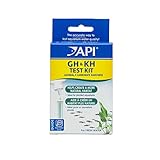 | API GH & KH TEST KIT Freshwater Aquarium Water Test Kit…API GH & KH Test Kit | $11.98 Prime | Check on Amazon |
Raising GH step by step
Steps 4 to 6 are separate routes (our reading); use one mineral product at a time. Seachem says “using multiple mineral supplements could result in a GH that is too high.”
Unplug before your hands go in the water
Fluval’s AquaClear filter manual: “CAUTION – Always unplug or disconnect all appliances in the aquarium from electricity supply before placing hands in water, before putting on or taking off parts and while the equipment is being installed, maintained or handled.” With your hands out, restart the filter as its manual says; Fluval warns: “IMPORTANT – DO NOT OPERATE FILTER WITHOUT WATER”. Hydor, a heater maker, says its heater “can ONLY then be turned back on when the Aquarium is full and the heater is completely submerged.” Then plug every appliance you unplugged back in.
Read both test reagents’ safety lines before you test
API’s safety data sheets for both carry the signal word “DANGER” and say “Wear protective gloves/protective clothing/eye protection/face protection.” Section 8 of the GH sheet lists “Safety glasses with side shields. Chemical goggles.” and “Wear chemical protective gloves, e.g. PVC.”; it adds “Care must be taken, when removing gloves and other protective equipment, to avoid all possible skin contact.” The KH sheet lists “Safety glasses with side shields; or as required, Chemical goggles.” and “Wear general protective gloves, eg. light weight rubber gloves.” The GH sheet’s hazard lines add “Causes serious eye damage.”, “May cause an allergic skin reaction.”, “Suspected of causing cancer.” and “Use only outdoors or in a well-ventilated area.”; the KH sheet, “Causes severe skin burns and eye damage.” For eyes, both: “IF IN EYES: Rinse cautiously with water for several minutes. Remove contact lenses, if present and easy to do. Continue rinsing.” and “Immediately call a POISON CENTER or doctor/physician.” The GH sheet’s first-aid section adds: “Seek medical attention without delay; if pain persists or recurs seek medical attention.” Both first-aid sections add: “Removal of contact lenses after an eye injury should only be undertaken by skilled personnel.” Skin: GH, “IF ON SKIN: Wash with plenty of soap and water.” and, in its first-aid section, “Immediately remove all contaminated clothing, including footwear.”; KH, “IF ON SKIN (or hair): Remove/Take off immediately all contaminated clothing. Rinse skin with water/shower.” Swallowed: GH, “IF SWALLOWED, REFER FOR MEDICAL ATTENTION, WHERE POSSIBLE, WITHOUT DELAY.”, “For advice, contact a Poisons Information Centre or a doctor.” and “Urgent hospital treatment is likely to be needed.”; KH, “IF SWALLOWED: Rinse mouth. Do NOT induce vomiting.” The GH sheet’s ingestion section also contains an instruction to induce vomiting under some conditions, which the KH sheet’s “Do NOT induce vomiting.” contradicts; this guide does not repeat it, so call a poison center or doctor first and follow its advice (our reading). In the US, the National Capital Poison Center, a nonprofit, says to “call a poison center at 1-800-222-1222”. Both sheets say “Store locked up.”
Test GH, KH and pH in the tank and your tap water
Handle the reagents as step 2 says; if your hand goes in the water, follow step 1. API’s GH test counts drops until the water “turns from orange to green” (KH: “blue to yellow”), and its chart reads one drop as 1º, or 17.9 ppm. Follow the kit’s directions, and your pH kit’s. If the tap reads harder than the tank, start with step 4; if not, step 5 (our reading).
Change water with harder tap water, or blend tap with RO
Shrimply Explained, a shrimp-keeping education site: “If your tap water has higher GH, then simply doing a water change will increase GH in your tank.” It adds that this is “area and time dependent” and that “it is always important to measure parameters before each water change”. ForAquarium, a fishkeeping guide site, says “a mixture of 50% tap water and 50% RO water will reduce the total GH and KH by half”, so a bigger tap share gives harder water (our arithmetic: the mix’s GH is about the tap’s GH times the tap share, with RO at 0). Tap water carries KH as well as GH, so this route can raise KH too; read the tap’s KH in step 3 (our reading). Treat tap water with a conditioner; Aqueon says: “Be sure to match temperatures of the new water with the aquarium.” Hydor recommends that its heater is “turned off and unplugged from the power socket at least 30 minutes before any waterchange”; other heaters follow their manual. Unplug everything else before your hands go in (step 1). Aqueon: “Avoid water changes of more than 25% as larger water changes can stress your fish and upset the balance in your aquarium.” API: “It is not recommended to do more than 30% because it may cause loss of bacteria and be stressful on the fish.” These are upper limits, not targets (our reading). Once refilled, restart and plug back in as in step 1.
Or remineralize RO water in a bucket, with one product
Swell UK, an aquarium retailer, warns: “Once you move exclusively to use RO however the pH, GH and KH can drop dangerously low, so use a buffer, even if you want very soft water for Discus, to prevent the pH and KH from crashing.” That is Swell’s advice for RO-only tanks; whether a buffer fits depends on your species’ KH range (our reading), and our guides to raising KH and raising pH cover buffers. Seachem says Equilibrium “is intended to raise GH” and “will have no impact on the KH or pH of an aquarium”; its RO FAQ adds: “Without the stabilizing influence of a buffer, pH is prone to rapid changes even if the components being added would not typically change the pH.” Seachem’s dosing page says its dose raises GH “by 1 meq/L (3 dH)”, a per-dose effect, not a target, and: “This dose is based on DI or RO water; for other water, measure hardness (GH) first, then add according to need.” Follow the label for the amount. Seachem says to “add to new water”, and: “Do not use Equilibrium™ when replacing evaporated water.” Asked whether it suits a given tank, Seachem answers “Possibly”: “Equilibrium™ is exclusively intended for freshwater tanks and not every type of aquarium fish is suited to the GH that Equilibrium™ can be used to create. Research your fish to know what GH they would prefer.” It adds: “We recommend to alter GH slowly and keep water changes to 30% of the tank or less.” Its overdose FAQ: “An overdose of Equilibrium™ can result in a sudden and stressful shift in GH.” Its safety data sheet says that, under OSHA and EU GHS criteria, “This material is not hazardous.”, but also “May cause eye irritation.”, “Wash thoroughly after handling this product.” and “Avoid generating and breathing dusts or particulates generated by this product.”; it lists “Splash goggles or safety glasses.” and “Wear neoprene or butyl rubber gloves for routine industrial use.” For eyes: “Immediately flush eyes thoroughly with water for 15-20 minutes. Remove contact lenses after the initial 1-2 minutes and continue flushing for several additional minutes. If effects occur, consult a physician, preferably an ophthalmologist.” If swallowed: “Rinse mouth with water and drink a glass of water. Further first aid not generally required. If unconscious, do not induce vomiting. If in doubt, contact a poison information center or a doctor.” For bee, bumblebee and tiger shrimp, SaltyShrimp, a shrimp-mineral maker, says its Bee Shrimp Mineral GH+ “raises the total hardness (°dH) without significantly influencing the carbonate hardness (KH). This is especially important for shrimp originating from softwater habitats”, and to “Mix with water outside of the aquarium.”; its product page has no safety section, so follow the label. Test the bucket’s GH, KH and pH before it goes in, then change water as in step 4.
Crushed coral or aragonite: expect KH and pH to rise too
Unplug first (step 1). Shrimply Explained says these are “made of calcium carbonate that slowly leaches into your water over time to increase GH, KH, and pH”, and: “They are excellent sources of calcium, but they do not contain any magnesium so you may experience molting problems if your water does not already have magnesium. As such, always start with a small amount, measure the effects over a few days, then adjust as necessary.” Aqueon: “Fill a mesh media bag with crushed coral or dolomite gravel and place it in your filter.” Buce Plant, an aquarium plant retailer: “Please make sure to wash and sanitize these objects before placing them into the aquarium.” (It names no cleaner.) Restart and plug back in (step 1). If GH, KH or pH climbs past your target, take the bag out (our suggestion): before your hand goes in the filter or tank, unplug all appliances, and restart and plug everything back in as in step 1.
Retest, and stop once GH reaches your species’ range
If your hand goes in the water, follow step 1. For a community tank, that is API’s 3 – 6º band (our reading). Aqueon says that with fish in the tank, “never make sudden or drastic changes to pH or any other water parameters.” If GH ends up too high, see our softening guide; if KH or pH does, see our guides to lowering alkalinity and lowering pH.
Mistakes to avoid
- Adding minerals straight into the tank. Shrimply says remineralizers “should never be added directly to your tank except in very small amounts because they cause immediate changes that stress your shrimp”.
- Topping off with tap water once GH is where you want it. API: “Topping off with tap water simply adds more minerals to the aquarium, resulting in a steady increase in GH.”
Ready to buy?
Our freshwater test kit roundup compares kits that read GH and KH, and our Water Lab gathers our guides to pH, hardness and other readings.
Frequently Asked Questions
Q. Does Epsom salt raise GH or KH?
Shrimply Explained says: “We do not recommend attempting to make homemade remineralizers with Epsom salt, baking soda, or other common household ingredients. It is very difficult to get the right ratio of minerals without a strong understanding of the science behind it. Please use with caution.” Anchor Aquarium, an aquarium maintenance and pet supply business, is the only source we read that says Epsom salt (magnesium sulfate) “increases magnesium levels, contributing to overall GH without affecting carbonate hardness”. No maker or authority we read gives an Epsom salt amount, so this guide gives none (our reading).
Q. What GH do cherry shrimp need?
No maker or authority page we read gives a GH figure for cherry (Neocaridina) shrimp, so this guide gives none.
Q. How fast should I raise GH?
For a major change, Seachem recommends “doing so in increments over time, preferably through simply matching ideal water parameters in the water used for water changes.”
Q. What GH do goldfish need?
API’s leaflet lists goldfish in both its 6º – 11º and 11º – 22º rows.
Sources (26)
- API, GH & KH kit (maker)
- API, kit leaflet (maker)
- API, GH reagent SDS (maker)
- API, KH reagent SDS (maker)
- API, routine care (maker)
- Seachem, dosing (maker)
- Seachem, GH FAQ (maker)
- Seachem, tanks FAQ (maker)
- Seachem, overdose FAQ (maker)
- Seachem, products FAQ (maker)
- Seachem, RO pH FAQ (maker)
- Seachem, SDS (maker)
- SaltyShrimp, GH+ (maker)
- Fluval, AquaClear manual (maker)
- Hydor, heater FAQ (maker)
- Aqueon, snails (maker)
- Aqueon, shrimp (maker)
- Aqueon, pH (maker)
- Aqueon, do’s and don’ts (maker)
- Aqueon, checklist (maker)
- National Capital Poison Center (nonprofit)
- Swell UK, softening (retailer)
- Buce Plant, pH (retailer blog)
- ForAquarium, KH (fishkeeping guide site)
- Shrimply Explained, GH (education site)
- Anchor Aquarium, GH (maintenance and pet supply business blog)
Product prices and availability are accurate as of the date/time indicated and are subject to change. Any price and availability information displayed on Amazon.com at the time of purchase will apply to the purchase of this product.