The short answer
Retest the low reading, then test KH, your tap water and ammonia. Remove what is pulling pH down, aerate, and rebuild buffer with partial water changes or crushed coral in the filter. Sources call pH products a last resort; for its pH Up, API says some fish may be sensitive to pH adjustments greater than 0.2 in 24 hours.
These steps are for freshwater tanks. Our guide to why aquarium pH runs low covers the causes.
Warning
If fish look unwell, test the water and contact an aquatic veterinarian. This guide covers water chemistry only; it does not diagnose or treat sick fish.
What to have on hand
- A pH test. API, a maker of test kits and water treatments, says: “It is recommended to test water for pH weekly.”
- A KH test, the buffer reading (step 3).
- An ammonia test (step 3 explains why).
- A bucket for preparing and testing new water.
- A tap water conditioner. API’s directions for its Tap Water Conditioner say to use it “when adding or changing water”.
Both kits below come from our freshwater test kit roundup.
| # | Preview | Product | Price | Link |
|---|---|---|---|---|
| 1 |  | API Freshwater Master Test Kit 800-Test Freshwater Aquarium…pH and ammonia | Check on Amazon | |
| 2 | 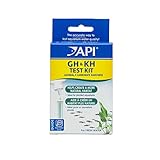 | API GH & KH TEST KIT Freshwater Aquarium Water Test Kit…KH and GH | $11.98 Prime | Check on Amazon |
Five ways to raise pH, compared
| Method | What it acts on | Staying power |
|---|---|---|
| Aeration | Dissolved CO2 (Buce Plant) | While it runs (our reading) |
| Partial water changes | Buffering minerals (Aqueon) | Only if your tap has KH (our reading) |
| Crushed coral, aragonite, limestone | GH and KH (Buce Plant) | Slow, lasting (Aqueon) |
| pH products | pH | Liquid adjusters often temporary (Aqueon) |
| Baking soda | pH | Must be re-added (Buce Plant) |
“Our reading” cells are our inferences.
Raising pH step by step
Check that your fish need a higher pH
Aqueon, an aquarium equipment maker, says it is best not to change aquarium pH unless you are trying to breed “sensitive or wild caught fish from environments with extremely low or high pH”, and adds: “Most fish will adapt as long as water quality is good and pH is stable.” For targets, API calls 7.0 “ideal” for a community tank of tropical fish and says goldfish and livebearers “prefer a pH of 7.5”, and “Many Amazonian fish, like angelfish and neon tetras, prefer a pH of 6.5 to 6.8.”
Check the reading before you add anything
Atlas Scientific, a maker of pH sensors, is the only source we found for this check. It says experts suggest pouring tank water into a separate container, aerating it with a circulation stone and testing it “a day or two later”, because “the true pH can be inhibited by CO2 levels causing pH levels to spike downward.” It adds: “You don’t want to prematurely add buffering agents to your tank.” Compare the sample with the tank’s own reading: on our reading of Atlas, a lower tank reading points to CO2, which step 5 covers. Atlas gives no rule for the difference. Aqueon says “Minor changes in pH also occur between day and night, especially in well-planted tanks”, as plants “give off carbon dioxide at night, which lowers pH”. Swell UK, an aquarium retailer, in a guide to high pH, says that in planted tanks pH “will typically be at its lowest just before the lights come on in the morning” and suggests testing at several times of day.
Test KH, your tap water and ammonia
API’s GH & KH kit page says: “An aquarium with a low KH level will tend to be acidic. Aquariums with very low KH are subject to rapid pH shifts if not monitored carefully.” Aquaforest, an aquarium products maker, says low pH in freshwater tanks may come from “the tap water used during water changes being too low”. For ammonia, Aqueon, writing about cycling a new tank, explains that “as pH rises above 7.3, the balance swings toward toxic NH₃”, so raising pH while ammonia is present makes more of it toxic (our reasoning from Aqueon’s explanation). If ammonia reads above zero, deal with that before raising pH (our reasoning); our guide to what causes ammonia in fish tank water covers the usual sources.
Take out or cut back what is lowering pH
Buce Plant, an aquarium plant retailer, says driftwood will “release tannins that lower the pH”, and names peat moss, catappa leaves and alder cones as other pH-lowering materials. Buce also names UNS Controsoil as an aqua soil designed to keep pH below 7, and lists CO2 injection as a way to lower pH, warning: “Make sure not to add too much CO2 though, as this can be fatal for livestock in the aquarium.”
Add surface movement to drive off carbon dioxide
Buce Plant suggests creating “more surface agitation in the water by adding an air stone / air pump or by placing your filter output above the water”. Our air stone roundup compares stones and bubblers.
Rebuild buffer with partial water changes, if your tap water carries it
Aqueon says regular partial water exchanges “replenish minerals that naturally buffer pH and keep it stable”. Treat tap water with a conditioner first. With fish in the tank, Aqueon says to “never make sudden or drastic changes to pH or any other water parameters”, so if the tap reads well above the tank, change smaller amounts and retest (our reading). If you use RO water, Buce Plant says RO/DI water has no minerals, so “you will need to add them back in with remineralization products”, and Aqueon, on RO and DI water, says: “Always prepare water and test pH before adding it to your aquarium.” Our best water guide compares tap, RO and remineralizers.
Add calcium carbonate for a slow, lasting rise
Test ammonia first (step 3). Aqueon suggests crushed coral or dolomite gravel as substrate (“These calcium carbonate-based gravels slowly dissolve over time, raising and buffering pH”), or a mesh media bag of crushed coral or dolomite gravel in your filter. Aquaforest says of crushed coral in a bag in the filter: “You should notice a slow increase in pH.” Buce Plant says dissolving calcium carbonate “increases the GH and KH of the water”, that “The more acidic the water, the faster they dissolve”, and: “Please make sure to wash and sanitize these objects before placing them into the aquarium.” Aqueon’s advice for any pH change is to “test regularly to make sure it remains stable”; if pH climbs past your target, take the bag out (our suggestion). Our cichlid sand roundup compares aragonite substrates for African cichlid tanks and what each maker says they do to pH.
Keep pH products as the last resort
Aquaforest says “we do not recommend using chemical products in the first instance”, and Buce Plant says that if the other methods do not work, “your last resort could be to use chemicals”. Aqueon says pH products “should be avoided altogether or used with extreme care by experienced aquarists to avoid sudden drastic pH shifts”, and warns: “The resulting pH roller coaster this creates is very stressful to aquatic creatures.” Test ammonia first (step 3) and follow the label for the amount; this guide gives no doses.
With API pH Up, retest before each dose and protect your eyes and skin
API’s directions: “Take another pH reading before adding another dose of pH UP. Some fish may be sensitive to pH adjustments greater than 0.2 in a 24 hour period, so changes of this magnitude should be done with extreme care.” Its FAQ says you can use it “once daily” but “should always test the pH between doses”. API’s safety data sheet for pH Up carries the signal word “Danger” and “Causes serious eye damage.” It says: “Wear protective gloves, protective clothing, eye protection and face protection.” Section 8 names “Wear chemical protective gloves, e.g. PVC.” and “Safety glasses with side shields.” or “Chemical goggles.[AS/NZS 1337.1, EN166 or national equivalent]” Section 7 says: “DO NOT allow material to come in direct contact with human skin or eyes.” and “Always wash hands with soap and water after handling.” For the eyes, the label says: “IF IN EYES: Rinse cautiously with water for several minutes. Remove contact lenses, if present and easy to do. Continue rinsing.” and “Immediately call a POISON CENTER/doctor/physician/first aider.” Section 4 says: “Immediately hold eyelids apart and flush the eye continuously with running water.” and “Continue flushing until advised to stop by the Poisons Information Centre or a doctor, or for at least 15 minutes.” and “Transport to hospital or doctor without delay.” It adds: “Removal of contact lenses after an eye injury should only be undertaken by skilled personnel.” The two lens lines differ, so keep flushing and let the poison center or doctor direct you on lenses (our reading). For skin, Section 4 says: “Immediately remove all contaminated clothing, including footwear.” “Flush skin and hair with running water (and soap if available).” and “Seek medical attention in event of irritation.” If swallowed: “Immediately give a glass of water.” and “First aid is not generally required. If in doubt, contact a Poisons Information Centre or a doctor.”
Retest, then keep the buffer topped up
Test pH weekly, as API recommends, and KH with it. Tetra, a maker of water treatments, says that “With regard to pH stability, the KH should not generally drop below 3 °dH” (°dH is Tetra’s unit; check which unit your kit reads). Keep up the partial water changes from step 6, or use step 7 if your tap KH is low (our reading).
Baking soda: what the sources say
Buce Plant lists baking soda under its last-resort chemicals (“Some hobbyists also use baking soda”), mixes it “with some conditioned water” so the pH rises gradually, and warns that it “will have to be added regularly because the pH will slowly revert back to its former level”. Atlas Scientific advises against over-the-counter remedies such as vinegar or baking soda to buffer a tank. Buce Plant gives an amount, but it is a retailer blog’s figure, not a maker’s direction, so this guide gives none. Test ammonia first (step 3), and do not pour powder straight into the tank (our reading of Buce’s method).
Church & Dwight’s safety data sheet for Arm & Hammer Baking Soda lists it as “Not classified” but says “Exposure may aggravate pre-existing eye, skin, or respiratory conditions.” For eye contact: “Rinse cautiously with water for at least 15 minutes. Remove contact lenses, if present and easy to do. Continue rinsing.” and “Obtain medical attention.”
When pH will not behave
- It rises, then slides back. Aqueon says liquid adjusters “often have only temporary effects and pH soon shifts back to its original value”. Check KH (step 3), then use a lasting buffer (step 7) or remove an acid source (step 4) (our suggestion).
- It will not rise. Check the tap reading (step 3) and the substrate (step 4) (our suggestion).
- It went too high. Stop adding anything and retest (our suggestion). Our guide to lowering aquarium pH brings it back down slowly, and what causes high pH explains where a high reading comes from.
Our Water Lab has a guide to each reading.
Ready to buy?
Our freshwater test kit roundup compares kits for pH, KH and ammonia; our water conditioner roundup compares treatments for change water. If your water is hard, our guide to softening aquarium water gives each source’s methods.
Frequently Asked Questions
Q. How do I raise pH in a fish tank quickly?
The sources advise against speed: see Aqueon’s caution in step 6 and API’s line for its pH Up in step 9.
Q. How long does it take for pH Up to work?
API’s page gives no time; it says to retest before each dose (step 9).
Q. How can I raise pH naturally?
Aqueon lists calcium carbonate rock and substrate among “natural methods for adjusting pH that are longer lasting and more stable over time” (step 7).
Q. How do I raise KH in an aquarium?
Calcium carbonate raises GH and KH (Buce Plant, step 7), and water changes add KH when your tap water has it (step 6).
Sources (12)
- Aqueon, Aquarium pH: How to Safely Adjust pH (maker)
- Aqueon, What is pH and Why Is It Important? (maker)
- API, pH UP Freshwater Aquarium Water pH Raising Solution (maker)
- API, pH Up Safety Data Sheet (maker)
- API, General & Carbonate Hardness Test Kit (maker)
- API, Tap Water Conditioner (maker)
- Tetra, pH/KH Plus (maker)
- Aquaforest, How to raise pH in aquarium and what causes low pH in fish tank (maker)
- Atlas Scientific, How to Safely Raise the pH in an Aquarium (pH sensor maker’s blog)
- Church & Dwight, Sodium Bicarbonate (Arm & Hammer Baking Soda) Safety Data Sheet, distributor copy (maker)
- Swell UK, What causes high pH in a fish tank? (retailer help guide)
- Buce Plant, How to Adjust pH in the Freshwater Aquarium (retailer blog)
Product prices and availability are accurate as of the date/time indicated and are subject to change. Any price and availability information displayed on Amazon.com at the time of purchase will apply to the purchase of this product.