Your aquarium filter isn't working because it's likely clogged with debris, the impeller is stuck, or it has an airlock.
That moment of panic is something every fishkeeper knows. You walk by your tank and notice the water is eerily still. The gentle hum of the filter is gone, and you’re left wondering, "why isn't my aquarium filter working?" As someone who has spent years troubleshooting every gurgle, rattle, and complete silence from aquarium filters, I can assure you that the fix is usually simpler than you think. This guide will walk you through the most common problems step-by-step, helping you get your tank's life support system back online and your fish happy and healthy.

Common Culprit: A Clogged Filter
The most frequent reason an aquarium filter stops working is a simple clog. Over time, fish waste, uneaten food, and decaying plant matter get sucked into the filter. This gunk can block the intake tube or saturate the filter media, preventing water from flowing through. It’s like trying to drink a thick milkshake through a tiny straw—eventually, nothing gets through.
I remember one time my favorite hang-on-back filter went completely silent. My first thought was that the motor had died. But upon closer inspection, I found a single, stubborn snail had wedged itself perfectly inside the intake strainer, blocking all water flow. It’s often the little things! To fix a clog, here’s what you do:
- Unplug the filter. Safety first! Never work on any aquarium equipment while it's connected to power.
- Check the intake tube. Remove the intake tube and strainer. Look for any blockages like plant leaves, snails, or substrate. Use a filter brush to clean the inside of the tube thoroughly.
- Rinse the filter media. Take out the sponges, cartridges, or other media. Gently swish and squeeze them in a bucket of old tank water you removed during a water change. Never use tap water, as the chlorine will kill the beneficial bacteria living in your media.
- Reassemble and test. Once everything is clean, put it all back together, plug it in, and see if it starts running. In most cases, this simple cleaning solves the problem.

The Heart of the Matter: Impeller Issues
If cleaning the media and intake tube doesn't solve why your aquarium filter isn't working, the next place to look is the impeller. The impeller is a small, magnetic spinning rotor with fins that acts like the heart of the filter, actively pushing and pulling water. When it gets jammed or dirty, the motor might hum, but no water will move.
An impeller can get stuck due to sand, tiny gravel, or a buildup of slime. The shaft it spins on can also break, or the magnet can lose its strength over time. Accessing it is usually straightforward.
- Unplug the filter from the wall.
- Remove the motor assembly from the main filter body. It usually twists off or is held by clips.
- You should see a cover over the impeller well. Gently pull it off. You may need to use your fingernail or a small flathead screwdriver to pry it open.
- Carefully pull the impeller out. It's magnetic, so it might offer a little resistance.
- Inspect the impeller for any damage, like broken fins. Clean the impeller and the well it sits in with a small brush or cotton swab. An old, soft toothbrush is perfect for this job.
- Once clean, place the impeller back, replace the cover, reattach the motor, and plug it in. This often brings a "dead" filter right back to life.
Power Problems and Simple Fixes
This might sound obvious, but you’d be surprised how often power is the issue. Before you take your filter apart, always run through these basic checks. It can save you a lot of time and frustration when troubleshooting why an aquarium filter isn't working. I once spent 30 minutes disassembling a filter only to realize the power strip it was plugged into had been accidentally switched off.
Here are the simple power checks to perform first:
- Is it plugged in correctly? Make sure the plug is firmly seated in the outlet or power strip.
- Is the power strip on? Check if the switch on the power strip is illuminated or in the "on" position.
- Test the outlet. Plug a different device, like a lamp, into the same outlet to confirm the outlet itself has power.
- Check the GFCI. If your outlet is a Ground Fault Circuit Interrupter (the kind with "test" and "reset" buttons), check to see if it has been tripped. If so, press the "reset" button.
- Inspect the cord. Look over the power cord for any signs of damage, like kinks, chew marks from pets, or fraying. A damaged cord is a fire hazard and means the filter should be replaced.

Air Lock and Priming Problems
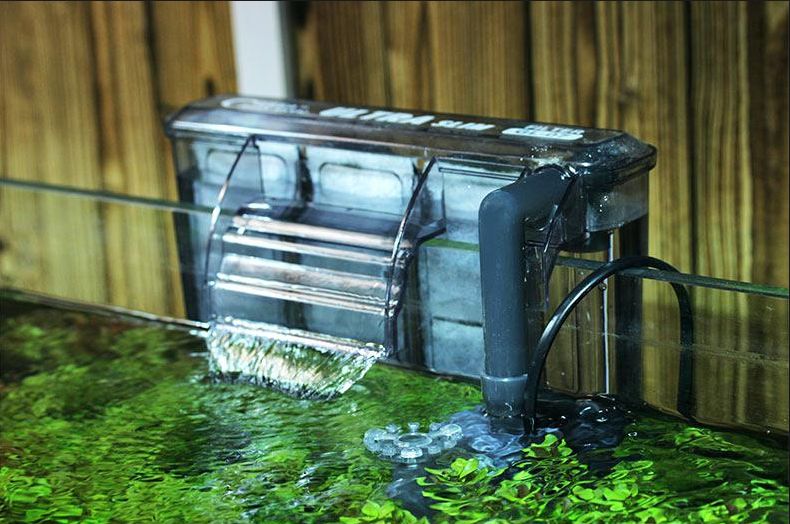
This issue is most common with Hang-On-Back (HOB) and canister filters. An airlock happens when air gets trapped inside the filter, preventing it from creating the siphon needed to pull water from the tank. The motor might be running and making noise, but no water is cycling because it's just spinning in the air.
Priming a filter simply means removing that trapped air and getting the water flowing. For HOB filters, the solution is usually very easy. Just pour a cup of tank water directly into the filter box where the media sits. This often gives it the jumpstart it needs to create a siphon and start pulling water on its own.
For canister filters, the process is a bit different. Most have a built-in priming button or pump. After setting up the filter, you press or pump this primer to manually draw water up the intake tube, through the filter, and down the outlet tube, pushing all the air out. If your canister filter isn't working after a cleaning, it almost always needs to be primed again.

When It's Time for a Replacement
Sometimes, despite your best efforts, a filter is simply beyond repair. If you've cleaned everything, checked the impeller, and confirmed it's getting power, but there's absolutely no sound or vibration from the motor, it has likely failed. A cracked filter housing that leaks water is another clear sign that it's time for a new one.
Most aquarium filters are built to last for several years, but the motors can eventually wear out. If your filter is old and you've already replaced the impeller to no avail, it's often more cost-effective and reliable to buy a new filter than to keep trying to fix the old one. While you wait for a replacement, you can keep your aquarium healthy by performing small daily water changes and adding an air stone to ensure the water stays oxygenated.

Frequently Asked Questions
How often should I clean my aquarium filter?
You should lightly clean your aquarium filter about once a month. Rinse the sponge or media in old tank water to preserve beneficial bacteria, but avoid deep cleaning unless the flow is significantly reduced.
Can my fish survive if the filter is off overnight?
Most healthy fish can survive for 8-12 hours without a filter, as long as the tank is not overstocked. The main concerns are a lack of oxygenation and a buildup of ammonia, so it's important to fix the filter as soon as possible.
Why is my filter making a loud noise?
A loud rattling or grinding noise is usually caused by a dirty or damaged impeller. Unplug the filter, clean the impeller and the well it sits in, and check for any debris like sand or gravel that might be causing the noise.
Should I replace the filter cartridge every month?
No, you should not. Most disposable filter cartridges house your beneficial bacteria, and throwing them away can crash your tank's nitrogen cycle. Instead, rinse the cartridge in old tank water and only replace it when it is literally falling apart.
What happens if my aquarium filter is too strong?
A filter with a flow rate that is too high can stress your fish, especially smaller species like bettas or guppies. It can also blow plants and substrate around. If the flow is too strong, you can often baffle it with a sponge or adjust the flow control if your filter has one.
Conclusion
Finding your aquarium filter not working can be stressful, but it's a common problem with a manageable solution. By methodically checking for clogs, inspecting the impeller, verifying the power source, and priming it correctly, you can solve the issue a majority of the time. Remember to approach the problem calmly and start with the simplest fixes first. A healthy aquarium relies on consistent filtration, and learning how to perform these basic maintenance checks is a key skill for any successful aquarist.
Now that you're armed with this knowledge, you can face a silent filter with confidence. What was the reason your filter stopped working? Share your story in the comments below—it might just help someone else solve their filter mystery