The short answer
Test and change water first. Two FishLore owners (2016) reported fast drops with API Nitra-Zorb in freshwater; Seachem says Seachem Purigen removes organic waste before it becomes nitrate, though one independent test found no nitrate effect; the Penn-Plax Nitrate Reducer Pad is the budget cut-to-fit option. Listed by type, not ranked by merit.
Our verdict
Our Top Picks at a Glance
Test the tank and your tap water, and change some water, before buying any of these: TFH Magazine calls a water change “the simplest solution”. We compare five products sold on Amazon as nitrate removers, on each maker’s claim, dose and conditions, from our water care and testing category.
If fish look unwell, test the water and contact an aquatic veterinarian; this guide covers equipment, not treatment. Steps are in how to lower nitrates in a fish tank.
Nitrate finder
Find a nitrate remover for your tank
Pick the approach and what you want to spend. The suggestion is our editorial starting point, drawn from the five nitrate removers below, not a test result. None of them replaces testing and water changes.
Tiers are relative to the products in this guide; live prices are in the comparison table below.
Compare the picks
Compare the 5 nitrate removers
Types and claims are the makers’ own. “Not published”: not on the maker page or listing we read.
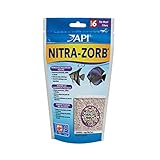 API Nitra-ZorbRechargeable resin pouchCanister filters, freshwaterResin pouchFreshwater$16.38 Prime
Evidence: owner reports, no independent test
 Seachem PurigenOrganic-waste adsorbentOrganics, tannin colorOrganic adsorbentFresh and salt$9.89 Prime
Evidence: one independent test (Aquarium Science, eight tanks fed 4 ppm nitrogen a day, read to 16 weeks) found no nitrate reduction with Purigen and reports it did not clarify the water; Seachem says it removes organic waste before it becomes nitrate
 Penn-Plax Nitrate Reducer PadCut-to-fit filter padBudget, cut to fitMineral-infused padFresh and salt$9.99 Prime
Evidence: maker specs only, no independent test
 Tetra EasyBalance PlusBacteria-feeding liquidKH and pH support, alongside weekly changesLiquidNot stated$13.87 Prime
Evidence: maker specs only, no independent test
 Kordon AmQuel PlusDetoxifying conditionerSmall volumes (drop dose), alongside water changesLiquid conditionerFresh and salt$14.09 Prime
Evidence: maker specs only, no independent test
How We Weighed These Nitrate Products
How this guide was built
built from manufacturer documentation, published third-party reviews and owner reports; we have not tested these products ourselves.
What we checked for each pick
- Remove, feed or bind: what it removes, feeds or binds, in its maker’s words.
- Conditions: dose per gallon, recharge and cautions as the maker or listing states them.
- Sold by Amazon: all five sold and shipped by Amazon.com in the default buy box on 2026-11-15, and named as the seller in Amazon’s product data at our stock check the same day.
The independent tests
The independent tests
Aquarium Science, a hobby site whose tests are not peer reviewed, fed eight tanks protein to add 4 ppm nitrogen a day and read nitrate for up to 16 weeks: “The testing showed no reduction in nitrates with Purigen.” Seachem says Purigen works on organic waste before it becomes nitrate; we report both.
What We Left Out and Why
Seachem de*Nitrate and Seachem Matrix are Seachem’s denitrifying biomedia. Seachem’s nitrate guide says de*Nitrate “absolutely must be used at a flow rate of 50 GPH or less” and that Matrix “works at any flow rate”. In a year-long Aquarium Science test of 12 liters of de*Nitrate per 40-gallon tank, in a canister and a very slow-flow filter with nitrate “kept very high, 120 to 240 ppm”, “The results showed no difference in the nitrate levels of the four tanks after one year or at any point in the year”. That is far above the 20 mg/L Seachem says to reach first; Aquarium Science says it used “the exact grades recommended to do anaerobic nitrate decomposition by the manufacturer” and argues higher nitrate speeds any denitrification. Matrix owner reports in the ranking FishLore thread (2016) and Reddit thread range from no nitrate after 6-8 weeks to “zero to a little at best”. Neither is a pick: for the two sizes we first picked, Amazon’s product data named a third-party seller while the page’s buy box still showed Amazon.com, and the other sizes we checked showed third-party sellers; our seller gate does not accept either. The FishLore thread’s Algone and Instant Ocean liquid also did not pass our Amazon check.
Detailed Reviews: The 5 Nitrate Removers
API Nitra-Zorb, Rechargeable resin pouch
Freshwater canister owners who will test and recharge on API's schedule.
$16.38 from AmazonAs of Nov 17, 17:11 UTCVerdict
A freshwater resin pouch you recharge in salt water, with owner reports of fast drops.
Evidence: No independent test; owner reports. FishLore owner thread: size 6 pouch (one owner, 2016).
API says the pouch “works to remove harmful toxins, such as ammonia, nitrate, and nitrite, from freshwater aquariums” and “Fits most canister filters on the market”; its listing says it is made of “natural and synthetic ion-exchange resins”. API says to “recharge every 5 days until nitrate is reduced to 20 ppm (mg/L) or less. Replace pouch after 2 months.” Each recharge is “4 tablespoons (80 g) of API AQUARIUM SALT in 8 oz. (240 ml) of warm tap water” for 2 hours; API publishes no tank size per pouch. A FishLore owner (2016) with a size 6 pouch wrote: “Pretty much instant nitrate removal. Within 24 hours I noticed a large difference.” Another said that, used wrongly, it “completely clouds your tank”. Aquarium Science argues from arithmetic, not a test, that most exchange resins do little; it does not name Nitra-Zorb.
Specs (linked: size 6 pouch)
- Type: resin pouch (API)
- Water: freshwater (API)
Pros
- Rechargeable resin with a written nitrate schedule, per API
Cons
- Recharging every 5 days until nitrate is 20 ppm (mg/L) or less, per API, and a new pouch after 2 months
- One owner found the pouch large for a hang-on filter; another reports clouding
Who should buy it
Freshwater canister owners who will test and recharge on API’s schedule.
Seachem Purigen, Organic-waste adsorbent
Keepers who want to adsorb dissolved organics and tannin color, alongside water changes.
$9.89 from AmazonAs of Nov 17, 17:11 UTCVerdict
Takes out organic waste before it becomes nitrate, by Seachem’s account.
Evidence: One independent test found no nitrate effect: Aquarium Science (hobby site, not peer reviewed) fed eight tanks 4 ppm nitrogen a day for up to 16 weeks and saw no nitrate reduction in the two with Purigen, and reports it did not clarify the water. Seachem says Purigen removes organic waste before it becomes nitrate. Aquarium Science: Purigen, size not stated.
Seachem says Purigen “controls ammonia, nitrites and nitrates by removing nitrogenous organic waste that would otherwise release these harmful compounds”; “Each 250 mL treats up to 1,000 L (250 US gallons) for up to six months”, so 100 mL covers about 100 gallons (our arithmetic), in a fine mesh bag. It darkens as it exhausts. Seachem’s regeneration is a multi-step bleach soak with its own cautions (unscented 8.25% household bleach, a non-metallic container, a well-ventilated area away from children, then a dechlorinator soak): follow Seachem’s page, and “Do not reuse if odor of bleach/chlorine is detectable.” Aquarium Science reports that its testing “showed Purigen did not remove nitrogenous compounds like nitrate nor did it clarify the water”, though it did remove “colors like tannic acid”.
Specs (linked: 100 mL)
- Type: synthetic adsorbent (Seachem)
- Water: fresh and salt (Seachem)
Pros
- Color change shows when it is spent, per Seachem
Cons
- Works on organics, not nitrate already in the water, by Seachem’s description
- Bleach regeneration has several steps and cautions, per Seachem
Who should buy it
Keepers who want to adsorb dissolved organics and tannin color, alongside water changes.
Penn-Plax Nitrate Reducer Pad, Cut-to-fit filter pad
Budget keepers who want a nitrate pad in their usual filter and will keep testing.
$9.99 from AmazonAs of Nov 17, 17:11 UTCVerdict
A budget pad you trim to your filter; the listing’s nitrate claim is modest.
Evidence: No independent test; maker specs. Source: Penn-Plax (Amazon listing text).
The listing calls these pads “infused with natural mineral powder”, made to be trimmed, for fresh and salt water and ponds. Its claim is that they “help to maintain nitrate levels, and clear up discolorations”; rinse first and “replace filter media every 4 – 6 weeks”. It names no mineral, capacity or tank size.
Specs (linked: 10 x 18 in pad)
- Type: mineral-infused filter pad (listing)
- Water: fresh, salt and ponds (listing)
Pros
- A pad you trim to fit your filter, per the listing
Cons
- “Maintain” is the claim; no capacity or tank size is published
Who should buy it
Budget keepers who want a nitrate pad in their usual filter and will keep testing.
Tetra EasyBalance Plus, Bacteria-feeding liquid
Keepers who want pH and KH support and will keep weekly water changes and good aeration.
$13.87 from AmazonAs of Nov 17, 17:11 UTCVerdict
A water-chemistry liquid whose Nitraban feeds denitrifying bacteria, per Tetra.
Evidence: No independent test; maker specs. Source: Tetra.
Tetra says it “reduces nitrates and phosphates”; its Nitraban “Serves as a nutrient for denitrifying bacteria”, and “On average the nitrate concentration will drop below 40mg/l.” Tetra claims it “reduces the need for water changes for up to 6 months”, but its page also says to “Change 50-75% of your aquarium’s water at least once every 6 months, provided EasyBalance PLUS has been added as recommended and the aquarium is otherwise properly maintained”, and TFH says “The minimum schedule should be weekly”; do not stretch changes on Tetra’s claim. Tetra’s page gives two doses (“Two teaspoons treat 5 gallons” and “5ml or 1 tsp” for 5 gallons) and says “Use weekly”; the Amazon listing says “One teaspoon treats 5 gallons”, “Use monthly” in one bullet and weekly elsewhere. Check the bottle’s own label. It “should not be used in aquariums with low oxygen conditions”.
Specs (linked: 16.9 oz bottle)
- Type: liquid with a bacteria nutrient (Tetra)
- Water: not stated on the page we read
Pros
- Also stabilizes pH and KH, per Tetra
Cons
- Tetra’s fewer-water-changes claim differs from TFH’s weekly minimum
- Two different doses on Tetra’s page; weekly and monthly in Tetra’s own text
Who should buy it
Keepers who want pH and KH support and will keep weekly water changes and good aeration.
Kordon AmQuel Plus, Detoxifying conditioner
Keepers who want a dechlorinator with a nitrate claim and will still change water.
$14.09 from AmazonAs of Nov 17, 17:11 UTCVerdict
A conditioner that claims to detoxify nitrate; the claim is Kordon’s alone.
Evidence: No independent test; maker specs. Source: Kordon.
Kordon says it “Detoxifies all forms of nitrites/nitrates”: “Now this can be done in a few minutes with AmQuel Plus.” It also claims it “greatly reduces the need for continual water changes”. No source here tests it on nitrate. Aquarium Science lists AmQuel Plus among products using sodium hydroxymethanesulfinate and says the ammonia claim for that chemical “is just marketing hype” (ammonia, not nitrate); writing about Prime and Seachem Safe, it says “there is no way to “detoxify” nitrate since it isn’t that toxic”. TFH and Aquarium Science both put water changes first. The dose is “one teaspoonful (5 ml) per 10 gallons” or “10 drops per gallon”, used “at least once a week for the entire water volume in regular use”. Seachem’s AmGuard FAQ says “Most conditioners that clear away chlorine and chloramine, products that detoxify ammonia and nitrite, as well as some medications will reduce oxygen levels in the tank”; Kordon’s page does not address oxygen levels.
Specs (linked: 16 oz bottle)
- Type: liquid detoxifier, also a dechlorinator (Kordon)
- Water: fresh and salt (Kordon)
Pros
- Drop dose for small volumes, per Kordon
Cons
- Its few-minutes nitrate claim is Kordon’s own; no source here tests it
Who should buy it
Keepers who want a dechlorinator with a nitrate claim and will still change water.
AmQuel Plus also appears in our water conditioner guide, judged as a dechlorinator.
Remove, Grow Bacteria or Bind: What Each Type Does
Resin (pick 1) removes nitrate from freshwater and is recharged in salt water, per API. TFH says “Nitrate-adsorbing filter media and anaerobic denitrifying biofilters will remove dissolved nitrate, but they will do nothing to eliminate the cause of the problem”; the biomedia we left out are such biofilters.
Seachem says Purigen (pick 2) works upstream, on organic waste before it becomes nitrate, and Penn-Plax’s listing says its pad (pick 3) helps “maintain” nitrate levels; neither gives a nitrate-removal figure. Liquids (picks 4 and 5) feed bacteria (Tetra) or detoxify (Kordon), by their makers’ accounts.
Binders do not remove nitrate: Seachem says Prime “does not remove ammonia, nitrite, or nitrate from the system” and binds them “for up to 48 hours”, after which “they are released back into the water” unless redosed. Prime is judged as a dechlorinator in our water conditioner guide.
Aqueon says “Some tap water sources are high in nitrate, so it is a good idea to test your tap water before using it.” Seachem’s guide says plants “should not be used as a replacement for water changes or good aquarium maintenance”. Related roundups cover phosphate removers and water clarifiers.
When Nitrate Is Already High
Test with a nitrate kit (see our test kit guide). For freshwater, Tetra, a test-kit maker, says “For most freshwater aquariums, nitrate values should remain below 50 mg/L”; as a general rule, Seachem’s guide says nitrate should not build up “far above around 40 mg/L regardless of the system”, and to research your fish’s sensitivity. Change water in steps: TFH says “going from polluted water to fresh, clean water can be just as harmful to your fish as the nitrates themselves”, so start small at very high readings. For causes, see why aquarium nitrate runs high. For sick fish, contact an aquatic veterinarian.
Frequently Asked Questions
Q. What is the simplest way to lower nitrates?
TFH calls a partial water change “the simplest solution”, and Aquarium Science calls water changes “The simplest and cheapest method of removing nitrates”. Use low-nitrate water and, at very high readings, start small (TFH); see changing fish tank water. Two FishLore owners (2016) reported drops within a day with Nitra-Zorb, an owner report, not a test.
Q. What water filter will remove nitrates?
For nitrate in tap water, TFH says to “use a water purifier such as a reverse-osmosis unit, or you’ll have to buy suitable water for your aquarium”; see our RO/DI roundup and best water for a fish tank.
Q. Can these be used in a saltwater tank?
API describes Nitra-Zorb for freshwater. Seachem (Purigen), Kordon and the Penn-Plax listing name fresh and salt water. Tetra’s page states no water type.
The bottom line
Final Verdict
Test and change water first. API Nitra-Zorb (check price) is the freshwater resin with owner reports of fast drops. Seachem Purigen (check price) takes out organic waste before it becomes nitrate, by Seachem’s account; one independent test found no nitrate effect. The Penn-Plax Nitrate Reducer Pad (check price) is the budget pad, with a modest “maintain” claim. The liquids detoxify or feed bacteria by their makers’ accounts. Binders such as Prime do not remove nitrate, per Seachem.
Product prices and availability are accurate as of the date/time indicated and are subject to change. Any price and availability information displayed on Amazon.com at the time of purchase will apply to the purchase of this product.
