The short answer
The plant-store lists and guppy threads we read name these ten most: guppy grass, java moss, water sprite, hornwort, Amazon frogbit, vallisneria, Amazon sword, Cryptocoryne wendtii, java fern and anubias nana. Tropica, a plant grower, rates all but water sprite easy. Stores and owners single out fine-leaved plants and floaters for fry.
Tropica grows plants; Buce Plant and Aquarium Co-Op sell them, so their fry lines are store opinions. Aqua-Fish.net is an information site, FishBase a fish database. Where sources disagree, both are shown.
What Guppies Need From a Plant
- Hiding places for fry. Aquarium Co-Op says guppies “will predate on their own young unless you provide lots of hiding spots for the fry.”
- Harder, alkaline water. FishBase gives guppies “pH range: 7.0 – 8.0; dH range: 9 – 19”; Co-Op says they “enjoy pH levels at 7.0 or greater” and “like hard water”. Buce Plant’s ranges for six of these plants stop at pH 7.5, so each entry below gives the stated range.
- Warmth. Co-Op recommends a heater to keep the water “at 76 to 78°F”; FishBase gives 18-28 °C (about 64-82 °F, our conversion). Entries with no temperature are plants whose sources here state none.
The 10 Plants at a Glance
| Plant | Light need (Tropica) | Growth rate (Tropica) | Placement | Guppy role |
|---|---|---|---|---|
| Guppy grass | Not rated; medium (Aqua-Fish.net) | Fast (Tropica’s text) | Floating or rooted | Fry cover |
| Java moss | Low | Medium | On wood or stone | Fry cover |
| Water sprite | Medium | Fast | Floating or rooted | Fry cover |
| Hornwort | Low | Fast | Floating | Fry cover |
| Amazon frogbit | Low | Medium | Surface | Root cover |
| Vallisneria | Low (‘Tiger’) | Fast | Background | Tall cover |
| Amazon sword | Low | Fast | Background | Large-tank cover |
| Crypt wendtii | Low | Medium | Midground | Rooted cover |
| Java fern | Low | Slow | On wood or stone | Leafy cover |
| Anubias nana | Low | Slow | On wood or stone | Leafy cover |
Tropica rates CO2 need low for all nine plants it scores.
Plants That Make Fry Cover
Guppy grass (Najas guadalupensis)
- Light and CO2: Tropica gives no rating; Aqua-Fish.net says “Medium lighting is sufficient” and “It does not require CO2 injection”.
- Growth, placement, difficulty: fast, floating or rooted, easy (Tropica, Aqua-Fish.net).
- Water: Aqua-Fish.net gives “a pH range of 6.0 to 7.0 and water hardness from 2 – 10°N”, softer than guppy water; Tropica says it “thrives under almost any conditions”.
- For guppies: Co-Op calls it “nearly impenetrable by adult fish” but “not as suitable for high flow tanks”. On r/Guppies, one keeper who uses it warns: “It does grow really quickly, so make sure to keep on top of trimming it.”
Java moss (Taxiphyllum barbieri)
- Light, CO2, growth, difficulty: low, low, medium, easy (Tropica, which sells it as ‘Bogor Moss’, “Commonly named Java moss”).
- Placement: on wood or stone (Tropica) (how to plant java moss).
- Water: Buce Plant, selling Vesicularia dubyana as java moss: “pH 6.0–8.0 | Temperature 65°F–78°F”. Co-Op’s 76-78°F guppy range sits at its top.
- For guppies: Tropica: “In breeding aquariums Taxiphyllum barbieri is a wonderful hiding place for the young fish.” Co-Op’s guppy guide says it “provides excellent cover for babies to escape being eaten by bigger fish.”
Water sprite (Ceratopteris thalictroides)
- Light and CO2: medium (Tropica), which adds “the addition of CO2 may be necessary to promote growth”; low to medium (Buce Plant).
- Growth, difficulty: fast, medium (Tropica).
- Placement: rooted or floating (Co-Op).
- Water: “pH: 6.5-7.5” (Buce Plant, which sells it as Ceratopteris siliquosa).
- For guppies: Co-Op says planted sprite has “fine, lacy leaves for small fish and shrimp to seek shelter”. An Endler keeper on r/Guppies: “You’ll want adequate lighting for water sprite”.
Hornwort (Ceratophyllum demersum)
- Light and CO2: low (Tropica); “Medium to High (Adaptable to Low Light)”, CO2 not required (Buce Plant).
- Growth, difficulty: fast, easy (Tropica).
- Placement: floating or weighted; Buce Plant warns “buried portions will decay” (how to plant hornwort).
- Water: “pH 6.5–7.5 (Tolerates broad ranges)” (Buce Plant).
- For guppies: Buce Plant says it gives “fry, shrimplets, and shy tankmates a place to hide out”. In an r/Guppies fry thread, one commenter wrote “Horn Wort is the bomb!”
At the Surface
Amazon frogbit (Limnobium laevigatum)
- Light, CO2, growth, difficulty: low, low, medium, easy (Tropica).
- Placement: the surface.
- For guppies: Co-Op: “Floating plants with long, shaggy roots are excellent for concealing eggs, newborn fish, and other small creatures.” It adds: “make sure not to let them cover the entire water surface or else they may out-shade the plants below and reduce the amount of dissolved oxygen in the water.”
Check your state first: Washington’s weed board says it is “prohibited to transport, buy, sell, offer for sale, or distribute” this plant there. More floaters are in our floating plants roundup.
Rooted Plants for the Back and Middle
Buce Plant calls crypts and vallisneria “heavy root feeders” and gives the sword “ideally a nutrient-rich substrate”; our root tabs roundup covers feeding them.
Vallisneria (Vallisneria spiralis)
- Light and CO2: low for ‘Tiger’, “growing in virtually all light and water conditions” (Tropica); “Moderate to High”, CO2 “Recommended (Optional)” (Buce Plant).
- Growth, placement: fast, background (both). Difficulty: easy (Tropica); easy to moderate (Buce Plant).
- Water: “pH 6.0–7.5” (Buce Plant).
- For guppies: Co-Op says it can grow until it “drapes over the top of the water, making a protective covering for fish to feel secure.”
Amazon sword (Echinodorus ‘Bleherae’, sold as E. bleheri)
- Light and CO2: low (Tropica, which says it “does well even in poorly illuminated aquariums”); moderate (Buce Plant).
- Growth, placement, difficulty: fast, background, easy (both).
- Size: Buce Plant calls it “a great addition to larger sized breeding tanks”; Tropica says it “needs pruning to prevent it depriving plants underneath of light” (how to plant an Amazon sword).
- Water: “pH 6.5–7.5” (Buce Plant).
- For guppies: Buce Plant says that once grown, its “dense foliage” “makes great cover for fry to hide in”. One owner: “I have had an Amazon sword that has fully grown and filled my guppy tank for years.”
Cryptocoryne wendtii ‘Green’
- Light, CO2, growth, difficulty: low, low, medium, easy (Tropica); Buce Plant: low to medium light, slow to moderate growth.
- Placement: midground (Tropica).
- Water: Tropica: “it also grows well in hard water”; Buce Plant: “pH 6.0–7.5 | Temperature 72°F–82°F”.
- For guppies: Buce Plant, of crypts in general: their “leaves provide plenty of coverage for both small fry and adult fish to hide in.”
Plants for Wood and Stone
Java fern (Microsorum pteropus)
- Light, CO2, growth, difficulty: low, low, slow, easy (Tropica); low to medium light (Buce Plant).
- Placement: on wood or stone; Tropica: “do not cover the rhizome because it will rot” (how to plant java fern).
- Water: Tropica: “A hardy plant that grows in all conditions.” Buce Plant: “pH 6.0–7.8 | Temperature 68°F–82°F”.
- For guppies: Buce Plant: “Their large leaves can provide shelter for fish fry”.
Anubias nana (Anubias barteri var. nana)
- Light, CO2, growth, difficulty: low, low, slow, easy (Tropica); low to moderate light (Buce Plant).
- Placement: on wood or stone (how to plant anubias).
- Water: Tropica says it “thrives in all conditions”; Buce Plant: “pH 6.0–7.5 | Temperature 68°F–82°F”.
- For guppies: Buce Plant, of anubias: “They provide a lot of cover for fry”. Tropica: “It is not eaten by herbivorous fish.”
Light, Substrate and Fertilizer
From our roundups:
- Light: the Fluval Plant 4.0, 32W, which Fluval sizes for 23- to 35-inch tanks (aquarium light roundup; more in our planted aquarium light roundup).
- Substrate: Seachem Flourite Black, a “stable porous clay gravel” that Seachem says “will not alter the pH of the water” (substrate roundup). The same roundup quotes Fluval saying its Stratum soil supports “a neutral to slightly acidic pH”; Co-Op says guppies enjoy 7.0 or greater.
- Fertilizer: Aqueon Plant Food, which Aqueon says “provides essential macro and micro nutrients for lush freshwater plant growth” (fertilizer roundup). Co-Op says water sprite, like most stem plants, “prefers feeding from the water column”.
No source read names these three products for guppies; the descriptions are the makers’.
| # | Preview | Product | Price | Link |
|---|---|---|---|---|
| 1 |  | Fluval Plant 4.0 LED, 32 Watts, 23-35 Inches | Bring out…Fluval Plant 4.0, 32W | $179.99 Prime | Check on Amazon |
| 2 |  | Seachem Flourite Black 3.5 kg / 7.7 lbsSeachem Flourite Black, 7.7 lb | $21.75 Prime | Check on Amazon |
| 3 | 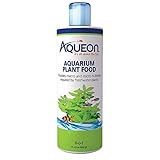 | Aqueon Fish Tank Aquarium Plant Food, 17.4 oz | Liquid…Aqueon Plant Food, 17.4 oz | $10.15 Prime | Check on Amazon |
Ready to buy?
See our beginner plants roundup for more easy species, our betta plants guide for a betta tank, and the Substrate, Plants & Decor section for the rest.
Frequently Asked Questions
Q. Do guppies need plants?
FishBase says wild guppies need “quiet vegetated water for survival”. Co-Op says breeders should provide “lots of cover (such as live aquarium plants)”.
Q. Which plant is best for guppy fry?
No source ranks one first. Java moss, guppy grass and hornwort are the most named in the two r/Guppies threads read; one reply: “Floating plants are also great, since the fry can hide in the roots.”
Q. What should I not add to a guppy tank?
Co-Op says to “avoid adding any aggressive fish that may nip their fins or eat them”. For plants, one r/Guppies commenter warns: “don’t get duckweed unless you want to have it for life.” Habitattitude says to “choose species that are not considered invasive in your state”.
Sources (7)
- Tropica: Najas guadalupensis, Taxiphyllum barbieri, Ceratopteris thalictroides, Ceratophyllum demersum, Limnobium laevigatum, Vallisneria spiralis ‘Tiger’, Echinodorus ‘Bleherae’, Cryptocoryne wendtii ‘Green’, Microsorum pteropus, Anubias nana
- Buce Plant: plants for breeding fish, java moss, water sprite, hornwort, vallisneria, Amazon sword, Crypt wendtii, java fern, anubias nana
- Aquarium Co-Op: plants for breeding fish, guppy care guide
- Aqua-Fish.net: Najas guadaloupensis; FishBase: Poecilia reticulata
- r/Guppies: plants for nitrates and guppy babies, plants for guppy fry
- Washington Noxious Weed Control Board: South American spongeplant; Habitattitude
- Makers: Seachem Flourite Black, Aqueon Plant Foods
Product prices and availability are accurate as of the date/time indicated and are subject to change. Any price and availability information displayed on Amazon.com at the time of purchase will apply to the purchase of this product.