The short answer
Aquarium Co-Op, a retailer, picks foreground plants that “stay roughly 3 inches (7.6 cm) or less in height”. The sources below name Cryptocoryne parva, dwarf sagittaria, pygmy chain sword, dwarf hairgrass, Marsilea and Staurogyne for the substrate, and Anubias ‘Petite’ and Bucephalandra for stone or wood. Tropica, a grower, rates all but the crypt easy.
Co-Op’s rule of thumb is to “plan out the aquarium in layers from front to back, such that the shortest plants are in the foreground and the tallest plants are in the background.” Its carpeting picks, dwarf baby tears and Monte Carlo, are left out here.
How to read the care fields
Tropica (T), a Danish aquarium-plant grower, gives difficulty, placement, light, CO2, growth rate and height per plant; its table heights often differ from its own text. Buce Plant (BP), a plant retailer, gives the same fields and calls them “general guidelines only”. Aquarium Co-Op is a retailer; Planted Box (PB) is a Belgian fertilizer and CO2 shop’s blog (2019, updated June 2026); Marcus Fish Tanks sells plants (July 2026). Pages read November 16, 2026; inch conversions are ours.
At a glance
| Plant (each source’s name) | Light need | CO2 need |
|---|---|---|
| Cryptocoryne parva | T medium; BP low-medium; Co-Op low | T low; BP optional (recommended) |
| Dwarf sagittaria (Sagittaria subulata) | T low; BP moderate | T medium; BP optional |
| Pygmy chain sword (T Helanthium tenellum ‘Green’; BP H. tenellum; PB Echinodorus tenellus) | T low; BP moderate-high | T low; BP not required (recommended) |
| Dwarf hairgrass (T, Co-Op, PB Eleocharis acicularis; BP E. parvula) | T low; BP low-high | T low; BP not required (recommended) |
| Marsilea hirsuta | T low; BP medium-high | T low; BP optional |
| Staurogyne repens | T low; BP medium-high; Co-Op medium-high “to keep it shorter” | T low; BP recommended |
| Anubias ‘Petite’ (T A. barteri ‘Petite’; BP A. barteri var. nana ‘Petite’) | T low; BP low | T low; BP not required |
| Bucephalandra (T ‘Bukit Kelam’; BP ‘Mini Coin’, ‘Lamandau’) | T low; BP low-medium | T low; BP not required |
| Plant | Difficulty | Growth rate |
|---|---|---|
| Cryptocoryne parva | T medium; BP easy; PB “relatively easy” | T, BP slow; PB “very slowly” |
| Dwarf sagittaria | T, BP easy | T, BP fast |
| Pygmy chain sword | T, PB easy; BP easy-moderate | T, PB slow; BP moderate-fast |
| Dwarf hairgrass | T, BP easy | T medium; BP moderate-fast; PB “fast-growing” |
| Marsilea hirsuta | T, BP easy | T medium (text “spreads rapidly”); BP slow-moderate (text says slow and quick) |
| Staurogyne repens | T easy; BP medium | T medium; BP moderate-fast |
| Anubias ‘Petite’ | T, BP easy | T, BP slow |
| Bucephalandra | T, BP easy | T, BP slow |
| Plant | Height (T table; T text; BP) | Placement |
|---|---|---|
| Cryptocoryne parva | 2-4+ in; 1-2.5 in; BP mini 1-3 in | T foreground; BP foreground, midground |
| Dwarf sagittaria | 2-12+ in; up to 20 in “in certain conditions”; 4-12 in | T field midground, text foreground; BP both; Marcus foreground in small tanks, midground in large |
| Pygmy chain sword | 2-6+ in; 2-4 in; 2-3 in | T foreground; BP foreground, “Midground Accent (Nano tanks)”; Co-Op medium to large tanks |
| Dwarf hairgrass | 4-6+ in; 2.5-6 in; 1-2 in | T, BP foreground |
| Marsilea hirsuta | 2-8+ in; 1-4 in; 1-2 in | T, BP foreground |
| Staurogyne repens | 1-4+ in; 2-4 in; 1-3+ in | T foreground; BP foreground, midground |
| Anubias ‘Petite’ | 1-2+ in; under 2 in; 1-3 in | T wood and stone; BP foreground |
| Bucephalandra | 2-4+ in; no height; 0.5-1.5 in (‘Mini Coin’), 1-2.5 in (‘Lamandau’) | T wood and stone; BP foreground detail |
Rosettes and grass-like plants in the substrate
- Cryptocoryne parva
- Light need: medium (T: it “needs more light than most other Cryptocorynes”); low to medium (BP: “under almost any light level”); Co-Op says it (with C. lucens) does “well in low light conditions”.
- CO2 need: low (T); “Optional (Recommended to accelerate carpeting speed)” (BP).
- Growth rate: slow (T, BP); Planted Box: “it grows very slowly”.
- Placement: foreground (T: “it must never be overshadowed by other plants”); foreground carpet or midground accent (BP).
- Difficulty: medium (T); easy (BP); Planted Box says crypts are “relatively easy” and “parva is no exception”.
- Height: about 2-4+ in (5-10 cm, T’s table), “only 3-6 cm tall” (T’s text); BP’s mini listing: “1 to 3 inches”.
- Dwarf sagittaria (Sagittaria subulata)
- Light need: low (T); moderate (BP, which says “lower light encourages it to grow taller toward the surface”).
- CO2 need: medium (T); optional (BP).
- Growth rate: fast (T, BP).
- Placement: Tropica’s field says “Midground aquarium plant”; its text, “an ideal, undemanding foreground plant”. Marcus Fish Tanks: “In smaller tanks, it often stays compact enough for the foreground, while in larger aquariums it can also be used in the midground.”
- Difficulty: easy (T, BP).
- Height: about 2-12+ in (5-30 cm, T’s table); T’s text says it “suddenly grows to a height of 50 cm” in some conditions; 4-12 in (BP).
Buce Plant also sells Sagittaria pusilla, “commonly known as Arrowhead”; S. pusilla is a different species from the dwarf sagittaria above, and the federal list below uses “arrowhead” for a third.
- Pygmy chain sword (Helanthium tenellum)
Tropica’s ‘Green’ was “Previously named Echinodorus tenellus ‘Green'”; Planted Box writes Echinodorus tenellus; Buce Plant gives “syn. Echinodorus tenellus”.
- Light need: low (T); moderate to high (BP).
- CO2 need: low (T); “Not required (Recommended for fast spreading)” (BP).
- Growth rate: slow (T, PB); moderate to fast (BP); Co-Op: it “can fill in the substrate pretty quickly”.
- Placement: foreground (T, BP); Co-Op says it “may be more appropriate as a foreground plant for medium to large aquariums”.
- Difficulty: easy (T, PB); easy to moderate (BP).
- Height: about 2-6+ in (5-15 cm, T’s table), a “5-10 cm high carpet” (T’s text); 2-3 in (BP).
- Dwarf hairgrass (Eleocharis)
Co-Op names dwarf hairgrass Eleocharis acicularis, which Planted Box says is also called “needle grass”. Buce Plant’s “Dwarf Hairgrass” is Eleocharis parvula. Each field is the source’s own plant.
- Light need: low (T); “Low to High (Medium-High preferred)” (BP); for grass-like plants Co-Op suggests “a medium to high light to keep the lawn denser and shorter”.
- CO2 need: low (T); “Not Required (Recommended for faster carpet growth)” (BP).
- Growth rate: medium (T); moderate to fast (BP); Planted Box lists it under “Fast-growing aquarium foreground plants”.
- Placement: foreground (T, BP); Tropica: “An open space without shading from other plants is still preferable.” Marcus says it “works well in both nano aquariums and larger aquascapes”.
- Difficulty: easy (T, BP).
- Height: about 4-6+ in (10-15 cm, T’s table), “6-15 cm” (T’s text); 1-2 in (BP).
- Marsilea hirsuta
Tropica says it is “usually delivered with leaves like a four-leaf clover”; Buce Plant’s common names include “Dwarf Four-Leaf Clover”.
- Light need: low (T); medium to high (BP).
- CO2 need: low (T); optional (BP).
- Growth rate: medium (T’s table; its text: “spreads rapidly”); slow to moderate (BP’s field). Buce Plant’s text says both “It is a slow-growing carpeting plant” and “it grows quickly and requires regular pruning”.
- Placement: foreground (T, BP). Difficulty: easy (T, BP).
- Height: about 2-8+ in (5-20 cm, T’s table), leaves “from 2-10 cm” (T’s text); 1-2 in (BP).
A stem plant
- Staurogyne repens
- Light need: low (T); medium to high (BP); Co-Op says to “give it medium to high light to keep it shorter and more compact”.
- CO2 need: low (T); “Recommended (Essential for compact carpet growth)” (BP).
- Growth rate: medium (T); moderate to fast (BP).
- Placement: foreground (T); foreground carpet or midground border (BP).
- Difficulty: easy (T); medium (BP).
- Height: about 1-4+ in (3-10 cm, T’s table), “5-10 cm” (T’s text); 1-3+ in (BP).
Epiphytes for stone and wood
- Anubias ‘Petite’
Tropica titles its page Anubias barteri ‘Petite’ and says “Anubias sp. ‘Petite’ is a mutation which appeared in cultivation”; Buce Plant lists Anubias barteri var. nana ‘Petite’.
- Light need: low (T, BP); Tropica says it “does not appreciate high light intensity”.
- CO2 need: low (T); “Not Required (Beneficial)” (BP).
- Growth rate: slow (T, BP).
- Placement: “Plants for wood and stone” (T, which calls it “An ideal plant for miniature landscapes in small aquariums”); foreground or nano hardscape (BP).
- Difficulty: easy (T, BP).
- Height: about 1-2+ in (3-5 cm, T’s table), “less than 5 cm tall” (T’s text); 1-3 in (BP).
- Bucephalandra
Tropica’s page is titled Bucephalandra pygmaea ‘Bukit Kelam’, but its text describes “Bucephalandra ‘Wavy Green'”; Co-Op names a “green wavy” bucephalandra. Buce Plant’s ‘Mini Coin’ and ‘Lamandau’ are trade names listed as “Bucephalandra sp.”, with no species.
- Light need: low (T, which says it “prefers lower light levels”); low to medium (BP).
- CO2 need: low (T); not required (BP).
- Growth rate: slow (T, BP).
- Placement: “Plants for wood and stone” (T); “Foreground Detail” among other uses (BP), which calls ‘Mini Coin’ “an excellent choice for nano tanks”.
- Difficulty: easy (T); “Beginner / Easy (Low-Tech Compatible)” (BP).
- Height: about 2-4+ in (5-10 cm, T’s table); ‘Mini Coin’ 0.5-1.5 in, ‘Lamandau’ 1-2.5 in (BP).
State and federal lists
Lists read November 16, 2026:
- Federal. 7 CFR 360.200 (2024 edition) lists “SAGITTARIA SAGITTIFOLIA LINNAEUS (ARROWHEAD)” as a noxious weed. None of the eight plants on this page, S. subulata and S. pusilla included, is on it (our reading); the listed species is a different one.
- Texas. Texas Parks and Wildlife lists no species from these genera among its prohibited aquatic plants (our reading). Of listed species it says: “No person may possess or place them into water of this state except as authorized by the department.”
- Florida. Rule 5B-64.011 (Cornell LII copy, last amended 6-13-93) names none of them (our reading, checked against the older names above, since “the prohibited status also applies to any synonyms”).
Soil, light and a liquid fertilizer
Co-Op says to feed crypts “by using enriched substrate or root tab fertilizer”, and for Staurogyne to “Dose an all-in-one liquid fertilizer”. From our roundups:
- Soil: Fluval Stratum; Fluval’s FAQ says it “has the potential to slightly increase ammonia levels” and “regular KH testing is recommended” (planted substrate roundup).
- Light: the Fluval Plant 4.0 Nano, a 20-watt light for rimless tanks 4.5-8 inches across; its manual says “Not for use on aquariums with top frames” (planted aquarium light roundup).
- Liquid fertilizer: Seachem Flourish, which Seachem says “Does not contain significant levels of nitrogen or phosphorus”, and Co-Op does not say what its all-in-one contains; our roundup lists Flourish as a trace-element base (plant fertilizer roundup).
None of the plant sources above names these three products or says any of them suits foreground plants; the cards show what our roundups verified (seller, stock, maker specs).
| # | Preview | Product | Price | Link |
|---|---|---|---|---|
| 1 |  | Fluval Plant 4.0 LED Nano, 20 Watts, 5.7 Inches | Bring out…Nano light | $106.99 Prime | Check on Amazon |
| 2 |  | Seachem Flourish Freshwater Plant SupplementLiquid fertilizer | $16.99 Prime | Check on Amazon |
| 3 | 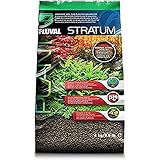 | Fluval Plant and Shrimp Stratum Aquarium Substrate – 8.8 lb…Planted soil | $16.99 Prime | Check on Amazon |
Ready to buy?
Our Substrate, Plants & Decor section gathers soils and plant guides; for easy plants beyond the foreground, see easy plants for beginners.
Frequently Asked Questions
Q. Which foreground plants need no CO2?
Tropica rates CO2 low for all of these but dwarf sagittaria (medium). Buce Plant’s field starts “Recommended” only for Staurogyne; for crypt parva, pygmy chain sword and dwarf hairgrass it says optional or not required, then adds “Recommended” in parentheses for faster growth. Planted Box says its easy picks “often do fine with much less CO2”.
Q. Do foreground plants spread?
Co-Op says grass-like plants “can spread rapidly by producing horizontal stolons”; Tropica says Staurogyne’s new shoots “gradually colonize the gravel”.
Q. What is the golden rule in aquascaping?
No source read here uses that phrase; Planted Box describes a “golden triangle” that “needs to stay in balance for healthy aquarium plant growth”.
Q. What if fish uproot foreground plants?
For epiphytes, Co-Op says: “If your fish keep uprooting it, try gluing the roots to a small rock and then push the rock into the substrate to keep it anchored.”
Sources (8)
- Tropica (grower): Cryptocoryne parva, Sagittaria subulata, Helanthium tenellum ‘Green’, Eleocharis acicularis, Marsilea hirsuta, Staurogyne repens, Anubias barteri ‘Petite’, Bucephalandra pygmaea ‘Bukit Kelam’
- Buce Plant (retailer): Cryptocoryne parva, Cryptocoryne parva mini, Sagittaria subulata, Sagittaria pusilla, Helanthium tenellum, Dwarf hair grass, Marsilea hirsuta, Staurogyne repens, Anubias nana ‘Petite’, Bucephalandra ‘Mini Coin’, Bucephalandra ‘Lamandau’
- Aquarium Co-Op (retailer), 7 best foreground plants
- Planted Box (fertilizer and CO2 shop blog), best aquarium foreground plants
- Marcus Fish Tanks (plant seller), best foreground aquarium plants
- 7 CFR 360.200, 2024
- Texas Parks and Wildlife, prohibited aquatic species
- Fla. Admin. Code R. 5B-64.011, Prohibited Aquatic Plants
Product prices and availability are accurate as of the date/time indicated and are subject to change. Any price and availability information displayed on Amazon.com at the time of purchase will apply to the purchase of this product.