The short answer
For a fine sand, Aqua Natural Oolitic Aragonite (0.4-0.9 mm, per its Amazon listing); for a small tank and a small bag, Seachem Pearl Beach (7.7 lb; Seachem’s page and Amazon listing give no grain size); for a nano reef or a refugium, Brightwell KoraLagoon (a mixed-grade aragonite that its listing says should sit no deeper than 2 inches).
Our verdict
Our Top Picks at a Glance
This guide picks three aragonite sands for saltwater and reef tanks, none sold with a live-bacteria claim (we group them as dry; only Seachem says so outright), and sets out what each maker states about grain size, buffering, depth and rinsing: a fine oolitic sand in a 20 lb bag, a Seachem aragonite in a 7.7 lb bag, and a mixed-grade lagoon substrate that Brightwell aims at nano reefs and refugia.
Why only three: we kept sands sold by Amazon.com itself (checked November 16, 2026), one per role. Among the marine sands we found, CaribSea’s Arag-Alive, Special Grade and Ocean Direct sands were offered by third-party sellers or out of stock, and CaribSea publishes no list price we could check them against; Nature’s Ocean’s live sands and Seachem’s Meridian were out of stock. So there is no live sand here; the section on live and dry sand below sets out what each side claims. For the rest of the build, see saltwater and reef gear, reef salt mixes and crabs for a saltwater tank.
Compare the picks
Compare the 3 saltwater sands
Type, grain size, bag and buffering wording as the maker or the Amazon listing states them. “Not published”: no millimeter figure from the maker or the listing. Two listings carry a weight field that disagrees with the bag size in their title; both figures are shown.
3 of 3 sands
| Sand | Best for | Grain / bag | Grain size | Price | Specs |
|---|---|---|---|---|---|
Oolitic AragoniteFine oolitic, 0.4-0.9 mm | Fine sandReef tanksRefugiums | 0.4-0.9 mm20 lb | 0.4-0.9 mm (listing; "can vary slightly") | Check current price | |
No independent test; the specs are Pisces’ text on the Amazon listing, not confirmed on a Pisces page. | |||||
Pearl BeachDry aragonite, small bag | Small tanks (per Reef Builders2014)MarineReef | Grain not published7.7 lb | Grain not published (Reef Builders, 2014: "small grade") | Check current price | |
Seachem publishes no grain size, and the listing's weight field says 16 ounces against the 7.7 lb title. | |||||
KoraLagoonNano reef and refugium | Nano reefRefugiumSeagrass | Grain not published1.4 kg | Grain not published (a "blend" of grades) | Check current price | |
No independent test; the pH, composition and depth claims are on the Amazon listing, not Brightwell’s page. | |||||
$ = entry level, $$ = mid-range, $$$ = premium, relative to the sands in this guide, by price per pound at the Amazon prices we saw on 2026-11-16.
Live or Dry, Fine or Coarse: What the Sources Say
Live versus dry. CaribSea says its Arag-Alive live sand “contains millions of live bacteria to cycle super fast” and that “independent labs prove Arag-Alive!™ cycles days faster than other brands of live sand” (CaribSea). Seachem, which sells Pearl Beach dry, says “wet” sands “are marketed to give one the impression that they contain living, microscopic animals when in fact they only contain common bacteria”, and that anyone who wants a shorter cycle should use “a product designed for that particular purpose”, naming its own Stability (Seachem). Simplicity Aquatics, a store that sells reef equipment, lists the dry-sand trade-offs as “Takes longer to cycle an aquarium” and “Can make the tank cloudy even if rinsed” (Simplicity Aquatics). One reef2reef owner who uses Special Grade dry (February 2022) puts the dry case bluntly: “I never trust the live is actually live and I rinse a lot so no need to waste the money on live.” For cycling a new tank either way, see how to cycle a fish tank.
Grain size and flow. Bulk Reef Supply (BRS), a store that sells these sands, says CaribSea’s oolite “is a fine-grain sand that is the ideal size for sand-sifting fish and invertebrates”, but “the small size can be troublesome in areas of high flow”, and calls 1-2 mm “the absolute smallest size you would want to use in high-flow SPS aquariums” (BRS). Simplicity Aquatics warns: “Small grain sizes of 2 millimeters or less on average, and you risk blowing sand all over the tank”; suspended sand, it says, can “damage powerheads, return pumps, and skimmer pumps”. A 36-gallon owner on r/ReefTank (January 2024, a month into setup) found a fine live sand (CaribSea Bermuda; a first-time keeper, and a reply blamed silt or filter output) “so fine that I could never stop sand blowing”. Two of the three picks publish no grain size, and the one that does, 0.4-0.9 mm, is the fine kind BRS and Simplicity warn about in high flow.
Sand-dwelling fish. PodYourReef, a store that sells reef supplies, in an unsigned, undated post, advises a sand “similar to sugar-fine up to maybe 2 mm” for sand-sifting gobies, “at least 2 inches (5+ cm) of sand” for wrasses that bury themselves, and “at least about 4–6 inches of substrate” for jawfish (PodYourReef). None of the three makers names a sand-sifting or burrowing species for its sand.
Buffering claims. Pisces says its oolitic aragonite “Keeps pH at a stable 8.2”; Seachem says Pearl Beach “Helps prevent large pH declines”. PodYourReef’s view is that aragonite’s “buffering effect is minimal in practice” at reef pH and that sand will not “magically maintain your pH in the ideal range – you still need to manage water chemistry”. Given that, test pH and alkalinity rather than relying on the sand; see what KH is and why pH runs high.
How We Picked These Sands
How this guide was built
built from manufacturer documentation, store guides and owner reports; we have not tested these products ourselves.
Our criteria for saltwater sand, in order
- Marine fit: the maker names marine or reef aquaria for the sand.
- Material and grain: aragonite, with a stated grain size where one is published.
- Buffering and chemistry wording: each maker’s claim, quoted, with the counter-view.
- Setup directions: rinsing, filling and depth guidance from the maker.
- Seller and value: sold by Amazon.com, with a relative tier by price per pound.
Where the claims come from
Where the claims come from
Specs come from Pisces USA’s, Seachem’s and Brightwell’s pages and from the makers’ text on the Amazon listings, read on November 16, 2026. We found no independent review of any of the three among the pages we read. The guides we quote from BRS, Simplicity Aquatics and PodYourReef are stores’ articles, and we label them as such; Reef Builders is an aquarium news site. Only Seachem says outright that its sand is sold dry; Pisces and Brightwell make no live-bacteria claim on their pages or listings, so we group all three as dry on that reading. Owner comments come from reef2reef and Reddit. Amazon’s AI-generated review summary is not a test, and we date it.
Detailed Reviews: The 3 Saltwater Sands
Aqua Natural Oolitic Aragonite, Fine oolitic, 0.4-0.9 mm

Reef and marine fish tanks that want a fine sand and do not run high flow (our reading of BRS and Simplicity), with an owner who can rinse and fill it slowly.
$25.19 from AmazonAs of Nov 19, 20:20 UTCVerdict
A fine Bahamian aragonite with a stated 0.4-0.9 mm grain, sold in a 20 lb bag; the grain size is the listing’s, not confirmed on a Pisces page.
Evidence: No independent test; maker text on the Amazon listing only. Source: Pisces’ Amazon listing text.
Pisces USA’s Amazon listing for Aqua Natural Oolitic Aragonite says “Sizing of Ooids is 0.4-0.9mm, this can vary slightly”, describes “98% pure calcium carbonate” collected in The Bahamas “with no harmful tar, organics or impurities”, and names “reef tanks, fish tanks, plenum systems and refugiums”. It claims the sand “Keeps pH at a stable 8.2” (see the counter-view above). Pisces’ own store page would not load when we checked, so the grain size rests on the listing.
The setup directions differ between sources. The listing calls it “a fine natural substrate” that may cloud the water at first, and says to “Place a plastic bag, plate, bowl, or similar item over the sand and pour water onto that surface”; it does not mention rinsing. The Pisces text on BRS’s product page (BRS is a store) says to “Rinse well in a bucket using clean water” until the overflow turns “from a milky to light cloudy appearance”. Amazon’s AI summary (read November 16, 2026) says buyers find it “perfect for saltwater tanks” but report that it “requires extensive rinsing” and “mixed experiences with cloudiness”.
Pisces’ Coarse Aragonite listing on Amazon carries the same rinse-until-light-cloudy directions and gives no grain size, so it is not a separate pick.
Specs (linked: 20 lb bag)
- Type: oolitic aragonite; the listing makes no live-bacteria claim
- Grain size: 0.4-0.9 mm (listing)
- Buffering: “Keeps pH at a stable 8.2” (listing)
Pros
- A stated 0.4-0.9 mm oolitic grain (listing), the only millimeter figure among the three
- The lowest price per pound of the three at the prices we saw
- Pisces names reef tanks, plenums and refugiums
Cons
- Fine grain is the kind BRS and Simplicity warn can blow around in high flow
- Cloudiness and rinsing complaints in Amazon’s review summary; rinsing directions differ by source
Who should buy it
Reef and marine fish tanks that want a fine sand and do not run high flow (our reading of BRS and Simplicity), with an owner who can rinse and fill it slowly.
Seachem Pearl Beach, Dry aragonite, small bag

3.5 kg / 7.7 lb · Grain not published
Owners of small marine tanks who want a dry aragonite in a small bag; Reef Builders (2014) called the 7.7 lb bag "cut-to-fit" for smaller aquariums, and Seachem's calculator gives the bag count for your depth.
$14.56 from AmazonAs of Nov 19, 20:20 UTCVerdict
Seachem’s dry aragonite in a 7.7 lb bag, with no published grain size; the listing’s weight field says 16 ounces.
Evidence: No independent test; maker specs. Source: Seachem’s Pearl Beach page.
Seachem calls Pearl Beach “an all natural aragonite substrate for all types of marine, reef and tropical aquaria” that will “assist in stabilizing calcium and alkalinity while preventing large pH declines”. It is sold dry, and Seachem says the bag “contains 35% more gravel than a bag of wet gravel of equal weight”. Its page gives a mineral table (calcium 376,041 ppm, by the University of Georgia’s lab) and a project calculator for bag count, but no grain size. Reef Builders, an aquarium news site whose editor has worked in aquarium retail and whose page carries store links, called it “a small grade aragonite sand” in 2014 and said the 7.7 lb bags are “‘cut-to-fit’ for smaller aquariums”, each “about the footprint of a ten gallon aquarium”.
Seachem says to “rinse before use to remove any residual dust”, fill over a bowl, and that “Initial cloudiness is normal”, to be cleared with filter floss. The Amazon listing is titled 3.5 kg / 7.7 lb, while its weight field reads 16 ounces; we found no owner report of this sand in a marine tank.
Specs (linked: 3.5 kg / 7.7 lb bag)
- Type: natural aragonite, dry (Seachem)
- Grain size: not published (“small grade”, Reef Builders, 2014)
- Buffering: “Helps prevent large pH declines” (Seachem; see the counter-view above)
Pros
- Natural aragonite that Seachem names for marine and reef aquaria
- A 7.7 lb bag Reef Builders (2014) called “cut-to-fit” for smaller aquariums
- Seachem publishes a lab mineral table for it
Cons
- No grain size from Seachem, so its fit for flow or sand-sifters is unknown
- Listing weight field (16 ounces) disagrees with the 7.7 lb title
Who should buy it
Owners of small marine tanks who want a dry aragonite in a small bag; Reef Builders (2014) called the 7.7 lb bag “cut-to-fit” for smaller aquariums, and Seachem’s calculator gives the bag count for your depth.
Brightwell KoraLagoon, Nano reef and refugium
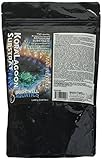
Nano-reef and refugium keepers who want a mixed-grade bed of 2 inches or less, need only a small amount, and keep no jawfish.
$21.66 from AmazonAs of Nov 19, 20:20 UTCVerdict
A mixed-grade aragonite that Brightwell aims at refugia and nano reefs, sold here only in its 1.4 kg bag; the listing’s weight field says 16 ounces.
Evidence: No independent test; maker page and Amazon listing text. Source: Brightwell’s KoraLagoon page.
Brightwell’s KoraLagoon page calls it a “High-purity Aragonite-based Refugium Substrate”, “A blend of high-purity aragonite particulate grades to simulate the natural substrate particle profile of tropical reef lagoons”, for “refugia, sea grass and macroalgae bed systems, mangrove systems” and “reef aquaria of all sizes (notably nano-reef systems)”. It lists 1400 g, 5.4 kg and 27 kg sizes; the 1.4 kg bag was the one sold by Amazon.com when we checked (the 5.4 kg listing had a third-party seller).
The Amazon listing adds claims that are not on Brightwell’s page: it “helps stabilize pH” and is “Over 30% calcium & 57% carbonate by dry weight”. Its directions say to “briefly rinse substrate in purified water” if desired and that “the total depth of substrate not exceed 2.0 in. (5.1 cm)”. The listing’s amount formula is cut off (“multiply the result by 0.05” with no first step), so we do not repeat it.
Specs (linked: 1.4 kg bag)
- Type: mixed-grade aragonite; no live-bacteria claim
- Grain size: not published
- Buffering: “helps stabilize pH” (listing only; see the counter-view above)
Pros
- Mixed aragonite grades Brightwell designs for lagoon-style beds and refugia
- A clear depth limit on the listing: 2 inches or less
- Brightwell names nano-reef systems
Cons
- Highest price per pound of the three at the prices we saw, in a bag of 1.4 kg
- Its 2 in cap is below PodYourReef’s “at least about 4–6 inches” for jawfish and level with its 2-inch minimum for burying wrasses
- No grain size; the pH claim is on the listing, not Brightwell’s page
Who should buy it
Nano-reef and refugium keepers who want a mixed-grade bed of 2 inches or less, need only a small amount, and keep no jawfish.
How Much Sand and How to Add It
Simplicity Aquatics’ chart suggests “50 Pounds for a 1.5-2” Sandbed” in a 55-gallon mixed reef and “100 Pounds for a 1.5-2” Sandbed” in a 120-gallon fish-only tank. Brightwell caps KoraLagoon at 2 inches; Seachem’s project calculator works out Pearl Beach bags from your depth and tank size.
Pisces and Seachem both say to fill gently: Pisces over a plate or bag, Seachem over a bowl. Expect some haze at first; Seachem says to clear it with mechanical filtration. BRS’s copy of Pisces’ text says to wait until “the water is clear enough to see the back of the aquarium” and the pH is stable “before adding fish and invertebrates”. On that advice, if cloudiness lasts or readings swing, test the water before adding livestock; see cloudy aquarium water and, later on, how to clean aquarium sand.
Frequently Asked Questions
Q. What type of sand is best for a saltwater aquarium?
BRS’s best-of list is mostly CaribSea aragonite and oolite sands (it also lists crushed coral and a volcanic black sand), Simplicity’s chart names CaribSea Arag-Alive live sand and Special Grade dry sand, and PodYourReef says “Aquarium-grade aragonite sand is tailored for reef use”. The grade then follows your flow and fish (see “Live or Dry, Fine or Coarse” above).
Q. Can I use play sand or Home Depot sand in a saltwater tank?
PodYourReef says silica sands “can be used (many people have done so successfully)”, but that “Experiments have shown that “silica” play sand can substantially raise dissolved silicate levels in saltwater”, which can feed diatom algae. It says “most play sand or construction sand is largely silica”.
Q. Should I add rock or sand to my reef tank first?
To prevent bare spots, BRS’s tip is to set foundation rock “flat side down, directly on the bottom panel of your aquarium, and then cover it with sand …”, so the rock sits on glass rather than on sand.
Q. Can I use kiln-dried sand in a saltwater aquarium?
None of the three makers says its sand is kiln-dried on the pages and listings we read. PodYourReef’s silicate caution above applies to any silica sand.
The bottom line
Final Verdict
Start with Aqua Natural Oolitic Aragonite (check price) for a fine sand with a stated 0.4-0.9 mm grain, if your flow is not high, Seachem Pearl Beach (check price) for a small marine tank (no grain size from Seachem; its listing’s weight field says 16 ounces), or Brightwell KoraLagoon (check price) for a nano reef or refugium bed kept to 2 inches or less (PodYourReef wants 4–6 inches for jawfish; 1.4 kg bag; its listing’s weight field also says 16 ounces). Rinse and fill each as its maker directs (Pisces’ Amazon listing and BRS’s copy of its text differ on rinsing; see review 1), and test the water before adding fish, as BRS’s copy of Pisces’ text advises.
Product prices and availability are accurate as of the date/time indicated and are subject to change. Any price and availability information displayed on Amazon.com at the time of purchase will apply to the purchase of this product.