My 90-Day Blackwater Aquarium Journey: Every Mistake, Every Lesson, Every Hard-Won Victory
I killed my first betta, Gerald, in an uncycled tank back in college. That failure haunted me for years. So when I decided to attempt my first blackwater aquarium setup, I was determined to do everything right. Spoiler alert: I still messed up. Multiple times. But here’s the thing about those mistakes. They taught me more than any perfectly curated YouTube tutorial ever could.
Most blackwater aquarium setup guides for beginners read like a checklist written by someone who’s never actually struggled with the process. “Add Indian almond leaves. Wait. Done!” If only it were that simple.
The reality? My first attempt resulted in a pH crash that stressed my ember tetras so badly I thought I’d lost them all. Attempt number two left me with water so murky I couldn’t even see the back of my 10-gallon tank.
What follows documents my actual 90-day journey, complete with the course corrections most writers conveniently skip. Because honestly? Knowing what can go wrong is just as valuable as knowing what should go right.
Understanding Your Starting Point: Testing Your Tap Water Before Buying Anything
Here’s where I made my first rookie mistake. I bought everything, from leaves to driftwood to botanicals, before I even tested my tap water. Turns out Portland water runs around 7.0 pH with relatively low hardness. Not bad! But if you’re working with liquid rock like some areas of Arizona or Texas, your approach needs to be completely different.
Before you spend a single dollar on blackwater supplies, grab a liquid test kit. Not strips. The liquid API Master Test Kit runs about $30 and will save you months of frustration.
Test for:
– pH (you’ll want to know your baseline)
– KH, which is carbonate hardness and honestly the most important measurement
– GH (general hardness)
Why does KH matter so much? High KH acts like a buffer, fighting against your attempts to lower pH. A friend of mine in San Diego has KH around 12, and she burned through Indian almond leaves for weeks before realizing she needed a different strategy entirely. understanding aquarium water chemistry
Write down your numbers. You’ll reference them constantly over the next three months.
Choosing Your Tannin Strategy: Indian Almond Leaves vs. Driftwood vs. DIY Extract
Your decision here depends entirely on those water parameters you just tested. Let me break down what I learned about the best tannin sources for blackwater tank setups.
Indian Almond Leaves (Catappa)
Great for soft water that already leans slightly acidic. They release tannins gradually and break down over 4 to 6 weeks. About one large leaf per 5 gallons works well for most setups. The downside? They can get slimy, and you’ll need to replace them regularly.
Driftwood
Slower release, longer lasting. When comparing Indian almond leaves vs. driftwood for tannins, think marathon versus sprint. Malaysian driftwood and mopani release tannins for months, sometimes years. Perfect if you want a more hands-off approach. Just know that learning how to prepare driftwood for blackwater tank success takes patience. My first piece soaked for three weeks before it stopped leaching so aggressively.
DIY Blackwater Extract
Honestly? This is my current favorite, and the approach I wish I’d started with. Making a DIY blackwater extract for fish tank use gives you precise control. Boil a handful of leaves or alder cones, strain, cool, and add measured amounts to your tank. You control the darkness. You control the speed. A mason jar of concentrated extract lives in my fridge, and I add a few tablespoons during water changes.
For beginners with hard water, I’d actually recommend starting with the DIY extract approach. It lets you add tannins without fighting your buffer system as hard.
Gear Breakdown: The $50 Setup Versus the $300 Setup

Let me give you an honest comparison because I’m tired of guides pretending everyone has unlimited budgets. My blackwater journey started cheap because, well, Portland rent isn’t kind to aquarium budgets.
The $50 Setup (What I Actually Used)
| Item | Cost |
|---|---|
| 10-gallon tank (Petco dollar-per-gallon sale) | $10 |
| Sponge filter + air pump | $15 |
| Basic LED light | $12 |
| Heater | $13 |
| Total | $50 |
Add maybe $15 for your initial tannin sources, and you’re looking at $65 to start. That’s blackwater biotope tank equipment at the absolute minimum.
The $300 Setup (What I Eventually Upgraded To)
| Item | Cost |
|---|---|
| Rimless 20-gallon long | $80 |
| Canister filter | $75 |
| Adjustable spectrum LED | $60 |
| Reliable heater with controller | $45 |
| CO2 drop checker (helpful for pH monitoring) | $8 |
| Digital thermometer | $12 |
| RO water system (game changer) | $50 |
| Total | $330 |
What was the biggest upgrade that actually mattered? The RO system. If your tap water is hard, an RO unit lets you start with a blank slate. best RO systems for aquariums Mine didn’t arrive until month two, and I honestly wish I’d prioritized it from day one.
For substrate, both budgets can work with play sand or pool filter sand. Genuinely the best substrate for blackwater aquarium setups because it mimics the natural sandy river bottoms these ecosystems come from. Skip the colored gravel.
The 4-Week Conditioning Process: Step-by-Step Water Preparation and pH Stabilization
Here’s where most guides get vague, so let me walk you through exactly what my first month looked like.
Week 1: Initial Setup
– Rinse substrate thoroughly (I mean thoroughly, like 20 minutes of rinsing)
– Add hardscape and pre-soaked driftwood
– Fill with dechlorinated tap water (or RO/tap mix if using RO)
– Start your filter running
– Test and record pH, KH, and GH
Week 2: Begin Tannin Introduction
– Add your first leaves or initial extract dose
– Start small. Two medium catappa leaves went into my 10-gallon
– Test pH daily
– You’re looking for slow movement, not dramatic drops
This is where I made my biggest mistake. Impatience got the better of me, and I added way too many leaves at once because I wanted that amber tea color immediately. My pH dropped from 7.0 to 6.2 overnight. Too fast. Fish can tolerate low pH, but rapid changes cause stress.
Week 3: Adjustment Phase
– Continue monitoring
– Add more tannins gradually if pH isn’t dropping enough
– Remember: slow and steady wins when lowering pH safely
– Watch for any filter issues (tannins can gunk up intake straws)
Week 4: Stability Testing
– By now, you should see consistent parameters
– Your target pH depends on your planned fish (more on that below)
– Perform a 20% water change and see how much it shifts things
– Note what happens so you know what to expect after future water changes
Natural methods to soften aquarium water include mixing RO water with tap, using peat moss in your filter, and of course, tannin-rich botanicals. Learning how to maintain stable low pH in aquarium systems really comes down to finding the right balance of these approaches for your specific water.
Stocking Your Blackwater Tank: Species Compatibility Chart with Actual Difficulty Ratings
Now for the fun part. But please, wait until your tank has been stable for at least 4 weeks. I know it’s tempting. Resist.

Here’s my honest blackwater aquarium fish species list with difficulty ratings based on my experience and research:
Beginner-Friendly (Forgiving of Mistakes)
– Ember tetras: My personal favorites. Hardy, stunning in tannin-stained water
– Chili rasboras: Tiny jewels that pop against dark water
– Honey gouramis: Peaceful, curious, tolerant of parameter fluctuations
– Corydoras (pygmy or habrosus): Bottom dwellers that actually thrive in softer water
Intermediate (Need Stable Parameters)
– Cardinal tetras: Gorgeous but less forgiving than embers
– Chocolate gouramis: Worth the effort, but they require pristine water quality
– Apistogramma (cacatuoides or agassizii): Dwarf cichlids that show incredible color in blackwater
Advanced (Don’t Start Here)
– Wild-caught discus: Just… don’t. Not yet.
– Chocolate gouramis (wild-caught): A different beast than captive-bred
– Altum angels: Beautiful but demanding
My starting lineup included ember tetras and pygmy corydoras. Smart choices. They survived my learning curve. best fish for nano tanks
Maintenance Reality Check: Weekly Tasks, Monthly Tasks, and Warning Signs to Watch
Let me be brutally honest about the maintenance commitment.
Weekly Tasks (30 to 45 minutes)
– 15 to 20% water change (match temperature and add tannins to new water)
– Test pH and temperature
– Remove any decomposing leaves (they get soggy and gross)
– Clean front glass (algae shows up less in blackwater but still happens)
– Quick visual check of all fish
Monthly Tasks (1 to 2 hours)
– Larger 30% water change
– Rinse filter media in old tank water (never tap water!)
– Add fresh botanicals to replace decomposed ones
– Test full parameters including ammonia and nitrate
– Clean hardscape if needed
Warning Signs I Learned the Hard Way
– Sudden clarity: If your water clears up quickly, something’s off with your biological filtration
– Fish gasping at surface: pH crash or ammonia spike, so test immediately
– White film on driftwood: Usually harmless biofilm; snails love it
– Foul smell: Remove rotting botanicals; you added too many at once
One thing I didn’t expect? Blackwater tanks are actually easier to maintain long-term than my standard planted tanks. Tannins have mild antibacterial properties, and the lower light requirements mean less algae management. Win-win.
Here’s what success should look like at your 90-day mark:
By Day 30: Stable cycling complete, consistent pH readings, and a clear understanding of how water changes affect your parameters.
By Day 60: First fish added and thriving, established tannin replacement routine, and confidence in your testing and maintenance schedule.
By Day 90: Full stocking complete, predictable parameter patterns, and that gorgeous amber water you’ve been dreaming about.
Not hitting these checkpoints? Don’t panic. I didn’t either. My 90-day journey actually took closer to 120 days because I rushed the initial cycling and had to start over.
Ask for help when:
– You’ve had unexplained fish deaths
– Your pH won’t stabilize despite trying multiple approaches
– You’re seeing parameters you can’t explain
– You’re feeling overwhelmed or frustrated
Online communities like r/Aquariums and dedicated blackwater Facebook groups saved my sanity more than once. Every tank is different, and your specific combination of tap water, equipment, and fish choices creates unique challenges.
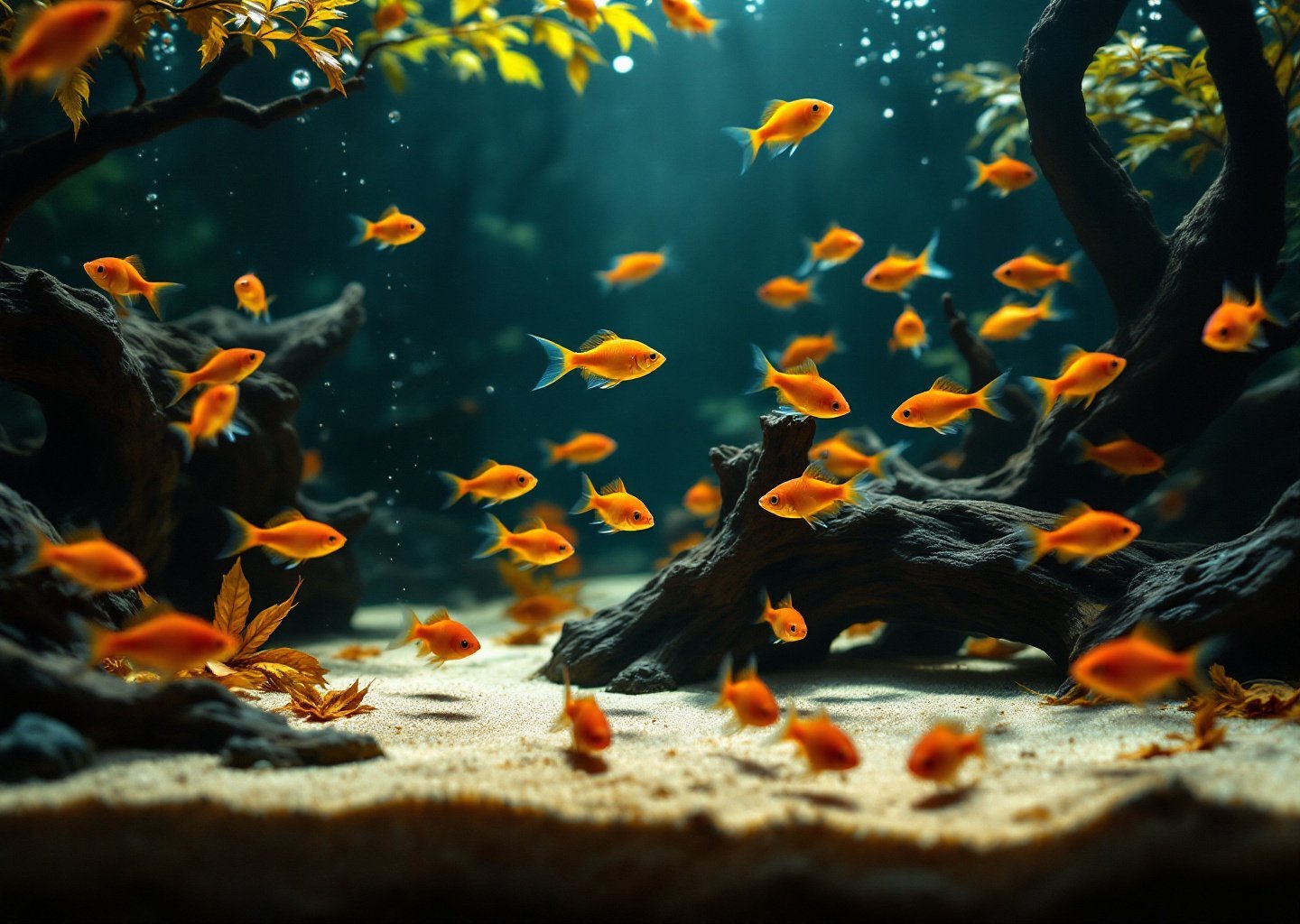
Here’s the truth. My blackwater 10-gallon is now my favorite tank in my apartment. It took patience I didn’t know I had, a few failed attempts, and way more water testing than I expected. But watching my ember tetras school through that amber-tinted water, their orange bodies practically glowing? Worth every mistake along the way.
Now go test your tap water. Seriously. That’s step one. Everything else follows from there.