I Killed Every Plant in My $200 Substrate Setup (Here’s What Actually Works)
Let me tell you about the time I spent $200 on substrate for a 10-gallon tank and still managed to kill every plant I put in it. I’m talking yellow, melting Amazon swords, crypts that dissolved into brown mush, and a carpet of dwarf hairgrass that never carpeted anything. It just sat there, judging me, before slowly turning translucent and disappearing.
The substrate wasn’t even the problem. Well, not entirely. I’d bought premium aquarium soil because a YouTuber with a gorgeous Dutch-style tank told me it was “the only way to grow plants.” What he didn’t mention was that his lighting, CO2 injection, and daily fertilizing routine were doing 90% of the heavy lifting. My desk lamp and tap water? Not quite the same setup.
Here’s what I wish someone had told me before I became a cautionary tale: the best substrate for planted aquarium beginners isn’t always the most expensive one. And it definitely isn’t whatever the person with the $3,000 tank is using.
This guide breaks down what actually works for beginners versus what just looks impressive in YouTube thumbnails. I’ll share the real differences between substrate types, help you figure out how deep to go (spoiler: you’re probably overthinking it), and give you a decision framework based on your actual situation. Not your dream tank, but your real one, with your real budget and your real schedule.
Active vs. Inert Substrate: Why the “Best” Choice Depends on Your Actual Setup
Figuring out how to choose planted tank substrate means confronting this fork in the road immediately: active or inert? The aquarium soil vs. gravel for live plants debate has started more Reddit arguments than I can count. But honestly? Both can work beautifully. The right answer depends on you, not the substrate.
Active Substrates (Aquarium Soils)
Active substrates like Fluval Stratum or ADA Amazonia are nutrient-rich substrates for aquarium plants. They leach ammonia initially (which cycles your tank faster but can stress fish), lower pH, soften water, and provide nutrients directly to plant roots.
The good stuff:
– Heavy root feeders go wild in these
– You’ll see faster initial growth
– Great for aquascaping styles that need dense planting quickly
The reality check:
– They break down over 1–2 years and need replacing
– Initial ammonia spike means you can’t add fish immediately
– More expensive upfront
– Some brands turn to mud if you disturb them
Inert Substrates (Gravel, Sand, Pool Filter Sand)
Inert substrates don’t change water chemistry or provide nutrients. They’re basically just anchors for your plants.
The good stuff:
– Cheap (pool filter sand costs like $8 for a 50-pound bag)
– Never breaks down or needs replacing
– No cycling complications
– Easy to clean
The reality check:
– You’ll need to add root tabs for heavy feeders
– Water column dosing becomes more important
– Some plants grow slower initially
Here’s my honest take after keeping seven tanks: running a low-tech setup with easy plants, inert substrate plus root tabs works just as well as fancy soil. I know that’s not a popular opinion in planted tank circles, but my thriving 5-gallon with pool filter sand doesn’t care about popular opinions.
Substrate Depth Guide: How Deep Should You Actually Go?
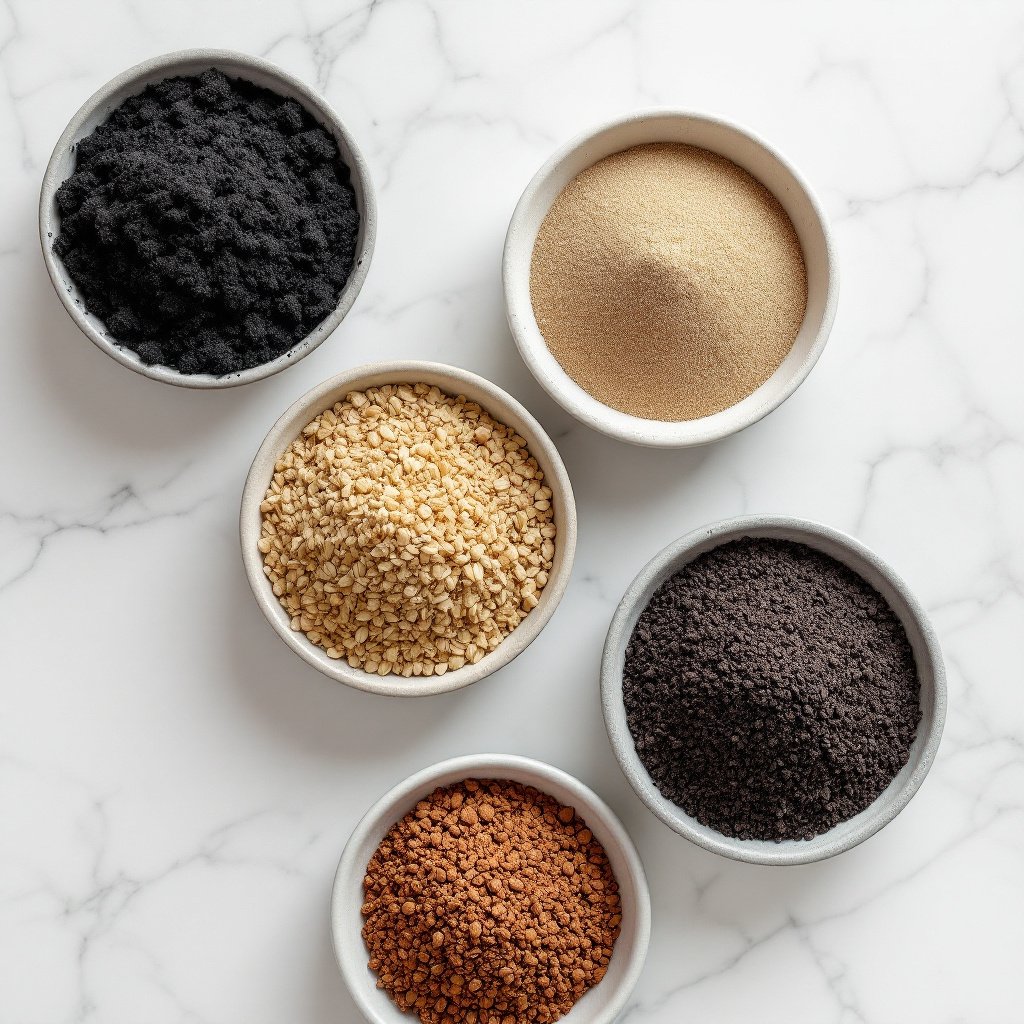
So, how deep should substrate be in a planted tank? Short answer: 2–3 inches in most areas, sloping from about 1.5 inches at the front to 3–4 inches at the back.
The long answer involves some geometry. That slope isn’t just aesthetic (though it does make tanks look bigger and more natural). It gives you planting flexibility. Shallow-rooted plants can go up front where substrate is thin. Deep rooters like swords get the back section where there’s room to spread.
Common beginner mistakes I’ve made:
- Going too shallow everywhere. One inch of substrate looks clean in photos but gives plants nothing to grip. During my first hairgrass carpet attempt, the whole thing literally floated away.
- Piling it too deep. More than 4 inches creates anaerobic pockets where bad bacteria produce hydrogen sulfide. It smells like rotten eggs. Ask me how I know.
- Forgetting about aquascaping. Want to add rocks or wood? You need extra depth behind them to maintain that slope. I’ve had to completely redo hardscapes because I didn’t account for this.
For a standard 20-gallon long, you’ll need roughly 20–25 pounds of substrate to achieve proper depth. Scale up or down from there based on your tank’s footprint.
Head-to-Head: Fluval Stratum vs. ADA Amazonia vs. Budget Alternatives
Let’s break down the Fluval Stratum vs. ADA Amazonia comparison, plus some budget options that actually perform.
Fluval Stratum
Price: Around $25 for 8.8 pounds
My experience: This was my second substrate attempt after the pool sand learning curve. It’s lightweight, doesn’t compact much, and has a nice natural appearance. Granules stay intact pretty well unless you’re really aggressive with gravel vacuuming.
Best for: Shrimp keepers (the soft, porous texture is shrimp paradise), beginners who want an active substrate without the intense ammonia spike of Amazonia.
Watch out for: Very light weight means plants float out easily at first. Use planting tweezers and bury stems deep. It’s also more expensive per pound than some competitors.
ADA Amazonia
Price: Around $35–40 for 9 liters
My experience: This is the gold standard. But I genuinely think it’s overkill for most beginners. Yes, plants grow like crazy in it. The ammonia spike lasts 4–6 weeks though, it muddies water if disturbed, and it requires commitment to high-tech setups to really shine.
Best for: Experienced aquascapers running CO2, serious Dutch or nature-style tanks, competition scapes.
Watch out for: Don’t buy this if you want to add fish within a month. Don’t buy this if you’re not running CO2 and high light. And definitely don’t buy this if you have a habit of moving things around. It turns to soup.
Budget Alternatives That Actually Work
Eco-Complete: Around $20 for 20 pounds. Pre-cycled with beneficial bacteria, doesn’t break down, inert but rich in minerals. Currently my favorite for balanced price-to-performance. No ammonia spike means fish can go in faster.
CaribSea Flora Max: Similar price point to Eco-Complete. Slightly different texture, equally effective. Pick whichever color you prefer.
Pool Filter Sand + Root Tabs: Generally under $25 total for a 20-gallon, though prices vary by brand and retailer. Sand provides anchoring, and root tabs (Seachem or even DIY Osmocote gel caps) provide nutrients where plants need them. This is my go-to recommendation for substrate for low-tech planted tank setups.
Best Substrates for Low-Tech Planted Tanks: The Low-Maintenance Options
Not running CO2 injection? Honestly, most beginners shouldn’t start there anyway. Your substrate needs are different from what you see in high-tech showcases.
For low-tech tanks, the best substrate for planted aquarium beginners is usually inert substrate paired with root tab fertilizers. Here’s why: active substrates release nutrients whether your plants can use them or not. Without high light and CO2, plants grow slowly and can’t uptake nutrients fast enough. Excess nutrients just feed algae instead.
Top picks for low-tech tanks:
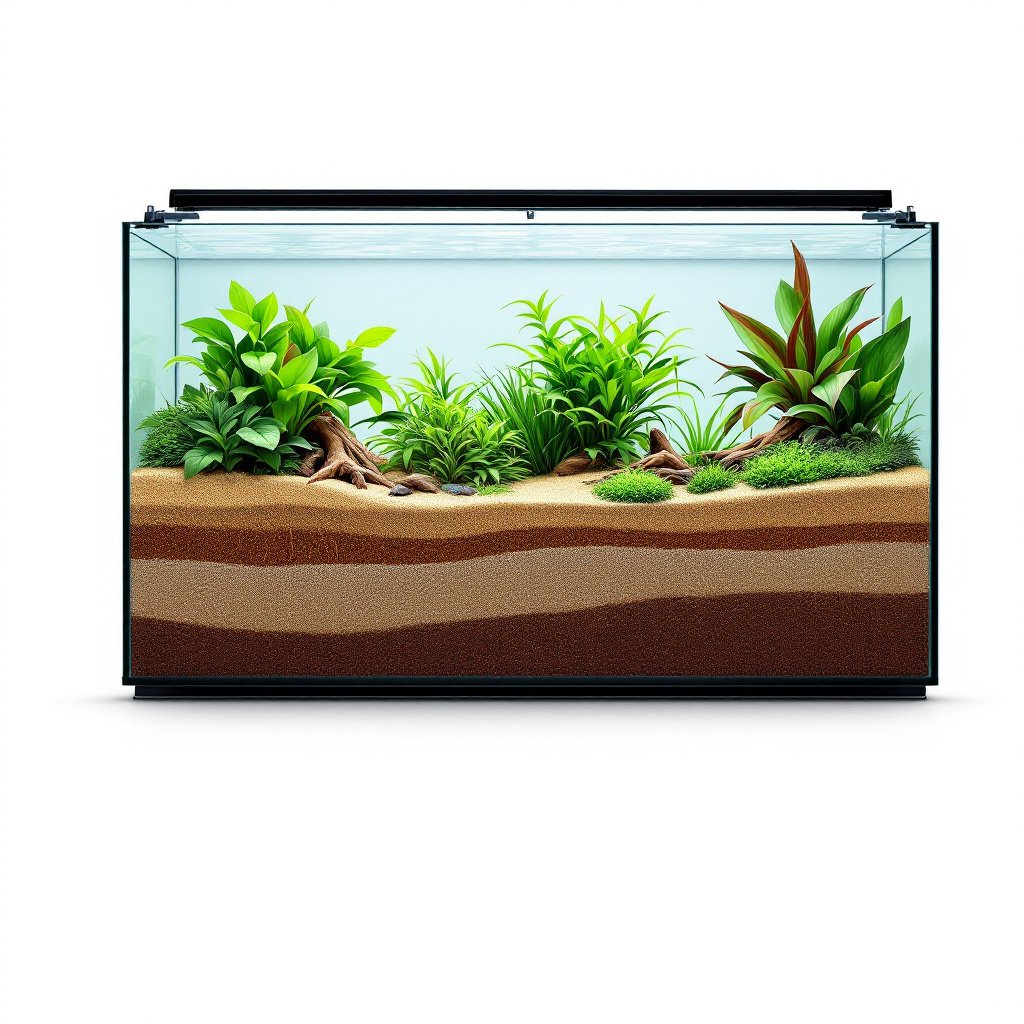
- Pool filter sand with root tabs – Cheapest, most forgiving, looks surprisingly good
- Black diamond blasting sand – Darker aesthetic, same principles as pool sand
- Seachem Flourite – Inert but porous, holds nutrients from root tabs well, never breaks down
- Eco-Complete – Middle ground between active and inert, good mineral content
Plants that thrive in inert substrate with root tabs:
– Anubias (actually prefers being tied to hardscape, not planted)
– Java fern (same as above)
– Cryptocorynes (once established, these are bulletproof)
– Amazon swords (heavy root feeders that love tabs)
– Vallisneria (spreads like crazy with minimal help)
For beginner-friendly planted aquarium substrate options, I really can’t overstate how well simple sand works. Currently, my most lush tank is a 5-gallon with play sand, two Seachem root tabs, and a $15 LED light.
The Beginner Substrate Decision Tree: Match Your Budget, Plants, and Commitment Level
Let me make this easy. Answer these questions:
What’s your budget for substrate?
- Under $20: Pool filter sand or black diamond blasting sand + root tabs
- $20–40: Eco-Complete or Seachem Flourite
- $40+: Fluval Stratum or UNS Controsoil
How patient are you?
- “I want fish in there NOW”: Inert substrate (no cycling complications)
- “I can wait a month”: Active substrate is fine
What plants are you starting with?
- Epiphytes like Anubias and Java fern: Substrate barely matters; they don’t use it
- Stem plants: Any substrate works with water column fertilizing
- Root feeders like swords and crypts: Active substrate OR inert with root tabs
- Carpeting plants: Active substrate strongly recommended (but also requires high light and CO2)
How often will you realistically maintain this tank?
- Once a week or less: Inert substrate, simple plants
- Multiple times weekly: Active substrate can work
- Daily (let’s be honest, who does this long-term?): Go nuts with the Amazonia
My honest recommendation for most beginners: Start with Eco-Complete or pool filter sand with root tabs. You’ll spend less money, have fewer complications, and actually enjoy the hobby instead of fighting ammonia spikes and cloudy water.
When you’ve kept plants alive for six months and caught the bug, then consider upgrading to fancier substrates for your next tank. Notice I said “next tank,” not “this tank.” Because if you’re like me, there will always be a next tank.
So What Should You Actually Do?
Remember those dead Amazon swords I mentioned at the beginning? After three years of trial and error, I finally figured out that expensive substrate couldn’t compensate for my complete lack of knowledge about lighting and nutrients. Fancy dirt won’t save you from fundamentals.
The best substrate for planted aquarium beginners isn’t about finding the perfect product. It’s about matching your substrate to your actual setup, budget, and commitment level.
Here’s how to move forward:
- Decide active or inert based on your patience level and plant choices
- Calculate how much you need using the 2–3 inch depth guideline
- Budget for the full setup including root tabs if going inert
- Start with easier plants that tolerate substrate learning curves
Still unsure? Grab a bag of Eco-Complete and some beginner plants like Java fern or Anubias. You’ll spend under $50 total, have plants growing within weeks, and avoid the mistakes I made when I thought expensive substrate would compensate for having no idea what I was doing.
Your plants don’t need the most nutrient-rich substrate for aquarium plants that money can buy. They need consistent light, stable water parameters, and an owner who isn’t constantly uprooting them to “fix” the aquascape. Trust me on that last one.
Now stop researching and start planting. You’ve got this.