The short answer
Rotate TetraColor Tropical Granules as a daily food, offer a small amount of Seachem NutriDiet Discus Flakes (made for discus; one keeper’s fish refused it), add Fluval Bug Bites Cichlid Pellets for discus big enough for a 5-7 mm pellet, and keep Tetra BloodWorms for a treat two or three times a week.
Our verdict
Our Top Picks
Discus prefer warm, soft water and, in Aqueon’s words, “require pristine water quality”, so what you feed them, and what is left over, matters. This guide has 4 picks, all sold and shipped by Amazon.com: a discus-formula flake, a slow-sinking granule that Tetra names for discus, an insect-based pellet for medium to large fish and a freeze-dried bloodworm treat. Only four shelf-stable foods passed our seller check; Sera, Hikari and New Life Spectrum discus foods did not, for reasons given in the methodology. Frozen foods and beef heart are feeding advice here, not picks. More foods are in our food and feeding section.
Compare the picks
Compare the 4 Discus Foods
Protein is the label minimum, from the maker or from label copies on retailer pages where marked.
$ = lower-priced, $$ = mid-priced, $$$ = higher-priced pack, relative to the packs in this guide.
 NutriDiet DiscusDiscus-Formula FlakeDiscus, stapleSinks: not stated46% label copy$18.03 Prime
Evidence: owner reports, no independent test
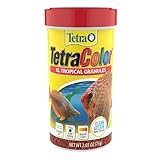 TetraColor GranulesMid-Water GranuleDiscus, angelfish, stapleSlow sinking47.5% label copy$7.49 Prime
Evidence: owner reports, no independent test
 Bug Bites Cichlid PelletsInsect-First PelletMedium-large fish, discusSlow sinking40%$5.60 Prime
Evidence: owner reports, no independent test
 Tetra BloodWormsFreeze-Dried TreatTreatFloats at first50% label copy$5.49 Prime
Evidence: owner reports, no independent test
Detailed Reviews
Picks: Seachem NutriDiet Discus Flakes, TetraColor Tropical Granules, Fluval Bug Bites Cichlid Pellets, Tetra BloodWorms.
Seachem NutriDiet Discus Flakes, Discus-Formula Flake
Keepers who want a discus-formula flake in their rotation and are ready to see whether their fish take it.
$18.03 from AmazonAs of Nov 29, 00:25 UTCVerdict
The one pick made for discus alone: a flake with fish, squid, earthworms, chlorella, garlic and probiotics, though the one owner report we found (2016) is a refusal.
Evidence: No independent test; owner reports. SimplyDiscus forum, “Seachem food” thread: Discus Flakes, size not stated (2016 thread).
Seachem’s page says the flakes are “formulated to meet the requirements of all discus”, names fish, squid and earthworms, and adds chlorella algae, vitamin C, probiotics and GarlicGuard “to attract finicky eaters”. The Amazon listing starts with fish protein concentrate, whole fish meal, wheat starch and rice flour, and ends with three artificial colors (Red 40, Yellow 6 and Blue 1 lakes) and BHA. Seachem’s support page lists whole fish meal, wheat flour and squid first, with no artificial colors. Label copies on retailer pages give 46% minimum protein; Seachem’s US page gives no figure. Check the pouch you receive.
In a 2016 SimplyDiscus thread on this flake, member Filip wrote that a pack bought a year earlier “still sits full on my shelf” because none of their fish, discus included, would eat it, and noted a “very strong garlic aroma”. Another member, Altum Nut, who had not fed it, suggested offering a small amount “during their first feeding when they are the hungriest”.
Specs (100 g / 3.5 oz):
- Form: flake; sinking or floating not published
- First ingredients: fish protein concentrate, whole fish meal, wheat starch (Amazon listing; Seachem’s support page lists whole fish meal, wheat flour, squid)
- Guaranteed analysis: protein 46% min, fat 9% min, fiber 2% max (label copies on retailer pages)
- Extras: chlorella, garlic, vitamin C, Bacillus probiotics (Seachem)
Pros
- Formulated by Seachem for discus, with fish, squid and earthworms named
- Garlic added, per Seachem, to tempt finicky eaters
- Sold and shipped by Amazon.com
Cons
- One keeper’s fish, discus included, refused it (SimplyDiscus, 2016)
- The Amazon ingredient list shows artificial colors and BHA, unlike Seachem’s support-page list
- Highest-priced pack in this guide when we checked
Who should buy it
Keepers who want a discus-formula flake in their rotation and are ready to see whether their fish take it.
TetraColor Tropical Granules, Mid-Water Granule
Keepers of discus and angelfish who want a daily granule to rotate with a flake or pellet.
$7.49 from AmazonAs of Nov 29, 00:25 UTCVerdict
A slow-sinking granule that Tetra makes for mid-water fish “like discus and angelfish”; fish meal comes first, with soybean meal and wheat close behind.
Evidence: No independent test; owner reports. SimplyDiscus forum, “best pellet?” thread: Tetra Color Bits (former name), size not stated (2013 thread).
Tetra describes these as granules that “can be consumed in mid-water, where larger fish like discus and angelfish like to feed”. The food was sold earlier as Tetra ColorBits: That Pet Place’s listing for this 2.65 oz jar (part 16159) still calls it ColorBits Tropical Granules. Under that name it appears in a 2013 SimplyDiscus pellet thread, where one keeper wrote “Mine love Tetra Color Bits.” and two others named or seconded it.
Label copies on retailer pages (That Pet Place, Hardy Paw) start with fish meal, dehulled soybean meal, wheat germ meal and wheat flour and give 47.5% minimum protein, and That Pet Place’s copy lists added colors; another retailer prints a different order, so check the jar. It is not Tetra Discus Granules, which our Amazon search did not find.
Specs (2.65 oz):
- Form: slow-sinking granule, size not published
- First ingredients: fish meal, dehulled soybean meal, wheat germ meal, wheat flour (label copies on retailer pages)
- Guaranteed analysis: protein 47.5% min, fat 6.5% min, fiber 2% max (label copy, That Pet Place)
Pros
- Tetra names discus among the mid-water fish it is made for
- Slow sink keeps food in mid-water, where Tetra says discus feed
- Sold and shipped by Amazon.com, also in a 10.58 oz jar
Cons
- Soybean meal, wheat germ meal and wheat flour follow the fish meal
- Owner reports are from 2013, under the old Color Bits name
- Added colors on That Pet Place’s label copy
Who should buy it
Keepers of discus and angelfish who want a daily granule to rotate with a flake or pellet.
Fluval Bug Bites Cichlid Pellets, Insect-First Pellet
Keepers of discus big enough for a 5-7 mm pellet who want an insect-based food to rotate with a flake or granule.
$5.60 from AmazonAs of Nov 29, 00:25 UTCVerdict
Black soldier fly larvae and salmon in a 5-7 mm slow-sinking pellet; one keeper’s whole discus group took it at once (2018), another’s ignored Bug Bites.
Evidence: No independent test; owner reports. SimplyDiscus forum, “Fluval Bug Bites” thread: Cichlid formula for medium to large fish (2018 pack).
Fluval lists dried black soldier fly larvae first (up to 40%), then whole salmon, and says the food has no artificial fillers, colors or preservatives. Fluval’s US page gives 40% minimum protein and 12.5% minimum fat, and a label copy on Aqua Imports’ listing for the 3.5 oz pellets lists salmon, fish protein concentrate, green peas, potato and wheat after the larvae.
In a 2018 SimplyDiscus thread on Bug Bites, FishFanMan wrote that the “cichlid formula for medium to large fish is a winner!” and that “they all eagerly ate it the first time”. The forum’s owner, brewmaster15, is less sure: “Bug bites are hit or miss with discus”, he wrote in a 2024 thread, and his own discus would not touch them. Fluval sizes the pellets for medium to large fish and also sells the same Cichlid formula as 1.4-1.6 mm granules for small to medium fish, which our cichlid food guide links. Our oscar food guide links these same pellets.
Specs (Pellets, 3.53 oz):
- Form: slow-sinking pellet, 5-7 mm, for medium to large fish (Fluval)
- First ingredients: dried black soldier fly larvae, salmon, fish protein concentrate (label copy on a retailer page)
- Guaranteed analysis: protein 40% min, fat 12.5% min (Fluval); fiber 5% max (label copy)
Pros
- Insect larvae and salmon as the first two ingredients, with no artificial colors (Fluval)
- One SimplyDiscus keeper’s whole group ate it the first time
- Sold and shipped by Amazon.com
Cons
- Hit or miss: an experienced keeper’s discus would not touch Bug Bites
- A 5-7 mm pellet that Fluval sizes for medium to large fish
- The discus owner report dates from 2018
Who should buy it
Keepers of discus big enough for a 5-7 mm pellet who want an insect-based food to rotate with a flake or granule.
Tetra BloodWorms, Freeze-Dried Treat
Keepers who want a bloodworm treat for two or three days a week without storing frozen worms.
$5.49 from AmazonAs of Nov 29, 00:25 UTCVerdict
A shelf-stable bloodworm treat that Tetra says to feed 2 to 3 times a week beside a staple; keepers disagree about bloodworms for discus.
Evidence: No independent test; owner reports. SimplyDiscus forum, “Tetra freeze dried blood worms” thread: Tetra freeze-dried bloodworms, size not stated (2012 thread).
Tetra says they are “specially processed” to minimize undesirable organisms found in live bloodworms, names small to medium tropical fish as the target, and says to feed them 2 to 3 times a week beside a staple diet. Label copies on retailer pages give 50% minimum protein and 15% maximum fiber, with freeze-dried bloodworms as the only ingredient.
In a 2012 SimplyDiscus thread on this food, Ishmael_ wrote that it “took my discus a while to accept them but once one started eating they all just joined in”, and Skip called it “a very good addition to diet for discus”. The worms float at first: Skip feeds them from an inverted worm cone “so it does not float away”. Recent r/discus threads are warier. In a 2023 thread on frozen bloodworms, bedroomsport rates bloodworms poor in nutrition and, citing parasites from frozen worms, advises “Freeze dried or avoid them”; another keeper there says their discus had “choking and bloating” on freeze-dried bloodworms or tubifex. In a 2026 thread, bedroomsport adds that “even frozen ones can introduce parasites” and that once discus are hooked on bloodworms, “it’s hard to get them to take other foods”. Keep it a treat.
Specs (0.25 oz):
- Form: freeze-dried bloodworms; float at first (owner report)
- Ingredients: freeze-dried bloodworms only (label copies on retailer pages)
- Guaranteed analysis: protein 50% min, fat 2% min, fiber 15% max (label copies on retailer pages)
Pros
- Shelf-stable bloodworms, processed to reduce unwanted organisms, per Tetra
- Discus in a 2012 SimplyDiscus thread took to it after a slow start
- Sold and shipped by Amazon.com
Cons
- A treat, not a staple: keepers rate bloodworms low in nutrition and warn discus can get hooked on them
- One owner’s discus had choking and bloating on freeze-dried worms
- Small 0.25 oz jar; stock was low when we checked
Who should buy it
Keepers who want a bloodworm treat for two or three days a week without storing frozen worms.
What Discus Eat and How to Plan Their Menu
Aqueon’s discus care guide calls discus omnivores that in nature eat “a considerable amount of plant material and detritus” and forage for worms and small crustaceans. It advises rotating the diet daily, with frozen or live foods as treats. Keepers in the threads we read agree on variety.
- Frozen foods (not picks). Many keepers feed frozen bloodworms, brine shrimp and mysis. DiscusGuy, a discus seller, advises frozen rather than live worms, which it says can carry parasites.
- Beef heart: cheap, but messy. In a SimplyDiscus thread, Willie says he has “consistently produced” 6-inch adults on beef heart and dry food over 30+ years, and rates frozen mysis and freeze-dried blackworms “equally as good”; the forum’s owner adds “Its perfectly doable raising big healthy discus on many foods.” A grower on r/discus finds beef heart “great but does mess up the water”. Aqueon says it is “not harmful” but not a natural food for discus.
- Food form and species fit. Pick a slow-sinking form for mid-water, where Tetra says discus feed, and a size that fits the mouth.
- First ingredients. When you compare labels, note whether fish, squid, krill or insect larvae come first, and how high wheat, soy and starch sit. See what fish food is made of.
- Soak dry food. DiscusGuy advises soaking pellets to avoid bloating, and keepers on r/discus and SimplyDiscus soak dry foods in tank water or GarlicGuard. Sera says discus have a short digestive tract, so food should not swell in the stomach.
- Switching foods. Discus are often used to their breeder’s food, Sera notes. Switch slowly, or, as brewmaster15 advises, feed only the new food for a few days.
- Water. Aqueon gives 82 to 86°F, pH 6.0 to 7.0, hardness of 1 to 4 dKH and weekly 10% to 25% water changes; see our guides to aquarium temperature and softening aquarium water. DiscusGuy warns that food left on the bottom rots and “will lead to bacteria”.
How Often to Feed Discus
Sources agree that young discus eat more often than adults, but not on the numbers. DiscusGuy says baby discus eat 10 to 12 times a day, young fish up to 5 times and adults 2 to 3 times. One r/discus keeper grew discus from 1 inch to 5-6 inches on 4-5 feedings a day; Willie feeds his discus two or three times a day (dried food once or twice, beef heart once). Aqueon’s general advice is once or twice a day, only what they eat in 2 to 3 minutes.
The labels’ directions (Seachem 1 to 3 times a day; Fluval and Tetra, as retailers print Tetra’s label, 2 to 3 times; each meal what the fish finish in two to three minutes: Fluval two, Seachem three, Tetra a few) match the adult schedules above. For growing juveniles, the breeders above split the day into more meals, so keep each one small. Vacuum out leftovers, which DiscusGuy says rot after two days.
If a discus that usually eats stops eating or looks unwell, ask an aquatic veterinarian; this guide covers food, not treatment.
How We Picked Four Discus Foods
How this guide was built
built from manufacturer documentation, label copies on retailer pages, Amazon listing details and owner reports; we have not tested these products ourselves.
What each food had to meet
- Made for discus, or named by its maker or by discus keepers as a food their discus eat
- Shelf-stable (dry or freeze-dried); frozen and live foods appear only as advice
- First ingredients and a guaranteed analysis we could read, or a stated gap
- Sold and shipped by Amazon.com, or sold by the brand’s own store at or below the maker’s published list price, and in stock at our final check
Sellers we checked and ruled out and what discus keepers say
Sellers we checked and ruled out
Amazon.com sells all four picks. Sera’s discus granules are sold by Sera’s own Amazon store (the seller profile names sera GmbH), but we found no US list price from Sera to check the price against, and US dealers sold the 1,000 ml tub for less. Hikari and New Life Spectrum discus foods had only resellers; Super Cichlids’ freeze-dried blackworms cost more on Amazon than in its own store; and Aquatic Foods, Tropical D-50 Plus, Ocean Nutrition and Xtreme failed on list price or availability.
What discus keepers say
In the r/discus and SimplyDiscus pellet threads, Sera discus granules come up in both, with Hikari Vibra Bites, Hikari Discus Bio-Gold, New Life Spectrum and Tetra Color Bits also named. In a 2026 r/discus thread, one keeper puts dry food in its place: “Dried foods def are not the best food for them (or any fish) but they’ll be OK with them.”
Frequently Asked Questions
Q. What food do discus eat?
Aqueon calls them omnivores. Keepers feed a dry staple, freeze-dried or frozen worms and brine shrimp as treats, and some, Aqueon notes, beef heart.
Q. How often should I feed my discus?
Adults two to three times a day per DiscusGuy, or once or twice per Aqueon; juveniles more often (DiscusGuy says up to five), in small meals.
Q. How many days can discus go without food?
We found no maker guidance. On SimplyDiscus, brewmaster15 notes that keepers “go away a week to 10 days and dont feed their discus at all”, a point about waiting for discus to accept a new food, not a feeding plan; Willie uses an auto-feeder with dried food when he travels. Our feeder guides (automatic aquarium feeders, freshwater auto feeders, auto fish feeders) cover capacity, power source and schedules.
Q. Is Hikari discus food good?
Keepers name Hikari Discus Bio-Gold and Vibra Bites often in the threads we read. We did not pick them because their Amazon listings were sold by resellers we could not verify.
Q. Can discus eat cichlid or tropical fish food?
Many can, if the pieces fit: Sera notes that discus belong to the cichlid family, Tetra names discus as a target for its tropical granules, and one of our picks is a cichlid pellet. Our cichlid food guide and tropical fish food guide cover more options, and our guppy food guide covers small tank mates.
The bottom line
Final Verdict
For a daily granule, rotate TetraColor Tropical Granules (check price), which Tetra describes for discus. Seachem NutriDiet Discus Flakes (check price) is made for discus, but the one owner report we found (2016) is a refusal, so offer a small amount first; discus are often used to their breeder’s food, Sera notes. Add Fluval Bug Bites Cichlid Pellets (check price) for discus big enough for a 5-7 mm pellet. Keep Tetra BloodWorms (check price) for two or three treat days a week, and remove leftovers.
Product prices and availability are accurate as of the date/time indicated and are subject to change. Any price and availability information displayed on Amazon.com at the time of purchase will apply to the purchase of this product.