The short answer
A dark start cycles a new planted freshwater tank before anything living goes in. Substrate, hardscape and water go in, the filter runs, and the lights stay off for weeks while nitrifying bacteria grow on ammonia, usually from the soil. Then comes one large water change, planting and light. Sources differ on how long and on water changes.
This page covers freshwater planted tanks with no animals in them yet. If fish in any tank look unwell, test the water and contact an aquatic veterinarian.
What a dark start is, next to a fishless cycle
Green Aqua, an aquascaping shop in Hungary, describes the method as “starting planted aquariums without lighting and in complete darkness without requiring extra water changes.” For a set period it runs with no CO2, liquid fertilizer, plants or livestock.
Aquarium Breeder, a shrimp-keeping blog, compares it with a fishless cycle on bottled ammonia:
| Point | Fishless cycle | Dark start |
|---|---|---|
| Ammonia source | Mostly bottled ammonia | Mostly the soil |
| Lights | On | Off |
| Water changes | Lots | None, then one large change |
| Plant melt risk | High | Low |
| Cycling time | Fastest | Longest |
How it works: soil, bacteria and no light
The soil supplies the ammonia. ADA, which makes Aqua Soil-Amazonia, warns in its Ver.2 manual about the Amazonia supplement sold with that soil: “With high concentration of organic elements, nutrient-rich Amazonia supplement causes ammonium and nitrite in aquariums right after use. Do not add fish and shrimp until the levels of both ammonium and nitrite are down to zero.” Dr. Tim’s Aquatics, a maker of nitrifying bacteria, says “Just setting up the tank and turning the filter on will not establish the nitrifying bacteria.”
Bacteria turn the ammonia into nitrate. The University of Florida’s extension service (UF/IFAS) explains that one group of bacteria converts ammonia to nitrite and a second converts nitrite “to the much less toxic nitrate”. Both groups “need oxygen and alkalinity to function”, which is why the filter runs the whole time.
The dark is aimed at algae. “Algae also need light for their development,” Green Aqua says. No aquarium source read here shows an effect of light on the bacteria. A 1996 lab study of pure cultures of marine nitrifying bacteria (Guerrero and Jones) found that “Cool-white fluorescent light inhibited NH4+ oxidizing activity but not NO2- oxidizing activity”, and that the effect of light depends “also on the conditions of their environment.” It was not an aquarium trial.
How to dark start an aquarium
The steps follow the shop and hobby guides; the ammonia, oxygen, temperature and pH figures come from bacteria and soil makers. Freshwater tanks only.
Set up the substrate and hardscape, and nothing living
No plants, fish or shrimp yet.
Fill gently with dechlorinated water
ADA says to “pour water gently on a plate or a board to avoid AQUA SOIL to stir”. Fritz Aquatics, another bacteria maker, says chlorine and chloramines “are toxic to bacteria so they must be neutralized before adding FritzZyme bacteria.” With RO/DI water, Fritz adds a product to “replenish minerals, electrolytes and buffering capacity”. See our water conditioner comparison and tap, RO and distilled water guide.
Make sure there is an ammonia source
An ammonia-releasing soil supplies its own; on plain gravel or sand, Aquarium Breeder says you add ammonia (see the FAQ). Dr. Tim’s says household ammonia solutions “usually contain an additive for scent or something else”, and: “Never use anything but pure ammonia.” It aims for “an initial ammonia-nitrogen concentration of 2 to 3 mg/L (ppm). Do not go above 5 mg/L.” Fritz recommends “between 2–4 ppm for fishless cycling” and warns that “an ammonia level above 5 ppm can inhibit nitrification.” Dose by the label, confirm with a test, and, in Fritz’s words, “Do not add Fishless Fuel to any system containing livestock.” Fritz does not recommend rotting fish food as the source “because it is unpredictable.”
Add bottled bacteria if you choose
Green Aqua “ideally” adds a starter; Aquascaper.be, a Belgian aquarium shop, adds bacteria “if using”; Aquarium Breeder calls it optional. With a UV sterilizer, Fritz says to discontinue it “prior to and 4 days after each application” of FritzZyme 7.
Run the filter and keep the water moving
Fritz says “Nitrification stops below 2–3 mg/L of dissolved oxygen (DO).” Fritz’s bacteria “grow the fastest and perform the best in temperatures from 77-86° F (25-30° C)”, and more slowly in colder water. Fritz also says “The phosphate level should always be maintained above 0 ppm.” and “If it is depleted, nitrite conversion will stop.”
Keep it dark, including room light
For tanks that receive “a considerable amount of indirect lighting”, Green Aqua says: “The glass panes should be darkened with suitable material – any exposure to light is a risk and, in the worst case, could cause an algae explosion.” Aquarium Breeder covers the tank on all sides because room light “may cause a brown algae outbreak” (see brown stuff in a new tank); in a completely dark room it sees no need to wrap it.
Test ammonia, nitrite, nitrate and pH every few days
Dr. Tim’s checks ammonia and nitrite “every 2 or 3 days” in its fishless method, and its quick guide says: “If either ammonia or nitrite concentration get above 5 ppm, do water changes to lower the concentration.”
Test before animals go in
Fritz counts a tank as cycled once it is “managing the ammonia and nitrite and keeping them at undetectable levels”. Dr. Tim’s stricter check: “The cycle is completed when you can add the full dose of ammonia (2 to 3 mg/L-N) and overnight it all disappears to nitrate with no sign of nitrite.”
Change most of the water, plant, then turn on the light
Aquarium Breeder changes “up to 90%”; PlantedBox, a Belgian fertilizer shop, and Aquascaper.be drain 90%. While planting, Green Aqua keeps the filter running in a clean bucket of tank water: it “should never be switched off for longer than 45 min. – max. 60 min. Otherwise, the essential bacteria can die due to a lack of oxygen.” Aquascaper.be adds: “Be careful not to let your plants dry out.” Dechlorinate the refill too: chlorine and chloramines “are toxic to bacteria so they must be neutralized before adding FritzZyme bacteria,” Fritz says.
Add animals slowly and keep testing
To play safe, Aquarium Breeder adds plants first and waits “at least 1 or 2 weeks before adding any animals.” Dr. Tim’s warns that “only enough bacteria will be established to take care of the ammonia added to the tank during the cycling period”, so stock gradually. Aquarium Breeder also says to “Add only a few animals” at first and to “check your water parameters daily.” For readings above zero, see how to lower ammonia and why nitrite runs high.
A liquid ammonia, nitrite, nitrate and pH kit covers steps 7 and 8; a GH and KH kit adds alkalinity, which Fritz says “can quickly become a limiting factor if not maintained above a minimum level of 4.5 dKH or 80 ppm KH.” The kits below are compared in our aquarium test kit roundup, the bacteria bottle in our beneficial bacteria roundup.
| # | Preview | Product | Price | Link |
|---|---|---|---|---|
| 1 |  | API Freshwater Master Test Kit 800-Test Freshwater Aquarium…Tests ammonia, nitrite, nitrate, pH | $35.98 Prime | Check on Amazon |
| 2 | 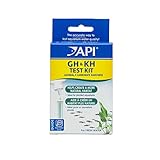 | API GH & KH TEST KIT Freshwater Aquarium Water Test Kit…Adds GH and KH readings | $11.98 Prime | Check on Amazon |
| 3 |  | DrTim’s Aquatics One & Only for Freshwater Aquariums – 4 oz…Live nitrifying bacteria | $24.99 | Check on Amazon |
What the test readings mean
| Reading | What the makers say |
|---|---|
| Ammonia above 5 ppm | Fritz: can inhibit nitrification. Dr. Tim’s: change water |
| pH below 7 | Dr. Tim’s: the usual cause of a stall. Fritz: slower below 7.3, stops below 6.0 |
| Ammonia and nitrite at zero | Fritz: cycled. ADA: no fish or shrimp before this |
How long it takes
Makers and UF/IFAS give cycling times: UF/IFAS says a new biofilter “requires six to eight weeks to build up sufficient bacteria to effectively reduce ammonia and nitrite levels”; Dr. Tim’s says bacteria take “30 to 45 days (usually saltwater takes longer)” to establish naturally; and Fritz says of its own product that “for most new systems, FritzZyme 7 will become established and complete the cycle in 7-14 days.”
The guides’ own dark periods:
| Source | Dark period | Water change |
|---|---|---|
| Green Aqua (shop) | At least 4-6 weeks | None during it |
| Aquascaper.be (shop) | 4 (to 6) weeks | 90% before planting |
| PlantedBox (shop blog) | 4-8 weeks | 90% before planting |
| Aquarium Breeder (blog) | 4-8 weeks | Up to 90% at the end |
| 2Hr Aquarist, with starter bacteria | At least a week | 90% if ammonia is high on day 4 |
The 2Hr Aquarist, a fertilizer maker, says a cycle without starter products “can take up to a month or more.” Fritz, Dr. Tim’s, ADA, Green Aqua and PlantedBox use a zero-ammonia, zero-nitrite test before animals go in. Aquascaper.be gives only the weeks, and the 2Hr Aquarist says standard, non-delicate plants can go in while ammonia is “below 0.5ppm or so”.
Where the sources disagree
Water changes in the dark. Green Aqua and Aquarium Breeder do none until the end. Dr. Tim’s says “high levels of ammonia or nitrite inhibit the nitrifying bacteria” and calls for water changes above 5 ppm. On the Aquarium Co-Op forum in October 2026, a keeper using ADA Aquasoil wrote that in past setups it had released up to 5-10 ppm of ammonia in a day right after a full water change. Another member agreed that changes are needed to keep ammonia below 5 ppm, said they can stop once the bacteria take over if the tank stays dark, and called it a “man-made soil issue”, not a dark start one.
pH. ADA says its Amazonia Pro soil helps “adjust the water to a slightly acidic condition”. Dr. Tim’s says a stall is “usually” due to “a low pH value (less than 7.0)”, and its quick guide advises: “Do not let the pH drop below 7. If it does, do a partial water change to bring the pH back up.” Fritz puts the best range at 7.3-8.0 and says “Nitrification is completely inhibited below pH 6.0.” The 2Hr Aquarist disagrees: “cycling does not stall below pH 6.” It says “a low-pH tank cycles more gradually, not never.”
Full blackout or lights off. On the ScapeCrunch forum in June 2025, the administrator wrote: “Like others have said, dark means dark. If you can black it out with garbage bags, it’s better.” Another member kept the lights off except when working in the tank, “but no effort to black out ambient light.” A third ran one tank under garbage bags and one without: “Both cycled in ~3 weeks and had very little algae issues”; full blackout, the member wrote, is not “required” but “just recommended”.
Dark start or plant on day one. Tropica, a plant grower, plants at setup (its setup guide does not mention a dark start) and says to “turn off after 6 hours of light every day for the first three weeks.” The 2Hr Aquarist says hardier plants “can be used in a fresh set up without too much of a downside”, but sensitive ones such as “tissue culture plants in general, should not be planted until the tank has been cycled – they melt easily in fresh soil.”
What owners report, good and bad
- It worked (The Planted Tank forum, September 2021). A new hobbyist with ADA soil covered the tank with black paper, ran the filter for 3 weeks, then planted, changed 30% weekly for two weeks and added six neon tetras after the fifth week. Algae: a “very negligible amount” on the driftwood.
- Very high ammonia, little melt (ScapeCrunch, September 2025). In a 140-gallon tank on ADA Amazonia V2: “At one point, my ammonia readings were 8+ (the max the test kit will show) for nearly two weeks.” After a little under 4 weeks, with ammonia still under 2 ppm, the owner did one 90% water change, planted and “saw little to no melting at all”.
- Stuck at week three (ScapeCrunch, September 2025). A member dosing nitrifying bacteria still read 4 ppm ammonia in the third week.
- Algae anyway (Aquarium Co-Op forum, October 2026). A member with three dark starts said it usually clears a 2 ppm ammonia dose to zero ammonia and nitrite within 24 hours by about day 21. The one algae problem was green dust algae on the glass, which faded on its own after a few weeks.
- The costs. Aquarium Breeder: “This method requires more time compared to others. We also can’t control the cycling process.” Green Aqua reports “no real disadvantage” beyond patience.
Frequently Asked Questions
Q. Is my tank cycled if I have nitrates?
Fritz says “The presence of nitrate indicates that the bacteria are performing properly and the tank is cycling”, and that at the end of the cycle “any detectable amount is an indication that the cycle has matured”. Its definition of cycled, in a later section, is ammonia and nitrite kept at undetectable levels.
Q. Can you put too much bottled bacteria in a tank?
Seachem says Stability is “completely harmless to all aquatic organisms as well as aquatic plants, thus there is no danger of over use”; Fritz says FritzZyme 7’s new-tank “dose may be increased up to 10x or repeated as desired.” Follow your bottle’s label.
Q. What is the difference between a dry start and a dark start?
Aquarium Breeder’s author explains that the “Dry Start method keeps the tank humid but not flooded”, for plants, while a dark start grows bacteria underwater. Replying to a reader, he says that if you completely drain a dark-started tank for a dry start, “most of those bacteria will die”; the large water change in step 9 is a different thing.
Q. Can you dark start with gravel or sand instead of aquasoil?
Yes, says Aquarium Breeder, but “we will have to introduce a bacterial source (ammonia) in the first place.” Aquarium Breeder says to “Add 1-2 drops of ammonia per 1 gallon (~4 liters) and no more”, and that a reading above 2 ppm is “already a very high concentration”; Dr. Tim’s aims for 2 to 3 mg/L and Fritz for 2-4 ppm. Follow the label of the ammonia you use.
Ready to buy?
Our beneficial bacteria roundup compares the starter bottles and what independent tests found, and our Tank Setup & Care section gathers more new-tank guides.
Sources (20)
- ADA (soil maker), Aqua Soil-Amazonia Ver.2 manual (PDF)
- ADA (soil maker), Aqua Soil-Amazonia Pro
- DrTim’s Aquatics (bacteria maker), Guide to Fishless Cycling
- DrTim’s Aquatics (bacteria maker), quick guide
- Fritz Aquatics (bacteria maker), cycling guide
- Fritz Aquatics (bacteria maker), Fishless Fuel
- Fritz Aquatics (bacteria maker), FritzZyme 7
- Fritz Aquatics (bacteria maker), bacteria preferences
- Seachem (bacteria maker), Stability
- UF/IFAS Extension, Ammonia in Aquatic Systems
- Guerrero and Jones (journal), 1996
- Tropica (plant grower), Get the right start
- Green Aqua (shop blog), Dark Start Method
- The 2Hr Aquarist (fertilizer maker), The Dark Start Method
- PlantedBox (shop blog), Dark Start Method
- Aquascaper.be (shop blog), Dark Start Method
- Aquarium Breeder (hobby blog), The Dark Start Method
- ScapeCrunch (forum), Dark Start Method thread
- Aquarium Co-Op Forum (forum), dark start thread, 2026
- The Planted Tank (forum), dark start thread
Product prices and availability are accurate as of the date/time indicated and are subject to change. Any price and availability information displayed on Amazon.com at the time of purchase will apply to the purchase of this product.