The Best Fish for Planted Aquarium Beginners: A Hard-Won Guide
I learned this lesson the hard way with my second tank. After spending three weeks meticulously planting a gorgeous carpet of dwarf hairgrass, I added a group of silver dollars because the pet store employee said they were “great community fish.” Within 48 hours, my carpet looked like a salad bar after a football team’s visit. That $60 worth of plants? Gone.
Here’s the thing about choosing the best fish for planted aquarium beginners. The rules are completely different from setting up a standard community tank. Fish that thrive in bare or plastic-decorated setups can become absolute terrors in a planted environment. And the worst part? Most big-box pet stores won’t tell you this because they’re not thinking about your aquascape. They’re thinking about moving inventory.
In this guide, I’m going to save you the heartache (and the hit to your wallet) by walking you through exactly which fish will work with your planted tank, not against it. We’ll cover the species to avoid, the ones that actually help your plants succeed, and how to match fish to your specific plant style. Plus, I’ll share my 7-day introduction method that’s kept my current seven tanks thriving.
The Plant-Destroyer Hall of Shame: Popular “Beginner Fish” That Will Ruin Your Tank
Before we get into what to buy, we should talk about what to run away from. The fish below show up on almost every “great beginner fish” list, but honestly? Terrible choices for planted setups.
Goldfish top my list of fish that’ll absolutely devastate your aquascape. Picture underwater goats. Constant nibbling, uprooting plants while foraging, and producing so much waste that your carefully balanced ecosystem gets thrown completely off. I don’t care how cute that fancy oranda looks. Keep it away from your plants.
Silver dollars and Buenos Aires tetras are next on my avoid list. Strict vegetarians with a particular taste for expensive aquatic plants. Your Amazon sword? Breakfast. Your red tiger lotus? Lunch. I’ve seen tanks stripped bare in under a week. Honestly heartbreaking to watch.
Large cichlids like Oscars and Jack Dempseys aren’t plant-eaters, but they’re rearrangers. Moving substrate, knocking over hardscape, uprooting anything not literally glued down. And even then? They’ll try.
Common plecos seem like a good idea because of their algae-eating reputation. But here’s what nobody mentions: these fish get massive (over a foot long), produce enormous amounts of waste, and as they grow, they’ll bulldoze through your carefully arranged plants like tiny armored tanks.
Tinfoil barbs round out the list. Gorgeous, active fish that will systematically destroy soft-leaved plants like hygrophila and rotala. Not worth the headache.
Fish That Actually Help Your Plants Thrive
Now for the good news. Some fish don’t just coexist with plants. Some actively contribute to a healthier planted ecosystem. My go-to recommendations for low-maintenance fish that won’t eat plants include the species below.
The Algae Crew
Otocinclus catfish are my absolute favorites. And I mean that. Tiny, peaceful algae-eaters that clean your plant leaves without damaging them. Unlike plecos, otos stay small (under 2 inches) and work in groups. I keep six in my 20-gallon Dutch-style tank, and my anubias leaves have never looked cleaner.
Amano shrimp aren’t technically fish, but they deserve mention here. Algae-eating machines that also clean up decaying plant matter. Plus, watching them graze across your plants is oddly satisfying. Like tiny lawn mowers, but cuter.
Siamese algae eaters (the real ones, not the Chinese algae eaters or flying fox look-alikes) tackle the dreaded black beard algae that other cleaners ignore. Just make sure you’re getting the actual species, Crossocheilus siamensis. Ask specifically because pet stores mix these up constantly.
Debris Cleaners
Corydoras catfish constantly sift through substrate, which helps keep aquarium plants clean and healthy. This activity aerates the soil and prevents dead zones. Soft, sensitive barbels mean they won’t uproot plants. Bronze, peppered, and panda corydoras are all solid choices. Personally? I’m partial to the pandas.
Malaysian trumpet snails burrow through your substrate at night, eating decaying matter and aerating the soil around plant roots. Some people call them pests. I call them free gardeners. Your mileage may vary, but I’ve never regretted adding them.
Surface Agitators
Hatchetfish and African butterfly fish occupy the top water level, breaking up surface film that can block light from reaching your plants. Interesting conversation pieces too because of their unusual shapes. Every guest I’ve had asks about my hatchetfish.
The Perfect Match: Best Fish for Your Specific Plant Style
Different aquascaping styles have different requirements. What works in a jungle tank might fail spectacularly in a minimalist iwagumi layout. So which camp are you in?
For Carpet Tanks (Monte Carlo, Dwarf Hairgrass, HC Cuba)
You need small fish for heavily planted tanks that won’t disturb that beautiful green carpet you’ve spent months growing. Trust me. Nothing’s more frustrating than watching fish tear up your carpet.
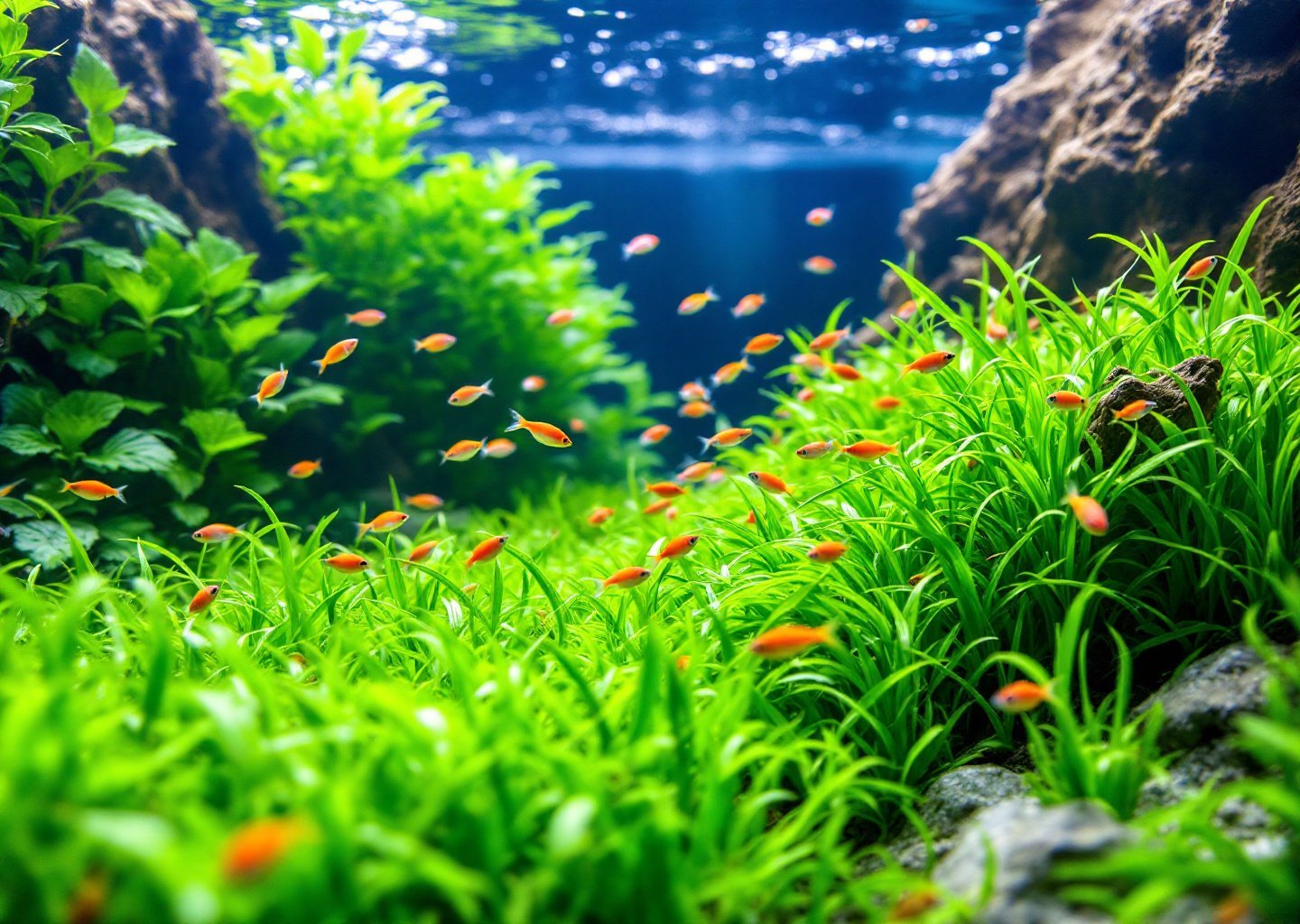
Celestial pearl danios (also called galaxy rasboras) are perfect here. Tiny, peaceful, swimming in the middle column and rarely disturbing the bottom. Orange and pearl coloring pops against green carpets like nothing else. Seriously stunning.
Ember tetras stay under an inch, and their warm orange-red color creates stunning contrast against bright green carpets. From a design perspective, the complementary color principle is working perfectly here. But even if you don’t care about color theory, they just look good.
Chili rasboras are even smaller and work well in nano setups. In my 5-gallon iwagumi, a school of twelve adds movement without overwhelming the minimalist aesthetic.
For Jungle Tanks (Dense, Overgrown Styles)
Heavily planted jungle tanks can handle more active fish because there’s plenty of cover, and the dense planting hides any minor disturbances.
Rummy-nose tetras thrive in well-planted environments, making them ideal tropical fish for aquascaped tanks. Tight schooling behavior looks incredible weaving through stem plants, and here’s a cool bonus: the red on their faces acts as a health indicator since the color fades when water quality drops.
Harlequin rasboras are hardy, colorful, and happily swim through dense plant growth. A staple in my jungle-style 29-gallon for two years now. Zero complaints.
Pearl gouramis add a focal-point species without the aggression of their dwarf gourami cousins. Delicate exploration through plants and occasional surface picking for mosquito larvae and other tiny pests.
For Dutch Layouts (Organized, Colorful Plant Arrangements)
Dutch aquascaping is all about showcasing plant variety and color. You want community fish safe for planted tanks that won’t distract from the plant work but will add subtle movement.
Cardinal tetras are the classic choice for a reason. Neon blue and red stripes create a “living accent” that complements plant colors without stealing focus. Also one of the best tetras for planted tanks because they never touch the plants. Ever.
Green neon tetras are smaller than cardinals and have a more subtle coloration that works well in tanks where you want the plants to star.
Threadfin rainbowfish offer elegant finnage and subtle color that photographers love. Peaceful, plant-safe, and sophisticated. If your tank were a dinner party, these would be the guests who know which fork to use.
Stocking Your Planted Tank: The Numbers That Actually Matter
The old “one inch of fish per gallon” rule? Throw it out. Seriously. Planted tank stocking ideas need to account for your filtration, plant mass, and maintenance schedule.
Here’s my approach: Start at 50% of your target and build up slowly. A heavily planted tank can handle more fish than a bare one because plants absorb nitrates, but you won’t know your tank’s capacity until you test it over time.
For a 20-gallon planted tank, I’d start with:
– 8 small schooling fish (tetras or rasboras)
– 4 otocinclus
– 6 corydoras
– A handful of shrimp
After a month of stable parameters, you could consider adding more. But resist the urge to stock everything at once. I know it’s tempting. Trust me on this.
Watch for warning signs:
– Nitrates above 40 ppm between water changes
– Algae outbreaks
– Fish gasping at the surface
– Cloudy water that doesn’t clear
If you’re seeing any of these, slow down. Your tank’s telling you something.
The 7-Day Introduction Method: How to Add Fish Without Plant Casualties
When I first started, I’d buy fish, acclimate for 15 minutes, and dump them in. This led to stressed fish, parameter swings, and (once) a complete plant melt in my Java fern collection. Lesson learned. Now I use this method for how to introduce fish to a planted tank:
Days 1–2: Keep lights off or dimmed. Fish are stressed from transport, and reduced lighting helps them acclimate while also preventing any panic-swimming that might uproot plants.
Day 3: Resume normal lighting. Feed sparingly. Uneaten food will spike ammonia.
Days 4–5: Watch behavior. Are fish hiding constantly? Swimming erratically? Nipping at plants? Address issues now before they become habits.
Days 6–7: First water change. Test parameters. If everything looks good, you’re established.
Pro tip: Quarantine new fish for at least two weeks before adding them to your display tank. I know, I know. An extra tank to maintain. But one sick fish can wipe out your entire stock. And the medications used to treat fish diseases? They’ll kill your plants and beneficial bacteria. Not worth the risk.
Your Planted Tank Fish Selection Cheat Sheet
Let’s make this actionable. Here’s your planted tank fish stocking ideas summary:
Best Universal Choices:
– Ember tetras
– Cardinal tetras
– Harlequin rasboras
– Otocinclus (for algae control)
– Corydoras (for debris cleanup)
What to Avoid:
– Goldfish (any variety)
– Silver dollars
– Large plecos
– Buenos Aires tetras
– Large cichlids
When you walk into the pet store, don’t just ask for “beginner fish.” Be specific: “I need fish that won’t uproot live plants, stay small, and are peaceful community fish safe for planted tanks.”
Does the employee look confused or try to sell you goldfish anyway? Find another store. Or better yet, find a local fish shop with planted display tanks. Those employees actually know what fish work best in a planted aquarium.
One last piece of advice: start with one species, let them settle, then add the next. Your plants (and your wallet) will thank you. And when your carefully chosen fish are swimming through your thriving aquascape, you’ll understand why the best fish for planted aquarium beginners aren’t always the ones on the “easy” lists.
Now go build something beautiful. But maybe call your local fish store first to make sure they have otos in stock. Those little guys sell out fast.