Hikari Micro Pellets Review: 6 Months of Testing Across 4 Nano Tanks
Let me be honest with you. Most fish food reviews are garbage. Someone feeds a product for two weeks, watches their fish eat it, and declares it amazing. That tells you nothing about long-term health, water quality impact, or whether your fish will still be interested three months from now.
So I did something different. I ran a 6-month controlled test of Hikari Micro Pellets across four different species in my apartment’s collection of nano tanks. I tracked water parameters, photographed my fish weekly, and documented everything from color changes to behavioral patterns. What you’re reading represents hundreds of hours of observation, not a weekend of casual feeding.
I’ve made enough mistakes in this hobby to know that shortcuts don’t work. Remember Gerald, my first betta? He didn’t survive my impatience with cycling. That loss taught me to slow down and do things properly.
When I started researching small pellet foods for my growing collection of nano tanks, plenty of quick reviews praised Hikari Micro Pellets. But nobody addressed the questions I actually had. Does the food maintain water clarity in a 5-gallon tank with minimal filtration? Will my ember tetras still eat it enthusiastically after months, or will they start ignoring it like they did with flakes? Is the premium price actually justified, or am I just paying for marketing?
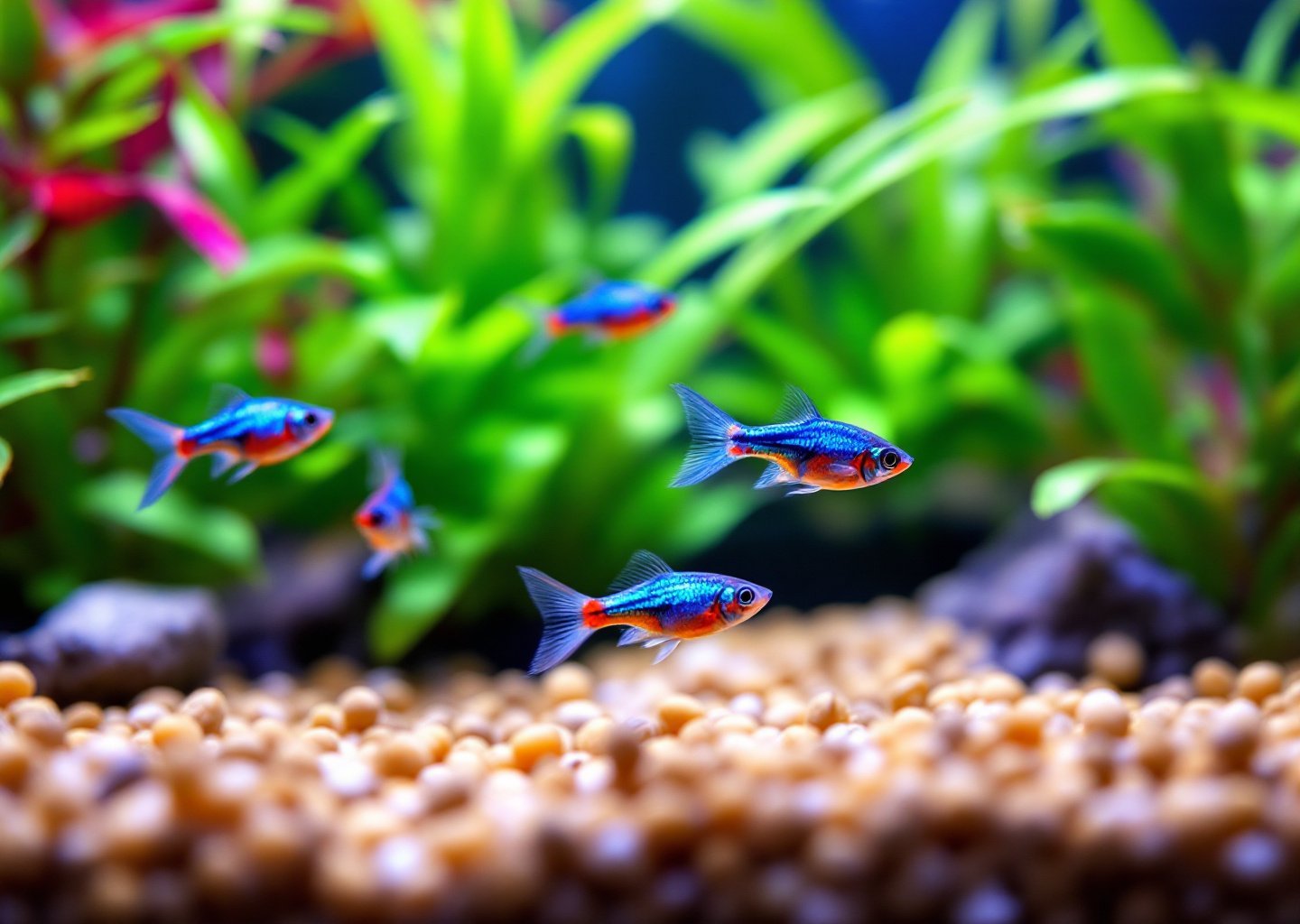
My testing happened in four separate tanks: a 10-gallon with neon tetras, a 5-gallon betta setup, a 7-gallon with chili rasboras, and a heavily planted 10-gallon community tank with guppies. Each tank got the same testing protocol, the same feeding schedule, and the same obsessive documentation from me.
Hikari Micro Pellets Ingredients Analysis: Breaking Down the 45% Protein Formula
Before feeding a single pellet, I wanted to understand what I was putting in my tanks. And honestly? The ingredient breakdown reveals a formula that’s genuinely impressive on paper.
Here’s the guaranteed analysis:
– Crude protein: minimum 45%
– Crude fat: minimum 4%
– Crude fiber: maximum 3%
– Moisture: maximum 10%
According to the manufacturer’s label, fish meal leads the ingredient list, followed by wheat flour and wheat germ meal, along with supplementary ingredients including spirulina, dried seaweed meal, and various vitamins. That protein content and those nutrition facts suggest a well-rounded diet. But that wheat flour sitting high on the list does make me raise an eyebrow. Wheat is a cheap filler, and while it’s not harmful, I’d prefer to see more protein sources higher up.
What I appreciate is the inclusion of color-enhancing ingredients. The formula reportedly contains astaxanthin and carotenoids without relying on artificial dyes. Those pellets themselves are a natural tan color, not some alarming neon shade.
Pellet size is genuinely micro. We’re talking about 0.2 to 0.37mm, which is smaller than most “small” pellets on the market. For neon tetras and similarly tiny species that struggle with standard foods? Perfect.
Water Clarity Test: Do Hikari Micro Pellets Actually Cloud Your Tank?
Water clarity worried me most going in. I’ve used foods that turn my water into soup within days, and in a 5-gallon betta tank with a gentle filter, that’s a disaster waiting to happen.
Short answer: Hikari Micro Pellets don’t cloud your water. At least not when fed appropriately.
I tested this methodically. In each tank, I measured water clarity before feeding, then at 30 minutes, 2 hours, and 24 hours post-feeding using a simple Secchi disk method (basically measuring how far I could see into the water before a white disk disappeared). Ammonia spikes got tracked over the full six months as well.
These pellets sink slowly, which gives mid-water feeders time to grab them. Most importantly, they hold their shape in water for a surprisingly long time. Even after 20 minutes submerged, pellets I retrieved with a pipette were still intact. No disintegrating into a protein cloud.
In my heavily planted guppy tank, I noticed zero water quality issues. My 5-gallon betta tank was more sensitive to overfeeding, but that’s true of any food in a small volume.

how to maintain water quality in small tanks
Feeding Amount Guide: Exact Pellet Counts for Tetras, Bettas, Rasboras, and Guppies
“Feed what your fish can consume in 2 to 3 minutes” is worthless advice. How many pellets should you actually feed? Let me give you real numbers based on six months of testing.
Neon Tetras (10 fish):
– 20 to 25 pellets per feeding
– Twice daily
– They consume everything in about 90 seconds
Betta Fish (1 male):
– 6 to 8 pellets per feeding
– Twice daily, with one fast day weekly
– My betta, Vermeer, takes about a minute to eat this amount
Chili Rasboras (12 fish):
– 15 to 18 pellets per feeding
– Twice daily
– These tiny fish are slower eaters, taking 2 to 3 minutes
Guppies (8 adults plus fry):
– 25 to 30 pellets per feeding
– Twice daily
– Adults consume quickly; fry pick at what settles
I learned the hard way that you should start with fewer pellets than you think necessary. These fish are tiny, and overfeeding is the enemy of water quality. I’d rather my fish be slightly hungry than deal with ammonia spikes in a nano tank.
For bettas specifically, I found Vermeer absolutely loved these pellets. Bettas can be notoriously picky, but he’s never once refused them. And trust me, he’s rejected plenty of other foods.
Hikari Micro Pellets vs. Omega One vs. Fluval Bug Bites: Side-by-Side 30-Day Comparison
Midway through my test, I ran a 30-day comparison in my neon tetra tank, rotating between three foods: Hikari Micro Pellets, Omega One Small Pellets, and Fluval Bug Bites Tropical Formula.
Acceptance Rate:
All three foods were eaten enthusiastically. No clear winner here, though Hikari pellets disappeared slightly faster. Likely due to their smaller size making them easier to consume.
Water Quality Impact:
Hikari and Fluval Bug Bites performed similarly. Omega One caused slightly more debris and required more frequent gravel vacuuming. When comparing Hikari to Omega One directly, Hikari won on water clarity.
Color Enhancement:
This one surprised me. After 30 days, tetras fed primarily Hikari showed noticeably more vibrant blue and red coloration compared to the Bug Bites period. Differences were subtle but visible in my weekly photos.
Price Per Feeding:
Hikari is the most expensive option, but the pellets are also smaller and denser. Gram for gram, you’re getting more individual pellets, which somewhat offsets the cost. Comparing Hikari to Bug Bites for small fish is essentially a wash on value when you calculate cost per feeding rather than cost per container.
My verdict: Hikari edges out the competition for small tropical species, primarily due to pellet size and color enhancement results. But honestly? All three are solid foods. You won’t go wrong with any of them.
comparing fish food brands for tropical fish
Fish Health Results: Color Enhancement, Activity Levels, and Growth Observations

Here’s where six months of documentation pays off. I photographed each tank weekly under consistent lighting conditions, tracked activity levels during feeding, and measured juvenile fish growth.
Color Enhancement:
Guppies showed the most dramatic improvement. Males developed significantly deeper orange and blue coloration over the six-month period. Chili rasboras, which can look washed out under poor nutrition, maintained their characteristic deep red throughout. Neons showed good color retention but less dramatic improvement.
Activity Levels:
All species remained active and showed no signs of lethargy. Vermeer, in particular, became more interactive during feeding times. He now does a little wiggle dance when he sees me approach, which I’m 90% sure is about food and 10% about actually liking me.
Growth:
Juvenile guppies in the community tank reached full adult size with no stunting over the six months. Growth rate seemed normal compared to previous generations I’ve raised on other foods.
No Health Issues:
Zero deaths across all four tanks during the six-month period. No signs of constipation (a common issue with dry foods), no fin deterioration, no unusual behavior. Honestly, the biggest win here? Nothing went wrong.
Is Hikari Micro Pellets Worth the Premium Price? Final Verdict + Best Alternatives
After six months, yes. With some caveats.
A great small pellet food for tetras and similarly sized species needs to meet specific criteria: small enough to eat easily, nutritionally complete, and gentle on water quality. Hikari Micro Pellets check all these boxes.
Where the price makes sense:
– Genuinely micro-sized pellets that small fish can actually eat
– Excellent water quality maintenance
– Strong color enhancement results
– High-protein formula without excessive fillers
– Long-term palatability (fish still love it after months)
Where it doesn’t quite justify the cost:
– Wheat flour filler taking the second ingredient spot
– Similar results achievable with alternatives at lower cost
– No magical properties, just solid nutrition
For small tropical fish that need sinking pellets, this product delivers. But if budget is tight, Fluval Bug Bites offers comparable nutrition at a lower price point. You trade off with larger pellet size, which may not work for the smallest species.
Best alternatives:
1. Fluval Bug Bites Tropical Micro Granules (best budget option)
2. New Life Spectrum Small Fish Formula (similar quality, sometimes cheaper)
3. Omega One Small Pellets (widely available, decent results)
After 180 days, countless water tests, and an embarrassing number of fish photos on my phone, here’s my honest take.
Buy Hikari Micro Pellets if you:
– Keep nano fish (tetras, rasboras, small barbs, tiny livebearers)
– Maintain small tanks where water quality is critical
– Care about color enhancement in your fish
– Have a picky betta that rejects other foods
– Want a reliable staple food you won’t need to replace
Skip this food if you:
– Keep larger fish that need bigger pellets
– Are on a tight budget and need to stretch every dollar
– Already have a food that’s working well for you
– Want an insect-based protein source (choose Bug Bites instead)
Look, no single food should be your only option. I rotate Hikari Micro Pellets with frozen foods, occasional live treats, and other quality pellets. But as a staple food for my nano tanks, it’s earned a permanent spot in my fish room.
Would I repurchase? Already have. Twice.
complete guide to feeding small tropical fish
For apartment dwellers and college students just getting into the hobby, this is a solid investment that won’t break the bank, lasts forever due to the small feeding amounts, and actually delivers on its promises. That’s more than I can say for most products in this hobby.
Now if you’ll excuse me, I need to go convince my partner that we definitely have room for one more 5-gallon tank on the bookshelf.