
Building a Multi-Tank Air Pump System for Your Fish Room: What Actually Works
I thought scaling up from my cozy collection of nano tanks to a 12-tank fish room would be simple. Buy a bigger pump, plug in some air lines, call it a day. Instead? Three weeks of listening to a sad chorus of uneven bubbling, two blown diaphragm pumps, and more wasted money than I’d like to admit. If you’re trying to build a multi-tank air pump system for your own fish room projects, you probably want to skip that whole phase. Good news: you absolutely can.
Running one air pump for multiple aquariums sounds tidy and efficient. And honestly, it is. Once you figure out how to size the pump correctly, route air lines without losing pressure, and balance everything so your sponge filters actually behave like they’re supposed to. In this guide, I’m walking you through what worked in my 12-tank setup, what absolutely did not, and how to dodge the expensive mistakes I made.
By the end, you’ll understand how to size an air pump for a multi-tank fish room, how to build or buy an air manifold, what type of pump makes sense for your room size, and how to solve those weird problems that only show up after all the tanks are running. Sound familiar? Yeah, I thought so.
Sizing Your Air Pump: The Math That Actually Works
Here’s the math I wish I’d known when I started. Every tank needs a certain amount of airflow measured in liters per minute (LPM). Most standard sponge filters want around 1 to 4 LPM, depending on their size. Bigger, deeper tanks or dual-sponge units? Those need more.
A simple rule for planning:
- 1 to 2 LPM per nano tank or small breeder
- 2 to 4 LPM for deeper grow-out tanks
- Add 20 percent extra capacity as a buffer
My 12 tanks average out at 2 LPM each, so the minimum was 24 LPM. With a buffer, the target jumped to about 29 LPM. Originally, I bought a high-output air pump for 10-tank setup projects, thinking it’d stretch. It didn’t. The thing struggled at 8 tanks and wheezed like an asthmatic pug by tank ten.
Tank depth changes things too. Anything deeper than 18 inches needs more pressure. And once you pass 24 inches, some small diaphragm pumps can barely push bubbles at all. That’s where linear pumps start to make sense.
So what size air pump do you actually need for the fish room you’re building? Measure depth, count tanks, calculate airflow, and add a buffer. This formula works every single time.
Linear vs. Diaphragm Pumps: Which Type Belongs in Your Fish Room
Both types ran in my room before I settled on a final setup. Here’s what I learned.
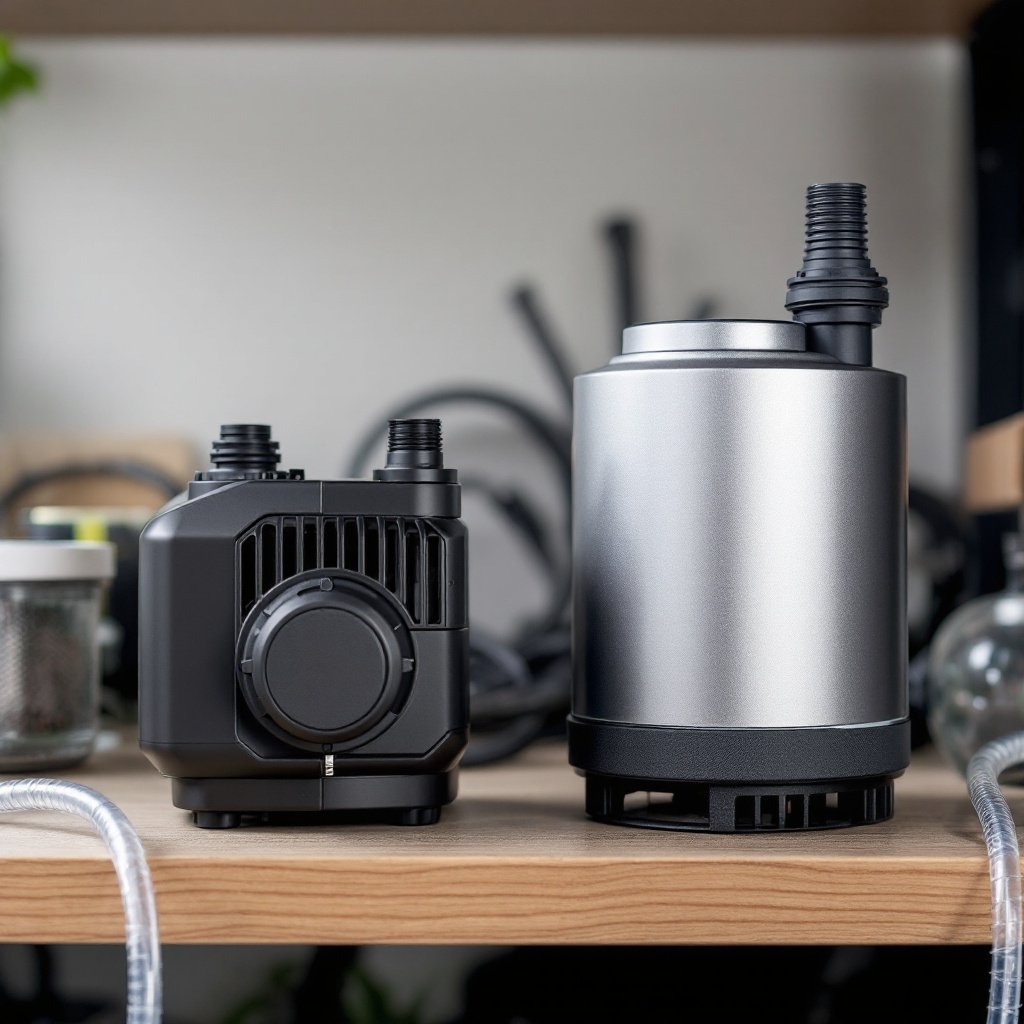
Diaphragm pumps work well for small clusters of tanks. Cheap, compact, and easy to replace. But they lose power over time, and once you push them to their upper limit, they get noisy in a way that (honestly) drives me absolutely bananas.
Linear piston pumps? Completely different beast. The upfront cost is higher, but the reliability is impressive. Mine runs cooler than any diaphragm pump I ever owned. Airflow stays stable too. Breeders I’ve talked with say the Medo LA-45 and similar models often last 5 to 10 years with just a rebuild kit every few years. That kind of longevity matters when you’re running a serious operation.
You want the best linear air pump for fish breeders if you’re planning on 10 or more tanks long-term. Mine is quiet enough that I can still hear my heater clicking at night, which feels surreal after years of using those loud diaphragm units.
Does noise matter to you? (Let’s be honest, it probably does.) A quiet air pump for a fish room with many tanks is usually going to be a linear pump. The hum is softer and lower in pitch, so it just blends into the background.
For smaller fish rooms, a strong diaphragm pump like the Tetra Whisper AP300 is totally fine. For bigger plans, a central air pump for aquarium rack setup layouts almost always means going linear.
Building Your Air Distribution Manifold: PVC vs. Commercial Options and How to Ensure Equal Pressure
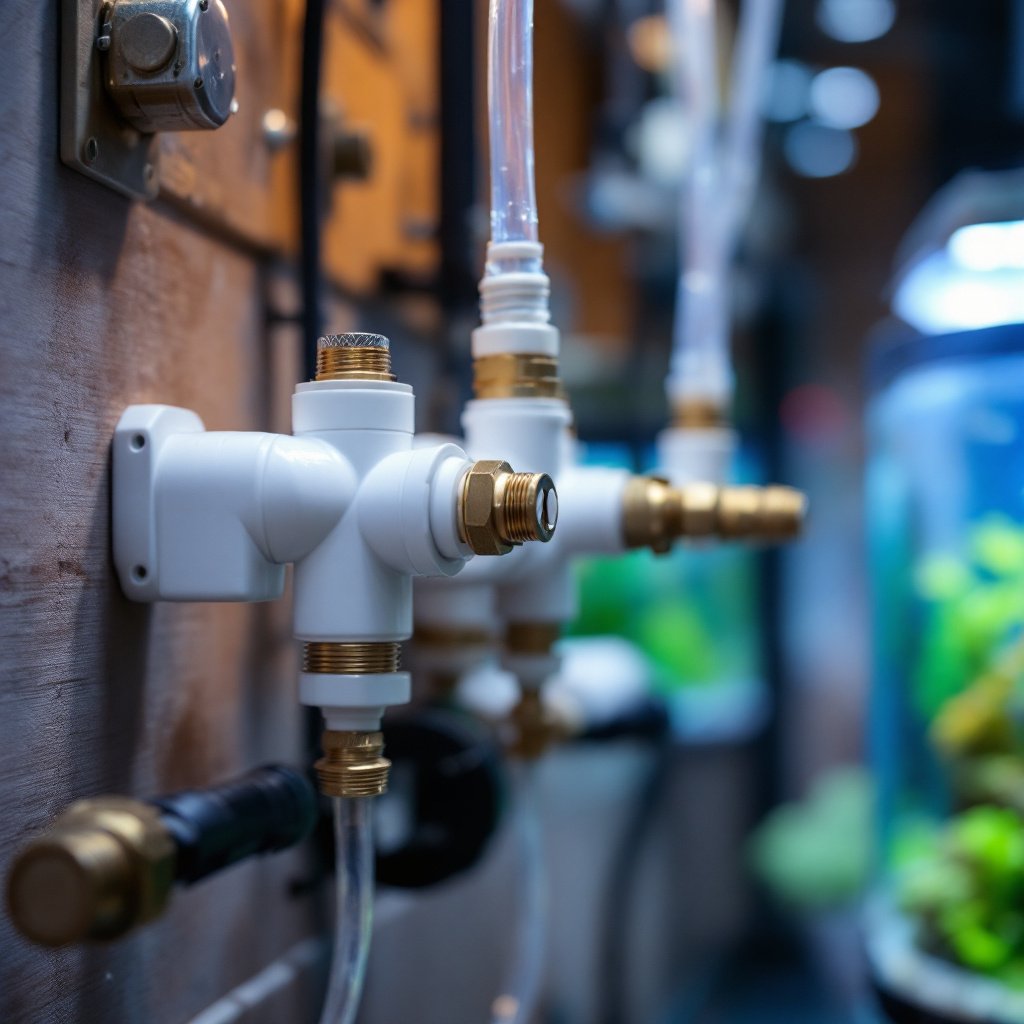
Your pump is useless without a good way to distribute air. At first, those cheap plastic gang valves you get in bulk packs seemed like a fine solution. Let me tell you: they leak. They clog. The screws wear out. Eventually I tossed them in a box and swapped to a PVC manifold.
PVC sounds fancy, but it’s literally one length of 1/2-inch pipe with drilled holes and threaded metal valves. You can build one in an hour with a $10 length of pipe and a handful of fittings. Nothing complicated about it.
Pros of PVC manifolds:
- Sturdy and leak-free
- Easy to mount above racks
- Valves stay in the position you set
- Perfect for connecting multiple aquariums to single air pump setups
Commercial aluminum manifolds look slick, but clogged valves drove me nuts. PVC wins for durability and adjustability. Every time.
Achieving equal pressure might sound complicated. It’s not. You just want the manifold higher than your tanks so air flows evenly. And install a check valve at every tank. Even if you think you’ll remember to turn off the pump before maintenance, trust me. At 2 AM you won’t. Water backflow is brutal.
Want the best air distribution method for multiple aquariums? PVC with metal valves is the sweet spot for cost and performance.
The Installation Walkthrough: Step-by-Step Setup from Pump Placement to Individual Tank Connections
Here’s the exact process from my 12-tank room. Feel free to adapt it to your own layout.
Step 1: Place the pump
Keep it off the floor. Mine sits on a shelf near the top of the rack. Air pushes better downhill, which is just physics doing its thing.
Step 2: Add a short section of thick silicone tubing
This small piece acts like a shock absorber and cuts vibration noise. The difference is surprising, honestly.
Step 3: Connect the line to your manifold
Use hose clamps on both ends if you’re using a linear pump. Pressure’s higher, so lines can pop off without them. Ask me how I know.
Step 4: Mount your manifold above tank height
Mine runs across the back of my racks. Looks clean, works well.
Step 5: Run individual air lines down to each tank
Each line gets:
- A check valve
- An inline valve or a valve from the manifold
- The option to add a splitter if you’re running dual sponges
Step 6: Adjust each valve
Open all valves halfway, turn on the system, then dial in each tank. The whole process takes maybe 10 minutes.
Nervous about how to run one air pump for multiple tanks? This setup works in almost any fish room layout. Don’t overthink it.
Troubleshooting Common Problems: Uneven Bubbling, Pressure Loss, and Noise Reduction Fixes
Now that your system is running, let’s tackle the issues that inevitably pop up.
Uneven bubbling
Half the time it’s a kinked air line. The other half? A valve that isn’t fully open. Rarely, it’s because your pump is undersized and struggling. When the weak tank happens to be your deepest one, that’s your clue right there.
Pressure loss
Look for leaks first. Spray a little soapy water around fittings. Bubbles mean you need to tighten things up. One tiny leak in a threaded PVC joint drove me absolutely wild until I finally spotted it.
Noise issues
Linear pumps vibrate, so set yours on a foam pad or yoga block. Diaphragm pumps hum loudly when overworked, which means either reduce the load or upgrade. No way around it.
Random bursts of bubbles
Usually condensation in the line. Try adding a drip loop.
Connecting multiple aquariums to a single air pump manifold means you’ll eventually hit one of these issues. Don’t panic. Every single one is fixable.
Building a multi-tank air pump system for fish room setups is way easier once you know the right pump size, how to route air lines, and how to avoid pressure loss. Here’s your quick 30-minute action plan:
- Count your tanks and estimate LPM per tank
- Add 20 percent buffer
- Choose linear for big rooms, diaphragm for small
- Build a PVC manifold
- Mount everything above tank height
- Add check valves everywhere
- Adjust each tank one at a time
Looking for pump recommendations?
- Small rooms (4 to 8 tanks): strong diaphragm pump like the Tetra AP300
- Medium rooms (8 to 16 tanks): small linear piston pump like the Medo LA-28
- Large rooms (20+ tanks): mid-size linear pump like the Medo LA-45 or Hiblow HP-40
For more reading, you might want to look at topics like sponge filter sizing or nano tank stocking guides. Add those as internal links when you publish.