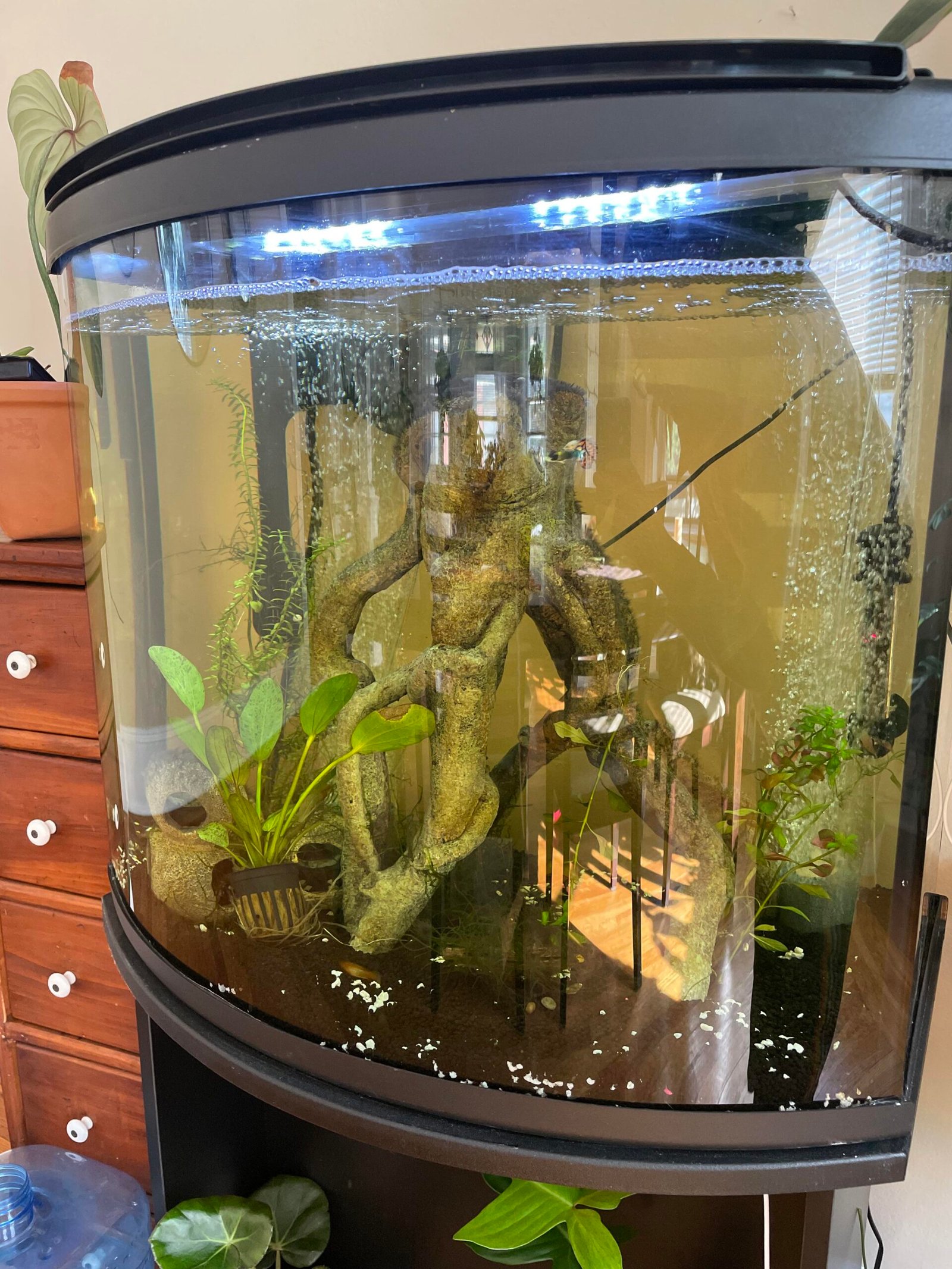
Yellow aquarium water is usually caused by tannins from driftwood, decaying organic matter, or a buildup of fish waste.
Walking over to your aquarium for a moment of peace, only to be met with a yellow, tea-like tint in the water, can be disheartening. I've been there myself, staring at my tank and wondering, "Why did my aquarium water turn yellow overnight?" As an aquarist with years of experience, I can assure you that this is one of the most common issues fishkeepers face. The good news is that it's almost always easy to fix. In this guide, we’ll dive deep into the exact reasons why your aquarium water turn yellow and provide you with simple, actionable steps to get your tank back to being crystal clear.

The Most Common Culprit: Tannins from Driftwood
If you've recently added a new piece of driftwood to your aquarium, you've likely found the primary source of the yellowing. Driftwood, especially types like Mopani or Malaysian driftwood, naturally releases compounds called tannins into the water. Think of it like steeping a tea bag; the wood slowly infuses the water with a brownish-yellow color.
I remember the first time I added a gorgeous piece of Mopani wood to my 20-gallon tank. I was so excited about the new look. The next morning, I woke up to what looked like a tank full of weak tea. My initial panic was quickly replaced with research, and I learned that this is a completely natural process. While it might look odd, tannins are not harmful to your fish. In fact, they can lower the pH slightly and have antibacterial properties, which can be beneficial for sensitive fish like bettas, tetras, and discus, mimicking their natural blackwater habitats.
So, if driftwood is the reason why my aquarium water turn yellow, what can be done? The easiest solution is to pre-soak or boil the wood before adding it to your tank. Boiling a new piece of driftwood for an hour or two can release a significant amount of tannins. For larger pieces that won't fit in a pot, soaking them in a bucket for a week or two, with daily water changes, will also do the trick.
:strip_icc()/yellow-or-brown-aquarium-water-1381217_final-5bdb757f46e0fb002d76612a-0a52e89c9a4f4a139fd58ef83c8bc36f.jpg)
The Sneaky Suspect: Decaying Organic Matter
Another major contributor to yellow water is the buildup of dissolved organic compounds (DOCs). This sounds complicated, but it's just the natural waste that accumulates in any aquarium over time. This is often the answer for aquarists asking why my aquarium water turn yellow even without driftwood.
These organic compounds come from a few key sources:
- Fish Waste: This is the most obvious source. Fish poop breaks down and releases compounds that can stain the water.
- Uneaten Food: Any food that your fish don't eat sinks to the bottom and begins to rot. This decay process leaches colors and other substances into the water column.
- Decaying Plants: If you have live plants, any dead leaves or melting stems that are not removed will decompose and contribute to the yellow tint.
Imagine your aquarium's substrate like a carpet. If you never vacuumed it, dust, crumbs, and dirt would build up. The same thing happens in your tank. Without regular cleaning, this organic waste accumulates, breaks down, and slowly turns your water yellow. This is why consistent maintenance is the cornerstone of a healthy, clear aquarium.

Overfeeding and Fish Waste Buildup
Tying directly into decaying matter, overfeeding is a huge factor when you're wondering why my aquarium water turn yellow. It’s easy to do; we love our fish and want to make sure they are well-fed. However, feeding them more than they can consume in a couple of minutes leads to a cascade of problems.
The excess food settles on the gravel or in your filter, where it starts to decompose. This process not only releases yellowing compounds but also produces ammonia, which is toxic to fish. A tank with high levels of organic waste is working overtime to process it, and yellow water is often one of the first visual signs that your biological filter is getting overwhelmed. A friend of mine couldn't figure out why his tank was always cloudy and yellow until we realized he was feeding his fish three large meals a day. Once he cut back, the water quality improved dramatically within a week.
The rule of thumb is to feed your fish only what they can completely consume in about two minutes, once or twice per day. This simple change can make a massive difference in water clarity and overall tank health, and it's a primary solution for anyone asking why my aquarium water turn yellow.

How to Fix Yellow Aquarium Water and Keep it Clear
Now for the best part: getting your water back to crystal clear. Fixing yellow water is straightforward and involves a few key maintenance practices. If you're tired of asking "why my aquarium water turn yellow," these steps will give you a clear path forward.
- Perform Regular Water Changes: This is your first and most effective tool. Performing a 25-30% partial water change every week physically removes the dissolved organic compounds and tannins from the water, diluting the yellow color. It's the simplest way to reset your water quality.
- Use Activated Carbon: Think of activated carbon as a chemical sponge. Its porous surface is incredible at trapping and absorbing impurities, including the tannins and DOCs that cause yellow water. Most hang-on-back or canister filters have a cartridge or space for a media bag filled with activated carbon. Remember to replace it every 3-4 weeks, as it becomes saturated and loses its effectiveness.
- Step Up Your Cleaning Routine: Get a good gravel vacuum and use it during every water change. Siphoning the substrate pulls out trapped fish waste, uneaten food, and other debris before it can decompose. Also, regularly trim and remove any dead or dying leaves from your live plants to prevent them from rotting in the tank.
- Pre-Treat New Driftwood: As mentioned earlier, never add a new piece of driftwood straight to your main tank. Boil or soak it first to leach out the majority of the tannins. This proactive step can prevent the yellow water issue from ever starting.
By incorporating these habits into your routine, you won't have to worry about why my aquarium water turn yellow anymore. You'll be maintaining a healthy, stable, and beautifully clear environment for your fish to thrive in.

Frequently Asked Questions
Is yellow aquarium water harmful to fish?
Generally, no. Yellow water caused by tannins from driftwood can actually be beneficial, as it mimics the natural habitat of many fish. However, if it's from excessive waste, it indicates poor water quality that can eventually stress or harm your fish.
How long does it take for tannins to go away?
Tannins from driftwood can continue to leach for weeks or even months. Regular water changes and the use of activated carbon will significantly speed up the process of clearing the water.
Can my filter fix yellow water?
A filter helps, but it needs the right media. A standard sponge filter will only remove physical debris. To remove the yellow tint, you need to add a chemical filtration media like activated carbon to your filter.
Why is my new tank water yellow?
If you just set up a new tank with driftwood, tannins are the most likely cause. If there is no driftwood, it could be from organic compounds leaching from the new substrate, especially if it's an aqua soil.
Does yellow water mean my tank has high ammonia?
Not necessarily, but they can be related. The decaying organic matter that causes yellow water also produces ammonia as it breaks down. It's always a good idea to test for ammonia, nitrite, and nitrate if your water suddenly turns yellow.
Conclusion
Seeing your aquarium water turn yellow can be alarming, but it’s rarely a sign of a major disaster. In most cases, it's a natural result of tannins from driftwood or a simple reminder that your tank is due for a good cleaning. By understanding the causes—tannins, decaying organic matter, and overfeeding—you are empowered to take control.
A clear tank is a sign of a healthy ecosystem, and achieving it is all about consistency. Start incorporating regular water changes, gravel vacuuming, and the use of activated carbon into your maintenance schedule. With a little bit of effort, you'll be rewarded with a sparkling clear aquarium that you and your fish can enjoy. Now, go put these tips into practice and share your success stories in the comments below