An imbalance of light and nutrients is the main reason why there is so much algae in your aquarium.
Seeing your beautiful aquarium turn into a green, murky mess can be incredibly frustrating. I've been there, staring at a tank that looks more like a forgotten pond than a vibrant underwater world, wondering what went wrong. You’ve invested time, money, and care into your aquatic pets, only to find yourself in a constant battle with slimy green, brown, or black gunk. If you're tired of scrubbing and are asking yourself, "why is there so much algae in my aquarium?", you've come to the right place. We're going to dive deep into the real causes of algae overgrowth and give you a clear, actionable plan to restore balance and clarity to your tank for good.

Understanding the Root Causes of Aquarium Algae
Algae is not your enemy; it's just a simple plant that thrives on a basic formula: light + nutrients + carbon dioxide (CO2). In a healthy, balanced aquarium, your decorative plants use these resources, leaving little for algae to consume. The problem arises when this system gets out of balance. Understanding why there is so much algae in my aquarium starts with identifying which part of this simple equation has gone wrong.
The Big Three: Light, Nutrients, and CO2
Think of these three elements as the legs of a stool. If one is too long or too short, the whole system becomes wobbly and unstable, creating the perfect opportunity for algae to take over.
- Excessive Light: Light is the energy source for photosynthesis. When there's too much of it, algae goes into overdrive. This is one of the most common reasons people find so much algae in their aquarium. Common mistakes include leaving the aquarium light on for more than 8 hours a day or placing the tank in a spot where it receives direct sunlight from a window. I learned this the hard way with my first tank; a few hours of afternoon sun turned my crystal-clear water into green pea soup in less than a week. A simple timer is your best friend here, ensuring your lights provide a consistent and appropriate photoperiod.
- Surplus Nutrients: Algae feeds on organic waste compounds, primarily nitrates and phosphates. These nutrients build up in your tank from several sources: overfeeding your fish, fish waste, and decaying plant matter. Every uneaten flake of food breaks down and becomes fuel for an algae bloom. This is why a clean tank is a healthy tank. Regular maintenance isn't just about making the tank look nice; it's about actively removing the food source that algae needs to survive.
- Inconsistent CO2 Levels: This factor is especially critical for aquarists with planted tanks. Your aquatic plants need a stable supply of CO2 to photosynthesize effectively and outcompete algae. When CO2 levels fluctuate, plants struggle, and algae seize the opportunity to absorb the unused light and nutrients. This is often the culprit behind stubborn Black Beard Algae, which loves environments with unstable CO2.
The Hidden Culprits Behind Algae Growth
Sometimes, you might feel like you're doing everything right with light and nutrients, yet you're still wondering why there is so much algae in my aquarium. In these cases, the problem might be a less obvious issue related to your tank's overall health and maintenance routine.
Poor Water Circulation
Stagnant water is an open invitation for algae. If water isn't flowing well throughout your tank, you'll get "dead spots" where nutrients can accumulate and algae can settle and grow undisturbed. A good filter that is appropriately sized for your tank is crucial. You should see a gentle movement of plants and debris throughout the entire aquarium. If you notice areas where things seem to settle, you may need to adjust your filter output or consider adding a small powerhead to improve circulation.
Inconsistent Tank Maintenance
Consistency is key in the aquarium hobby. Skipping a weekly water change might not seem like a big deal, but it allows nitrates and other waste products to build up to levels that algae loves. A routine that includes a 25-30% water change each week, along with vacuuming the gravel to remove detritus, is your strongest defense. I remember a busy month where I neglected my maintenance schedule, and the price was a stubborn layer of green spot algae on the glass that took weeks of dedicated effort to finally get rid of.
Unwanted Hitchhikers
Algae spores can enter your aquarium in many ways. They can hitch a ride on new fish, live plants, decorations, or even in the water from the fish store bag. This is why it's a good practice to quarantine new arrivals. For plants, a quick rinse in a very diluted bleach or hydrogen peroxide solution can help kill off any lingering algae spores before you introduce them into your main display tank, preventing a problem before it even starts.

Identifying Common Types of Aquarium Algae
Knowing your enemy is half the battle. Different types of algae tend to be caused by different imbalances, so identifying what's growing in your tank can give you a major clue about how to fix it.
- Green Spot Algae (GSA): These are the hard, circular green spots that appear on the glass and slow-growing plant leaves. They are often a sign of very intense lighting and can sometimes indicate low phosphate levels.
- Black Beard Algae (BBA): This dreaded algae grows in dense, dark tufts that look like a beard. It's tough to remove and is almost always linked to fluctuating or low CO2 levels.
- Green Water: This is caused by a bloom of free-floating algae that turns your entire tank into green soup. It is typically the result of a sudden nutrient spike combined with too much light.
- Brown Algae (Diatoms): This dusty brown coating is very common in newly set up aquariums. It feeds on silicates present in new sand and tap water and almost always disappears on its own as the tank matures.
- Hair Algae: As the name suggests, this algae grows in long, stringy filaments. It's a general indicator of a nutrient imbalance, often high nitrates, and can be a real nuisance to remove manually.

Your Game Plan for an Algae-Free Aquarium
Now that you know why there is so much algae in your aquarium, it's time to take action. The goal isn't to eliminate algae completely—a little is normal in a healthy ecosystem—but to bring your tank back into balance so algae can't take over.
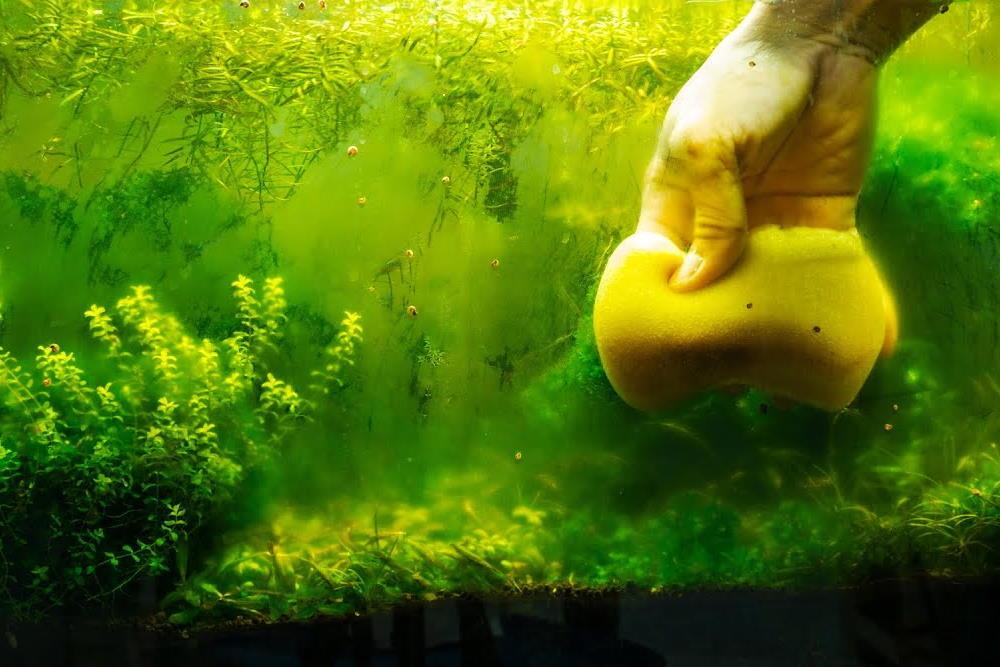
- Perform a Manual Cleanup: Start by removing as much algae as you can. Scrub the glass, trim affected plant leaves, and siphon out any loose algae during a large water change of about 50%. This gives you a clean slate to work with.
- Correct the Imbalance: Based on what you've learned, address the root cause. Reduce your lighting period to 6-8 hours with a timer. Start feeding your fish less. Review your CO2 injection if you have a planted tank to ensure it's stable.
- Establish a Routine: Commit to a weekly maintenance schedule. This should include a 25% water change, gravel vacuuming, and cleaning your filter media in old tank water (never tap water, as chlorine kills beneficial bacteria).
- Introduce an Algae Cleanup Crew: Nature has its own solutions. Amano shrimp are fantastic at eating hair algae, Nerite snails are relentless glass cleaners for green spot algae, and Otocinclus catfish will happily graze on brown diatoms. Adding the right cleanup crew can make a huge difference in keeping algae under control.
- Be Patient: An aquarium is a living ecosystem, and it takes time to restore balance. Don't expect to see results overnight. Stick with your plan for a few weeks, and you will gradually see your tank's health improve and the algae recede.
Frequently Asked Questions
h3 Why did algae suddenly appear in my established tank?
A sudden algae outbreak in a stable tank is almost always due to a change. This could be anything from a change in your feeding habits or maintenance schedule to a recent addition of new fish, which increases the biological load.
h3 Will a chemical algaecide fix my problem?
While algaecides can kill algae quickly, they are a temporary fix that does not address the underlying imbalance. The algae will almost certainly return unless you fix the root cause, and these chemicals can sometimes harm sensitive fish, shrimp, and plants.
h3 Is it true that some algae is good for an aquarium?
Yes, a small amount of green algae on rocks or driftwood is a sign of a healthy, mature aquarium. It provides a natural food source for shrimp and some fish. The problem is not the presence of algae, but its overgrowth.
h3 Can I get rid of algae by just turning off the lights?
A "blackout" for 2-3 days can be very effective at killing off algae, especially green water. However, like chemical treatments, it's a temporary solution. If you don't address the nutrient issue that fueled the bloom, it will come back once the lights are on again.
h3 Why do I have algae if my water tests show zero nitrates?
In a tank with a severe algae problem, the algae can consume nitrates as fast as they are produced. Your test kit may read zero, but it's a false negative because the algae is using it all. This is a clear sign that you have a nutrient problem that needs to be addressed.
Reclaiming Your Crystal-Clear Tank
Tackling an algae problem can feel overwhelming, but it's entirely manageable when you stop fighting the symptoms and start treating the cause. The answer to "why is there so much algae in my aquarium" always comes down to an imbalance of light, nutrients, and CO2. By taking control of these elements, you're not just getting rid of algae; you're creating a healthier, more stable, and more beautiful environment for your aquatic pets.
Now it's your turn to restore harmony to your underwater world. Pick one step from the action plan and start today. Which imbalance do you think is causing your algae issue? Share your story and progress in the comments below—we can all learn from each other's experiences