New aquariums go cloudy mainly from harmless bacterial blooms or stirred-up debris.
I have set up and cycled dozens of tanks. I know why is new aquarium cloudy and how to fix it fast. This guide explains causes, testing steps, safe fixes, and prevention. Read on to clear the water and protect your fish with confidence.
Common causes of cloudy water in a new aquarium
Cloudiness in a new tank usually stems from a few repeatable causes. The main culprits are bacterial blooms, fine dust in the substrate, and dissolved organics from décor or tap water. Understanding the cause helps you act without stressing fish.
- Bacterial bloom. Rapid bacterial growth makes a white or milky haze. This happens as the tank’s nitrogen cycle begins.
- Substrate dust. Unrinsed sand or gravel can float and cloud water for days.
- Dissolved organics. New wood, decorations, or decaying plant bits leach tannins and organics that cloud water.
- Tap water minerals. Hard water with high phosphate or calcium can form a film.
- Overfeeding and waste. Extra food and new fish waste spike organics that feed cloudiness.
If you ask why is new aquarium cloudy, start by checking these items first. Most cases are normal and temporary when a tank is new.

The nitrogen cycle and “new tank syndrome”
The nitrogen cycle explains why bacterial blooms often occur. Ammonia from waste rises in a new tank. Beneficial bacteria multiply to convert ammonia to nitrite, then nitrate. During this fast growth, suspended bacteria make water cloudy.
Cycling speed varies with tank size, temperature, and available food. Patience is the first remedy. Testing ammonia, nitrite, and nitrate shows where you are in the cycle. If ammonia or nitrite are high, do small water changes and avoid adding more fish.
Understanding why is new aquarium cloudy as part of the cycle helps you avoid harmful interventions. Let biology stabilize while supporting it with gentle care.
:strip_icc()/cloudy-aquarium-water-1378803-3736ff0eb5b34aa0907ae9df2882a86e.png)
How to diagnose the type of cloudiness
A clear diagnosis prevents wrong fixes. Use these simple checks to identify the cause of cloudiness.
- Look at color. Milky white usually means bacteria. Brown or yellow suggests tannins from wood. Green tint points to algae.
- Smell the water. Foul or rotten smells suggest decay and excess waste. No smell often means bacterial bloom.
- Test water. Use test kits for ammonia, nitrite, nitrate, pH, and phosphate. High ammonia or nitrite ties to cycling issues.
- Check the filter. New filters can release fine dust. Inspect media for clogging or fresh dust.
- Time the cloudiness. If it appears 24–72 hours after setup, bacteria or substrate dust is likely.
When you know why is new aquarium cloudy, you choose safe steps instead of guessing.
Step-by-step fixes for a cloudy new aquarium
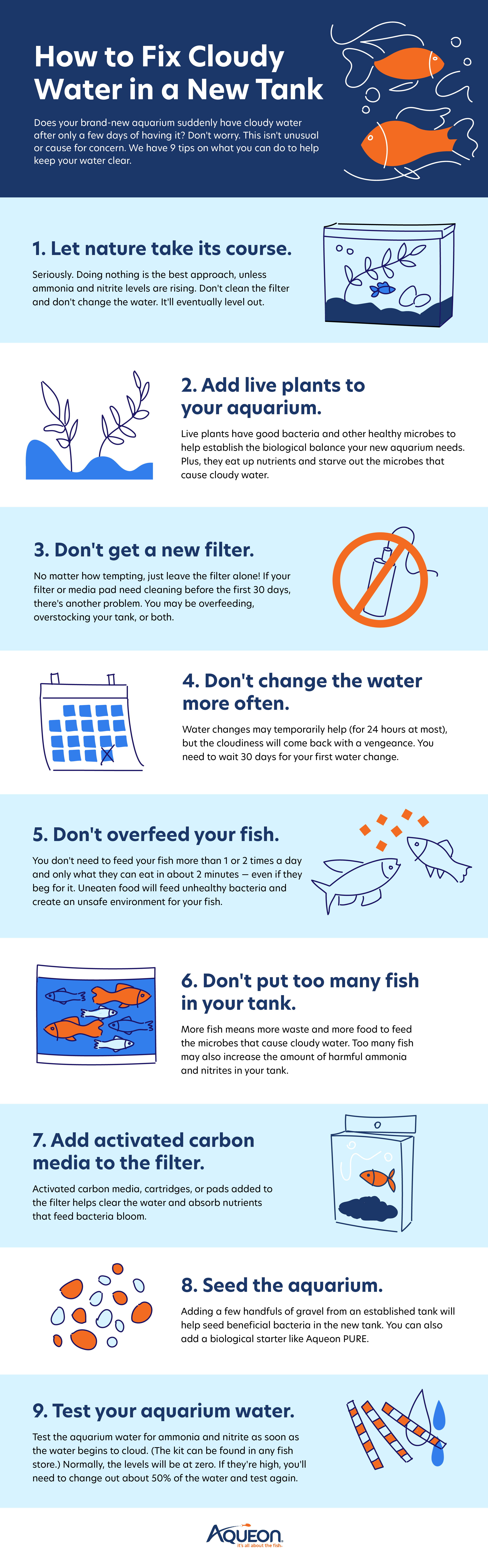
Follow a calm, stepwise plan. Rapid, extreme changes often harm fish and delay cycling.
- Stop feeding as much. Cut feeding by 50% or skip a day. Less food reduces waste and organic load.
- Do small water changes. Replace 10–20% of water every 1–2 days for cloudy tanks with high ammonia or nitrite. Use dechlorinated water at the same temperature.
- Rinse the filter media gently. Rinse in removed tank water to avoid killing bacteria with chlorinated tap water.
- Vacuum the substrate lightly. Remove visible debris without stirring the whole bed aggressively.
- Add mechanical filtration. A fine sponge or polishing pad captures suspended particles.
- Consider a bacterial starter carefully. Quality products can accelerate cycling, but use as directed.
- Avoid flocculants unless necessary. They clump particles so they can be filtered, but they don’t solve underlying cycling issues.
- Maintain steady temperature and aeration. Stable conditions help bacteria establish quickly.
Each step respects the biology that answers why is new aquarium cloudy. Be patient and measure progress with test kits.
Preventing cloudiness when setting up a tank
Preventing cloudiness starts at setup. Small habits avoid common mistakes.
- Rinse substrate thoroughly until water runs clear. This prevents sandy clouds.
- Cycle the tank before adding fish. Use fishless cycling to build bacteria safely.
- Use aged or conditioned water. Let tap water sit or use conditioners to remove chlorine and chloramine.
- Add décor slowly. Clean driftwood and new décor to limit leaching.
- Stock gradually. Add a few hardy fish, then wait weeks before adding more.
- Control feeding. Feed small amounts that fish fully eat in two minutes.
Prevention answers why is new aquarium cloudy before it starts. A little prep saves time and stress.

Products and tools that help clear cloudy water
Certain tools make diagnosis and cleanup easier. Use them thoughtfully and sparingly.
- Test kits. Essential for tracking ammonia, nitrite, nitrate, and pH.
- Mechanical filters and fine sponge pads. Capture suspended particles.
- Activated carbon. Removes dissolved organics and tannins but replace often.
- UV sterilizers. Effective for free-floating algae and bacteria when used correctly.
- Water clarifiers. They clump particles for easier filtering; use as a short-term aid.
- Gravel vacuums. Help remove debris from substrate during water changes.
Choose tools that match the cause. If you know why is new aquarium cloudy, select the right tool to support the tank’s recovery.
Personal experience: mistakes and lessons learned
I once set up a planted 10-gallon tank and rushed the rinse on fine black sand. The water turned gray within hours. I learned to rinse longer and vacuum gently during the first week. Patience plus daily 10% water changes cleared it in five days.
Another time I added too much wood at once. Tannins turned the water tea-colored. Activated carbon and frequent water changes helped. Next time I soaked wood for a week before adding it.
From these setups, I learned two rules: rinse everything well and introduce new elements slowly. Those steps prevent the common reasons why is new aquarium cloudy.
Frequently Asked Questions of why is new aquarium cloudy
Why is my new aquarium cloudy and white?
A white or milky cloud usually comes from bacterial bloom. It is common during the cycling phase and often clears in a few days with stable conditions.
How long does cloudy new tank water last?
Cloudy water from bacteria or dust typically clears in 3–14 days. Persistent cloudiness beyond two weeks suggests unresolved issues like filter problems or high nutrients.
Can I use water clarifier to fix a cloudy new aquarium?
Water clarifier can help by clumping particles so filters remove them. Use it as a short-term aid and still address the root cause like cycling or substrate dust.
Will a water change make a new tank less cloudy?
Small water changes reduce organics and help clear water. Avoid large, frequent changes that disrupt the beneficial bacteria. Aim for 10–20% changes if needed.
Is cloudy water harmful to fish in a new tank?
Short-term cloudiness is usually not harmful if ammonia and nitrite are low. If those levels are high, cloudy water signals stress and needs quick action.
Should I remove all decorations if the tank is cloudy?
Not usually. Only remove items that are clearly decaying or heavily leaching. Rinsing decor in tank water can help without disrupting the cycle.
Conclusion
Cloudy water in a new aquarium is most often a normal, fixable phase caused by bacterial bloom, substrate dust, or leached organics. Test the water, take measured steps like small water changes and gentle filtration, and give the tank time to cycle. Prevent future cloudiness by rinsing substrate, cycling before stocking, and adding new items slowly.
Start with testing and a calm action plan today. Try one or two of the fixes above, monitor with a test kit, and share your results or questions below to get tailored advice.