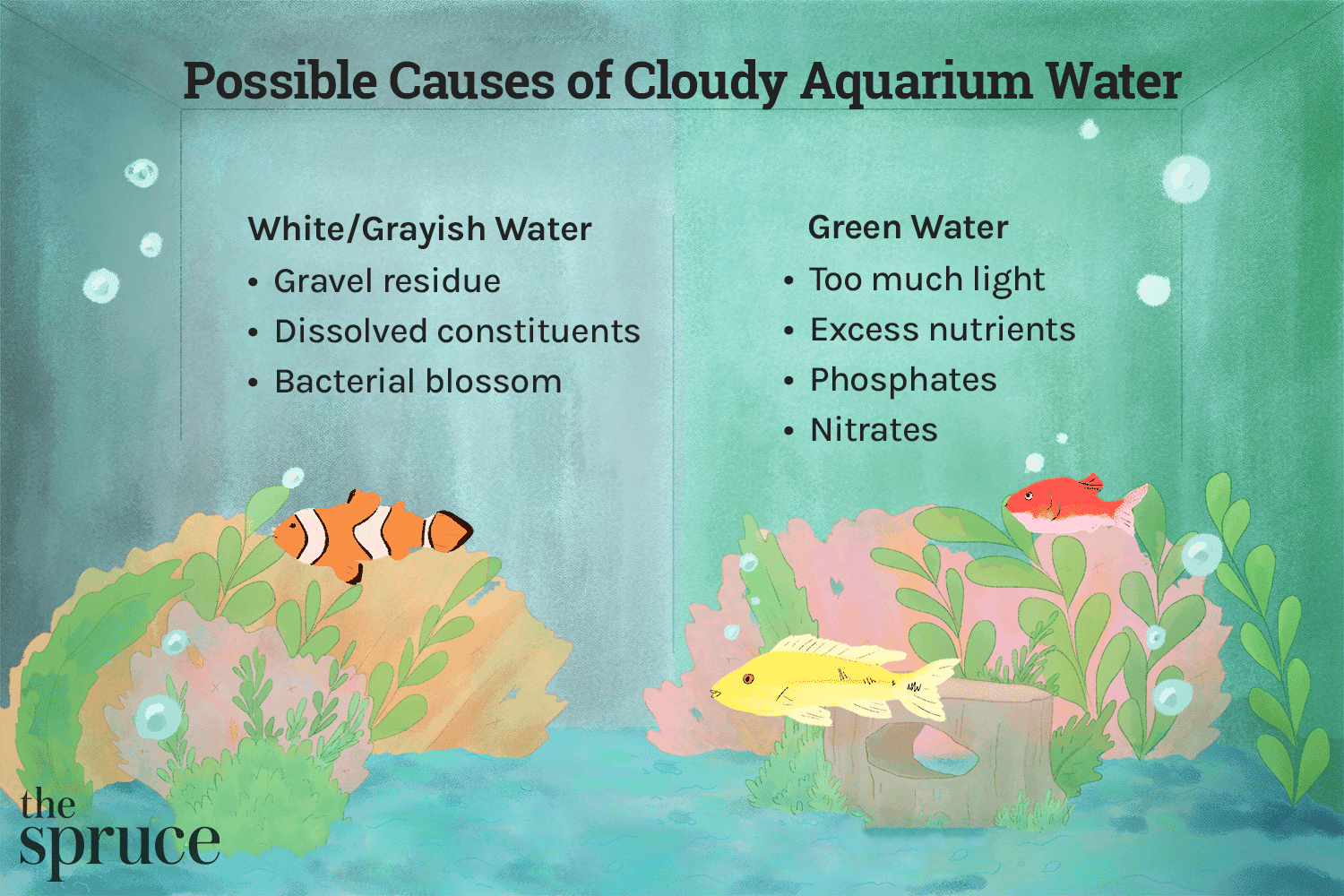
Cloudy aquarium water is usually caused by bacterial blooms, fine debris, or algae from poor filtration.
As an aquarist with years of hands-on tank care and troubleshooting, I will explain why is my fish aquarium water cloudy, how to tell the difference between causes, and exactly what to do next. Read on for clear, actionable steps that stop cloudy water fast and keep your tank stable over the long term.
:strip_icc()/cloudy-aquarium-water-1378803-3736ff0eb5b34aa0907ae9df2882a86e.png)
Common causes of cloudy aquarium water
Cloudy water can come from several sources. Knowing the cause helps you choose the right fix for why is my fish aquarium water cloudy.
- Bacterial bloom
- New tanks or recent large water changes can cause tiny bacteria to grow fast. The cloud looks milky and can clear in days if left alone.
- Fine debris and suspended particles
- Sand, crushed coral, or disturbed substrate can stir up particles. This makes the water look dusty or gray.
- Algae bloom
- Green cloudy water often comes from tiny free-floating algae. It grows with excess light and nutrients.
- Overfeeding and waste
- Extra food and fish waste raise ammonia and organic load. This feeds bacteria and algae and clouds water.
- Poor or underpowered filtration
- A filter that is clogged, undersized, or missing mechanical media leaves particles suspended in water.
- Chemical imbalances and additives
- Some additives or tap water residues can cloud water temporarily when they react with tank chemistry.
If you keep asking why is my fish aquarium water cloudy, start by checking these items in this order: feed, filter, light, and recent changes.

How to identify the type of cloudiness
Clear diagnosis saves time. Here’s how to tell which cause fits your tank.
- Appearance clues
- Milky white: usually bacterial bloom. The cloud looks like milk and coats surfaces slightly.
- Gray or dusty: likely fine substrate or debris from cleaning or a tank disturbance.
- Green tint: free-floating algae. Water may look pea-soup green under light.
- Brown or yellow: tannins from driftwood or poor filtration causing dissolved organics.
- Timeline and tank events
- New tank cycling: bacterial bloom is common in first weeks.
- After cleaning or substrate work: expect dust or debris cloudiness.
- After heavy feeding or many fish added: think waste-driven blooms.
- Simple tests you can do at home
- Turn off the filter for a short time and watch. If cloud clears slowly, particles may be trapped in the filter. If cloud worsens, biological imbalance may be active.
- Use a flashlight at night. Green algae glow differently than white bacterial clouds.
When you ask why is my fish aquarium water cloudy, these simple checks will narrow the cause quickly.
Tests and tools to diagnose the problem
Good tools speed diagnosis. You don’t need a lab to spot the issue.
- Basic test kit
- Measure ammonia, nitrite, nitrate, and pH. High ammonia or nitrite signals a biological problem.
- TDS meter
- Total dissolved solids show if dissolved organics or minerals are high. A sudden jump can explain cloudiness.
- Visual and smell check
- Smell the tank at the water line. A strong ammonia smell often points to decay or overfeeding.
- Net or jar test
- Scoop cloudy water into a clear jar and let it sit. Particles that settle are debris; still-suspended cloud suggests bacteria or algae.
Use these tools when you ask why is my fish aquarium water cloudy to make decisions based on data, not guesswork.

Step-by-step fixes for cloudy aquarium water
Follow a calm, measured plan rather than quick panic moves. This prevents stress and repeated problems.
- Pause feeding
- Stop feeding for 24 hours if cloudiness is new. Reducing food removes fuel for bacteria and algae.
- Check and clean the filter
- Rinse mechanical filter media in tank water. Replace media only if worn. Never rinse biological media with tap water.
- Perform a partial water change
- Change 20 to 30 percent of water. Use dechlorinated water at the same temperature. Repeat over several days if needed.
- Improve mechanical filtration
- Add fine filter floss or a polishing pad to capture tiny particles. Increase flow temporarily if the tank can handle it.
- Adjust lighting and nutrients
- Reduce light hours to 6–8 per day if algae bloom is suspected. Cut back on fertilization for planted tanks.
- Use a bacterial clarifier or UV sterilizer (when needed)
- Clarifiers bind particles for the filter to catch. A UV sterilizer kills free-floating algae and bacteria but should be used with care.
- Test water and monitor
- After actions, test ammonia, nitrite, and nitrate daily until stable. Continue partial water changes as values demand.
If you repeatedly ask why is my fish aquarium water cloudy, follow these steps and track changes. Consistent routine stops repeat issues.

Prevention and routine maintenance
Preventing cloudiness is easier than fixing it. Small habits keep water clear.
- Weekly tasks
- Do partial water changes of 10–20 percent. Vacuum substrate lightly.
- Monthly tasks
- Clean filter parts and replace worn media. Inspect for dead spots in water flow.
- Feeding habits
- Feed small amounts that fish eat in 2 minutes. Remove uneaten food after 5 minutes.
- Limit light
- Keep lights on a timer and avoid direct sunlight on the tank.
- Stocking and plant care
- Avoid overstocking. Healthy plants outcompete algae for nutrients.
- Quarantine new additions
- New fish or plants can bring in algae or bacteria. Quarantine for at least two weeks.
Think of your tank like a tiny lake. Regular, small upkeep keeps the water clear and safe.

Personal experience and lessons learned
I once set up a 20-gallon community tank and faced persistent cloudy water after a substrate change. I panicked and did a 70 percent water change at once. That shocked the system and made cycling take longer. From that I learned:
- Make gradual changes
- Large water changes can disrupt beneficial bacteria. Small, repeated changes work better.
- Use tank water to rinse filters
- Rinsing biological media in tap water kills helpful bacteria. I switched to tank-water rinses and saw faster recovery.
- Invest in a good mechanical filter
- A fine floss pad removed the last bit of dust. That little change made the water crystal clear for months.
These practical tips come from hands-on troubleshooting and saved time and fish health. Keep a log of changes so you learn what helps your specific setup.

Equipment recommendations
Good equipment makes cloudy water less likely.
- Filter types
- Canister filters for larger tanks provide strong mechanical and biological filtration.
- Hang-on-back filters are easy to maintain for small tanks.
- Media to use
- Fine filter floss for polishing and mechanical capture.
- Ceramic rings or bio-balls for stable biological filtration.
- Optional tools
- UV sterilizer to control free-floating algae and bacteria in chronic cases.
- Mechanical gravel vacuum to remove settled detritus during changes.
Choose gear that matches tank size and bioload. A well-sized filter reduces the chance you'll ask why is my fish aquarium water cloudy again.
Frequently Asked Questions of why is my fish aquarium water cloudy
Why is my fish aquarium water cloudy after a water change?
Cloudy water after a water change often comes from disturbed substrate or mineral differences in new water. Do smaller changes and match temperature and parameters to avoid shocks.
How long does a bacterial bloom take to clear?
A bacterial bloom usually clears in 24 to 72 hours as the tank rebalances and filter bacteria re-establish. Check ammonia and nitrite to make sure levels are safe while it clears.
Can cloudy water harm my fish?
Cloudy water itself is often more of a symptom than a direct threat, but the underlying cause like high ammonia or low oxygen can harm fish. Test water and act quickly if readings are off.
Will a water clarifier fix all types of cloudiness?
Water clarifiers can help by clumping tiny particles so the filter removes them, but they do not fix algae growth or chemical issues. Use clarifiers with proper filtration and follow-up maintenance.
Is green cloudy water the same as algae on glass?
No. Green cloudy water is free-floating algae in the water column, while algae on glass are attached forms. Both need different treatments: adjust nutrients and light for free-floating algae, and manual cleaning for attached algae.
Why is my aquarium cloudy only at night?
Some bacterial blooms or oxygen drops can make water appear murkier at night when plants respire and oxygen falls. Check aeration and filter flow and monitor oxygen-sensitive species.
Conclusion
Cloudy aquarium water is a common problem with clear solutions. Identify whether the cloud is from bacteria, fine debris, algae, or chemical issues, then apply the right fix: stop feeding, clean and improve filtration, do staged water changes, adjust light, and use targeted tools if needed. Start small, test often, and keep a steady maintenance habit to prevent repeat issues. Put these steps into practice this week, track the results, and share your experience or questions below — your tank will thank you.