My 6-Month Bedroom Test of the Tetra Whisper Air Pump: An Honest Review
Let me tell you about the worst night’s sleep I got in 2024. It wasn’t my neighbor’s dog, my partner’s snoring, or even my own anxiety brain keeping me up. It was a $12 air pump that had developed what I can only describe as a “dying motorcycle” impression at 2 AM.
But here’s the thing. That same pump had given me nearly five months of blissful, barely audible operation before that night. So what happened? And more importantly, should you still consider buying one?
Why I’m Testing an Air Pump in My Bedroom
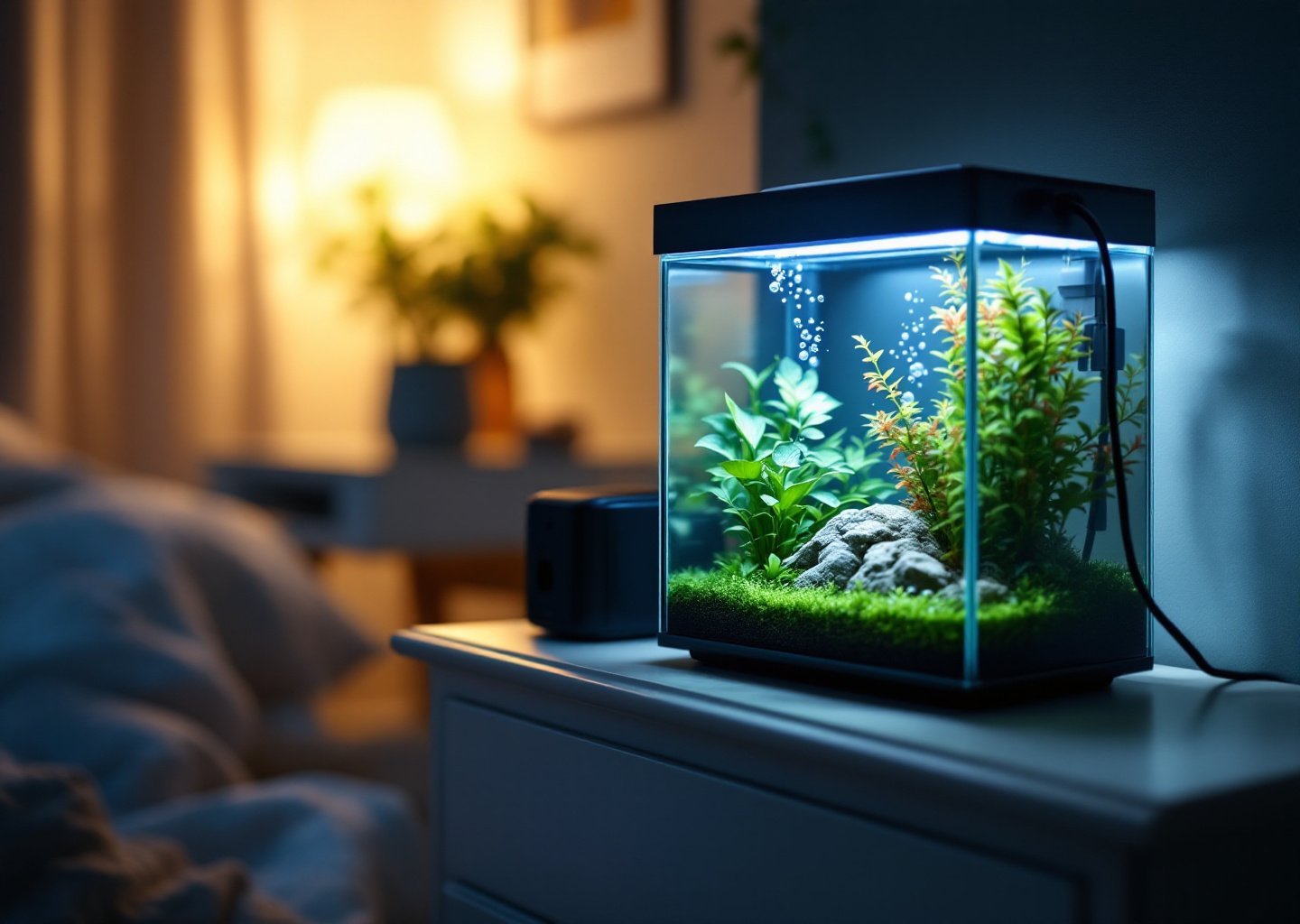
A 5-gallon planted tank sits on my nightstand. Yes, right next to my head while I sleep. Call it obsessive, call it aesthetic goals, call it the natural progression of someone who started with a desk betta and now has seven nano tanks scattered around a Portland apartment. This setup means I’ve got zero tolerance for noisy equipment.
When I decided to add supplemental aeration to my bedroom tank, I knew I was taking a risk. Every “quiet” pump I’d tried before turned out to be “quiet compared to a jet engine, I guess.” So I bought the Tetra Whisper Air Pump with healthy skepticism and a decibel meter app, determined to give you an honest Tetra Whisper Air Pump review based on real, long-term bedroom use.
In this piece, I’ll cover exactly how loud this pump actually is (with measurements), when it started failing, how it compares to alternatives, and whether the “Whisper” claim holds up when your pillow is 18 inches away.
Unboxing Reality: First Impressions and Day 1 Noise Levels
My Tetra Whisper 10 arrived in typically underwhelming aquarium packaging. Nothing fancy. Compact and roughly the size of a small computer mouse, the pump has a matte black finish that doesn’t scream “fish equipment” if you’re going for a minimalist bedroom aesthetic.
I plugged it in immediately because patience isn’t my strong suit.
First impression? Genuinely surprised. I expected the worst and got almost nothing. Standing at my normal distance from the tank (about three feet), I could barely tell it was running. Vibration was minimal, and the sound was a soft, consistent hum rather than the aggressive buzzing I’d experienced with cheaper pumps.
Here are my Day 1 decibel readings using the NIOSH SLM app (which isn’t perfectly accurate but gives you a solid baseline):
- Background room noise: 28–30 dB
- Pump on, measured at 3 feet: 32–34 dB
- Pump on, measured at pillow level: 35–36 dB
- For comparison, my mini fridge: 42–44 dB
That 35–36 dB at pillow level? Genuinely impressive for the best quiet air pump for fish tank category. For context, that’s roughly comparable to a whisper or soft rustling leaves. I fell asleep that first night without noticing it at all.
The 6-Month Timeline: When the “Whisper” Started Becoming a “Grumble”
Here’s where this Tetra Whisper Air Pump review gets real. Most reviews are written after a week of use. Nobody tells you what happens at month four.
Months 1–2: The Honeymoon Phase
Blissful silence. Well, near-silence. I honestly forgot the pump was there most nights. Noise levels stayed consistent at around 35 dB at pillow level. I smugly told my partner that I’d finally found the silent aquarium air pump for bedroom use.
Month 3: The First Warning Signs
An intermittent rattle started appearing. Nothing dramatic, just an occasional “tick” sound that would happen maybe once every few minutes. I assumed it was the tubing vibrating against something and adjusted the setup. Problem solved. Temporarily.
Month 4: The Vibration Creep
My pump started “walking” on the nightstand due to increased vibration. I’d wake up and find it had migrated an inch or two from where I’d placed it. Noise levels crept up to around 38–40 dB. Still manageable, but noticeably louder than before.
Month 5: The Buzz Begins
That smooth hum developed an undertone, a buzz that would come and go seemingly at random. Sometimes it’d be quiet for days, then suddenly sound like an angry bee was trapped inside. I started researching how to make the Tetra Whisper Air Pump quieter and tried several fixes (more on those later).
Month 5.5: That Night
Full “dying motorcycle” incident. My pump suddenly ramped up to what I measured at 52 dB. That’s as loud as a normal conversation. At 2 AM. Next to my head. I unplugged it so fast I knocked over my water glass.
Month 6: The Verdict
After troubleshooting (which I’ll cover below), I got it back down to acceptable levels, but it never returned to Day 1 quietness. Current operating noise sits around 40–42 dB, which is fine for most rooms but not ideal for a bedroom setup.
Tetra Whisper 10 vs. 20 vs. 40: Which Size Is Actually Quietest Per Gallon of Output?
After my bedroom experience, I tested the 20 and 40 models in my living room tanks to see if sizing up made a difference. Here’s what I found in my Tetra Whisper 20 vs. 40 comparison:
Tetra Whisper 10 (rated for 10 gallons)
– Day 1 noise: 32–34 dB at 3 feet
– Output: Adequate for a single sponge filter or airstone
– Best for: Nano tanks, betta tanks, small planted setups
Tetra Whisper 20 (rated for 20 gallons)
– Day 1 noise: 36–38 dB at 3 feet
– Output: Good for two small airstones or one medium sponge filter
– Best for: 10–15 gallon tanks where you want headroom
Tetra Whisper 40 (rated for 40 gallons)
– Day 1 noise: 40–42 dB at 3 feet
– Output: Strong enough for multiple outputs via gang valve
– Best for: 20+ gallon tanks or running multiple small tanks
Here’s the counterintuitive finding. Running the Whisper 20 at partial capacity (via check valve to reduce airflow) was actually quieter in practice than the Whisper 10 running at full capacity for the same output level. Because the larger diaphragm doesn’t have to work as hard, strain noise seems to decrease over time.
If you’re asking whether the Tetra Whisper Air Pump is worth it and you’re borderline between sizes, go one size up. Your future self will thank you.
Head-to-Head: Tetra Whisper vs. Aquarium Co-Op USB Pump
Everyone wants this comparison, so let’s get into the Tetra Whisper vs. Aquarium Co-Op Air Pump breakdown.
I bought the Aquarium Co-Op USB Nano Air Pump specifically to compare for this article. Here’s my honest assessment after running them side by side:
Noise (Day 1)
– Tetra Whisper 10: 32–34 dB
– Co-Op USB: 34–36 dB
– Winner: Tetra (barely)
Noise (Month 3)
– Tetra Whisper 10: 38–40 dB
– Co-Op USB: 35–37 dB
– Winner: Co-Op
Output Strength
– Tetra Whisper 10: Stronger, more consistent
– Co-Op USB: Adequate for nano tanks, weaker overall
– Winner: Tetra
Portability/Flexibility
– Tetra: Wall outlet required
– Co-Op: USB powered, works with power banks
– Winner: Co-Op (honestly, this is huge for some setups)
Price
– Tetra Whisper 10: ~$12
– Co-Op USB: ~$15
– Winner: Tetra (slightly)
Long-Term Reliability
– Tetra: Noise degradation over time
– Co-Op: More consistent noise levels
– Winner: Co-Op
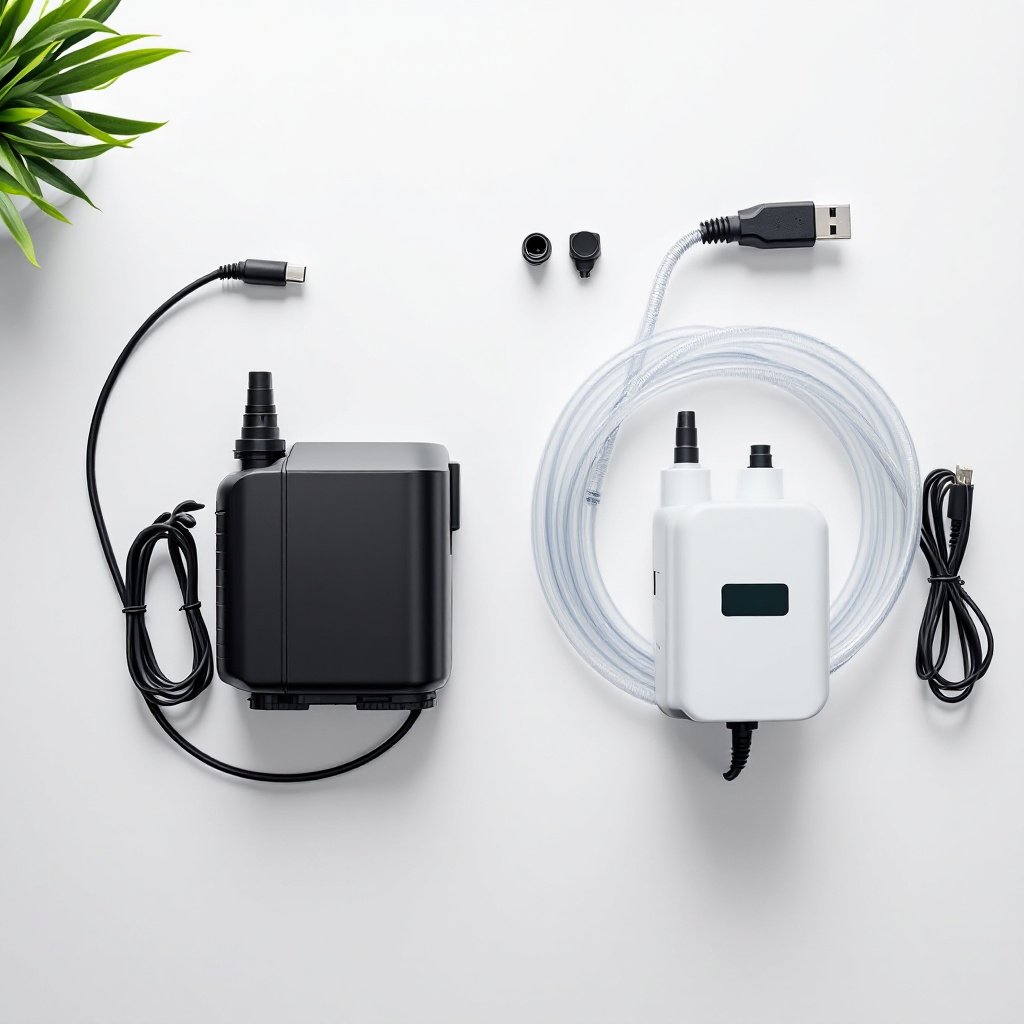
My verdict? For a bedroom tank, I’d actually recommend the Co-Op USB pump despite its slightly higher price and weaker output. Consistency matters more than Day 1 numbers when you’re sleeping next to it.
Troubleshooting Guide: Fixing the Buzz, Vibration, and “Not Working” Issues
Alright, let’s talk Tetra Whisper Air Pump not working troubleshooting, because I went through all of this myself.
Problem: Excessive Vibration
This is the most common issue. Here’s the Tetra Whisper Air Pump vibration fix that actually worked for me:
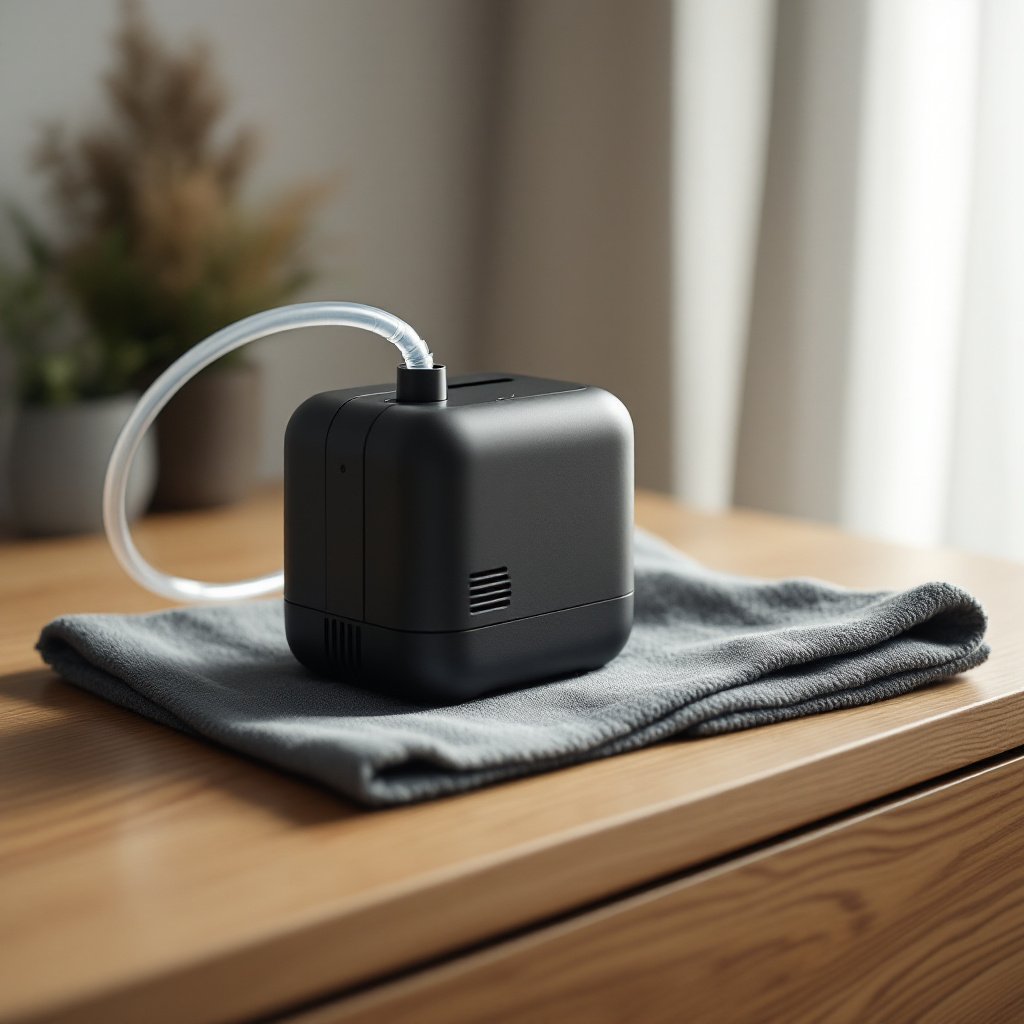
- Place the pump on a folded microfiber cloth or mouse pad.
- If that’s not enough, try a small piece of acoustic foam.
- Make sure the pump is level, not tilted.
- Check that tubing isn’t pulling on the pump and creating tension.
Problem: Sudden Buzzing or Grinding Noise
Nine times out of ten, this is a worn diaphragm. Rubber diaphragms inside the pump degrade over time, especially if you’re running it 24/7. You can buy replacement diaphragms, but honestly, at the price point of this pump, I’d just replace the whole unit.
Problem: Pump Running But No Air Output
Check these in order:
1. Is the tubing kinked anywhere?
2. Is your airstone or sponge filter clogged?
3. Is the check valve installed backward? (I’ve done this embarrassingly more than once.)
4. Has the diaphragm torn completely?
Problem: Inconsistent Noise Levels
This drove me absolutely crazy. My pump would be quiet, then loud, then quiet again. The culprit? The pump housing wasn’t fully snapped together after I’d opened it to inspect the diaphragm. Make sure both halves are firmly connected.
My Best Tip for How to Make the Tetra Whisper Air Pump Quieter
Hang it. Seriously. I rigged up a simple macramé plant hanger situation (very Portland of me, I know) and suspended the pump about six inches off my nightstand. This eliminated surface vibration transfer completely and bought me another month of acceptable noise levels.
Final Verdict: Should You Buy the Tetra Whisper?
So, is the Tetra Whisper Air Pump worth it? After six months of bedroom testing, my answer is yes, with caveats.
This is legitimately one of the quietest air pumps you can buy at this price point. For the first few months, it absolutely lives up to the “Whisper” name. At 32–34 dB on Day 1, it’s quiet enough for light sleepers, and the value proposition is excellent.
But here’s what you need to understand. This isn’t a premium, buy-it-for-life product. It’s a $12 pump that’ll likely need replacement or significant troubleshooting within 6–12 months of continuous use if noise is your primary concern.
My recommendations:
- For bedroom tanks: Start with the Tetra Whisper, but have a backup plan. Consider the Aquarium Co-Op USB pump for long-term bedroom use despite the lower output.
- For living room or office tanks: The Tetra Whisper is excellent, and noise degradation won’t matter as much.
- For best quiet air pump for a 10-gallon tank: Go with the Whisper 20 and use a gang valve to control output. An oversized diaphragm runs quieter under less strain.
The “Whisper” is real. But like most whispers, it eventually gets louder. Plan accordingly, and you won’t be throwing a water glass at your nightstand at 2 AM like some of us.