
How to Choose an Air Pump for Fish Tank Setups Without Losing Your Mind (or Sleep)
I learned how to choose an air pump for fish tank setups the hard way. Picture this: it’s 3 AM in my tiny Portland apartment, my seven nano tanks are humming along, and suddenly one of them starts rattling like a tiny underwater lawn mower. That awful buzzing had me tearing through my cabinet looking for a towel to shove under the pump. Classic overpowered air pump mistake. And honestly? Most of the advice I’d followed told me to buy something way stronger than I actually needed.
Ever felt overwhelmed by air pump specs, GPH numbers, and vague product descriptions? You’re definitely not alone. More power meant healthier fish, or so I thought. Turns out, more power usually means more noise, more microbubbles, and more chaos.
What follows is a problem-and-solution approach to this whole mess: how to avoid over-buying, how to size an air pump without guesswork, and how to know if you even need one in the first place. There’s also an aquarium air pump size chart, a few of my favorite quiet pumps for bedroom tanks, and a setup trick that lets one pump run multiple tanks.
Do You Actually Need an Air Pump? The 5-Gallon Betta Tank Truth
Here’s something a lot of beginners hate hearing: most 5-gallon betta tanks don’t need an air pump. Wish someone had told me that before I stuck poor Gerald in an uncycled 5-gallon with one of those cheap bubbling skull ornaments.
An air pump might be necessary if:
– You’re running a sponge filter
– Surface agitation is needed in a low-flow tank
– Your fish species enjoy strong oxygenation
– The tank is heavily stocked
– Shrimp keeping during hot weather calls for extra oxygen
Skip the air pump when:
– A decent hang-on-back filter already creates surface movement
– Your betta hates current (and let’s be honest, most do)
– A planted nano tank with light stocking is your setup
– Sleep matters and the tank sits in your bedroom
For the folks wondering, “Do I need an air pump for 5-gallon tank setups?” Only grab one if your filter barely moves the surface or you’re using a sponge filter. Otherwise, you’re good.
The GPH Myth: How to Calculate What Your Tank Really Needs, with Size Chart
Search the web long enough and you’ll see dozens of formulas. Some talk about gallons per hour, some talk about liters per minute, and none of them line up with how air pumps actually work. Here’s the thing: most aquarium air pumps don’t push water the way filters do, so GPH often just confuses beginners.
The real approach looks like this:
1. Decide what the pump will power, whether that’s a sponge filter or décor.
2. Match the air pump output to that tool’s resistance.
3. Size up only when splitting lines is part of the plan.
A simple rule works well here:
– Small sponge filters typically need about 1 to 1.5 LPM.
– Medium or dual sponges generally need 2 to 3 LPM.
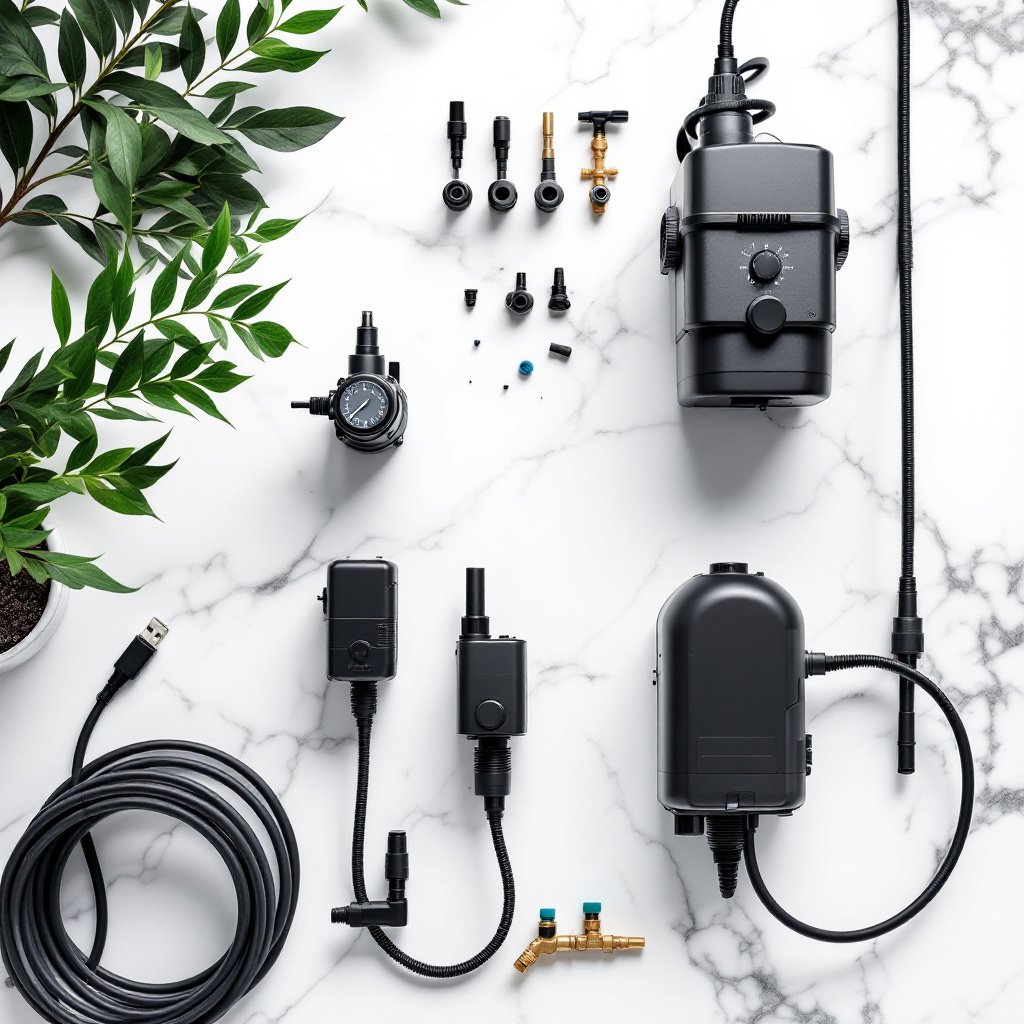
For people searching how to choose an air pump for fish tank based on gallons, the simple aquarium air pump size chart below avoids the overpowered pump trap.
Aquarium Air Pump Size Chart for Different Tank Sizes
5 Gallons
A tiny pump around 1 LPM does the trick. Great for a nano sponge filter. Honestly the best air pump for 5-gallon betta tank setups, if one is actually needed.
10 Gallons
Look for 1 to 2 LPM depending on sponge size. Helpful for anyone asking, “What size air pump do I need for a 10-gallon aquarium?” or hunting for the best air pump for 10-gallon tank setups.
20 Gallons
Aim for 2 to 3 LPM. Running multiple sponge filters may require closer to 4 LPM. That answers the common “How much airflow does a 20-gallon tank need?” question.
40 Gallons and Up
Generally, 3 to 5 LPM or more works here, possibly higher when splitting lines. Specific needs vary based on stocking and equipment.
Want a more technical method? Think of it like an air pump GPH calculator aquarium size puzzle, but simplified: one small sponge filter typically requires roughly 1 LPM. Add more for stronger aeration or more filters. Pretty straightforward, right?
Air Pump vs. Sponge Filter: When Each Makes Sense for Small Tanks
Sponge filters are fantastic. They’re cheap, quiet, and look kind of cute when tucked behind plants. But not every tank needs one.
Go with a sponge filter when:
– Shrimp or nano fish are in the tank
– Low flow is the goal
– Extra biological filtration sounds appealing
– Budget constraints are real
– Replacement cartridge shopping feels like a chore (don’t we all feel that way?)
Skip the air pump entirely if:
– The fish hate current
– Noise sensitivity is an issue in the room
– Carpeting plants prefer calmer water
– Minimal hardware in the tank sounds ideal
When friends ask how to choose an air pump for fish tank setups with sponge filters, my advice is to treat the sponge filter as the thing you’re sizing for. The tank size? Just a secondary detail.
Quiet Air Pumps That Won’t Ruin Your Sleep: Bedroom Tank Picks
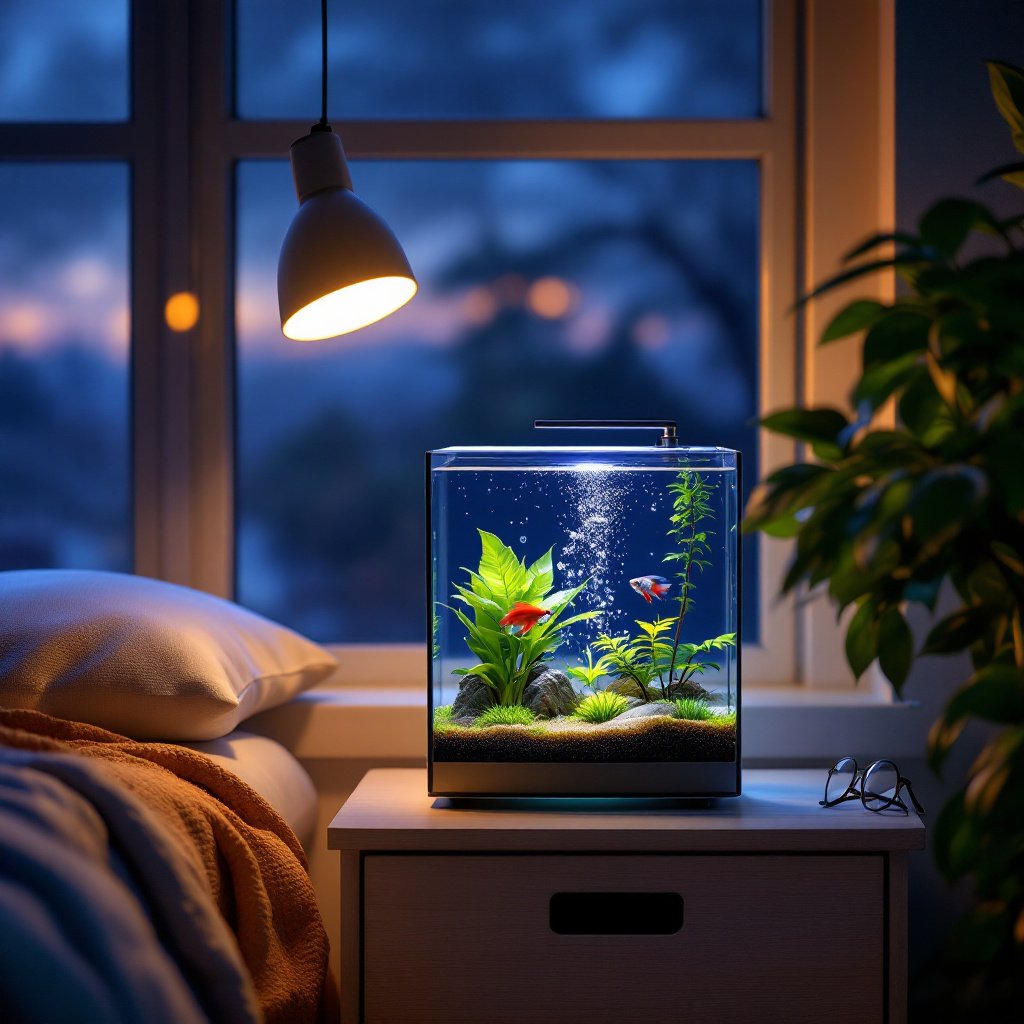
Two tanks live on my nightstand. Silence matters. Dozens of so-called “quiet” pumps have passed through my hands, and only a handful are actually bedroom-friendly.
The ideal quiet pump features rubber feet, thick silicone housing, adjustable output, and the ability to muffle with a towel without overheating.
Top picks that actually deliver on the quiet promise:
– Small single-outlet nano pumps for betta tanks
– Adjustable mid-size pumps with dial control
– USB-powered pumps, especially for low-watt tanks
These usually qualify as a quiet air pump for bedroom aquarium setups. And they don’t buzz like those brick-sized models everyone buys first. You know the ones.
One Pump, Multiple Tanks: The Adjustable Setup That Saves Money
Running seven nano tanks in a one-bedroom apartment has forced some creative problem-solving. One trick that changed everything? Using an adjustable air pump with a gang valve so one device powers multiple tanks.
The setup makes sense when:
– Multiple nanos are part of the collection
– Consistent airflow across tanks is important
– Saving money appeals to you (who doesn’t like that?)
– Flexibility is a priority
Look for an adjustable air pump for multiple tanks with enough power to handle all your tanks. Around 4 LPM or more works well for several small setups. Two outlets or the ability to split lines helps, along with a dial or knob that actually reduces output, not just changes resistance.
Perfect for people in apartments or dorms, especially when avoiding a pile of noisy pumps buzzing on the shelf is the goal. Been there. Not fun.
Choosing an air pump doesn’t need to turn into a guessing game. Once you figure out what the pump will power and how much flow you really need, the whole process becomes surprisingly simple.
Use this quick three-step checklist before buying:
- Are you running a sponge filter, or do you just want bubbles?
- How many filters or lines will the pump run?
- Does the pump list LPM output that matches the chart?
Following those steps helps avoid the classic mistake of over-buying and ending up with a loud pump rattling at 3 AM. Want to learn more about filtration options? Check out related guides like sponge filter guide or beginner aquarium setup tips.
Your fish, your ears, and your future 3 AM self will thank you.