How to Plant Aquarium Plants in Gravel (And Why It Actually Works)
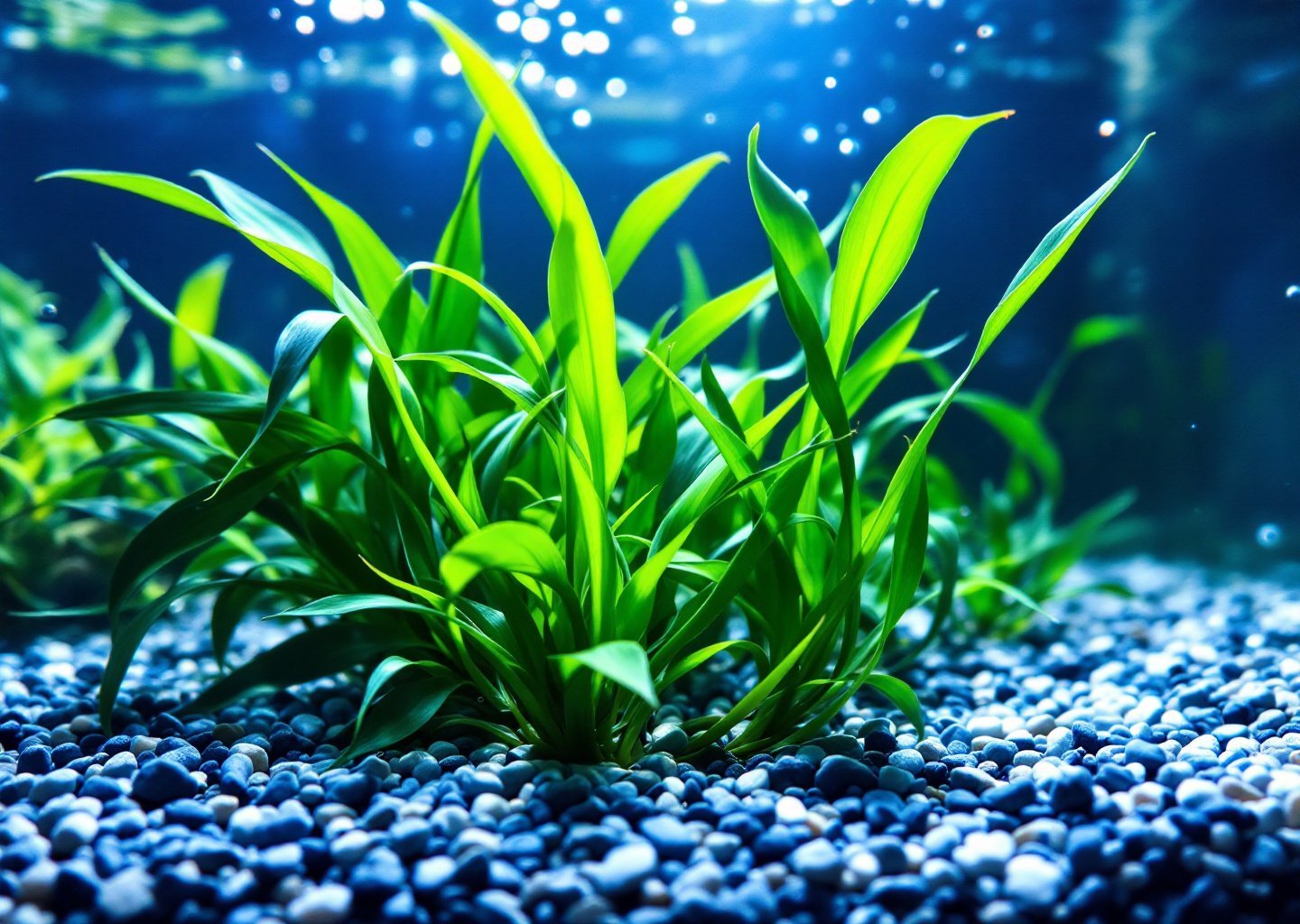
I used to think planted tanks were totally out of reach unless I splurged on pricey aquasoil. People online made it sound like gravel-only tanks were basically doomed from the start. But my second nano tank, a cheap five-gallon with nothing but rinsed pea gravel, ended up thriving. That little tank completely convinced me that gravel can absolutely support healthy planted aquariums. You just need the right plants and a smarter planting technique. So if you’ve been wondering how to plant aquarium plants in gravel substrate without creating a floating disaster, you’re in the right place.
There’s this common bit of advice that gets repeated to beginners: use aquasoil or your plants will melt, stunt, or never root at all. Honestly? I think this message scares people away from trying live plants in the first place. It makes the hobby sound way more expensive than it needs to be.
You can grow a ton of popular aquarium plants in plain gravel. Yes, really. I’ve done it in multiple nano tanks scattered around my apartment. When people ask whether aquarium plants need special substrate or regular gravel, I usually tell them they need to focus more on plant choice, root tabs, and technique than on fancy substrate.
Want proof? Let me show you the deep-bury trick I figured out after killing three batches of stem plants, plus the species that behave well in gravel and how deep your gravel should actually be for live aquarium plants.
The Gravel Truth: What Plants Actually Need
A lot of beginners think soil equals nutrients and nutrients equal growth. Sounds logical, right? But it oversimplifies plant biology quite a bit.
Plants need:
– Light that matches their needs
– Carbon dioxide, which they can get from fish respiration and surface gas exchange
– Water for photosynthesis and nutrient transport
– A steady supply of nitrogen, phosphorus, potassium, and trace minerals
– Space for roots to anchor
None of these require soil by default. Gravel holds roots just fine as long as the layer is thick enough. Nutrients can come from water column fertilizers or root tabs. Many hardy species take most of their nutrition through their leaves anyway.
So when someone asks, “Can you grow aquarium plants in plain gravel?” the honest answer is yes, especially with easy, low-light species. Aquasoil is helpful for high-tech tanks or carpets, but gravel doesn’t limit casual hobbyists at all.
Best Plants for Gravel Tanks: 12 Species That Thrive Without Soil
My design background makes me pretty picky, so these are plants that look great, stay manageable in small tanks, and behave nicely in gravel.
Twelve aquarium plants that grow well in gravel without soil:
- Cryptocoryne wendtii (green or bronze)
- Cryptocoryne lucens
- Amazon sword (works best in tanks at least 20 gallons)
- Vallisneria spiralis
- Sagittaria subulata
- Anubias nana or petite
- Java fern (any variety)
- Bucephalandra
- Water sprite
- Pogostemon stellatus octopus
- Hygrophila polysperma
- Hornwort (either floating or lightly anchored)
A quick note: some plants like Anubias and Java fern don’t go in the substrate at all. They attach to wood or rock. This makes them perfect for gravel tanks because you avoid planting struggles altogether.
Want something more dramatic? Planting Amazon sword in gravel step by step is absolutely possible with root tabs. I’ve done it in a medium tank, and it took off once those tabs kicked in.
Step-by-Step Planting Technique: The Deep Bury Method That Stops Floating
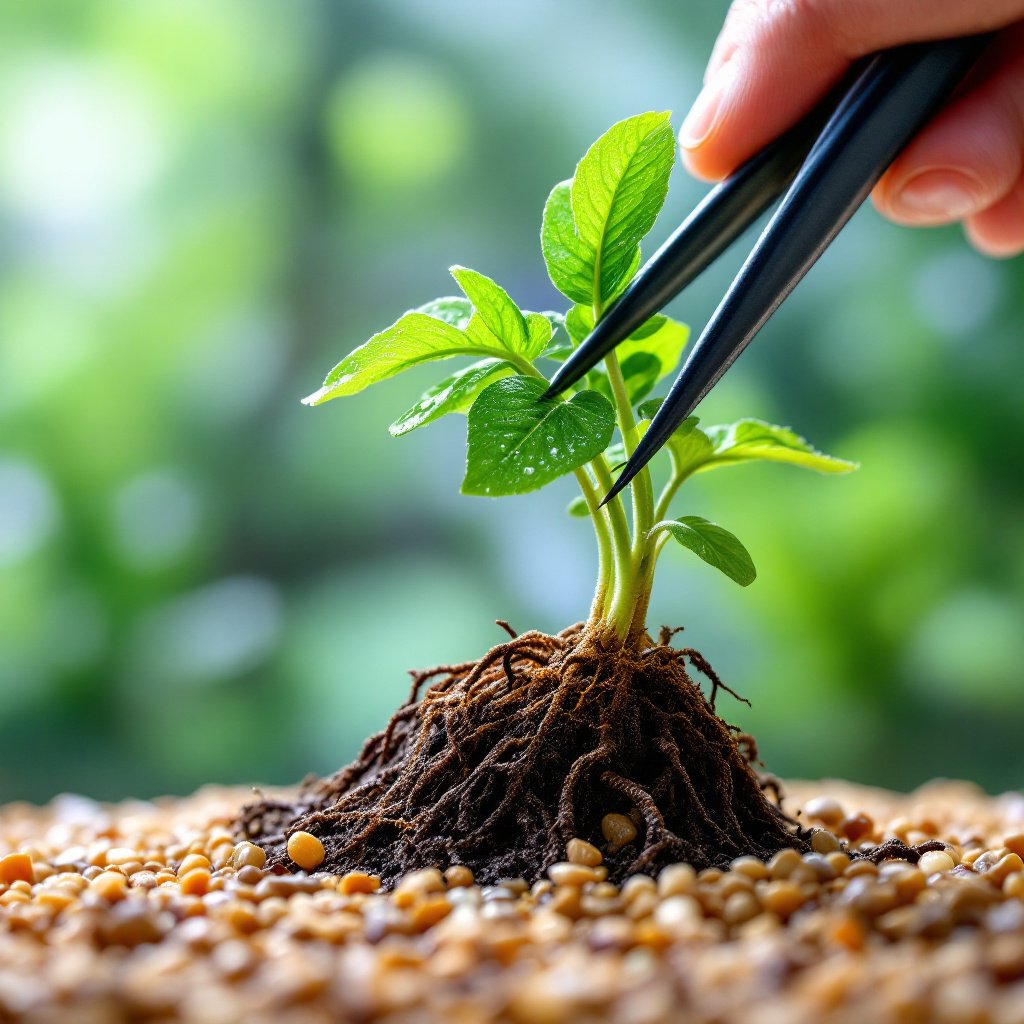
Ever pressed a crypt or stem plant into gravel only to watch it float up the moment you step back? Yeah, same. My early tanks were full of sad little floaters. Over time, I figured out a method that actually works, especially with lightweight gravel.
So this is what finally worked for me:
- Make a hole about twice as deep as the roots are long.
- Hold the plant by the crown or stem base.
- Place it in the hole, then backfill gravel higher than the crown line.
- Gently pull the plant upward until the crown sits at the gravel surface.
- Press the gravel around it so it has full contact.
This trick keeps stems or root bundles locked in while giving the plant its proper position. You’ll almost never see aquarium plants floating out of gravel when you plant this way.
For long stems like Pogostemon or Hygrophila:
– Plant them deeper than feels natural.
– Group stems in twos or threes so they anchor each other.
For crypts:
– Don’t bury the crown, only the roots.
For swords:
– Use a taller gravel mound under the plant so you can add root tabs easily.
Root Tabs 101: Placement Map, Dosing Schedule, and Brand Comparison
Root tabs are the secret weapon for gravel tanks. People ask me all the time, “How do you actually use root tabs for a gravel planted tank?” Honestly, it’s simpler than it looks.
Where to Place Tabs
Picture where the roots will spread out:
– Big root feeders like crypts and swords get tabs right at their base.
– Fast growers like Vallisneria prefer tabs a couple of inches away from the crown.
– Stem plants only need occasional tabs unless they’re heavy feeders.
A simple root tab placement guide for gravel tanks:
– Small plants: 1 tab under or right beside the plant
– Medium plants: 2 tabs spaced around the root area
– Large swords: 3 tabs in a triangle pattern under the base
How Often to Replace Tabs
Most brands last two to three months. I usually replace mine at the two-month mark because my tanks are packed with plants, and I like predictable growth for aquascape trimming.
Brand Comparison from My Own Tanks
From what I’ve actually used in my tanks:
– Seachem Flourish Tabs: Gentle, good for small tanks
– NilocG Tabs: Strong, great color improvement in crypts
– API Tabs: Budget-friendly, slower release
– ThriveCaps: My favorite for big plants, very nutrient-rich
Troubleshooting: Fixing Plants That Won’t Stay Anchored
Keep asking yourself, “Why won’t my aquarium plants stay in gravel?” It usually comes down to a few common problems:
- Gravel layer is too thin
- Plant wasn’t buried deep enough
- Fish are uprooting it (looking at you, Corydoras)
- Water flow is blasting the plant before it roots
- Plant is too buoyant because of trimmed roots
Fixes that actually work:
– Add another inch of gravel.
– Replant using the Deep Bury Method.
– Block flow temporarily by turning your filter down.
– Use small stones to prop the plant for a week.
– Trim roots to a shorter length so the plant sits lower.
How deep should gravel be for live aquarium plants? I aim for 2.5 to 3 inches. Anything thinner behaves like loose sand, and plants just can’t anchor properly.
Gravel vs. Aquasoil: Honest Comparison and When Soil Actually Matters
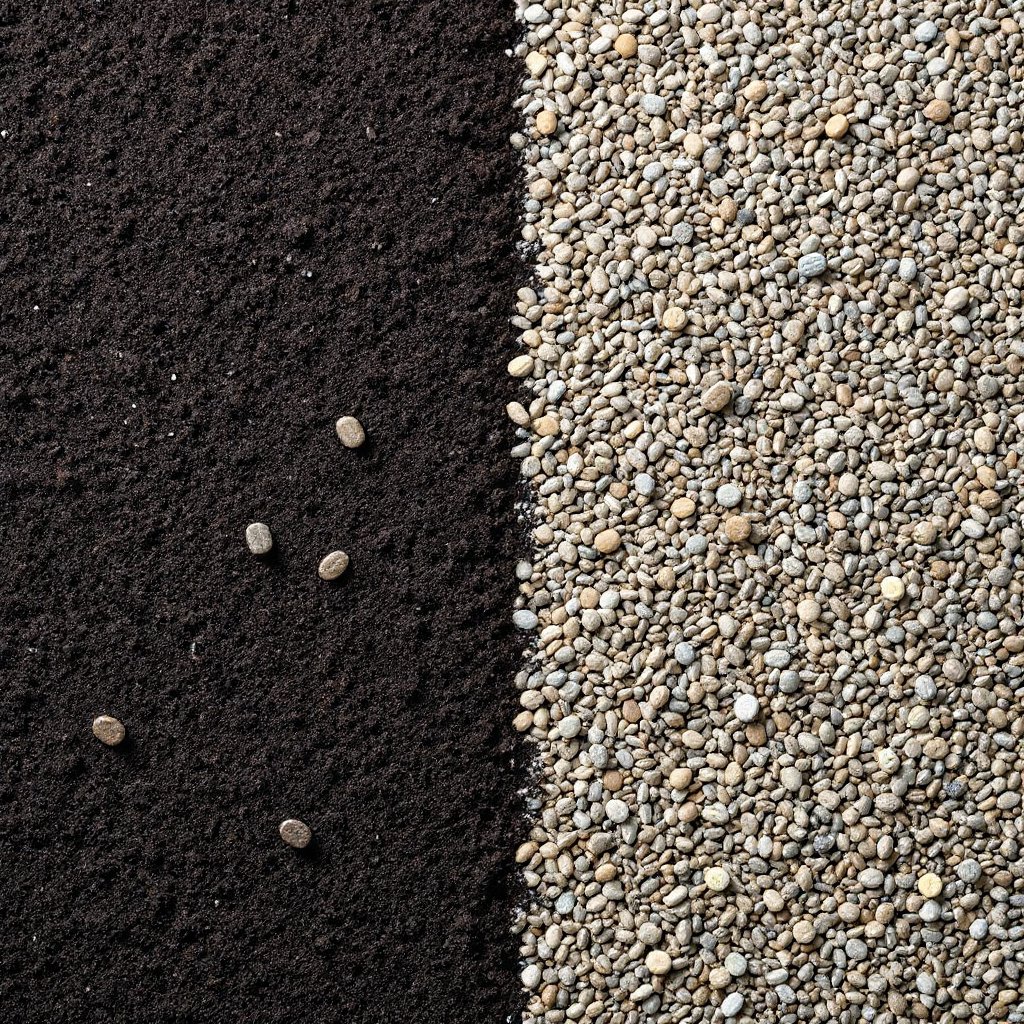
Aquasoil is great for certain setups. I won’t deny it. The stuff helps carpet plants spread, buffers water for shrimp, and feeds demanding species without constant root tabs. But gravel tanks shine in their own ways too.
Where gravel wins:
– Way cheaper, especially for large tanks
– Doesn’t cloud water or leach ammonia
– Easier for beginners to manage
– Better for fish that dig lightly
Where aquasoil wins:
– Heavy root feeders explode in growth
– Carpets like Monte Carlo or Glossostigma spread more easily
– Great for high-tech CO2 setups
When soil actually matters:
– You want a full carpet
– You keep delicate shrimp that need mineral buffering
– You’re running high light and pressurized CO2
For everyone else, especially beginners, gravel offers flexibility without the learning curve. You can always supplement with root tabs.
Want to try a planted gravel tank right now? This is exactly what I’d do:
Days 1 to 3:
– Rinse gravel thoroughly.
– Add 2.5 to 3 inches to your tank.
– Place root tabs where your plants will go.
Days 4 to 7:
– Plant hardy species like crypts, val, and Anubias.
– Use the Deep Bury Method.
– Reduce flow for a few days so they settle.
Days 8 to 14:
– Dose a liquid fertilizer once weekly.
– Watch for floaters and replant any weak ones.
Days 15 to 30:
– Add another round of tabs under heavy feeders.
– Trim any melting leaves.
– Start shaping your scape with new growth.
Once you get comfortable with how to plant aquarium plants in gravel substrate, you’ll realize how forgiving gravel tanks can be. You’ll probably save enough money to start another nano tank. Trust me, that’s exactly how my apartment ended up with seven. Want more plant suggestions? Check out guide to beginner-friendly aquascapes.