The short answer
Seachem PhosGuard, “the most economical of the four medias” per Seachem, for bagged use in saltwater, or in freshwater that is not phosphate-buffered (Seachem); TL Reefs GFO for a reef reactor; Brightwell Phosphat-E for liquid dosing in marine tanks.
Our verdict
Our Top Picks at a Glance
A phosphate remover either sits in your filter’s flow as a media (aluminum oxide, granular ferric oxide or GFO, or a resin) or is dosed as a liquid that binds phosphate into a particle your filter catches. These eight come from six brands. Some well-known removers are not here because, on 2026-11-03, the Amazon listings we found were shipped by resellers (Two Little Fishies PhosBan GFO, Ultralife, Kolar Labs, two D-D Rowaphos listings) or were shipped by Amazon for a reseller with no list price to check the price against (a third D-D Rowaphos listing, MagTool GFO). For the wider picture, see water care and testing.
Phosphate remover finder
Find the phosphate remover for your tank
Pick your tank and what you want to spend. Tiers are by product price relative to these eight. The suggestion is our editorial starting point, drawn from the makers' own figures, not a test result.
Compare the picks
Compare the 8 phosphate removers
Figures are the makers’ own, for the size we link; “listing” marks a figure from the Amazon listing.
 Seachem PhosGuardAluminum oxide beadsReef, freshwater, bagged mediaAluminum oxide100 mL bag$13.48 Prime
Evidence: owner reports, no independent test
 Seachem PhosBondGFO and alumina hybridReef, freshwater, bagged mediaGFO and aluminum oxide250 mL$17.49 Prime
Evidence: maker specs only, no independent test
 TL Reefs GFOGFO for media reactorsReef, reactorsGranular ferric oxide1 lb$39.68
Evidence: maker specs only, no independent test
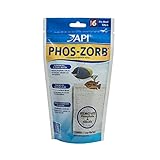 API Phos-ZorbPre-dosed canister pouchFreshwater, canister filtersPre-dosed pouchSize 6 pouch$11.38 Prime
Evidence: maker specs only, no independent test
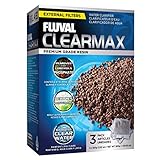 Fluval ClearMaxMulti-nutrient resinFreshwater, canister filtersResin3 x 100 g$18.99 Prime
Evidence: maker specs only, no independent test
 Fluval 07-series padsPad for 07-series filtersFluval 07 canistersResin-infused pad6 pads$10.99 Prime
Evidence: maker specs only, no independent test
 Brightwell Phosphat-EMarine liquid removerReef, liquid dosingLiquid250 ml$34.24 Prime
Evidence: maker specs only, no independent test
 Two Little Fishies Phosban-LLanthanum liquid binderLiquid dosing, filter socksLanthanum chloride liquid500 ml$24.95
Evidence: maker specs only, no independent test
How We Weighed the Phosphate Removers
How this guide was built
built from manufacturer pages and manuals, the live Amazon listings and owner reports in aquarium forums; we have not tested these products ourselves.
The criteria, in order
- Contaminants removed: what each maker says its product removes (phosphate, plus silicate, nitrite or nitrate where the maker says so), for the water type the maker names.
- Accuracy against a reference: does not apply; these products remove phosphate rather than measure it, and we found no removal figure checked against an independent reference.
- Cost per test or per gallon treated: not calculated; we give each maker’s dose or treatment volume where published and compare product price only.
- Ease of use and clarity of results: placement (bag, reactor, pad or dosing), rinsing, replacement and when to re-test, per the makers.
- Value: the relative price tier ($ entry level to $$$ premium, relative to these eight) set against the criteria above. All eight were in stock on 2026-11-03. Five listing pages showed Amazon.com as the seller, and Phosphat-E has an Amazon.com offer (see its review); TL Reefs GFO is sold by a seller named TL Reefs and Phosban-L by a third-party seller, both shipped by Amazon.
What reef and freshwater owners say
What reef and freshwater owners say
Forum threads lead the searches for this topic; the one ranking list, from The Spruce Pets (an ad- and affiliate-funded publisher), was written by an aquatic veterinarian. We found no independent lab test of these products.
In the Reef2Reef thread “What is the best phosphate remover?”, owners start with water changes and feeding, then name GFO (“I’ve had great luck with gfo in a bag”), Rowaphos in reactors and lanthanum (“very cheap at removing phosphate”). One warns that “The rocks and sand are surely bound with a very large reservoir” and that GFO and lanthanum can drop phosphate fast before it “will spike back up”; another says “Be careful with GFO as you can bottom phosphate out and get dinos. Use half the recommended and just wait it out.” In the top r/Aquariums thread on a planted tank, one owner says “Get seachem phosguard and put it in the filter”, while another warns that “Removing phosphate will starve your plants of phosphate”.
Detailed Reviews: The 8 Phosphate Removers
Seachem PhosGuard, Aluminum oxide beads
Saltwater keepers, or freshwater tanks not buffered with phosphate, who want media in a bag.
$13.48 from AmazonAs of Nov 4, 00:26 UTCVerdict
Seachem calls it “the most economical of the four medias” (with the lowest capacity), and says it “will operate better in sea water”.
Evidence: No independent test; owner reports. r/Aquariums owner: PhosGuard, size not stated.
Seachem says PhosGuard “rapidly removes phosphate and silicate from marine and freshwater aquaria”, but “will operate better in sea water”, and is “not recommended for phosphate buffered freshwater”. Its directions: 85 mL per 50 US gallons of saltwater or 100 of freshwater, in a filter bag, tested after 4 days and replaced if phosphate has not dropped to “around 0.02 mg/L”. Seachem says to pre-wet it by adding it to twice its volume of freshwater and rinsing, and not to use marine water for the first wetting because that “may generate sufficient heat to boil the water”; it does not recommend a media reactor because tumbling makes dust. Seachem warns that an overdose can lower phosphate “so quickly that corals become stressed”, and reports detecting “0.2 mg/L aluminum at a pH of 5.3” at three times the label dose, and none “under reef conditions (pH near 8)”. In “excessively high phosphate” it “will exhaust rapidly (4 – 5 days)”. On capacity, Seachem’s PhosBond FAQ, which calls PhosGuard “the most economical of the four medias” (four Seachem-group phosphate medias), gives it 0.82 mg/g of phosphate bound; Seachem’s table gives 0.87. One r/Aquariums owner used it “in a 20L to remove silicates and starve brown algae”.
Specs (linked: 100 mL bagged)
- Type: aluminum oxide, 0.87 mg/g phosphate bound (Seachem’s table)
- Dose: 85 mL per 50 gal salt or 100 gal fresh (Seachem)
Pros
- “The most economical of the four medias”, per Seachem
Cons
- Not recommended for phosphate-buffered freshwater, per Seachem
- Exhausts in 4-5 days at very high phosphate, per Seachem
Who should buy it
Saltwater keepers, or freshwater tanks not buffered with phosphate, who want media in a bag.
Seachem PhosBond, GFO and alumina hybrid
250 mL · GFO and aluminum oxide
Keepers who want Seachem's bagged media with a smaller dose.
$17.49 from AmazonAs of Nov 4, 00:26 UTCVerdict
The higher-capacity choice of the two Seachem picks, by Seachem’s own table.
Evidence: No independent test; maker specs. Source: Seachem.
Seachem says PhosBond “combines the phosphate removing capabilities of both aluminum oxide and granular ferric oxide” and “rapidly removes phosphates and silicates from saltwater and freshwater”, and that it “will not break down from mechanical stress”. Seachem’s own table lists 1.19 mg/g of phosphate bound, against 0.87 mg/g for PhosGuard, measured at pH 8.4. The dose is 60 mL per 50 US gallons of saltwater or 100 of freshwater, with the same 4-day test; in “excessively high phosphate” it “will exhaust rapidly (4 – 5 days)”. Seachem says to rinse it first and use a filter bag, does not recommend a media reactor (dust), and carries the same aluminum note as PhosGuard.
Specs (linked: 250 mL)
- Type: aluminum oxide and GFO, 1.19 mg/g phosphate bound (Seachem)
- Dose: 60 mL per 50 gal salt or 100 gal fresh (Seachem)
Pros
- A higher bound-phosphate figure than PhosGuard in Seachem’s own table
Cons
- Exhausts in 4-5 days at very high phosphate, per Seachem
TL Reefs GFO, GFO for media reactors
Verdict
Granular ferric oxide for a reactor or a media bag, per TL Reefs.
Evidence: No independent test; maker specs. Source: TL Reefs.
TL Reefs says its GFO “removes phosphate by molecular bond and will not leach them back into your water when exhausted”, and that a fluidized reactor is “The most popular and effective implementation method”; a media bag in a high-flow area is the other method. The Amazon listing is titled “for Saltwater Aquariums” and says “Use 1/2 cup per 50 gallons of aquarium water”, rinse first, and “replace when levels begin to rise”. We found no caution about lowering phosphate too quickly on TL Reefs’ page or listing; Reef2Reef owners advise using less GFO and going slowly (see above).
Specs (linked: 1 lb)
- Type: granular ferric oxide (TL Reefs)
- Dose: 1/2 cup per 50 gal (listing)
Pros
- GFO that “will not leach” phosphate back when exhausted, per TL Reefs
Cons
- Sold for saltwater aquariums, per the listing
API Phos-Zorb, Pre-dosed canister pouch
Verdict
A pouch you rinse and place in the filter flow, per API.
Evidence: No independent test; maker specs. Source: API.
API says Phos-Zorb is “a phosphate-removing filter media” in “a specialized convenient pouch that eliminates cloudy water caused by phosphate and silicate”, and the listing says it “fits most canister filters on the market, for use in freshwater and saltwater aquariums”. Rinse it “for several minutes”; “The activation process will temporarily generate some heat.” API says to use it when phosphate is “greater than 0 ppm” and to “Replace pouch every 2 months or when test indicated the presence of phosphate or silicate”. Neither API’s page nor the listing gives a tank size per pouch.
Specs (linked: Size 6 pouch, 1 count)
- Type: pre-dosed pouch (API)
- Replace: every 2 months or on a phosphate reading (API)
Pros
- No measuring: a pre-dosed pouch, per the listing
Cons
- No tank size or capacity published for the pouch
Fluval ClearMax, Multi-nutrient resin
Freshwater keepers who want one resin for phosphate, nitrite and nitrate.
$18.99 from AmazonAs of Nov 4, 00:26 UTCVerdict
A resin for phosphate, nitrite and nitrate, per Fluval.
Evidence: No independent test; maker specs. Source: Fluval.
Fluval calls ClearMax “a science grade resin designed to adsorb phosphate, nitrite and nitrate”, for freshwater and saltwater, with the note that it “does not remove Nitrates from saltwater applications”. Fluval’s filter media manual lists ClearMax as “Treats 300 L (80 U.S. gal.)” without saying per bag or per pack, and says to rinse it first, and “Monthly change is recommended as exchange resins will no longer be active”.
Specs (linked: 3 x 100 g bags)
- Type: resin (Fluval)
- Capacity: “Treats 300 L (80 U.S. gal.)” (Fluval manual; per bag or per pack not stated)
Pros
- Takes nitrite and nitrate as well as phosphate in freshwater, per Fluval
Cons
- A monthly change, per Fluval’s manual
Who should buy it
Freshwater keepers who want one resin for phosphate, nitrite and nitrate.
Fluval Phosphate Remover pads, Pad for 07-series filters
Verdict
A phosphate pad cut for one Fluval canister family.
Evidence: No independent test; maker specs. Source: Fluval.
Fluval says these pads are “Designed specifically for the Fluval 07 performance canister filter series” (306/406 and 307/407), “Effective at removing and controlling phosphate”, and that “Phosphate Resin infused Pads perform double duty as both an effective mechanical and chemical media”, for freshwater and saltwater. The listing says “replace monthly or as required after testing water”. Fluval’s page and listing give no capacity. One Aquarium Advice owner with 2 ppm phosphate, “the same as my tap water”, wrote: “I currently have the Fluval phosphate pads in my Fluval 307 filter but they don’t seem to make any difference.”
Specs (linked: 6-pack for 306/406, 307/407)
- Type: resin-infused pad (Fluval)
- Replace: monthly or as testing shows (listing)
Pros
- “Custom fit” for the 07-series canisters, per Fluval
Cons
- Fits only Fluval 306/406 and 307/407 canisters
Brightwell Phosphat-E, Marine liquid remover
Verdict
A liquid for marine and reef tanks, dosed near a filter or skimmer.
Evidence: No independent test; maker specs. Source: Brightwell Aquatics.
Brightwell says Phosphat-E “Eliminates Reactive Phosphate from all Marine Fish & Reef Aquaria” (only the Amazon description adds freshwater). At our check, the page’s buy box showed a third-party seller priced lower than Amazon.com’s own offer. Each ml “eliminates 1 ppm phosphate in 4 US-gallons of water”. Dose near a mechanical filter or skimmer intake, at most 2.5 ml per 20 US gallons daily, which removes 0.5 ppm. Brightwell warns the dose “should not exceed 0.5 ml per 4 US-gallons (15.142 L) daily, as too rapid a decrease in the concentration of phosphate may irritate sensitive corals”, and to cut it by 50% if corals or other invertebrates react. The water “may become slightly cloudy” at first, and test kits “may show a false-positive reading”. Ingredients: “Purified water, proprietary phosphate removers.”
Specs (linked: 250 ml)
- Type: liquid (Brightwell)
- Dose: 1 ml removes 1 ppm in 4 US gal (Brightwell)
Pros
- A daily limit and a coral caution set out by Brightwell
Cons
- Bound phosphate must be caught by a filter or skimmer, per Brightwell
Two Little Fishies Phosban-L, Lanthanum liquid binder
500 ml · Lanthanum chloride liquid
Keepers who will drip it slowly into a skimmer or filter sock.
$24.95 from AmazonAs of Nov 4, 00:26 UTCVerdict
Lanthanum chloride in a bottle, per Two Little Fishies.
Evidence: No independent test; maker specs. Source: Two Little Fishies.
Two Little Fishies calls Phosban-L “a highly-concentrated lanthanum chloride solution” to “Add it dropwise to a protein skimmer or a 10 micron filter sock to catch the precipitated phosphate”, then hold phosphate “below 0.02 ppm” with its PhosBan GFO (not linked here). The listing says the 500 ml bottle “will remove 1 ppm of Phosphate from 6000 gallons”. On Reef2Reef, one owner’s “preferred method” is lanthanum chloride “dripped into a 10 micron sock”; another says “LC works well too, but you have to go really slow and methodical”; and another wrote: “Please all research how to dose lanthanum. I just lost my tang and clown to poor dosing execution” (product and dose not stated in any of the three). Two Little Fishies’ page and the Amazon listing give no dosing schedule and no livestock or coral caution; the listing says “Please see packaging for details.” We could not read the label.
Specs (linked: 500 ml)
- Type: lanthanum chloride liquid (Two Little Fishies)
- Capacity: 500 ml removes 1 ppm in 6,000 gal (listing)
Pros
- A ready-made lanthanum chloride liquid, per Two Little Fishies
Cons
- Needs a skimmer or a 10-micron sock to catch the precipitate, per the maker
- No dose schedule or livestock caution on the maker’s page or listing; the cited owners stress slow, careful dosing
Media or Liquid: How to Choose
- Media (aluminum oxide, GFO, resin) sit in the filter flow until used up. Liquids bind phosphate into a particle that a filter, sock or skimmer must remove (Brightwell, Two Little Fishies).
- Go slowly. Seachem (for PhosGuard) and Brightwell both warn that dropping phosphate fast can stress corals; Reef2Reef owners add that rock and sand can release phosphate back.
- Planted freshwater tanks: plants use phosphate, and Seachem does not recommend PhosGuard for phosphate-buffered freshwater.
- Targets differ by maker and context. In its algae article, Aqueon, an aquarium-product maker, says “phosphate (PO₄) should be below 0.5 ppm”, without naming a tank type. For marine tanks, Brightwell says available (reactive) phosphate “should not be allowed to exceed 0.05 ppm for any lengthy period of time”. Seachem’s and Two Little Fishies’ 0.02 figures are for their own products.
- Check your tap water. API notes that water utilities “may add phosphate to tap water to prevent pipe corrosion”.
Test before and after. The kits in our freshwater test-kit guide are not listed as testing phosphate; API says its Phosphate Test Kit reads total phosphate from 0 to 10 ppm. If algae is the reason you are here, our guides to algae growth, green water and brown diatoms cover the causes. If fish look unwell, test the water and contact an aquatic veterinarian.
Frequently Asked Questions
Q. How can I remove phosphate from my aquarium?
Aqueon’s advice starts with “avoid having too many fish, feed sparingly” and regular water changes “using nitrate and phosphate free water”; a media or liquid remover then takes out what is left.
Q. Does phosphate remover actually work?
The makers tie results to testing: Seachem says to test after 4 days and replace if phosphate has not dropped, and API to replace Phos-Zorb on a phosphate reading. Owners add caveats: one Aquarium Advice owner saw no difference from Fluval pads with 2 ppm phosphate in the tap water, and Reef2Reef owners report rock releasing phosphate back.
The bottom line
Final Verdict
Seachem PhosGuard (check price), “the most economical of the four medias” per Seachem, mainly for saltwater (Seachem: “will operate better in sea water”); Seachem PhosBond (check price) for the higher capacity in Seachem’s table; TL Reefs GFO (check price) for a reef reactor; Brightwell Phosphat-E (check price) for marine liquid dosing.
Product prices and availability are accurate as of the date/time indicated and are subject to change. Any price and availability information displayed on Amazon.com at the time of purchase will apply to the purchase of this product.