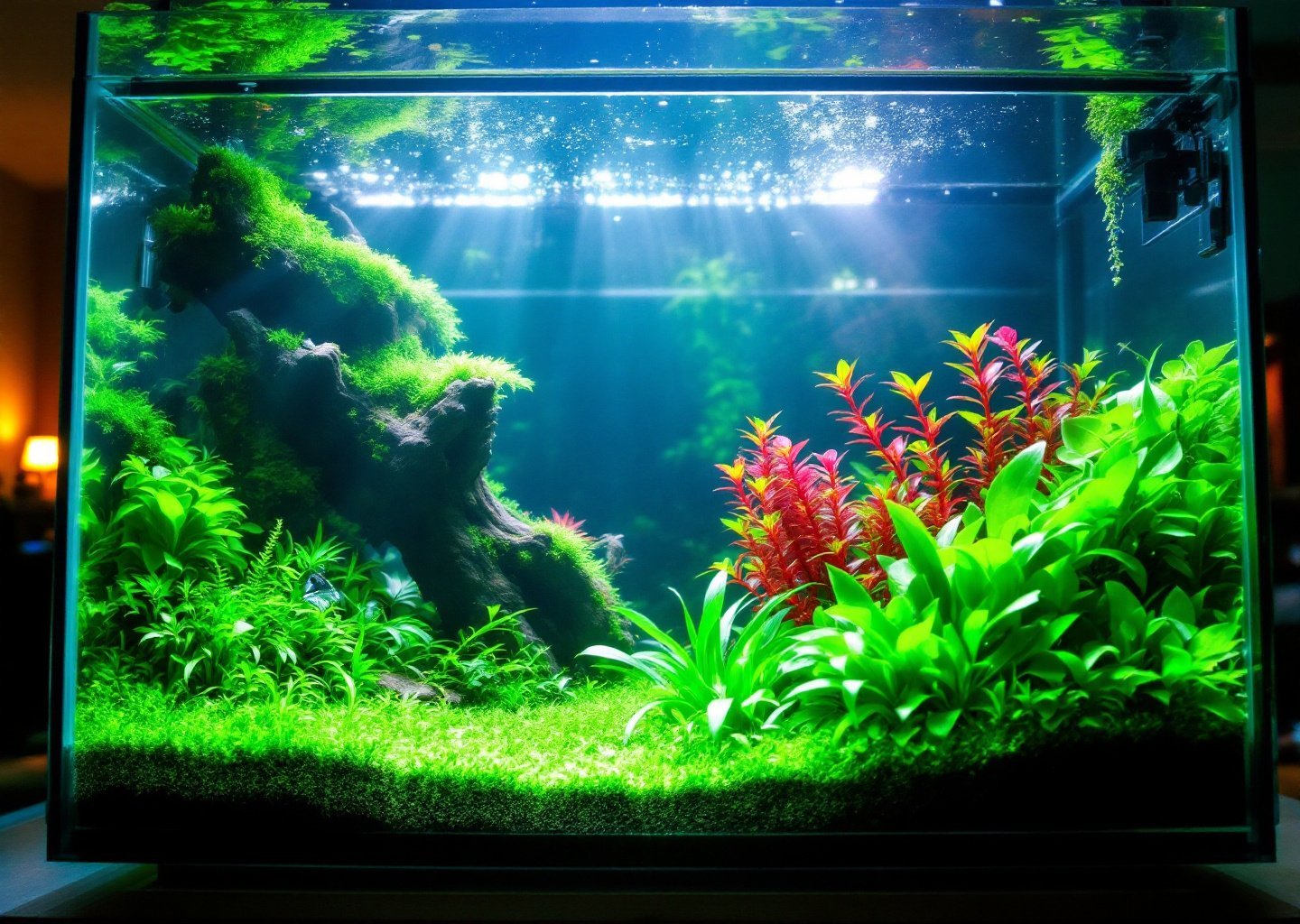
The Fluval Plant 3.0 LED Light Review I Wish Existed 18 Months Ago
Let me tell you something that still annoys me about aquarium content. Most reviews are written two weeks after unboxing. The tank looks perfect, the plants are freshly melted from their emersed-grown shipping stress, and the reviewer is riding that new-gear high. They haven’t experienced the algae. They haven’t watched their initial settings fail spectacularly. They definitely haven’t replaced any burned-out LEDs.
I bought my Fluval Plant 3.0 LED light eighteen months ago for my 20-gallon long display tank. Since then, I’ve measured PAR values obsessively, battled a green hair algae apocalypse that made me question my life choices, and documented everything in spreadsheets that would make my graphic design professors concerned about my free time.
This is the Fluval Plant 3.0 LED light review I wish existed when I was deciding between this and cheaper alternatives. No sponsor relationship, no affiliate pressure to say nice things. Just real data from someone who’s been staring at this light every day for a year and a half.
Why Most Fluval Plant 3.0 Reviews Are Written Too Early
Here’s the thing about planted tank lighting: the first month tells you almost nothing useful.
Your plants are adapting. Your photoperiod isn’t optimized yet. Meanwhile, the algae spores are just starting to wake up and smell the high-PAR breakfast you’re serving them.
I spent hours watching YouTube reviews before buying this light. Every single one was filmed within the first few weeks of ownership. Reviewers loved the app. They loved the customizable spectrum. They loved how their plants seemed to be growing faster.
What none of them mentioned: the Fluval Plant 3.0’s default settings are too intense for most setups right out of the box. And if you don’t adjust within the first month, you’re going to grow some truly impressive algae. Ask me how I know. Actually, don’t. I’ll tell you anyway in a minute.
Accurate reviews require time. Long-term reviews require someone slightly obsessive who enjoys taking the same measurements repeatedly. That’s me. Let’s get into the data.
Fluval Plant 3.0 PAR Values at Different Tank Depths
I measured Fluval Plant 3.0 PAR values at depth using a Seneye PAR meter (not the most accurate, but consistent enough for comparative data). My light sits directly on the glass lid, roughly 1 inch above the water surface.
20-gallon long at 100% intensity. Keep in mind your results may vary based on equipment, tank setup, and meter used:
- Surface: ~412 PAR
- 6 inches: ~187 PAR
- 12 inches (substrate level center): ~89 PAR
- 12 inches (substrate level corners): ~62 PAR
At my current running setting (73% intensity):
- Surface: ~298 PAR
- 6 inches: ~134 PAR
- 12 inches: ~64 PAR
- 12 inches corners: ~45 PAR
These numbers matter more than most reviewers acknowledge. That corner PAR drop-off is significant. I lost several Monte Carlo carpeting attempts in the corners before I understood what was happening. Light spread on this fixture is good, but it’s not magic.
For optimal PAR, you need to consider mounting height carefully. From my testing, Fluval Plant 3.0 optimal height for PAR depends entirely on your tank depth and plant demands. Shallow tanks might need the light raised to prevent scorching. Deep tanks might need it closer.
understanding PAR values for planted aquariums
The Algae Phase Nobody Talks About: My 3-Month Battle
Month two was when everything went sideways.
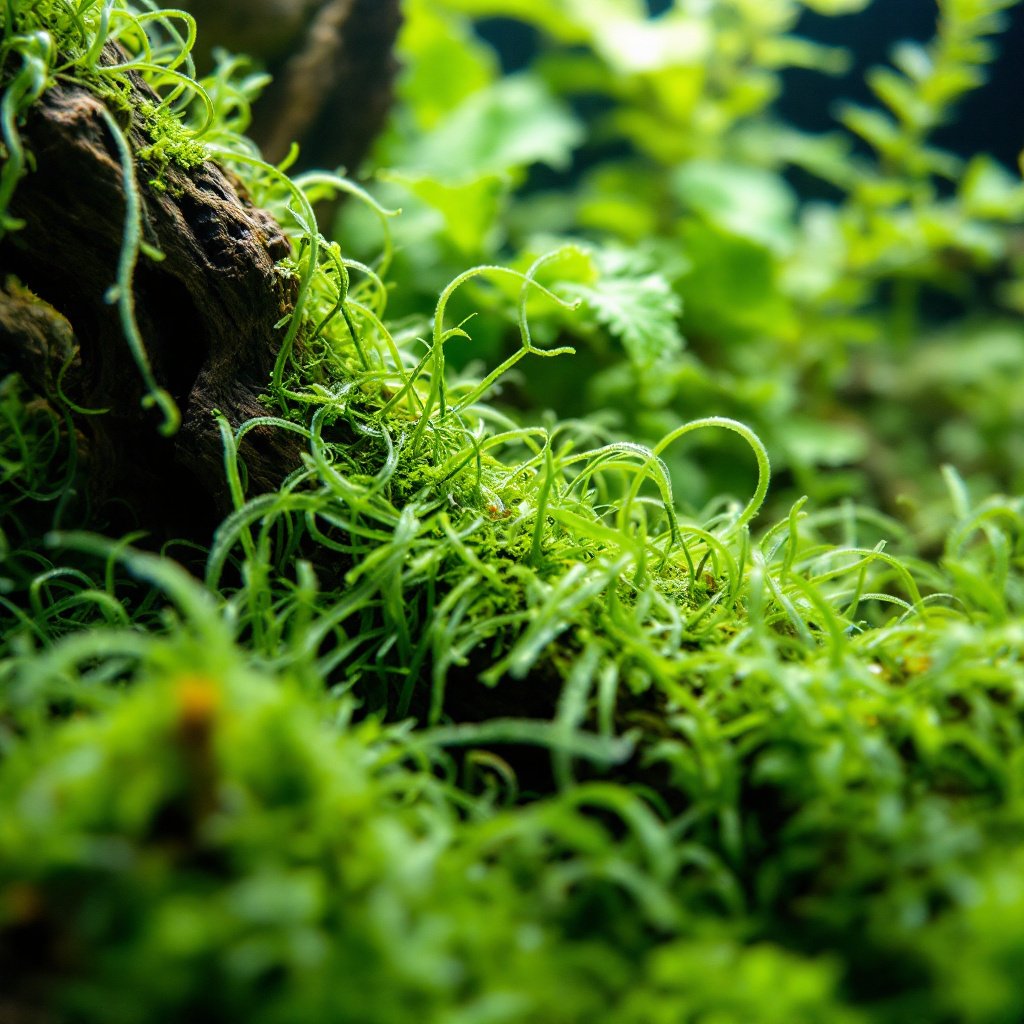
I’d been running the default “Planted Tank” profile at 100% intensity for about five weeks. My rotala was pearling beautifully. Deep red coloration was showing up on my Alternanthera reineckii. I thought I was a genius.
Then the green hair algae arrived.
It started on the driftwood. Within a week, it had colonized my anubias leaves. By week three, my entire Monte Carlo carpet looked like a chia pet that hated me personally.
I tried everything the forums suggested: reduced lighting duration from 8 hours to 6, added more floating plants, and increased water changes to twice weekly. Nothing worked.
Here’s what I eventually realized. The problem was the combination of high PAR values and my fertilization routine. This light at full power pushes demanding-light territory, but I was fertilizing for a medium-light tank. Plants couldn’t use all the light energy, so the algae happily consumed the difference.
What finally worked:
- Dropped intensity to 65% for two weeks
- Blacked out the tank for 3 days
- Added Amano shrimp (12 of them, my heroes)
- Slowly increased intensity to 73% over the following month
- Adjusted fertilizer dosing upward to match the light output
The best Fluval Plant 3.0 settings for a low-tech tank are nowhere near what Fluval suggests. I’d recommend starting at 50% intensity maximum and increasing only if plants show signs of deficiency or slow growth.
Fluval Plant 3.0 vs. Finnex Planted Plus: Same Tank, Same Plants
Before the Fluval, I ran a Finnex Planted Plus 24/7 on this same 20-gallon long. I kept detailed growth logs for both lights, which makes me either thorough or unhinged.
Fluval Plant 3.0 advantages:
- Noticeably higher peak PAR in my testing (the Fluval consistently outperformed the Finnex at substrate level, though exact values will vary based on your setup and measurement conditions)
- Customizable spectrum actually makes a visible difference for red plants
- App scheduling is genuinely useful once you figure it out
- Build quality feels premium; aluminum housing stays cool
- Sunrise/sunset simulation looks gorgeous
Finnex Planted Plus advantages:
- Generally more affordable (though prices vary by retailer and model size)
- Adequate PAR for low-to-medium light plants
- Set-it-and-forget-it simplicity
- No app means no connection issues
Comparing Fluval Plant 3.0 vs. Finnex Planted Plus comes down to one question: do you need high light capability? If you’re growing mostly Java fern, anubias, and crypts, the Finnex is honestly enough. Save your money.
But if you want carpeting plants, red stem plants with actual red coloration, or tissue culture specimens that demand intensity, the Fluval justifies its price. My Ludwigia ‘Super Red’ went from brownish-green under the Finnex to genuinely crimson under the Fluval.
best budget LED lights for planted tanks
App Setup Decoded: Settings for Every Tank Type
The Fluval app is simultaneously this light’s best feature and its most frustrating aspect. Bluetooth connectivity is unreliable on older phones, and the interface is cluttered. But once you understand the logic, it’s genuinely powerful.
Low-tech tank settings (no CO2, low fertilization):
- Maximum intensity: 40–50%
- Photoperiod: 6–7 hours
- Blue channel: 60%
- Red channel: 50%
- Green channel: 50%
- Ramp up/down: 60 minutes each
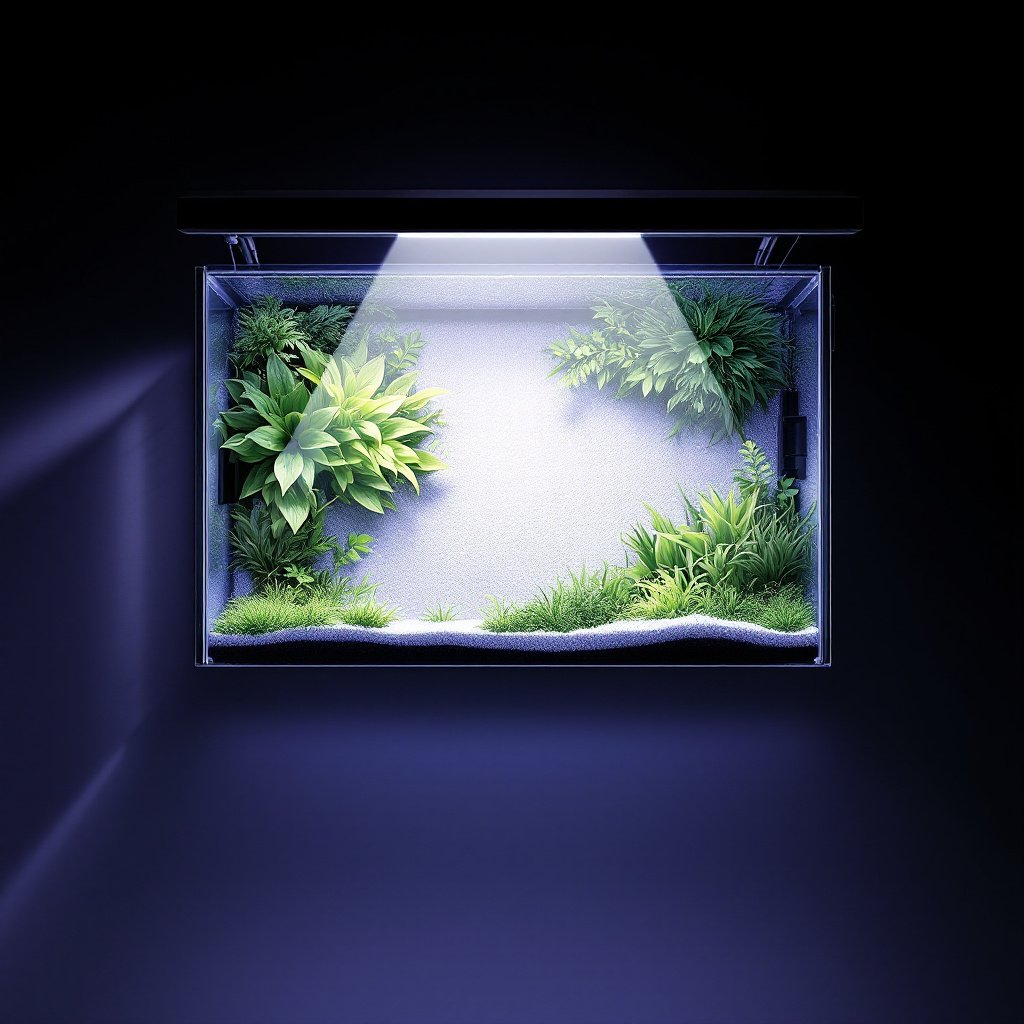
Medium-tech settings (root tabs, occasional liquid fertilization):
- Maximum intensity: 60–70%
- Photoperiod: 7–8 hours
- Blue channel: 70%
- Red channel: 70%
- Green channel: 60%
- Ramp up/down: 45 minutes each
High-light plant settings (pressurized CO2, full EI dosing):
- Maximum intensity: 80–100%
- Photoperiod: 6–7 hours (shorter duration offsets intensity)
- Blue channel: 80%
- Red channel: 90%
- Green channel: 65%
- Ramp up/down: 30 minutes each
A word of caution about Fluval Plant 3.0 settings for high-light plants: don’t run full intensity unless you have CO2 injection and robust fertilization. You will grow algae. This isn’t a threat. It’s a promise based on personal experience.
For anyone wondering about the Fluval Plant 3.0 vs. Fluval 3.0 Nano, the Nano runs cooler and covers smaller tanks more evenly. However, the standard model offers better PAR values per dollar for anything over 10 gallons.
Is Fluval Plant 3.0 Worth $200+? Breaking Down Cost Per PAR
Is the Fluval Plant 3.0 worth it? Here’s my honest breakdown.
At around $200 for the 36-inch model (prices fluctuate), you’re paying premium pricing. But how does it stack up against other high-output planted tank lights?
- Chihiros WRGB II: Comparable price range (varies by region and size), well-regarded app, competitive PAR output
- Twinstar S-series: Premium option with excellent spectrum quality
- Kessil A160WE: Much more expensive, tighter beam angle
- Budget alternatives: Significantly cheaper, but with lower output
For the best LED light for planted aquariums in 2024, the Fluval Plant 3.0 remains a solid mid-to-high tier option. It’s not the absolute best, but it’s good enough for 90% of hobbyists who want serious plant growth without spending Kessil money.
Who should buy this light:
- Anyone wanting to grow demanding plants without CO2 immediately (you can always add CO2 later and have headroom)
- Aquascapers who care about color rendering and spectrum customization
- People who enjoy tweaking settings and optimizing
Who should skip it:
- Beginners who just want plants to survive
- Anyone growing only low-light species
- Budget-conscious hobbyists with tanks under 15 gallons (get the Nano instead, or a cheaper alternative entirely)
CO2 systems for planted aquariums
My Final Verdict After 18 Months
After eighteen months of daily use, one algae apocalypse, countless setting adjustments, and more PAR measurements than any reasonable person should take, here’s where I land on this Fluval Plant 3.0 LED light review:
This is a genuinely good light that’s marketed poorly. Fluval acts like you can plug it in, use default settings, and grow anything. You can’t. It requires understanding, patience, and probably a few months of algae frustration before you dial it in.
Once dialed in? It’s excellent. My plants are thriving. Color rendering makes my tank look professional in photos. And the spectrum customization has let me find the exact balance between plant health and visual appeal that my design-obsessed brain craves.
Would I buy it again today? Honestly, yes. But I’d also consider the Chihiros WRGB II, which has improved significantly since I made my purchase. Competition in the planted tank lighting space has increased, and the Fluval no longer stands alone at this price point.
If you do buy this light, start at 50% intensity. Take PAR measurements if you can. Expect an adjustment period. And when the algae comes, because it probably will, check your intensity before blaming everything else.
That’s the review I wish I’d read eighteen months ago. Now if you’ll excuse me, I need to convince my partner that an eighth nano tank would fit perfectly on that empty shelf in the bathroom.