I Killed My First Fish: What Nobody Tells You About the Nitrogen Cycle
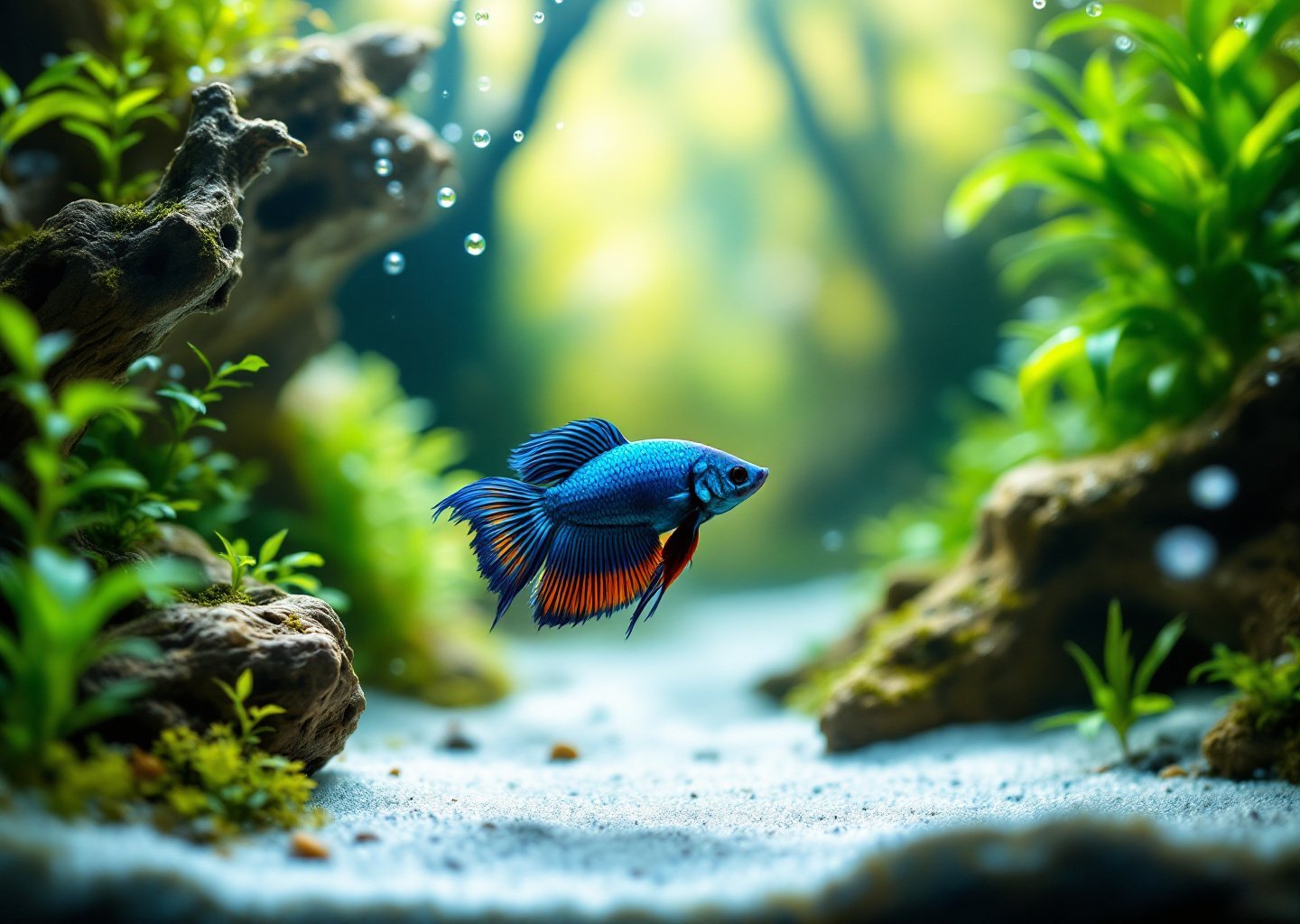
I killed my first fish. His name was Gerald, a gorgeous blue halfmoon betta I brought home the same day I set up my first tank. I thought I was doing everything right: new tank, dechlorinated water, pretty gravel, the whole setup. Gerald was dead within a week, and I had absolutely no idea why.
It took me three more dead fish and a lot of frustrated Googling before I finally understood what went wrong. Here’s the thing: the aquarium nitrogen cycle for beginners isn’t just some nerdy technicality you can skip. It’s literally the difference between a thriving underwater world and a toxic deathtrap that looks perfectly clear and innocent.
Nobody tells you this at the pet store. A brand-new aquarium is essentially a bottle of poison waiting to happen. Not because you did anything wrong, but because the invisible ecosystem that keeps fish alive simply doesn’t exist yet.
Think about it this way. When you plant a garden, you don’t expect tomatoes the next morning, right? You prepare the soil, add nutrients, and wait for the magic of biology to do its thing. An aquarium works exactly the same way. Instead of growing vegetables, you’re cultivating invisible bacteria that’ll become your fish’s life support system.
I’m going to walk you through what aquarium cycling actually means, without the overwhelming chemistry lessons that made my eyes glaze over when I first started researching. We’ll cover why new tanks fail, how to cycle properly, and exactly what numbers to look for when testing your water.
What’s Actually Happening: The Ammonia-Nitrite-Nitrate Cycle Explained Like You’re Growing Invisible Helpers
The ammonia-nitrite-nitrate cycle stages are simpler than they sound. Let me break it down.
Fish poop. They also breathe out waste through their gills. All of this creates ammonia, which is incredibly toxic. In nature, fish have entire rivers and lakes to dilute this waste. In your 10-gallon tank? Ammonia has nowhere to go.
Beneficial bacteria come in here. Think of them as your invisible garden.
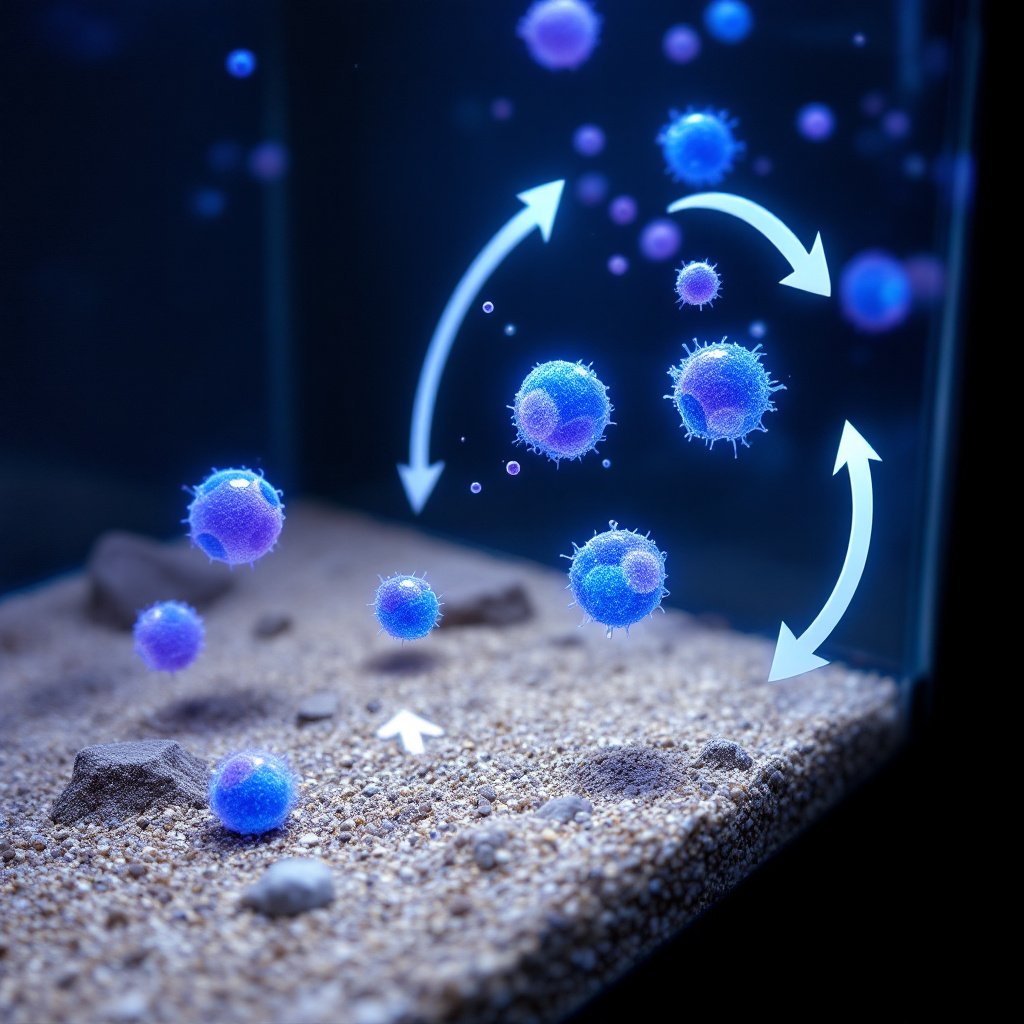
One type of bacteria (Nitrosomonas, if you want to sound fancy at parties) eats ammonia and converts it into nitrite. Nitrite is also toxic, just slightly less immediately deadly. Then a second type of bacteria (Nitrobacter) shows up and converts nitrite into nitrate. Nitrate is way less harmful and can be removed through regular water changes.
Here’s where the gardening metaphor actually pays off. Beneficial bacteria aquarium colonies don’t appear overnight. They need to be grown, fed, and established before they can handle the waste load of your fish. And cycling accomplishes exactly this.
Picture composting. You’re building a biological processing system that takes dangerous waste and transforms it into something manageable. Bacteria literally grow on surfaces in your tank: your filter media, your substrate, your decorations. They’re invisible, but they’re doing all the heavy lifting.
New Tank Syndrome Decoded: Why “My Tank Looked Fine” Still Ended in Disaster
New tank syndrome explained in one sentence: the tank looked perfect because you couldn’t see the poison.
Gerald died because of exactly this. My water was crystal clear, temperature was perfect, and he seemed happy for the first few days. But without established bacteria colonies, ammonia was building up every time he ate or breathed. By day five, his fins started clamping. By day seven? Gone.
What causes new tank syndrome in freshwater aquariums is simply the absence of biological filtration. New tanks have zero bacteria. Zero. So the first time fish start producing waste, ammonia spikes with nothing to process it.
And here’s the cruel irony: ammonia is colorless. At the low concentrations found in aquarium water, you often can’t detect its characteristic pungent smell. Water can test at deadly levels while looking absolutely pristine. Test kits aren’t optional. They’re the only way to see what’s actually happening in your water chemistry.
I’ve seen so many beginners in online forums posting beautiful photos of their new setups, fish already swimming around, asking why everything started dying a week later. Sound familiar? Almost always the same answer: uncycled tank. best aquarium test kits for beginners
Fishless vs. Fish-In Cycling: An Honest Comparison With No Judgment
Okay, so fishless cycling versus fish-in cycling. I see a lot of judgment in the hobby about this. Honestly? Sometimes life doesn’t go according to plan.
Fishless Cycling
The gold standard, and what I’d recommend if you’ve got the option. Add ammonia to the tank artificially (pure ammonia drops or fish food left to decompose) and let the bacteria colonies establish before any fish enter the picture.
What works in its favor:
– No fish suffer during the process
– Higher ammonia levels are possible, potentially speeding things up
– Less stressful for you (no sick fish to worry about)
– Cycle establishes more robustly
What doesn’t:
– Requires patience (4–8 weeks typically)
– Staring at an empty tank for weeks gets old
– Need to source pure ammonia or wait for food to decompose
Fish-In Cycling
Sometimes you inherit a fish. Sometimes the pet store employee swore the tank was ready. Sometimes you’re a beginner who didn’t know better. (Gerald and me, right there.) Fish-in cycling means establishing the bacteria colonies while fish are already in the tank.
What works in its favor:
– Fish are present, which is the whole point, right?
– Can work if done extremely carefully
The downsides, and there are several:
– Stressful for fish, potentially fatal
– Requires frequent water changes based on your test readings
– Much more work for you
– Higher risk of disease from stressed fish
My honest take? If you’ve already got fish in an uncycled tank, don’t panic. Do water changes as needed based on your ammonia and nitrite readings, test constantly, and consider adding a bacterial starter product. how to do a fish-in cycle safely It’s not ideal, but beating yourself up won’t help your fish. I’ve successfully rescued accidental fish-in situations with diligent water changes.
However, if you’re starting fresh? Please, please go fishless. Your future fish will thank you. How to cycle an aquarium before adding fish step by step is straightforward once you commit to the wait.
The Week-by-Week Timeline: What Your Test Kit Numbers Mean
So how long does fish tank cycling take for beginners? Typically 4–8 weeks, but honestly it varies based on temperature, ammonia source, and whether you seed with existing bacteria.
A realistic timeline for fishless cycling looks something like this:
Week 1–2: The Nothing Phase
Dose ammonia to around 2–4 ppm. Then… wait. Tests will show ammonia present but zero nitrite, zero nitrate. Nothing seems to be happening. Completely normal. First bacteria colonies are just starting to establish. Trust the process.
Week 2–3: Nitrite Appears
One day you’ll test and see nitrite readings. Exciting stuff! Ammonia-eating bacteria are working. Ammonia might start dropping faster. Keep dosing ammonia to feed the growing colony.
Week 3–5: The Nitrite Spike (a.k.a. “Is This Thing Broken?”)
Patience gets really tested here. Nitrite will likely spike high, sometimes off the charts on your test kit. Purple readings can last weeks. Why so long? Bacteria processing nitrite establish more slowly than the first group. Annoying, but biology doesn’t care about your schedule.
The question of how long fish tank cycling takes can feel like forever during this phase. I checked my water obsessively, convinced something was wrong. Nope. Just biology taking its sweet time.
Week 4–8: The Finish Line
Gradually, nitrite drops. Nitrate starts to accumulate. One day, dose ammonia in the evening and test the next morning to find ammonia at 0, nitrite at 0, and nitrate present.
Do this twice to confirm. If the tank processes 2 ppm ammonia to zero ammonia and zero nitrite within 24 hours, twice in a row? Cycled. Finally.
Five Signs Your Cycle Is Complete: The Exact Readings That Mean You’re Ready
How do I know when my tank is fully cycled? Look for these five signs your aquarium cycle is complete:
1. Ammonia reads 0 ppm within 24 hours of dosing
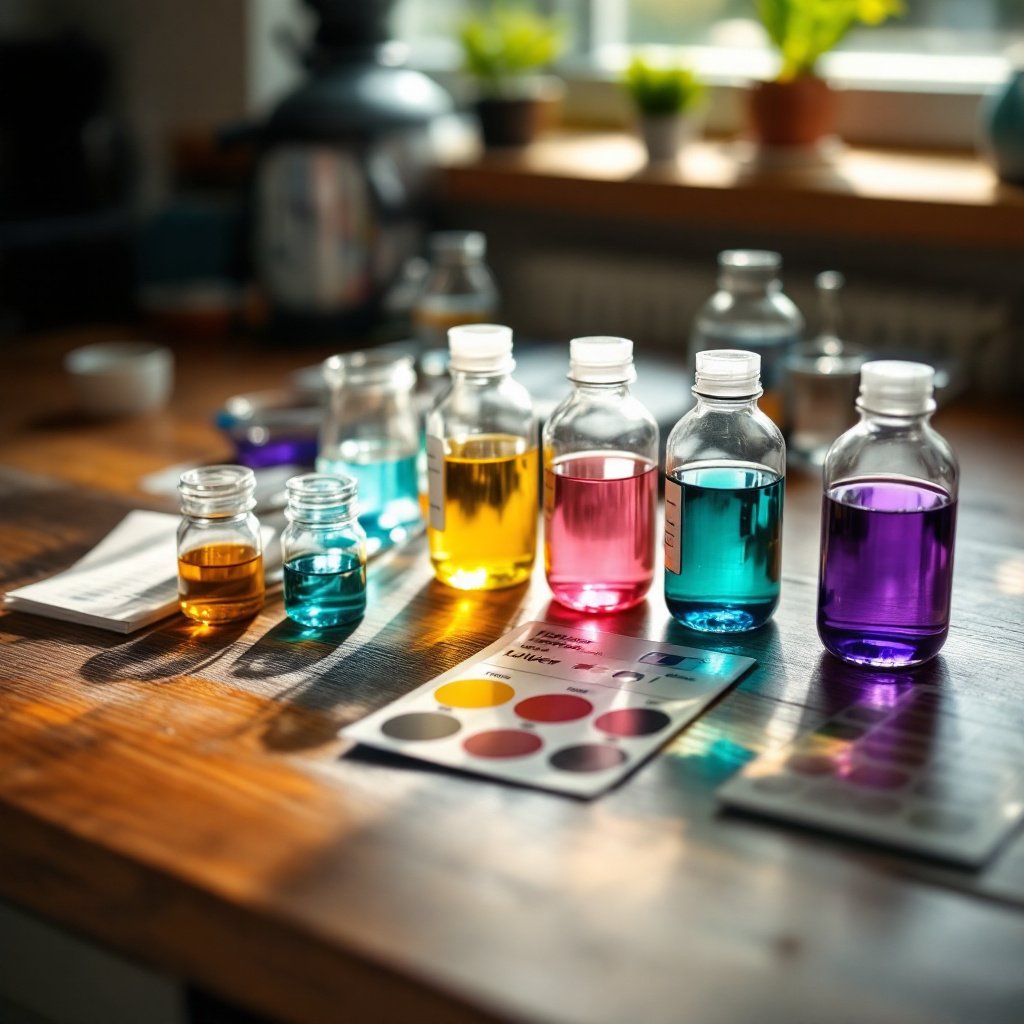
Not 0.25. Not “almost zero.” Actual zero on your test kit. The yellow should match the 0 ppm color card exactly.
2. Nitrite reads 0 ppm within 24 hours of dosing ammonia
Same deal. The test tube should be bright blue, matching the zero reading.
3. Nitrate is present
Some nitrate accumulation should show, usually 5–40 ppm depending on how long you’ve been cycling. Proof the full cycle is completing.
4. Consistency matters, not just a single good result
Test on two separate occasions, dosing ammonia each time. Both times should show the same result: full processing within 24 hours.
5. pH hasn’t crashed
Sometimes pH drops dramatically during cycling due to acid buildup. If it falls below 6.0, bacteria activity slows significantly. Check this as part of your final confirmation.
Once all five boxes are checked? Ready. Do a large water change to remove accumulated nitrates before adding fish. The exact percentage varies, but the goal is bringing nitrates down to safe levels for your future inhabitants.
After the Wait: Adding Fish Without Ruining Everything
Weeks of testing, waiting, and resisting the urge to just add “one little fish to speed things up.” The tank is now a functioning ecosystem with invisible bacterial colonies ready to handle waste.
But don’t undo all that work by going overboard.
Add fish slowly. I mean it. One or two small fish first, then wait another week or two before adding more. Bacteria colonies are established, but they’re calibrated to the ammonia levels you’ve been dosing. Suddenly adding ten fish at once can overwhelm them, and then you’re right back where you started.
I always recommend starting with hardy species: endlers, white cloud minnows, or a single betta for smaller tanks. best beginner fish for newly cycled tanks Watch them closely for the first week, test water every few days, and resist the temptation to overstock.
Looking back, I wish someone had explained the aquarium nitrogen cycle for beginners to me before I bought Gerald. The wait would’ve felt long in the moment, but losing fish feels so much worse.
Patience now creates a foundation for years of successful fishkeeping. Every tank I’ve properly cycled has been rock solid, handling fish additions and plant changes without drama. Tanks I rushed? Let’s just say my fish survival rate improved dramatically once I stopped skipping steps.
So grab that test kit, dose some ammonia, and start growing your invisible garden. In a month or two, you’ll be adding fish to a tank that’s actually ready for them. And trust me, watching healthy fish thrive in a stable environment is worth every day of waiting.