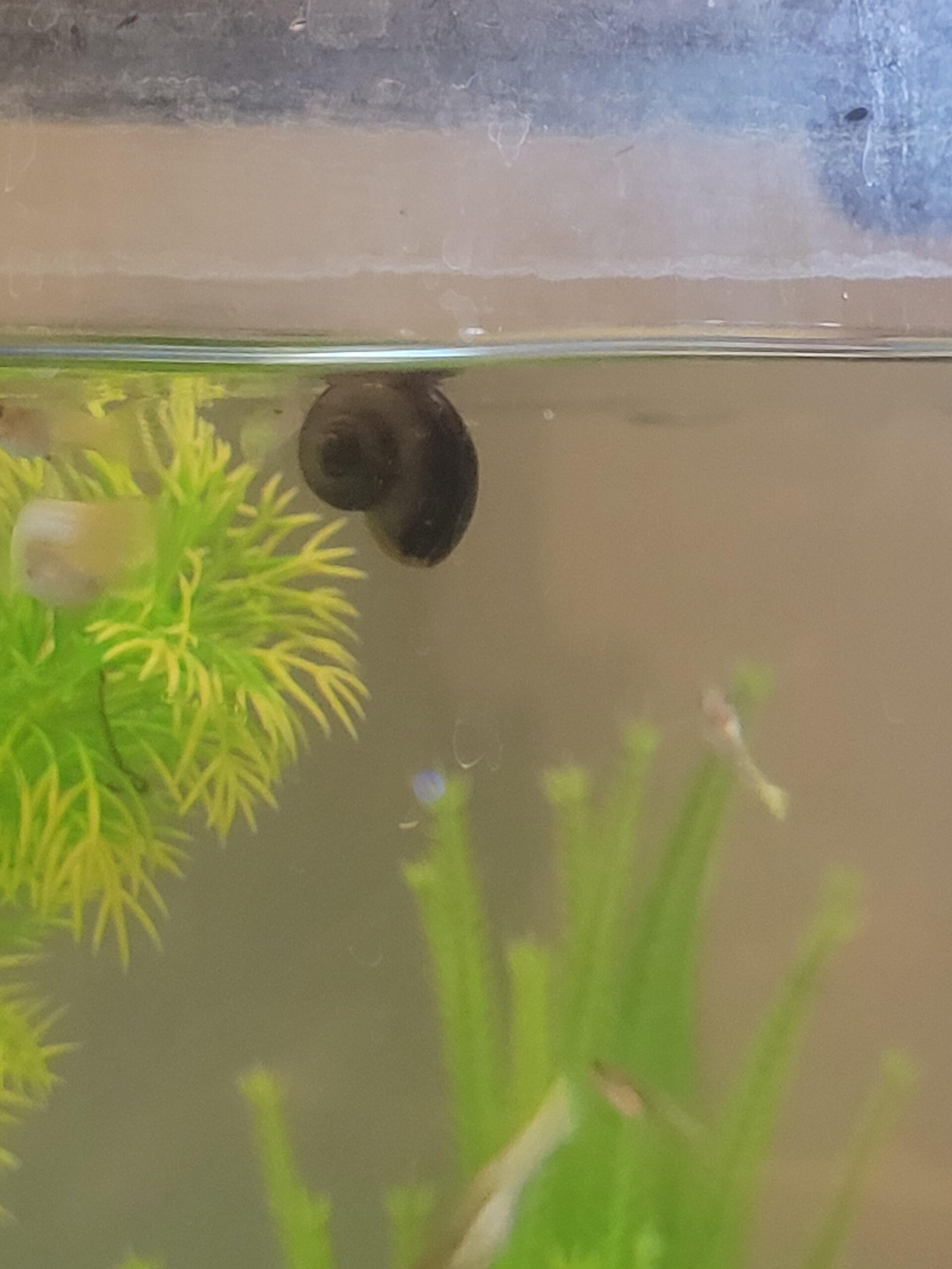
Most aquarium snails float because trapped gas, illness, or poor water conditions affect their buoyancy.
I’ve kept aquariums and studied snail care for years, so I know how alarming it is to find a snail bobbing at the surface. This article explains why is my snail floating in my aquarium, how to diagnose the cause, safe immediate steps to help the snail, and long-term prevention. You’ll get simple tests, clear actions, and real-life tips to protect your snails and your tank.

Why is my snail floating in my aquarium?
There are several common reasons your snail floats. Trapped gas inside the shell or body, bacterial infections, egg-carrying behavior, and poor water chemistry all cause buoyancy problems.
Floating can also be a sign the snail is dead and decomposing, which makes it buoyant.
- Trapped gas from digestion or trapped air
- Bacterial or parasitic infections causing bloating
- Egg-laden females holding air or eggs near the shell
- Poor water quality or toxins causing internal dysfunction
- Natural death and decomposition making the body buoyant
When you ask why is my snail floating in my aquarium, think first about water quality and recent changes. Sudden temperature swings, new fish, or new plants can trigger problems fast.

Signs to watch and how to check a floating snail
Look for simple clues to decide what is happening. A live but floating snail often moves slightly, retracts, or reacts to gentle touch. A dead snail will not respond and may smell or show a gaping body inside the shell.
- Check for movement by tapping the shell lightly with a clean instrument.
- Observe the snail’s siphon, foot, and antennae for response.
- Smell the water near the snail; a strong odor suggests decomposition.
- Test water parameters: ammonia, nitrite, nitrate, pH, and temperature can reveal underlying causes.
If you want to know why is my snail floating in my aquarium, these checks quickly narrow down whether it’s a treatable health issue or a dead snail that needs removal.

Immediate steps to help a floating snail
Act fast but gently. Quick, careful actions can save a live snail.
- Move the snail to clean, shallow water using a small net or container. Keep water from the same tank to avoid shock.
- Do a 25–50% water change in the main tank to improve water quality if parameters are off.
- Test water parameters and correct high ammonia or nitrite before returning the snail.
- Avoid poking or forcing the snail to the bottom. Rough handling can injure the soft body.
- If you suspect gas or trapped air, sometimes gentle agitation or tilting the snail can help it release air, but do this only very gently.
When considering why is my snail floating in my aquarium, immediate stabilization and improved water conditions are the safest first steps.

Long-term treatments and prevention
Fixing tank habits reduces repeats of floating issues. Consistent care prevents most buoyancy problems.
- Keep nitrates low and perform regular weekly water changes.
- Feed sparingly. Overfeeding creates excess waste and gas in snails.
- Maintain calcium levels for strong shells; crushed cuttlebone or specialized supplements help.
- Quarantine new snails and plants for two weeks before adding them.
- Avoid copper and many common snail-toxic medications. Read labels before treatment.
In my experience, one aquarist error—overfeeding vegetable matter—was the cause of repeated floating in pond snails. Cutting food in half solved the issue within days.

Common causes explained in detail
Trapped gas and digestive issues
Gas can build in the gut if snails eat fermenting food or decaying plant matter. The gas makes them buoyant. Fast water changes and reducing leftover food stop the problem.
Bacterial or parasitic infection
Bacteria can cause internal swelling and gas production. Infected snails may retract and not eat. Antibiotics can help but use them cautiously and avoid copper-based drugs.
Eggs and reproductive behavior
Some snail species carry egg clutches or air pockets temporarily. Females may float while guarding eggs or positioning them near the surface. This behavior is usually temporary.
Poor water chemistry and toxins
High ammonia or nitrite and sudden pH swings stress snails and can impair normal gas exchange. Copper and some fertilizers are highly toxic to snails and can cause buoyancy problems.
Death and decomposition
A dead snail often floats due to gases produced during decomposition. Removal is critical to avoid polluting the tank and harming other inhabitants.

When floating means the snail is dying or dead
Not all floating snails can be saved. Look for these signs of death.
- No response to gentle tapping or movement.
- Body is gaping out of the shell or shrunken and immobile.
- Foul odor or cloudy water around the snail.
- Shell brightening or white buildup indicates decay.
If the snail is dead, remove it quickly and perform a water change. Test water after removal to ensure ammonia or nitrate spikes did not follow.

Personal experience and lessons learned
Years ago I had a planted tank where multiple pond snails floated after a large algae bloom die-off. I learned three key lessons. First, reduce feeding during algae crashes. Second, quarantine additions. Third, test water twice a week when problems start. Those changes stopped floating incidents and improved overall tank health.
When to consult an expert
If many snails float at once or you cannot find a clear cause, reach out to a vet or experienced aquarist. Large-scale floating can indicate toxic exposure or severe bacterial outbreaks that need professional diagnosis. Be ready to provide water parameter readings and a history of recent tank changes.
Frequently Asked Questions of why is my snail floating in my aquarium
Why is my snail floating in my aquarium right after a water change?
A sudden temperature or pH shift from a water change can stress snails and cause temporary buoyancy. Match new water closely to tank conditions and make changes gradually.
Can I save a floating snail by forcing it back to the bottom?
Do not force a snail. Gentle repositioning can help a live snail, but rough handling may injure it and worsen the problem. Stabilize water quality first.
Does overfeeding cause snails to float?
Yes. Overfeeding leaves decaying food that ferments and produces gas in the snail’s gut. Cut feeding amounts and remove uneaten food to prevent floating.
Could my snail float because of eggs?
Yes, some species float or move near the surface when carrying eggs. This behavior is usually temporary and not a cause for alarm if the snail is active.
Is a floating snail always dead?
No. Floating can indicate a live snail with buoyancy issues, but it can also mean the snail is dead and decomposing. Check for movement, response, and odor to tell the difference.
Conclusion
Floating snails are usually a symptom, not a single problem. Test your water, check for infections or toxins, reduce overfeeding, and quarantine new additions to protect snails long-term. Act quickly but gently when you find a floating snail, and track tank changes to prevent repeats. Try the steps in this guide, monitor results, and leave a comment with your experience or questions—your real-world observations help other aquarists too.