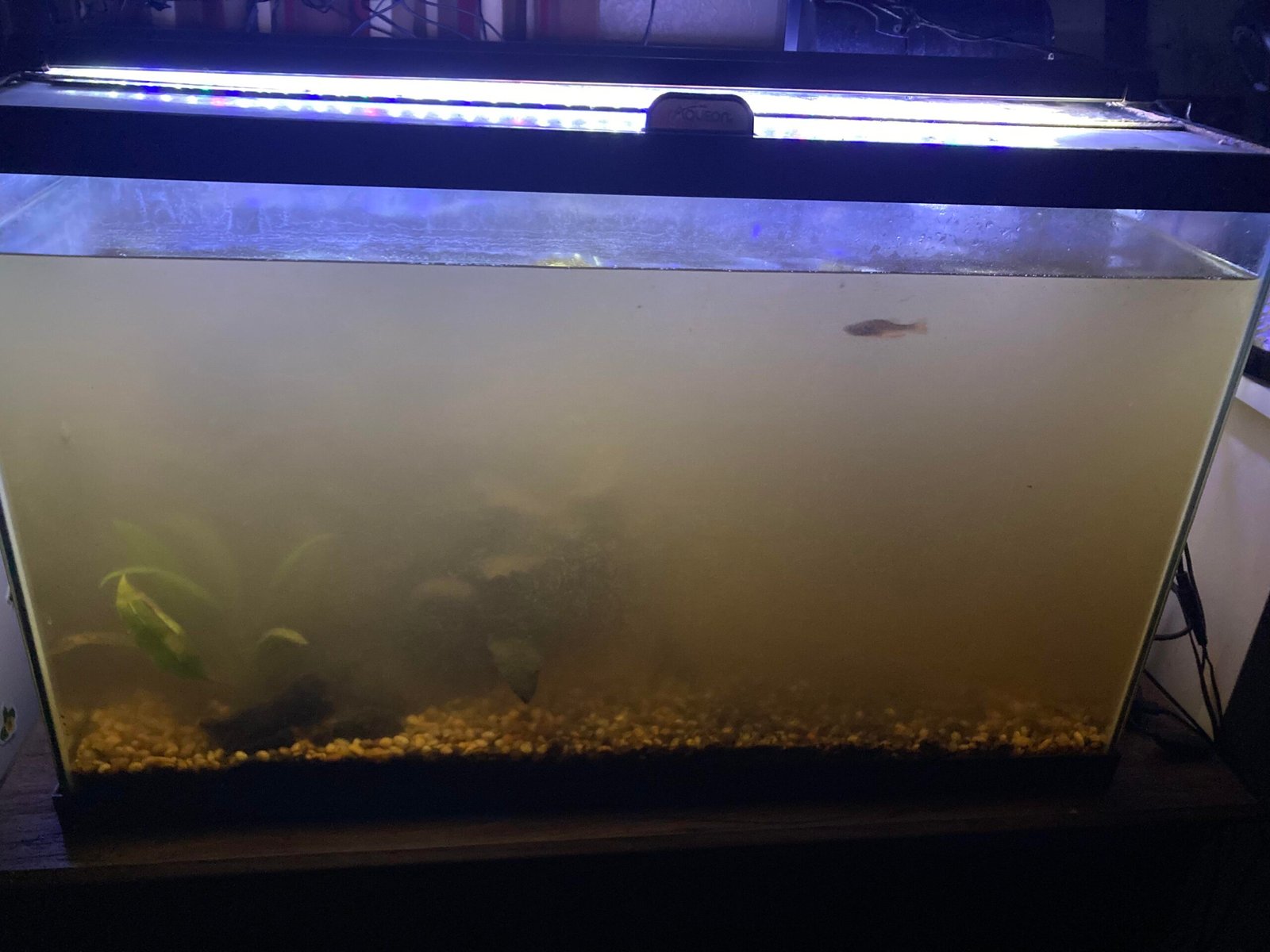
Cloudy aquarium water usually comes from bacterial blooms, overfeeding, or poor filtration.
I’ve kept aquariums for years and helped others fix murky tanks many times. This guide explains why does the aquarium water get cloudy, how to pinpoint the cause, and step-by-step fixes you can trust. Read on for clear, practical advice backed by real experience and simple testing methods to restore sparkling water fast.
Common causes of cloudy aquarium water
Cloudiness has several common roots. Knowing each one helps you act quickly.
- Bacterial bloom
- A sudden spike in free-floating bacteria can turn water milky white. This often happens in new tanks or after a large organic load.
- Overfeeding
- Leftover food breaks down and fuels bacteria. Overfed tanks often go cloudy in 24–48 hours.
- Substrate dust and new decorations
- Fine sand or gravel and porous décor can release particles when first added or disturbed.
- Poor filtration or clogged filters
- When mechanical or biological media fail, particles and waste stay suspended.
- Algae bloom
- Greenish or cloudy water can be from single-celled algae, often tied to excess light and nutrients.
- Chemical causes and tannins
- Decaying leaves or driftwood can leach tannins, tinting water brown but sometimes appearing cloudy.
- Overstocking and fish waste
- Too many fish produce more ammonia and organics than the tank can handle, causing cloudiness.
Understanding why does the aquarium water get cloudy begins with identifying these triggers. Look at timing, color, and smell to narrow the cause.
How to diagnose the type of cloudiness
A quick check saves time. Use these simple clues to diagnose why does the aquarium water get cloudy.
- Color clues
- Milky white points to bacterial bloom. Green means algae. Brown means tannins or dissolved organics.
- Smell
- A foul smell indicates high waste or decaying matter. No smell may mean a bacterial bloom.
- Timing
- New tank setups often show cloudiness from substrate or bacterial colonization. Sudden cloudiness after feeding is usually food-related.
- Water tests
- Test ammonia, nitrite, nitrate, and phosphate. High ammonia or nitrite suggests cycle imbalance.
- Visual inspection
- Check filters, substrate, and equipment. Look for uneaten food, dead plants, or clogged media.
These checks help you decide whether to perform water changes, clean gear, or wait for the tank to stabilize. Diagnosing why does the aquarium water get cloudy correctly cuts down on unnecessary treatments.
Step-by-step fixes and preventive measures
Follow these clear steps when you face cloudy water. These actions address common causes and help prevent recurrence.
- Immediate actions
- Remove visible waste with a net. Stop feeding for 24 hours if you suspect overfeeding.
- Do a 20–30% water change to remove suspended particles and reduce nutrients.
- Improve filtration
- Clean or replace mechanical filter media, but avoid scrubbing biological media with tap water. Rinse bio-media in tank water.
- Consider adding finer mechanical media if particles persist.
- Control bacterial blooms
- If bacterial bloom is mild, improving aeration and doing partial water changes is often enough. Avoid antibiotics unless a vet or expert advises.
- Manage algae
- Reduce light hours and clean algae from surfaces. Test and lower phosphates and nitrates.
- Fix substrate and decor issues
- Rinse new substrate thoroughly before adding it. Vacuum gravel to remove trapped waste.
- Long-term prevention
- Feed sparingly and remove uneaten food.
- Keep a regular water change schedule.
- Stock appropriately for tank size and filter capacity.
- Cycle new tanks fully before adding many fish.
These steps address why does the aquarium water get cloudy at the source, not just the symptoms.

When to use products and when to avoid them
Products can help but can also mask problems. Use them carefully.
- Water clarifiers
- Clarifiers clump tiny particles so filters can catch them. Use for stubborn particulate cloudiness, but learn the cause first.
- Chemical treatments and antibiotics
- Avoid antibiotics for routine cloudiness. They can harm beneficial bacteria and worsen cycling.
- Activated carbon and media
- Carbon removes dissolved organics and odors. It can help if tannins or chemicals cause cloudiness.
- UV sterilizers
- UV units kill free-floating algae and bacteria. They are effective for persistent green water and recurring bacterial blooms but add cost and complexity.
- Beneficial bacteria additives
- These can help re-establish biological balance after heavy cleaning. Choose reputable brands and follow instructions.
Match the product to the diagnosis. If you’re unsure why does the aquarium water get cloudy, simple fixes and testing are safer than immediate chemical treatment.
My personal experience and lessons learned
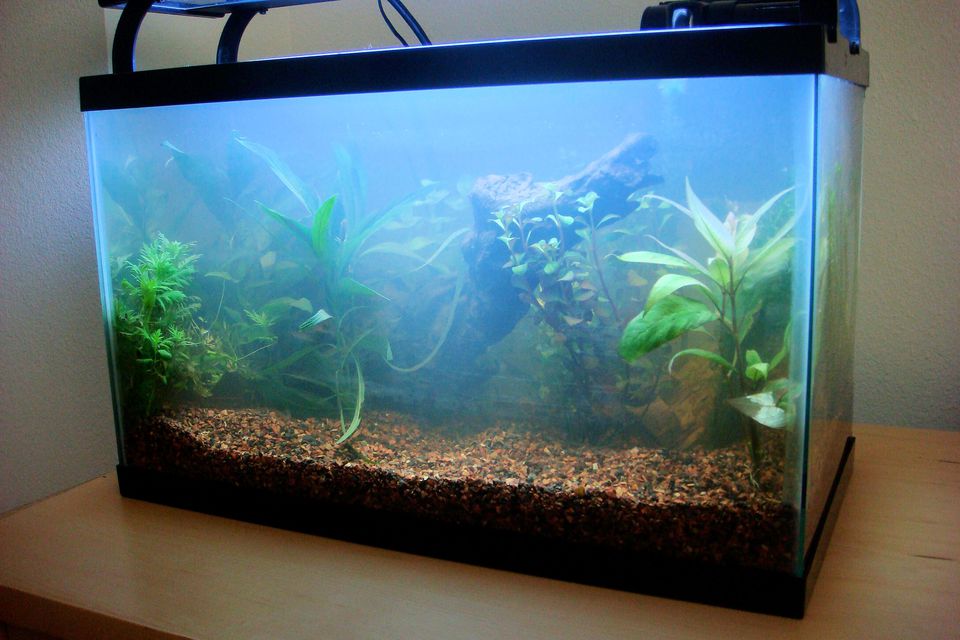
I once had a 20-gallon tank turn milky white two days after a large weekend feeding binge. I panicked and nearly added several chemicals. Instead I paused feedings, did a 30% water change, cleaned the filter sponge in tank water, and increased aeration. The bloom cleared in three days.
Key lessons I learned:
- Quick, calm action beats panic dosing products.
- Overfeeding is the most common, easiest-to-fix cause I’ve seen.
- Regular, small water changes prevent most cloudiness problems.
- When I used a UV sterilizer, green water disappeared, but I still maintained proper feeding and testing.
These experiences taught me to diagnose before treating and to prefer simple mechanical fixes first.
Maintenance checklist and quick reference
Use this checklist to keep cloudiness away. It’s a simple routine that covers most causes.
Weekly
- Test ammonia, nitrite, nitrate.
- Do a 10–25% water change.
- Remove uneaten food and dead plant matter.
- Check filter flow and clean pre-filter pads.
Monthly
- Deep vacuum substrate.
- Rinse biological media in tank water if flow slows.
- Replace carbon or chemical media as needed.
As needed
- Reduce feeding if uneaten food appears.
- Add aeration if oxygen levels seem low or if you see bacterial bloom.
- Use UV only for persistent free-floating algae or bacteria after other fixes.
Follow this checklist to reduce the chances you’ll ask why does the aquarium water get cloudy again.
Frequently Asked Questions of why does the aquarium water get cloudy
Why does my aquarium water suddenly get cloudy overnight?
Sudden cloudiness overnight often comes from overfeeding or a bacterial bloom triggered by a big organic load. Check for uneaten food and test water parameters before treating.
Can I clear cloudy water with more filtration?
Improving filtration helps remove particles, but you must also address the cause. Clean or upgrade filter media and ensure proper biological filtration for lasting results.
Is cloudy water harmful to fish?
Short-term cloudiness usually isn’t deadly but indicates water quality issues that can stress fish. Monitor ammonia and nitrite; act fast if levels climb.
Will water clarifiers permanently fix cloudy water?
Clarifiers help temporarily by clumping particles so filters can remove them. They don’t fix underlying problems like overfeeding, poor cycling, or excess nutrients.
How long does bacterial bloom cloudiness last?
A bacterial bloom often clears in 2–7 days with proper care: water changes, reduced feeding, and better aeration. Persistent blooms may require deeper investigation.
Should I replace all the water when tank gets cloudy?
Full water changes can stress fish and remove helpful bacteria. Use partial water changes (20–40%) and clean filters gently to avoid harming the biological balance.
Conclusion
Cloudy aquarium water is a common issue with clear fixes. Most cases stem from overfeeding, bacterial blooms, substrate dust, poor filtration, or algae. Diagnose using color, smell, and water tests, then take calm, targeted steps: partial water changes, filter care, reduced feeding, and regular maintenance. Apply the checklist above to prevent repeat problems and keep your tank clear and healthy. Try one change this week—your aquarium will thank you. Leave a comment with your aquarium situation or subscribe for more practical tank-care tips.