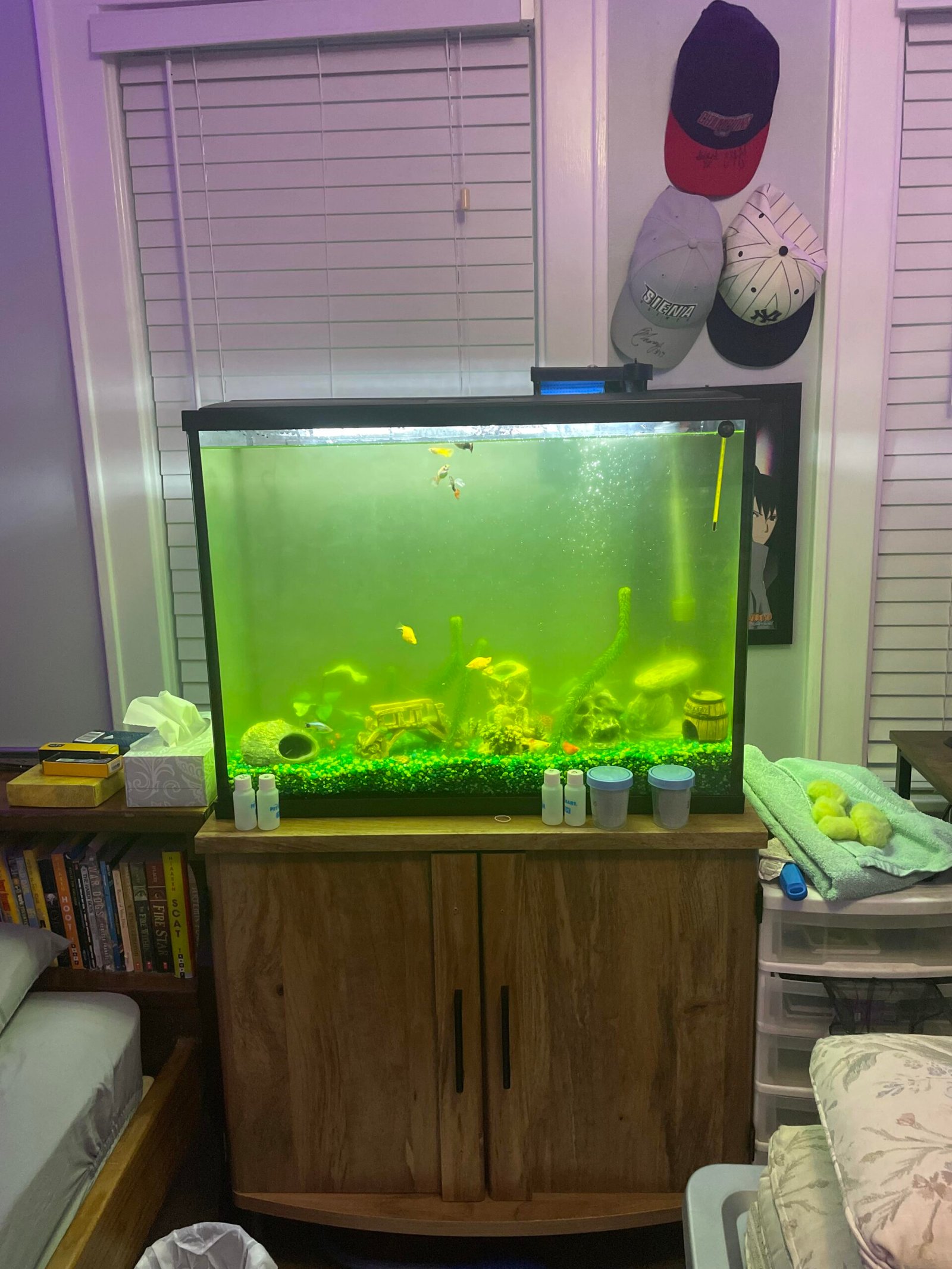
Typically, aquarium water looks green due to algae growth.
If you've ever glanced at your fish tank and wondered why it resembles a green smoothie rather than a pristine aquatic environment, you’re not alone. Understanding why your aquarium water looks green can help you reclaim the crystal-clear view you desire. In this guide, we’ll dive deep into the causes, prevention, and remedies for dealing with green aquarium water, ensuring your aquatic pets thrive in a healthy habitat.
Causes of Green Aquarium Water
Green water in aquariums is a common issue, usually caused by microscopic algae blooms. These blooms can be influenced by several factors, such as:
- Excessive Light: Overexposing your tank to light can accelerate algae growth. Consider using a timer or adjusting the placement of your aquarium to control light exposure.
- Nutrient Overload: Nutrients like nitrates and phosphates, often from overfeeding fish or decaying organic matter, can fuel algae growth.
- Imbalanced Ecosystem: A disrupted balance in the tank’s ecosystem may lead to excessive algae. Factors such as lack of plants, incorrect filtration, or insufficient water changes can play a role.
- New Tank Syndrome: New aquariums may experience algae blooms as they stabilize and develop beneficial bacteria.
How to Prevent Green Water
To keep your aquarium water clear, implement these preventive measures:
- Manage Lighting: Keep tank lights on for 8-10 hours per day and use curtains or blinds to block direct sunlight.
- Control Feeding: Overfeeding fish contributes to nutrient excess. Feed in small amounts that fish will consume within a few minutes.
- Regular Maintenance: Perform water changes regularly — about 15-20% weekly — to remove nutrients that contribute to algae growth.
- Introduce Live Plants: Aquatic plants compete with algae for nutrients, helping maintain balance in the tank.
- Use Proper Filtration: Ensure you have a good quality filter that provides both mechanical and biological filtration.
Effective Treatments for Green Water
If you’re facing a green water problem, consider these solutions:
- UV Sterilizers: These devices kill algae and help maintain clear water by using ultraviolet light.
- Algae Eaters: Introduce fish or invertebrates known to consume algae, like Amano shrimp or Otocinclus catfish.
- Chemical Treatments: Algaecides can be effective but use them cautiously as they may affect aquatic life.
- Blackout Method: Cover the aquarium to block all light for 3-4 days, inhibiting algae growth. Ensure fish can tolerate this temporary condition.
The Role of Balance in Aquariums
Maintaining a well-balanced ecosystem in your aquarium is essential for preventing green water. Balance involves optimizing various aspects, including:
- Water Chemistry: Regularly test for ammonia, nitrate, and phosphate levels to ensure they remain within safe limits.
- Temperature Management: Keep the water at a consistent temperature suitable for your specific fish species.
- Aquatic Plant Health: Healthy plants can outcompete algae for resources, staving off blooms.
Frequently Asked Questions
How do I clear green water naturally?
Natural options include introducing algae-eating fish and maintaining live plants to balance nutrients.
Can too much light make aquarium water green?
Yes, excessive light can promote algae growth, leading to green water.
How often should I clean my aquarium to prevent algae?
Regular maintenance, including weekly water changes and bi-weekly gravel vacuuming, can help prevent algae.
Is green water harmful to fish?
Green water is generally not harmful to fish but can indicate an imbalance in the ecosystem.
Do live plants help with green water?
Yes, live plants compete with algae for nutrients, helping control algae growth.
Conclusion
Achieving clear, healthy aquarium water is a rewarding but ongoing process that requires balance, patience, and dedication. By understanding the causes of green water and implementing preventive measures, you’ll ensure your fish can live in a vibrant and thriving aquatic environment. Start with these steps today and transform your aquarium into a crystal-clear oasis.
Feel free to explore more resources or leave a comment below if you have further questions!