Beginner Aquarium Plants: What Actually Survives (And What Secretly Kills Your Budget)
I’ve killed a lot of plants. Like, an embarrassing amount. Before I figured out what actually works in a beginner tank, I’d estimate I sent about $200 worth of aquatic greenery to the great compost pile in the sky. Java moss that turned brown and disintegrated. Amazon swords that melted into sad, transparent ghosts of their former selves. One particularly optimistic attempt at dwarf baby tears that lasted exactly eleven days.
Here’s the thing: I did my research. Or I thought I did. Every “best aquarium plants for beginners low maintenance” list told me the same plants were foolproof. Spoiler alert. They weren’t. At least not in my basic 10-gallon with its stock hood light and plain gravel.
What I wish someone had told me when I was staring at my first betta tank, credit card in hand, ready to transform it into an underwater forest? Most beginner plant guides are written by people with CO2 injection, fancy lights, and years of experience. Their “easy” isn’t our easy.
This guide is different. I’m ranking plants by actual survival rates in real beginner conditions, meaning no CO2, budget lighting, and whatever substrate you’ve already got. I’ll tell you which plants are genuinely kill-proof, which ones need a little more than the box suggests, and which “beginner” plants are secretly lying to you.
The Beginner Plant Survival Tier List: 15 Common Plants Ranked Honestly
Forget the five-tier systems you see everywhere. I’m giving you three tiers based on what I’ve personally watched survive (or not) in my collection of nano tanks and what I’ve seen in the tanks of friends who are brand new to planted setups.
Tier 1: Actually Unkillable (Even I Couldn’t Kill These)
- Anubias (any variety): This plant laughs at neglect. Low light? Fine. No fertilizer? Whatever. Just don’t bury the rhizome.
- Java Fern: Same deal as Anubias. Attach it to something and forget it exists.
- Marimo Moss Balls: Technically algae, but who’s counting? Roll them around occasionally.
- Pothos (roots in water): Yes, it’s a houseplant. Yes, it works. My nitrates have never been lower.
- Java Moss: Okay, I said I killed this, but that was before I learned to just leave it alone and stop trying to make it do things.
Tier 2: Beginner-Friendly with One Catch
- Amazon Sword: Needs root tabs. That’s it. That’s the catch.
- Cryptocoryne (most varieties): Will melt when you first plant it. Don’t panic. It comes back.
- Vallisneria: Needs slightly more light than your stock hood probably provides.
- Water Wisteria: Fast grower, but gets leggy without decent light.
- Hornwort: Easy but messy. Sheds needles everywhere if it’s unhappy.
Tier 3: “Beginner” Plants That Are Secretly Intermediate
- Dwarf Sagittaria: Needs more light than advertised.
- Monte Carlo: Can carpet without CO2 if you’ve got adequate light, but growth will be slower and less dense. CO2 makes a big difference here.
- Dwarf Hairgrass: Can grow without CO2, but expect slower growth and potentially thinner coverage. Patience is key.
- Red plants (any of them): High light minimum. Most need CO2.
- Amazon Frogbit (in certain conditions): Easy outdoors, weirdly finicky indoors under hoods with condensation.
Low Light Reality Check: What Your Basic Hood Light Can Actually Support
Let’s talk about the elephant in the room. When plant sellers say “low light tolerant,” they mean something different than what you and I mean.
To them, low light means “doesn’t need high-tech LED fixtures.” To us beginners, low light means “that strip light that came with the kit from the pet store.” These aren’t the same thing.
That stock hood light you’ve got? It’s probably running somewhere between 10 and 20 PAR at substrate level. For reference, “low light” plants typically want 15 to 30 PAR, and “medium light” plants want 30 to 50.
See the problem?
Your best bet with truly budget lighting: stick to Tier 1 plants, add floating plants (which get first dibs on the light), or budget aquarium lighting upgrades consider a basic LED upgrade for under $30.
Plants that can photosynthesize in a cave are your best friends here. Anubias and Java Fern won’t let you down.
Gravel vs. Planted Substrate: Which Plants Actually Grow in What You Have
Some good news for you: you don’t need to rip out your gravel and start over with expensive planted substrate. But you do need to know which plants care and which don’t.
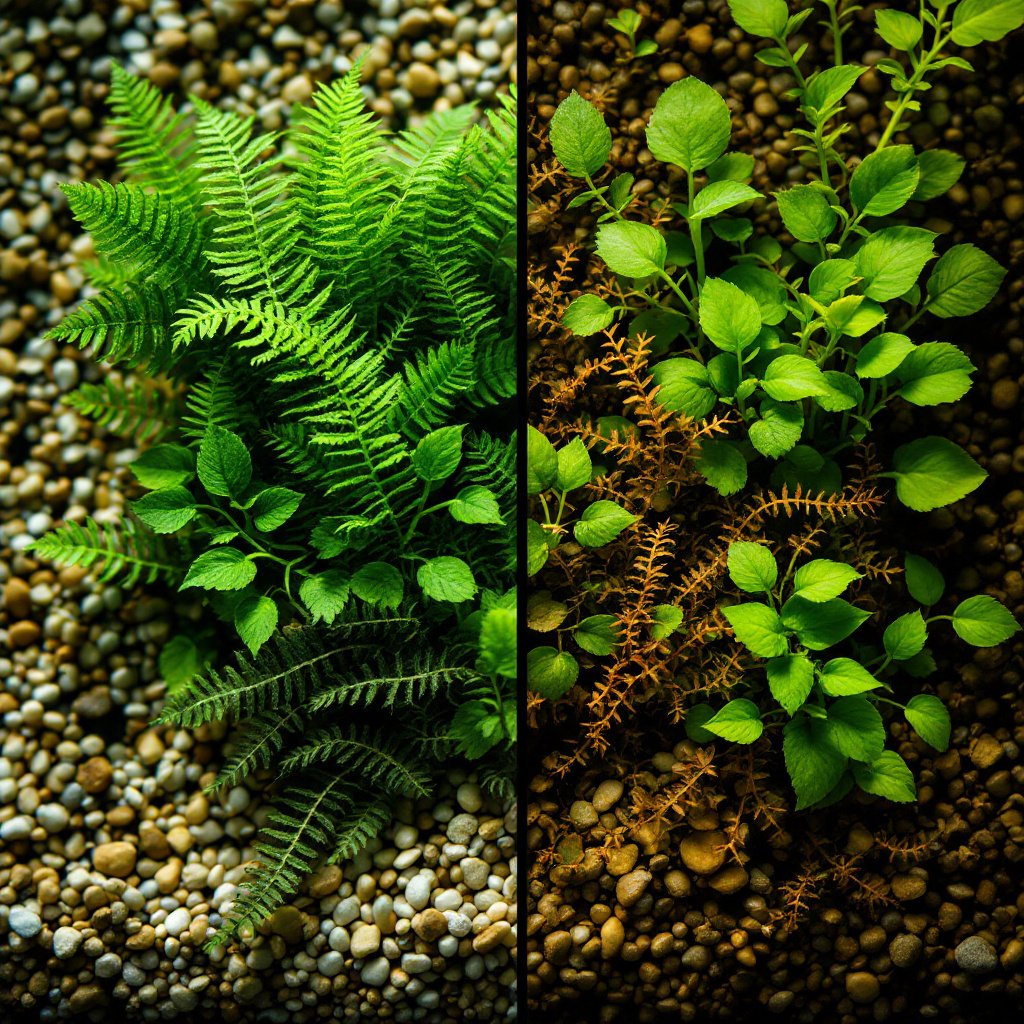
Aquarium plants that grow in gravel (no substrate change needed):
- Anubias (attach to decor, not planted)
- Java Fern (same thing, attach, don’t plant)
- Java Moss (wedge it, tie it, let it float)
- Floating plants (obviously)
- Stem plants like Water Wisteria (they’ll survive, if not thrive)
Plants that really want root tabs or planted substrate:
- Amazon Swords (heavy root feeders)
- Cryptocorynes (appreciate it, though they’re flexible)
- Vallisneria (runners need nutrients)
- Any carpeting plant (good luck without it)
My honest take? Buy a bag of root tabs for $8 and push them into your gravel near heavy feeders. Works fine for 90% of situations. Beginner aquarium plants that don’t need CO2 also typically don’t need fancy substrates. They just need occasional root feeding.
The Floating Plant Advantage: Why Beginners Should Start at the Top
If I could go back and tell past Sophie one thing about planted tanks, it would be this: start with floaters.
Beginner-friendly floating aquarium plants solve so many problems at once:
- They get maximum light (no substrate-to-surface distance issues)
- They pull nutrients directly from the water column (no root tab math)
- They provide instant cover for shy fish
- They grow fast, which means visible progress and motivation
- They’re cheap, often free if you know someone with a tank
Here are my favorites for beginners:
Salvinia minima: Small leaves, fast grower, doesn’t need much. Those little hairs on top keep it dry and happy.
Red Root Floaters: Gorgeous red roots, easy to maintain, though they prefer a lid with some airflow.
Water Lettuce: Gets bigger, needs open-top tanks or tall hoods, but practically unkillable.
Duckweed: I have to mention it. It’s bulletproof. It’ll also take over your life. Every tank. Every net. Every surface of your home. You’ve been warned.
Floaters are how I finally felt like I wasn’t just wasting money on live plants. Within two weeks, I could see growth. That visual feedback kept me in the hobby.
Betta-Safe Plant Picks: Protecting Those Fins
Since my first plant casualty (and fish casualty, RIP Gerald) happened in a betta tank, I feel obligated to address this specifically. If you’re wondering what live plants are safe for betta tanks, the short answer is most of them, with a few caveats.
Safe and recommended:
- Anubias (smooth leaves, good resting spots)
- Java Fern (same deal)
- Betta bulbs (Aponogeton, usually, and bettas love weaving through the leaves)
- Floating plants (bettas naturally hang out near the surface)
- Moss (soft, no sharp edges)
Use caution:
- Plastic plants with sharp edges (this isn’t live, but worth mentioning)
- Vallisneria with damaged edges (can become surprisingly sharp)
- Dense plantings that block surface access (bettas need to breathe air)
Skip entirely:
- Anything with stiff, pointy leaves
- “Lucky bamboo” that’s not actually aquatic (will rot)
- Sharp-edged driftwood sometimes sold as “natural decor”
Easy live plants for freshwater aquarium setups with bettas should prioritize smooth textures and surface access. Every betta I’ve kept has gravitated toward floating plants and broad Anubias leaves for their bubble nests and afternoon naps.
Starter Kit vs. DIY Collection: The Real Cost Breakdown
You’ve probably seen those “beginner plant bundles” on online aquarium plant retailers various websites. Twenty plants for $30! Incredible variety! Everything you need!
Let me save you some money and frustration.
Aquarium plant starter kit reality check:
Pros:
– Sometimes genuinely good deals on bulk plants
– Takes the decision paralysis out of shopping
– Often includes variety you might not pick yourself
Cons:
– Usually includes 2 to 3 plants that will die in your setup
– “Mystery plants” are often whatever they need to get rid of
– You’re paying for plants you might not want or have room for
Build your own starter collection instead.
For a 10-gallon beginner tank, I’d spend my $30 to $40 like this:
- 1 Anubias (attached to driftwood or rock): ~$8 to $12
- 1 Java Fern (same attachment method): ~$6 to $10
- 1 portion Java Moss: ~$5 to $8
- 1 Amazon Sword or Crypt (for a background plant): ~$6 to $10
- Floating plants (Salvinia or Red Root Floaters): ~$5 to $8
Total: roughly $30 to $45, and everything has a real chance of surviving.
When you’re looking at live aquarium plants online store reviews, pay attention to what people say about plant health on arrival and packaging quality. Dead-on-arrival plants are common with budget sellers.
What should you expect when you add your first best aquarium plants for beginners low maintenance setup?
Week 1: Some melting is normal. Crypts especially will look terrible. Don’t pull them out.
Week 2: Plants should stabilize. You might see some browning on older leaves. That’s just the plant redirecting energy to new growth adapted to your specific water.
Weeks 3 to 4: Look for new leaves, runners, or growth at the tips of stem plants. This signals that your plants are establishing.
When to worry:
- Complete mush (not just melting leaves, but dissolving stems)
- Black or translucent patches spreading
- Floating plants turning yellow-white (usually a light issue)
- Algae completely covering leaves (light/nutrient imbalance)
How to choose live plants for fish tank success really comes down to this: match the plant to your actual setup, not the setup you wish you had. Be honest about your lighting. Be realistic about your maintenance commitment. And start with the boring, reliable plants before you chase Instagram-worthy aquascapes.
I’ve got seven tanks now, and you know what’s in all of them? Anubias, Java Fern, and floaters. The foundation that actually works. Everything else is just showing off. And there’s time for that later, once you’ve got the basics down.
Now if you’ll excuse me, I need to go convince my partner that we definitely have room for another 5-gallon. I found this perfect piece of driftwood at the thrift store, and it’s basically begging for some Anubias nana petite.