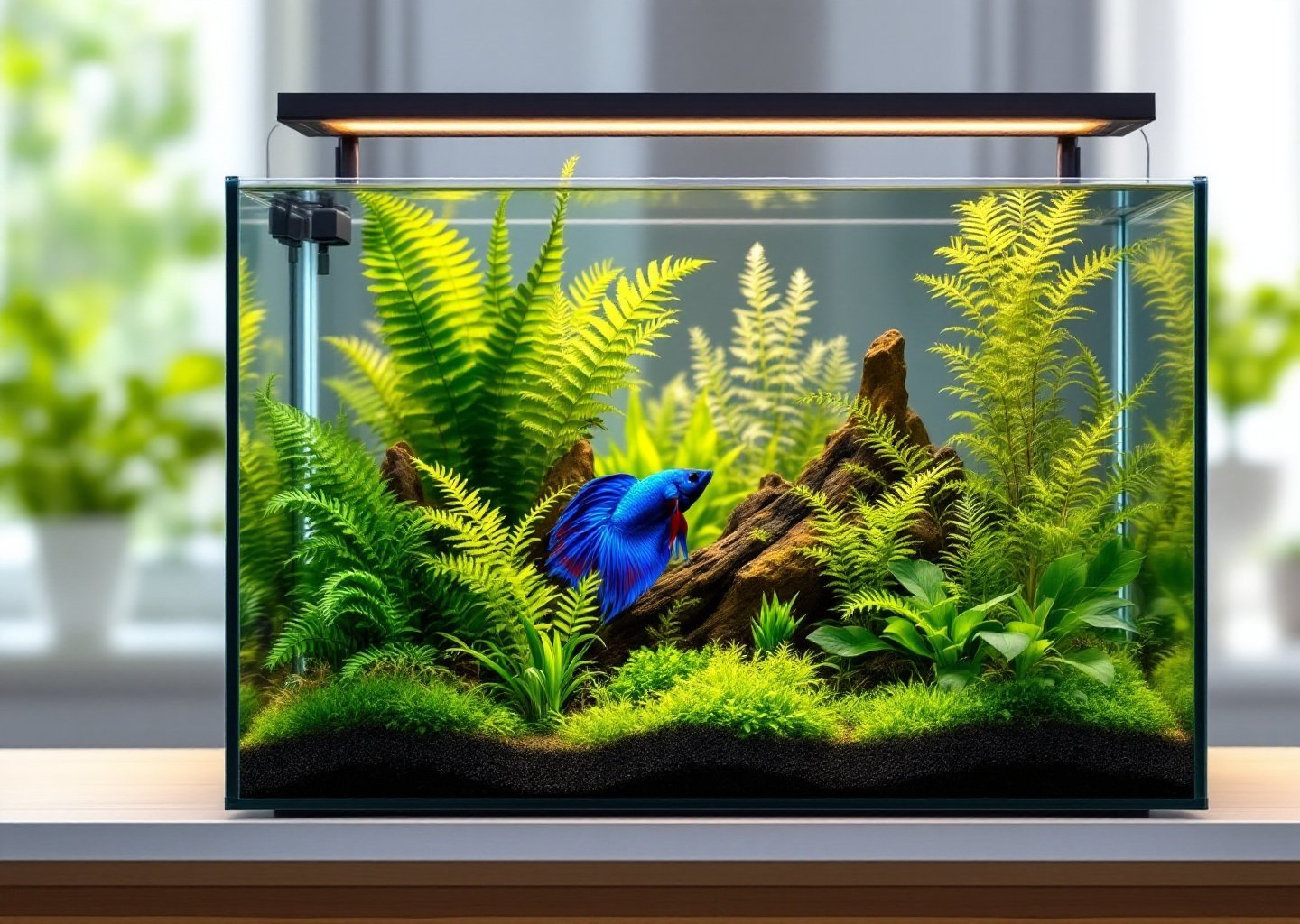
The Filter Rating on the Box Is Lying to You (Sort Of)
I’m going to let you in on a secret that took me three dead plants and one very stressed-out betta to learn: the filter rating on the box is lying to you. Well, not lying exactly, but definitely not telling the whole truth. When I set up my first 20-gallon planted tank, I did what every beginner does. I bought a filter rated for “up to 30 gallons” because hey, bigger is better, right? Wrong. So wrong.
Here’s the thing: most guides for finding the best aquarium filters for 20-gallon tanks will tell you to simply match your tank size to the filter rating. Maybe they’ll add the classic advice to “go one size up” for good measure. This one-size-fits-all approach ignores everything that actually matters: what fish you’re keeping, whether you have live plants, and how much current your inhabitants can handle.
I’ve watched too many people in online forums troubleshoot why their betta is hiding behind the heater all day. Spoiler: filter current too strong for betta fish is the number one culprit. Or why their carefully planted aquascape has brown algae despite a “powerful” filter. Almost always, the answer comes down to flow rate mismatch.
In this guide, I’m going to break down how to actually choose a filter based on your specific setup. No generic recommendations. No “just buy the expensive one” advice. Just real talk from someone who’s tested way too many filters across seven nano tanks and one beloved 20-gallon community setup.
The Flow Rate Myth: Understanding Real GPH Needs for Your Setup
Let’s talk numbers, because “what size filter do I need for a 20-gallon tank” is actually the wrong question entirely.
Traditional rule says you want 4–6x your tank volume in GPH (gallons per hour). So for a 20-gallon tank, that means 80–120 GPH. Simple, right? Except manufacturers measure GPH with zero media in the filter and no head height. Once you add your filter pads, bio media, and actual water lift, you’re losing 20–40% of that rated flow.
A filter rated at 150 GPH might actually push 100 GPH in your tank. Maybe less if you haven’t cleaned it in a month. No judgment. We’ve all been there.
Here’s where it gets interesting, though: different setups need radically different flow rates.
Low Flow Setups (3–4x turnover):
– Betta tanks
– Long-finned fancy goldfish
– Heavily planted tanks with delicate stems
– Shrimp breeding colonies
Medium Flow Setups (4–6x turnover):
– Community tanks with tetras, rasboras, and corydoras
– Moderately planted tanks
– Most “standard” setups
Higher Flow Setups (6–8x turnover):
– Hillstream loaches and river-dwelling species
– Tanks with heavy bioload
– Setups prioritizing crystal-clear water over plant health
Your best filter isn’t the most powerful one. It’s the one that matches your actual needs. understanding aquarium nitrogen cycle And if you’re keeping bettas or other low-flow fish, you might actually want to size down rather than up.
Hang-On-Back vs. Canister vs. Sponge: Honest Pros and Cons for Small Tanks
When comparing hang-on-back filters vs. canister filters for small tanks, the debate usually focuses on filtration power. For a 20-gallon tank, though, that’s the wrong frame entirely. Here’s my honest breakdown:
Hang-On-Back (HOB) Filters
What I actually love: Easy maintenance. Seriously, there’s something beautiful about being able to rinse media in tank water during a water change without dismantling your whole setup. HOBs provide plenty of filtration for a 20-gallon tank without eating up cabinet space.
What nobody tells you: That waterfall return creates significant surface agitation, which is great for oxygenation but can be too much for some fish. Also, the cheaper models? Incredibly loud. I had a Marina Slim that sounded like a tiny waterfall, which was charming for about three days before I wanted to throw it out the window.
Best for: Community tanks, beginners, and anyone who values simplicity
Canister Filters
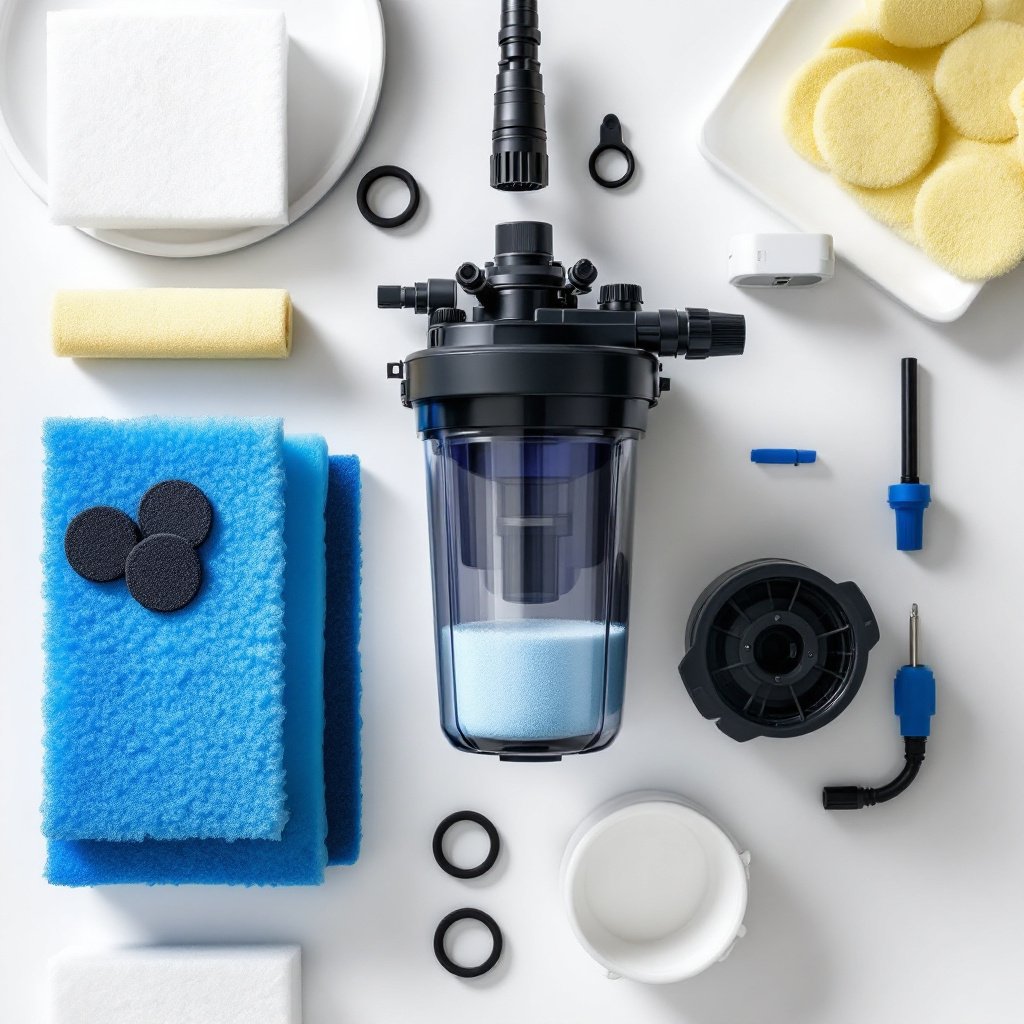
What I actually love: When it comes to the quietest aquarium filter for 20-gallon tanks, a canister almost always wins. They sit below your tank, the motor is submerged in water, and good ones are basically silent. Plus the spray bar return lets you customize flow direction and intensity.
What nobody tells you: They’re overkill for most 20-gallon setups. You’re paying for capacity you don’t need, and cleaning them is a whole production. I’ve seen beginners buy canister filters and then never clean them because the process feels intimidating.
Best for: Display tanks in quiet rooms, heavily stocked setups, and people who don’t mind the maintenance commitment
Sponge Filters
What I actually love: Cheap. Gentle. Impossible to kill shrimp or fry. My betta breeding setup runs exclusively on sponge filters, and they’re fantastic. Biological filtration is surprisingly robust for the price.
What nobody tells you: They’re ugly. There, I said it. As someone with a design background, placing a big gray sponge in a carefully aquascaped tank hurts my soul. They also provide minimal mechanical filtration, so your water won’t be as crystal clear.
Best for: Betta tanks, shrimp tanks, hospital/quarantine setups, and budget-conscious fishkeepers
Head-to-Head: AquaClear 30 vs. 50 vs. Fluval C3 (With Actual Flow Measurements)
This is the comparison everyone searching for Fluval vs. AquaClear for a 20-gallon tank actually needs. I’ve run all three on my 20-gallon at various points, so here’s my real-world take:
AquaClear 30
Rated GPH: 150
Real-world GPH (with media): ~110–120
Noise level: Quiet after break-in, occasional rattle if water level drops
This is my default recommendation for most 20-gallon setups. That flow adjuster actually works, unlike some cheaper HOBs where the “low” setting still creates a hurricane. You can dial it down to betta-friendly levels or crank it up for your white cloud mountain minnows.
The catch: Initial setup can be finicky. I’ve had to prime it multiple times before it catches, and it sometimes needs a little nudge after power outages.
AquaClear 50
Rated GPH: 200
Real-world GPH (with media): ~150–160
Noise level: Slightly louder than the 30, noticeable in quiet rooms
So what about the AquaClear 30 vs. 50 for a 20-gallon tank debate? Here’s my take: the 50 is only worth it if you’re overstocked or keeping messy fish like goldfish. Extra media capacity is nice, but you’re paying for flow you’ll probably dial back anyway.
The catch: Even on the lowest setting, it pushes more water than the AquaClear 30 on medium. Not ideal if you want a truly adjustable flow filter for a 20-gallon tank with real low-flow capability.
Fluval C3
Rated GPH: 153
Real-world GPH (with media): ~120–130
Noise level: Whisper quiet, probably the quietest HOB I’ve tested
This C series has a clever trickle chamber for extra biological filtration, and I genuinely think it produces clearer water than equivalently rated AquaClears. That refiltration dial is more precise than AquaClear’s flow adjuster too.
The catch: Proprietary media. Fluval wants you to buy their replacement cartridges, which adds up. You can hack it with generic media, but it’s not as seamless as the AquaClear’s basket system.
Best Picks by Tank Type: Betta Tanks, Community Tanks, and Planted Setups
Time to get specific, because “best filter” means nothing without context.
Best Filter for a Betta 20-Gallon Tank
Winner: Aqueon QuietFlow 10 with a pre-filter sponge
Yes, I said the QuietFlow 10, not 20. Here’s why: bettas need minimal current, and a 20-gallon tank gives your betta so much space that you don’t need aggressive filtration. Pairing the QuietFlow 10 with a sponge over the intake provides gentle circulation without turning your tank into a river. Your betta will actually use the whole tank instead of hiding in the one calm corner.
Alternative: A quality sponge filter rated for 20 gallons. Less aesthetically pleasing, but your long-finned friend will thank you.
Best for Community Tanks
Winner: AquaClear 30
Got a standard community with tetras, rasboras, corydoras, and maybe some dwarf gouramis? The AquaClear 30 hits the sweet spot. It provides enough flow to keep water clean and well-oxygenated, with the ability to dial back if needed. That customizable media basket means you can optimize for your specific bioload.
stocking guide for 20-gallon community tanks
Best for Planted Setups
Winner: Fluval C3 or canister with spray bar
Planted tanks need consistent CO2 distribution (if you’re injecting) and gentle, even flow across the plant beds. Fluval C3’s quieter operation and precise flow control work well here. Running a serious planted setup with CO2 injection, though? A small canister like the Fluval 107 with a spray bar positioned to create subtle circulation might be worth the investment.
Pro tip: Position your outflow to create a gentle circular current. This distributes nutrients without blasting your delicate stem plants into oblivion.
Budget Reality Check: Filters Under $30 That Actually Last
Not everyone needs a premium setup, so let’s talk about the best budget filters for 20-gallon tanks under $30.
Actually Worth Buying
AquaClear 20: Slightly undersized for a 20-gallon tank if you’re heavily stocked, but perfect for lightly stocked or betta tanks. Build quality matches the more expensive models.
Aqueon QuietFlow 20: Reliable, readily available, and genuinely quiet after break-in. That cartridge system is annoying (throw them out and stuff the chamber with generic media), but the motor is solid.
Hygger Double Sponge Filter: Great budget choice for betta tanks or shrimp setups. You’ll need a separate air pump, but the total setup is still affordable.
Skip These
Tetra Whisper series for HOBs: Those internal cartridge designs don’t work well, and the filter falls off the HOB bracket constantly. Not worth the headache.
Generic Amazon brands with suspiciously good reviews: A filter with 5,000 reviews that costs $15 probably isn’t lasting three years. Pump quality on these no-name filters is inconsistent at best.
Here’s your cheat sheet:
| Tank Type | Recommended Filter | Flow Setting | Expected Lifespan |
|---|---|---|---|
| Betta | Aqueon QuietFlow 10 or sponge | Lowest | 3–5 years |
| Community | AquaClear 30 | Medium | 5–7 years |
| Planted | Fluval C3 or small canister | Low–Medium | 5–10 years |
| Heavy bioload | AquaClear 50 | Medium–High | 5–7 years |
| Budget | AquaClear 20 or sponge | Varies | 3–5 years |
When to upgrade: Clean your filter more than twice a month and still see debris floating around? Fish seem stressed despite good water parameters? Time to reassess. Honestly though? An AquaClear 30 will serve most 20-gallon tank owners for years.
Your best filter is the one that keeps water clean without terrorizing your fish. Start with flow rate, match it to your inhabitants, and stop overthinking it. Your fish don’t care about brand names. They just want clean water and a current they can actually swim against.
Now go forth and filter responsibly. And if you’re still convinced you need that canister filter for your single betta, I can’t stop you. Gerald’s ghost is judging you from betta heaven.