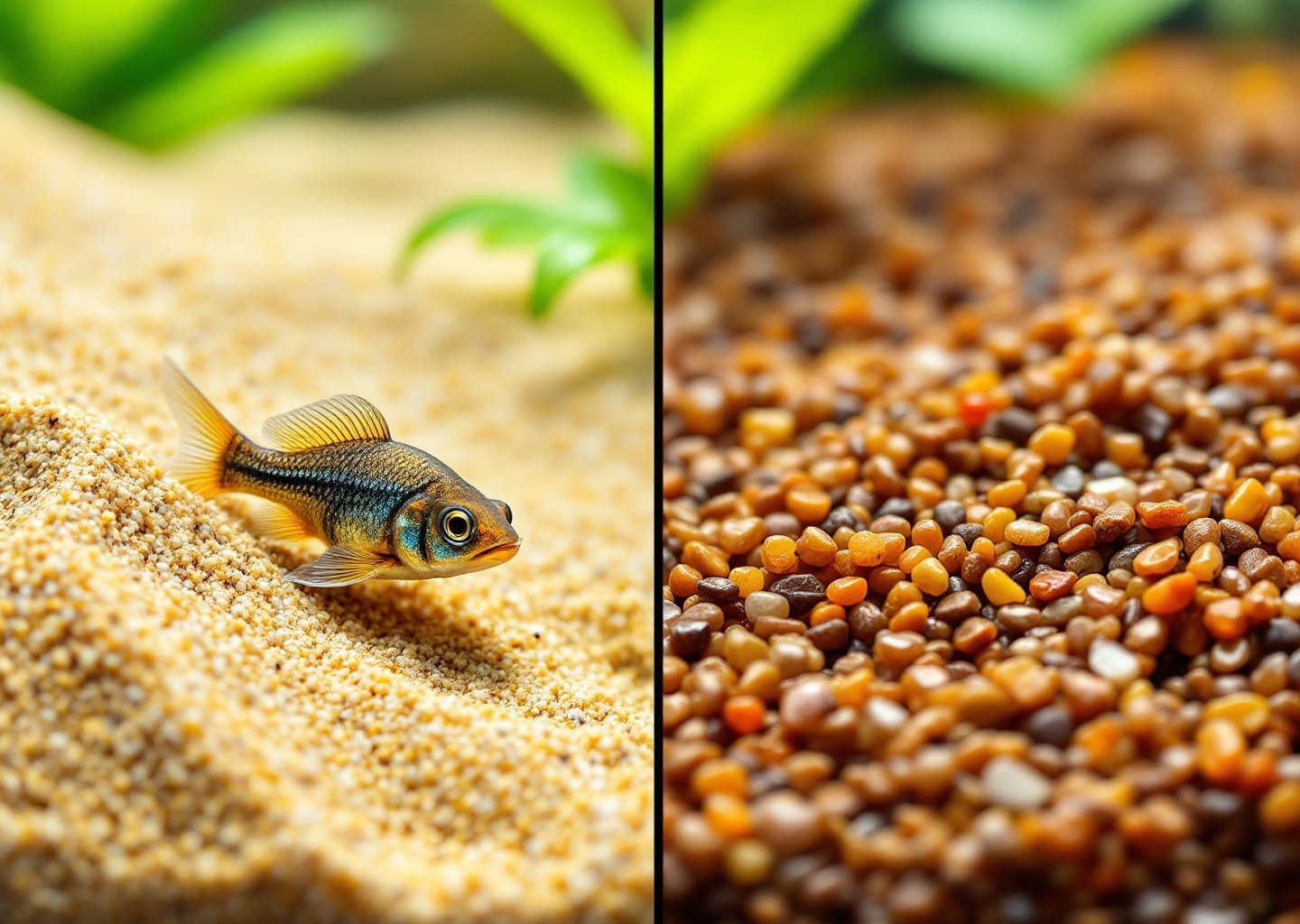
I Killed My First Betta With Bad Substrate. Here’s What 47 Tanks Taught Me About Gravel vs. Sand.
Three years ago, I killed Gerald. He was a beautiful blue halfmoon betta, and honestly? He deserved so much better than an uncycled tank with rainbow-colored gravel that leached dye for weeks. That disaster sent me down a rabbit hole of substrate research that most people would call obsessive. My partner definitely calls it obsessive. But after maintaining 47 different tank setups over the past eight years (okay, seven of them are currently crammed into our Portland apartment), I’ve learned things about gravel vs. sand substrate for freshwater aquariums that flat-out contradict what you’ll read on most forums.
Here’s the thing: most advice about aquarium substrate comes from people just repeating what they read somewhere else. Very few hobbyists actually run controlled comparisons. I did. Partly because I’m a nerd, partly because my graphic design brain loves controlled variables, and mostly because after Gerald, I needed to understand exactly what was happening at the bottom of my tanks.
This isn’t going to be another generic “pros and cons” list. I’m going to share specific findings from years of side-by-side experimentation, including results that genuinely surprised me and changed how I set up every tank since. Whether you’re researching sand vs. gravel for betta fish tank setups or trying to figure out the best substrate for your first planted aquarium, I’ve probably already made the mistake you’re about to make. Let me save you some heartbreak.
The Bacteria Myth Debunked: A Side-by-Side Cycling Experiment
You’ve probably heard that gravel houses more beneficial bacteria because of its greater surface area. I believed this for years. It makes intuitive sense, right? More nooks and crannies equals more bacterial real estate.
So I tested it. Two identical 10-gallon tanks. Same filter, same ammonia source, same temperature, same everything. One with pool filter sand, one with medium-grade natural gravel. I tested ammonia, nitrite, and nitrate every single day for six weeks. (Yes, I have a spreadsheet. Several, actually.)
And the results? Both tanks cycled within three days of each other. The gravel tank was technically faster, but we’re talking 23 days versus 26 days. For practical purposes? Statistically insignificant.
Here’s what I think is actually going on. Yes, gravel has more surface area. But the distribution of beneficial bacteria between your filter media and substrate varies a ton based on your tank setup, surface area, and conditions. Filter media typically hosts substantial bacterial colonies due to water flow and oxygen, yet substrate can actually harbor comparable or even greater bacterial populations depending on grain size and depth. Does gravel or sand grow beneficial bacteria better? Technically gravel, but not enough to matter unless you’re running a bare-bottom sponge filter setup.
So what’s the real takeaway? Pick your substrate based on aesthetics and livestock needs, not bacteria fears. Your filter’s doing the heavy lifting anyway. how to properly cycle a new aquarium
Cleaning Reality Check: Why Sand Saved Me Hours Monthly
I used to spend 45 minutes every Sunday vacuuming my gravel tanks. Debris would fall between the stones, decompose, and create these gross pockets of hydrogen sulfide if I missed spots. A planted 20-gallon of mine smelled like sulfur for months before I finally figured out what was happening.
Sand changed everything. But not immediately.
Those first few sand cleanings were absolute disasters. I’d jam the vacuum down, suck up half the sand, curse, dump it back, repeat. Forums said sand was harder to clean. For about two weeks, they were totally right.
Then I learned the hover technique. You hold the vacuum about half an inch above the sand surface and let the debris swirl up while the heavier sand falls back down. Game changer. Cleaning time dropped from 45 minutes to maybe 15. Waste just sits visibly on top instead of hiding in crevices.
For the easiest substrate to clean in fish tank setups, sand wins once you nail the technique. Gravel hides problems. Sand shows you exactly where the mess is. As someone who photographs her tanks constantly (design brain, remember?), I appreciate knowing immediately when something looks off.
One caveat, though. If you’ve got aggressive diggers like goldfish or large cichlids, they’ll constantly redistribute sand and debris. Gravel might be more practical for those setups.
The Bottom-Dweller Verdict: What Happened to My Corydoras and Loaches
This is where the gravel vs. sand substrate debate for freshwater aquariums becomes a welfare issue, not just a preference.
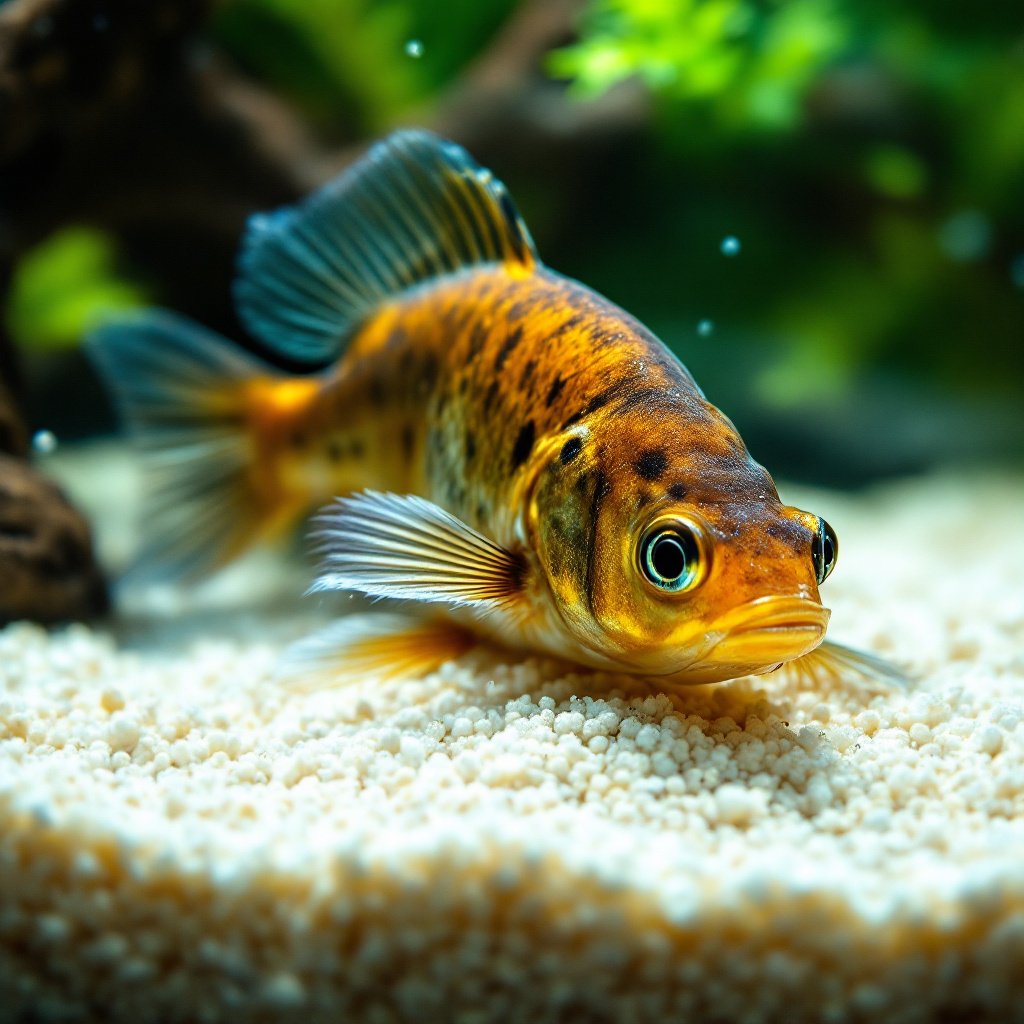
I kept a group of six bronze corydoras in a gravel tank for about eight months before switching them to sand. The difference was immediate, and honestly it made me feel terrible about those eight months.
In gravel, they’d sift half-heartedly, their barbels looked worn, and they spent most of their time chilling on the driftwood rather than the substrate. Standard cory behavior, I figured.
In sand? They became completely different fish. Constant sifting, barbels buried to the eyeballs, zooming across the tank like little vacuum cleaners on a mission. Their barbels grew back fuller within weeks. I could actually see them doing the behaviors they’re supposed to do.
For corydoras and loaches, sand is the best substrate. Period. This isn’t opinion. Watch a cory try to sift through gravel versus sand and you’ll see the difference yourself. These fish literally evolved to sift sand. It’s what their weird little mouths are built for. Gravel isn’t just suboptimal; it actively prevents natural behavior and can damage their sensitive barbels.
When it comes to which substrate is safest for bottom-dwelling fish, sand wins every time. If you’re keeping any substrate-sifting species, please just use sand. complete corydoras care guide
Planted Tank Truth: When Substrate Choice Actually Matters
Now we get into controversial territory. The planted tank industry really, really wants you to believe you need expensive aquasoils for successful plants. After killing approximately $200 worth of plants testing this theory, here’s what I actually found.
Root feeders like swords, crypts, and val? Substrate matters. A lot. They’ll grow in plain sand, but slowly and often with deficiencies. Aquasoil or capped dirt makes a dramatic difference.
Stem plants, rhizome plants, floaters? They couldn’t care less about substrate. My best java fern is attached to driftwood over bare bottom. Pearl weed in my tanks grows identically in sand, gravel, and aquasoil.
What’s best for your planted tank? Depends entirely on what you’re growing. Here’s my actual hierarchy:
- Heavy root feeders: aquasoil or dirt capped with sand
- Light root feeders with column-feeding capability: sand plus root tabs
- Stem plants and rhizome plants: literally whatever you want
- Mixed community planted tank on a budget: pool filter sand plus Osmocote root tabs
How do you keep aquarium plants rooted in sand? It’s actually pretty simple. Use adequate substrate depth for your specific plants. Many do well in 1.5–2 inches, while heavy root feeders may benefit from 3+ inches. Plant with tweezers, and leave them alone for two weeks. That constant “is it rooted yet?” poking is what uproots them. Trust me on this one.
For anyone choosing substrate for a freshwater aquarium with plants, stop believing you need to spend sixty bucks on designer dirt. Sand plus supplements works beautifully for 80% of common plants. low-tech planted tank setup guide
The Safe Substrate Switch: A Step-by-Step Method
After all this testing, I’ve switched substrate in probably 15 established tanks. I’ve never lost a fish. I’ve never crashed a cycle. Here’s exactly how I do it.
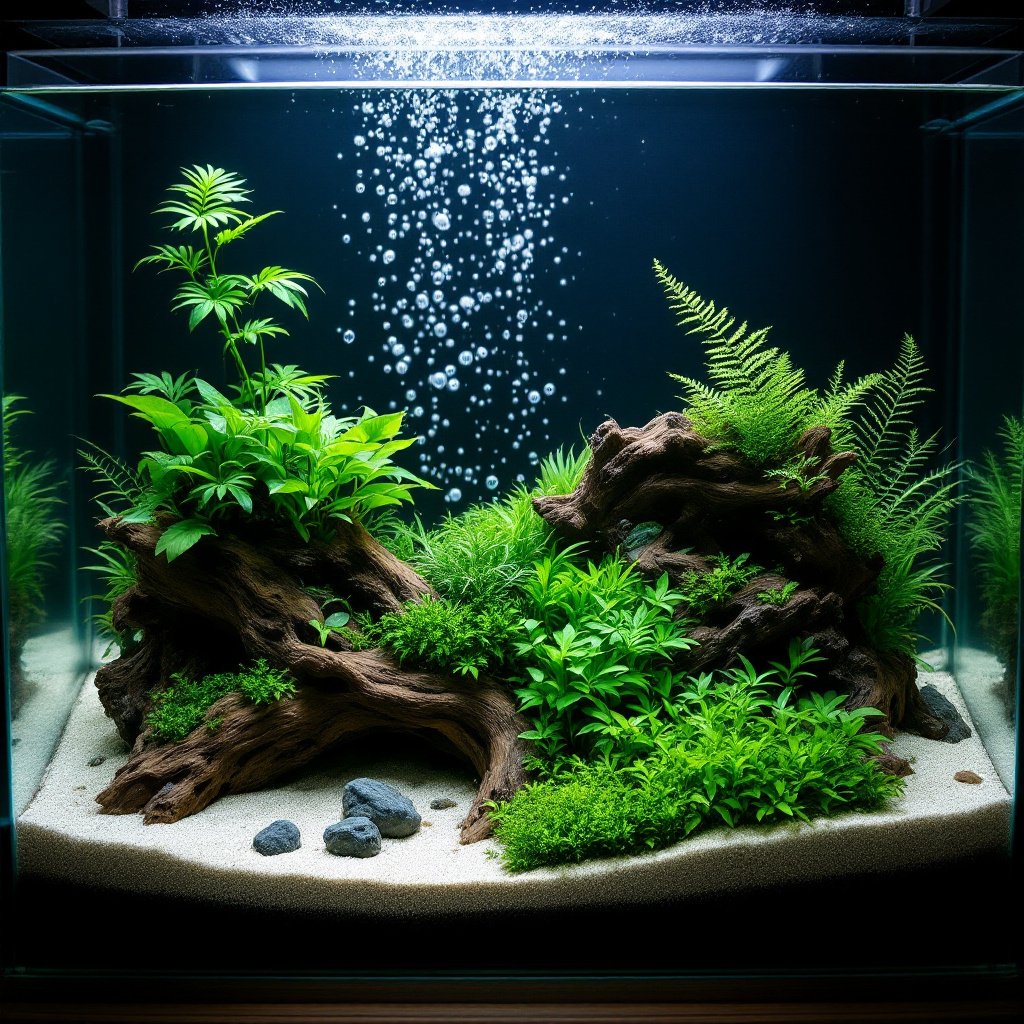
What you’ll need:
– New substrate (rinsed until water runs clear, and I mean actually clear)
– Bucket of old tank water
– Net for fish
– Temporary holding container
– Your patience
The process:
First, catch all fish and put them in a bucket with 50% old tank water. This is stressful for them, so work quickly.
Second, remove 75% of the tank water into buckets. Save this. Your beneficial bacteria in the water column is minimal, but the old water helps reduce parameter shock.
Third, scoop out the old substrate. Some people say to do this gradually over weeks. I’ve never found that necessary, and honestly, it just prolongs stress for bottom-dwellers.
Fourth, add the new substrate. Slope it from back to front for visual depth, because that design degree has to be useful somewhere, right?
Fifth, refill slowly using a plate to diffuse the water flow. Add your saved old water first, then fresh dechlorinated water.
Sixth, wait an hour for cloudiness to settle and temperature to stabilize, then reacclimate the fish.
Switching from gravel to sand without killing fish is really about protecting your filter bacteria, not your substrate bacteria. As long as you don’t touch your filter during the switch, your cycle stays intact.
After eight years and 47 tanks, here’s my honest take:
Choose sand if:
– You’re keeping bottom-dwellers (corys, loaches, any sifters)
– You want easier long-term maintenance
– You prefer natural aesthetics
– You’re doing a planted tank with root tabs
Choose gravel if:
– You have aggressive diggers
– You want very specific planted tank aesthetics
– You’re keeping fish that might ingest sand (some large fish)
– You already have established gravel and no bottom-dwellers
Choose aquasoil if:
– You’re doing a serious planted setup with heavy root feeders
– You’ve got the budget for it
– You’re ready for the initial ammonia spike
What I wish I’d read before Gerald would have been this simple: pick based on your livestock first, your plants second, and your aesthetics third. Your bacteria will be fine either way.
And if you’re sitting there with rainbow gravel right now? Your fish will forgive you. Mine did, eventually. Those seven nano tanks scattered around my apartment are proof that we learn from our mistakes.
Now if you’ll excuse me, I need to go convince my partner that we definitely have room for one more 5-gallon on the bookshelf.