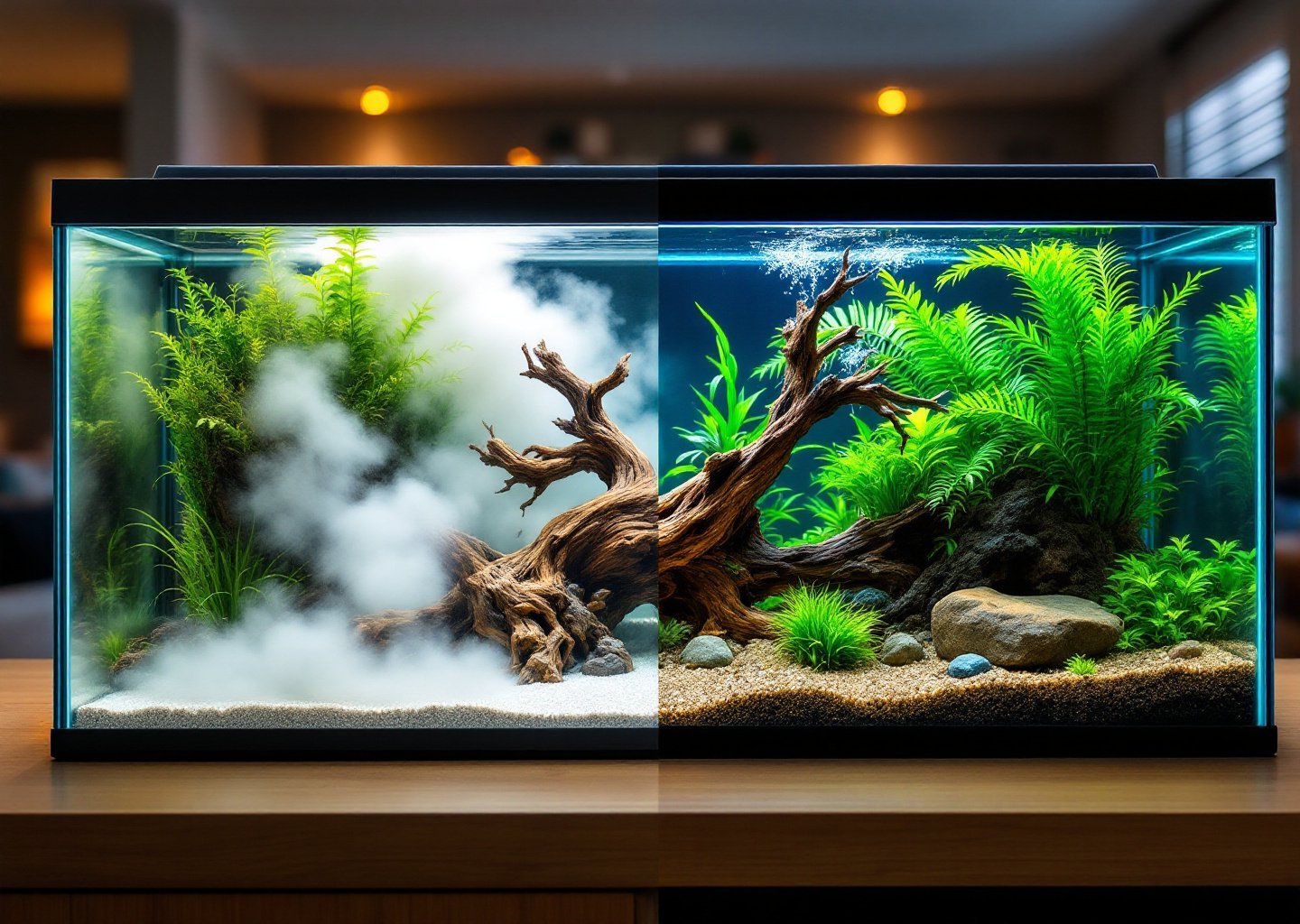
How I Fixed My Cloudy 40-Gallon Tank in 30 Days (With Photos)
I remember standing in front of my 40-gallon tank at 11 PM on a Tuesday, watching what looked like skim milk slowly engulf my carefully planned scape. Three weeks of planning. Two weekends of hardscaping. About $200 in plants that were now invisible behind a wall of white haze. My partner walked by, glanced at the tank, and said nothing. Honestly? That silence was worse than any criticism.
What follows is the story of how I transformed that cloudy disaster in 30 days. Every embarrassing failure is documented here, along with the counterintuitive fix that actually worked and enough photo evidence to prove I’m not making any of this up. If your cloudy aquarium water won’t go away and you’re ready to throw your API test kit out the window, keep reading.
Looking back, I should’ve known better. After seven nano tanks and that unfortunate incident with Gerald the betta (rest in peace, little guy), I understood the nitrogen cycle. Patience was supposed to be part of my process by now. But something about scaling up to a 40-gallon made me forget everything I’d learned.
My tank had been running for exactly five days when the cloudiness started. By day seven, I couldn’t see the back glass. By day ten, I was googling “why is my 40-gallon tank still cloudy” at 2 AM like some kind of aquarium-obsessed insomniac. Sound familiar? Spoiler: I wasn’t alone. New tank syndrome in a 40-gallon typically takes 4 to 8 weeks to resolve naturally, but let’s be honest. Nobody wants to hear “just wait” when their beautiful scape looks like soup.
Here’s what I learned through trial, error, and eventually, very clear water.
Diagnosing the Problem: What Kind of Cloudy Are We Talking About?
Before you can fix cloudy tank water, you’ve got to figure out what’s causing it. Not all cloudiness is created equal, and I wasted precious time treating the wrong problem.
Bacterial Bloom (What I Had)
Milky white or grayish water signals an explosion of free-floating bacteria trying to colonize your tank. Your classic 40-gallon fish tank bacterial bloom situation. These bacteria aren’t harmful, but they’re definitely not pretty either. You’ll typically see this in new tanks or after major disruptions like deep gravel cleaning or filter changes.
Green Water (Algae Bloom)
A distinct green tint means you’re dealing with suspended algae, usually triggered by too much light or excess nutrients. Different problem, different solution. controlling algae in planted tanks
Dust or Debris
Did your tank go cloudy immediately after adding substrate or decorations? You’re probably looking at physical particles. These usually clear with filtration within 24 to 48 hours.
Confirming my bacterial bloom came down to the flashlight test. Shining a light through the water from the side revealed a uniform haze with no visible particles. Classic bloom behavior.
Weeks 1–2: Everything I Tried That Failed
Let me save you some money and frustration by listing what absolutely did not work for me.
Water Clarifiers: The Expensive Mistake
Aquarium water clarifier, does it actually work? Here’s the thing. These products clump particles together so your filter can catch them. Great for debris. Useless for bacterial blooms. Bacteria are too small and too numerous to be affected by clarifying agents.
So I dumped in the recommended dose of a popular brand. Nothing happened except my water got slightly slimier feeling. Then I added a second dose because surely more product equals more results, right? Wrong. Cloudiness actually intensified for two days. Great.
Massive Water Changes
My next brilliant idea was to change 50% of the water every other day. My logic? If I kept diluting the bacteria, eventually they’d give up. What actually happened: bacteria populations just kept rebounding within hours. I was removing the problem temporarily while doing nothing to address the cause.
Looking back, this makes perfect sense. Bacteria were multiplying because they had abundant food (ammonia from my substrate and decomposing plant matter). Removing water didn’t remove their food source.

UV Sterilizers (Almost Worked)
A friend lent me a UV sterilizer and swore it would fix everything overnight. And honestly? Cloudiness did reduce significantly within 48 hours. But here’s the problem. The moment I removed it, the bloom came right back. UV sterilizers kill bacteria as water passes through, but they don’t solve the underlying imbalance. They’re a bandage, not a cure.
If you’re troubleshooting cloudy tank water that’s not clearing, skip directly to addressing the root cause. Which brings me to the turning point.
The Turning Point: Filter Upgrade and Counterintuitive Wisdom
Week two, day four. I’m sitting on my apartment floor surrounded by filter media, aquarium forums open on my laptop, when I finally accepted what experienced fishkeepers had been telling me all along.
Adding things wasn’t the fix. Waiting was. And providing more surface area.
Here’s what took me way too long to understand. Bacterial blooms happen because beneficial bacteria haven’t established enough colonies in your filter and substrate. All those free-floating bacteria in your water column are competing for resources with the bacteria you actually want, the ones that convert ammonia to nitrite to nitrate. By constantly disrupting the tank with water changes and additives, I was resetting the colonization process over and over again.
The Actual Solution
My first move was upgrading filtration. The hang-on-back filter that came with my tank kit was undersized for a heavily planted 40-gallon. Adding a sponge filter rated for 40 gallons as supplemental filtration meant more filter media. More surface area for beneficial bacteria to colonize.
When you’re looking for the best filter for a cloudy fish tank, prioritize biological filtration capacity over mechanical. You want those bacteria to have homes so they stop floating around making your water ugly.
Next, I stopped messing with the tank. No more daily water changes. No more additives. No more rearranging plants or disturbing the substrate. For two weeks, I committed to hands-off patience, only doing a 15% water change once weekly. And honestly? That was harder than it sounds.
Finally, I cut back on feeding. My new fish had been eating once daily, which was adding to the ammonia load. Dropping to every other day while the tank stabilized made a real difference.
Weeks 3–4: Day-by-Day Transformation
Things got exciting here. Every morning at 9 AM, I took photos with my phone against the same piece of blue poster board. My graphic design brain couldn’t resist standardizing the documentation.
Day 15: Still cloudy, but I noticed I could see about 4 inches into the tank where before I could see maybe 2 inches.
Day 17: Definite improvement. My driftwood centerpiece was visible as a shadow. Resisting the urge to “help” with another product took real willpower.
Day 20: Breakthrough moment. I could see my Anubias on the back wall. Water had shifted from milk to a light fog.
Day 22: About 70% clarity. Haze was concentrated in the lower third of the tank now.
Day 25: Almost there. Just a slight softness to the water, like looking through very clean reading glasses.
Day 28: Crystal clear. I’m not exaggerating. I could see every detail of my dragon stone, every tiny root on my floating plants. My cloudy aquarium water fix before-and-after photos looked like two completely different tanks.
You’re not treating symptoms when you take this approach. You’re letting the tank’s ecosystem mature. And that’s how you fix cloudy aquarium water permanently.
Prevention Protocol: Your Next Tank Setup
Now that I’ve lived through this, here’s how I’d approach setting up a 40-gallon (or any size) to avoid the cloudy nightmare entirely.
Use Established Filter Media
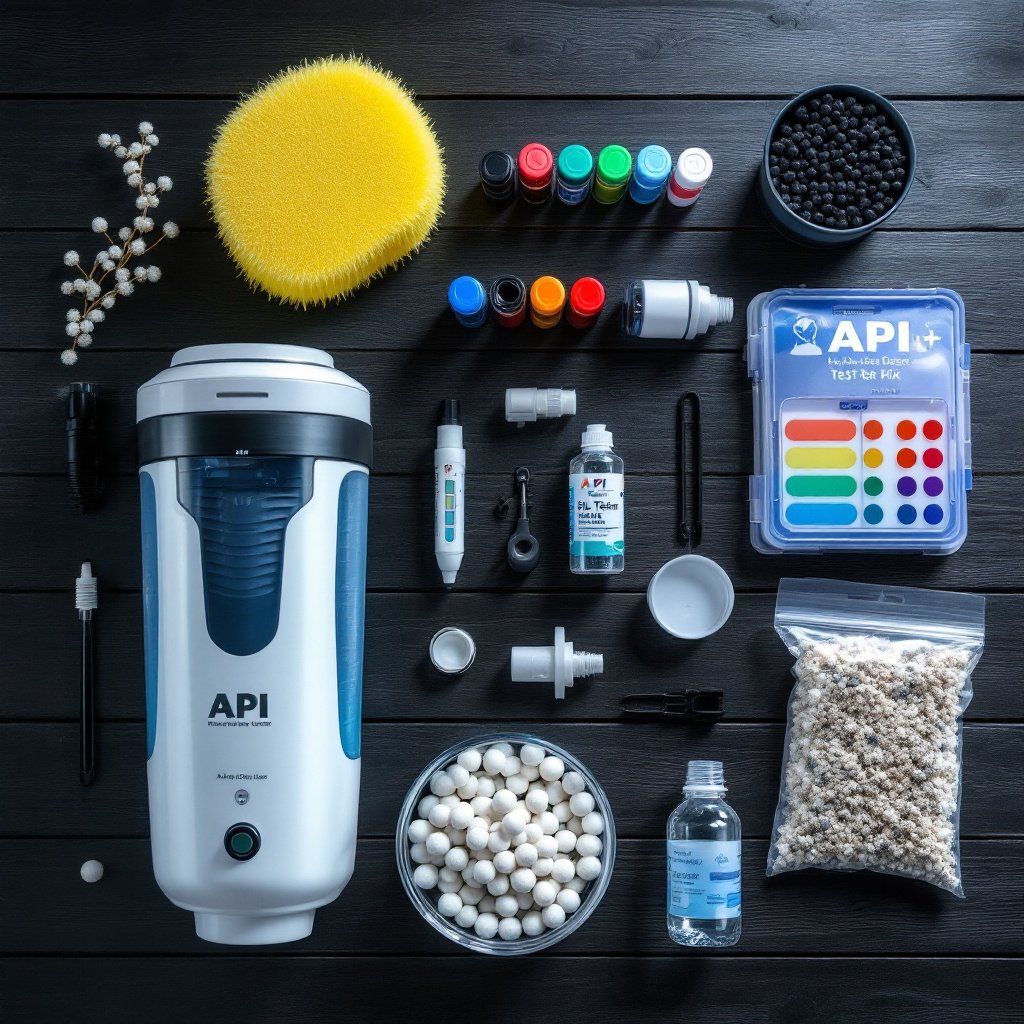
Got other tanks? Squeeze some gunk from an established filter sponge into your new tank. Seed that bacteria. Beg a fish store employee for some of their filter media. Sounds gross, but it works.
Go Fishless First
Consider running the tank for 2 to 3 weeks before adding fish. Dose with pure ammonia or use fish food to create an ammonia source. Let the cycle establish without the pressure of keeping animals alive. fishless cycling guide
Start with Fewer Plants
I know, this hurts to hear. I’m the person who wants jungle tanks immediately. But heavy planting in an immature tank means more organic matter breaking down, which means more fuel for bacterial blooms. Start with 50% of your intended plants and add more after stabilization.
Understock Initially
Your fish produce ammonia. More fish equals more ammonia equals more potential for blooms. Start with maybe 30% of your planned stock and build slowly.
Resist Product Temptation
New tank syndrome, how long does it last? About 4 to 8 weeks for most tanks. That’s 4 to 8 weeks of resisting the urge to buy miracle solutions. Put the credit card down. Let biology do its thing.
If you’re currently staring at a tank that looks like someone dumped a glass of milk into it, here’s what to do starting today.
When to Wait:
Your tank is less than 6 weeks old, cloudiness is white or gray, ammonia and nitrite levels are elevated but not dangerous, and your fish seem fine. Annoying, but normal.
When to Worry:
Fish are gasping at the surface. Cloudiness appeared suddenly in an established tank. You smell something foul. Ammonia levels are off the charts. These situations need immediate action, like large water changes and potential fish rehoming.
Your Action Plan:
During week one, identify what type of cloudiness you’re dealing with. Upgrade filtration if it’s undersized. Reduce feeding to every other day.
Week two is all about patience. One 15% water change. No additives. No filter cleaning. Just observation.
By week three, continue the patience game. You should see gradual improvement by now.
Week four brings clarity back. Gradually resume normal maintenance and feeding.
My cloudy 40-gallon tank transformation didn’t happen through expensive products or aggressive intervention. Understanding that bacterial blooms signal a tank finding its balance was the key. Getting out of the way long enough to let that happen was the solution.
That tank now sits in my living room, crystal clear, full of celestial pearl danios and the most ridiculous carpet of Monte Carlo I’ve ever grown. Every time I walk past it, I remember those milk-water days and feel unreasonably proud.
You’ll get there too. Promise.