I Lost 23 Fish to a Broken Heater. Then I Spent Three Years Testing the Replacements.
Three years ago, I lost a tank of ember tetras to a stuck heater. Twenty-three tiny fish, gone overnight because a heating element decided to stay on until my water hit 94°F. After crying into my morning coffee and vowing to never trust a heater again, I did what any reasonable person would do: I bought way too many heaters and started taking obsessive notes.
If you’re wondering which lasts longer between an Aqueon heater and a Fluval heater, you’re asking the right question. And honestly? You’re asking the question I wish I’d asked before that devastating morning.
After losing Gerald the betta to my first uncycled tank and then an entire school of tetras to heater failure, I became borderline paranoid about equipment reliability. So I set up a proper comparison. Not a quick unboxing review or a “first impressions” video, but an actual multi-year test with identical conditions.
Here’s what I learned about whether Fluval heaters are more reliable than Aqueon, which brand fails safer, and why the answer might not matter as much as you think.
Test Setup: Identical Tanks, Identical Conditions
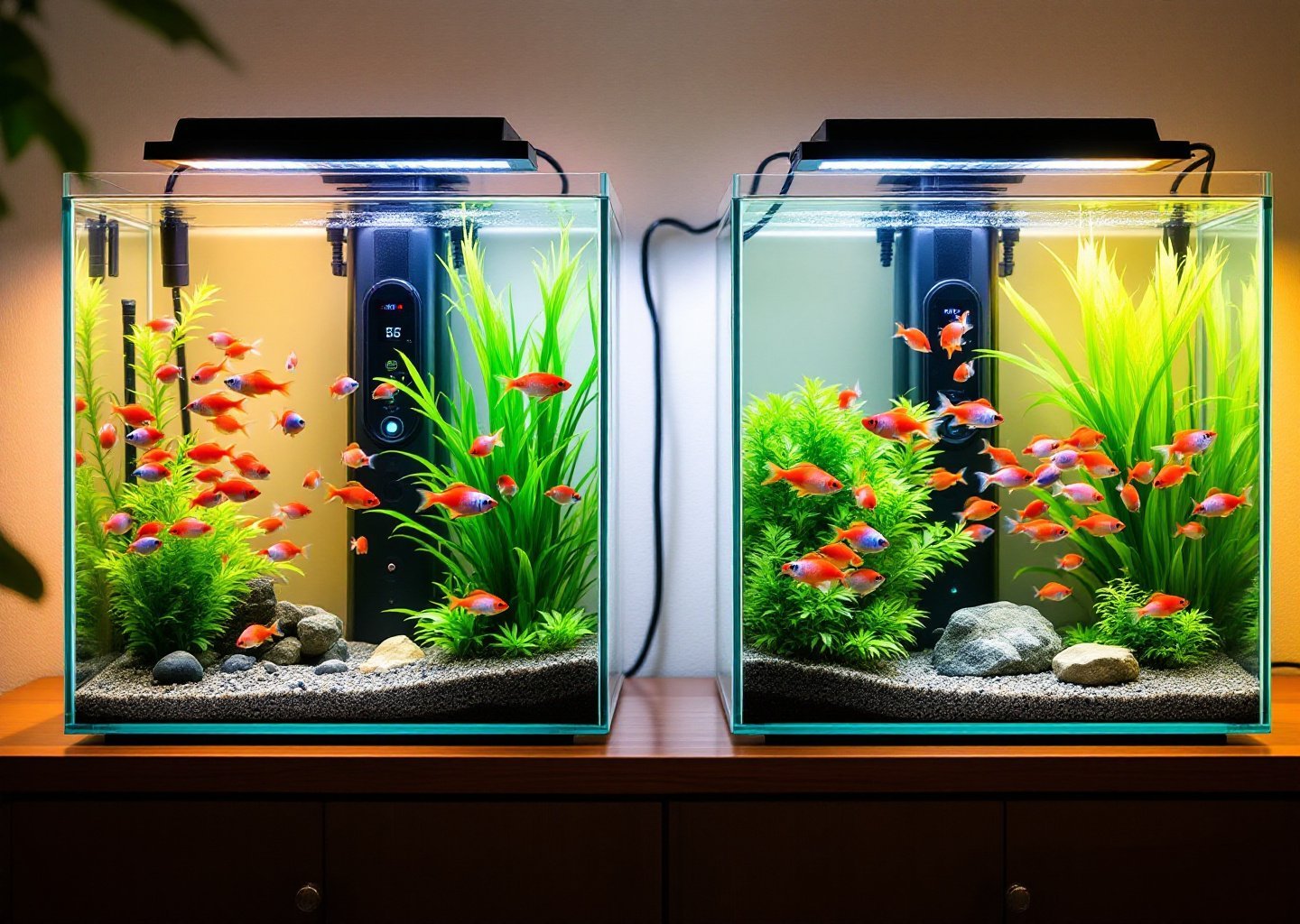
I established two 20-gallon long tanks in my apartment’s spare room, which my partner generously calls “the fish cave.” Same substrate (black sand), same filtration (AquaClear 50s), same lighting schedule, same ambient room temperature of around 68°F year-round thanks to Portland’s mild climate.
Tank A got an Aqueon Pro 150W heater.
Tank B got a Fluval E-Series 150W heater.
Identical bioloads went into each tank: 10 cardinal tetras, 6 corydoras, and some low-tech plants. I fed the same amounts, did the same weekly 25% water changes, and ran both heaters at 78°F continuously.
Temperature logging happened twice daily using separate digital thermometers (not trusting the built-in displays). I also tracked electricity costs using outlet monitors and photographed the heaters monthly for any visible degradation.
Yes, this is excessive. But when you’ve scraped dead fish off your aquarium floor, excessive starts to feel pretty reasonable.
Year-by-Year Performance: Temperature Consistency, Power Consumption, and Warning Signs
Year One: Honeymoon Phase
Out of the gate, both heaters performed beautifully. Honestly, my Fluval E-Series heater durability test notes from the first twelve months are boring. Temperature stayed within 0.5°F of target on both units. Fluval’s digital display was slick and easy to read, while Aqueon Pro’s simple dial felt more industrial but worked just as well.
Power consumption? Nearly identical, about $3–4/month each.
One difference stood out: the Fluval E-Series cycled on and off more frequently in shorter bursts, while the Aqueon Pro stayed on longer but less often. Same result, different approach.
Year Two: First Signs of Trouble
Around month 16, I noticed the Fluval starting to overshoot its target. Not dramatically, just hitting 79°F when set to 78°F. A small drift, but I documented it.
Meanwhile, the Aqueon Pro stayed rock steady. Temperature consistency remained within 0.3°F of target throughout year two. This is when my Aqueon Pro heater long-term review notes started getting more interesting.
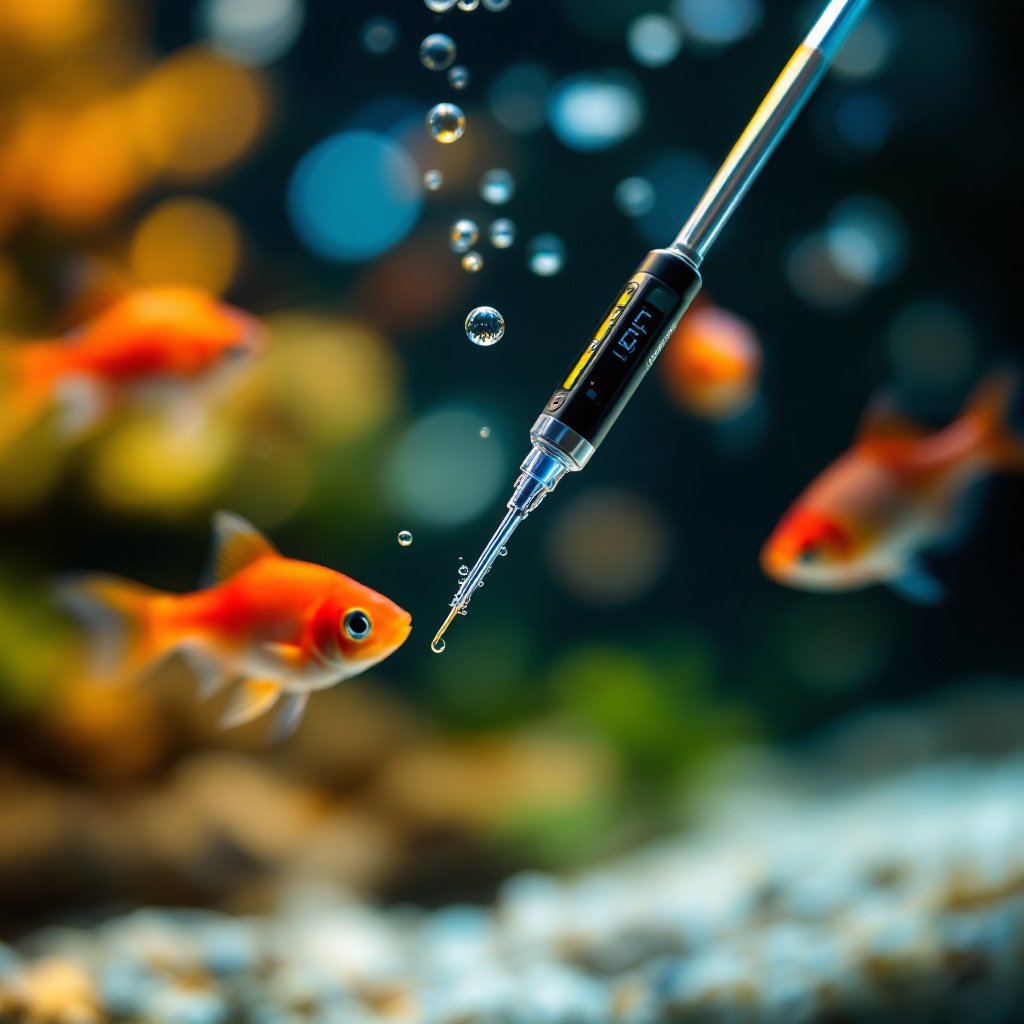
Month 20 brought the Fluval’s first major hiccup: the digital display flickered intermittently. Temperature control still worked, but I couldn’t always read the screen. For a heater that costs more specifically because of its display, that felt like a letdown.
Year Three: The Breaking Point
Month 28: Fluval E-Series died. No warning, no dramatic failure. It just stopped heating one morning. I noticed because my cardinals were hovering near the top, looking sluggish. Tank temp had dropped to 71°F overnight.
Month 31: Aqueon Pro developed a slight rattle when cycling on. Functionally fine, but audibly different from its normal silent operation.
Month 36 (end of test): Aqueon Pro still running. Temperature accuracy had drifted to about 1°F above target, reading 79°F when set to 78°F. Not ideal, but not dangerous either.
Final Tally:
– Fluval E-Series: Failed at month 28
– Aqueon Pro: Still functional at month 36, with degraded accuracy
So when people ask how long Aqueon heaters usually last, my answer is “at least three years in continuous use.” That’s better than I expected.
Failure Analysis: How These Two Brands Break Down Differently
Here’s what genuinely matters in this Fluval E-Series vs. Aqueon Pro debate: not just whether they fail, but how they fail.
Fluval failed OFF. It simply stopped producing heat. Annoying? Yes. Dangerous in a cold room? Potentially. But it didn’t cook my fish.
From what I’ve read in aquarium heater safety features research and forum discussions, most quality heaters are built with safety features intended to prevent dangerous overheating failures. My original heater tragedy came from a cheap no-name brand, the kind I found on sale at a big box store and grabbed without research.
Anecdotal reports on aquarium forums suggest both Fluval and Aqueon experience their share of failures, though reliable statistics on exact failure rates aren’t publicly available. What differs is the failure patterns. Fluval’s failures tend to cluster around electronic components (display, thermostat), while Aqueon issues usually involve temperature calibration drifting over time.
What This Means for Your Fish:
If a heater’s going to fail, you want it to fail cold, not hot. On this front, both brands earn points. Honestly, the “best aquarium heater that won’t fail” is a myth. Everything mechanical eventually breaks. What matters is whether it breaks safely.
Warranty Reality Check: What Happens When You Actually File a Claim
After the Fluval died at month 28, I filed a warranty claim. Here’s my actual experience (though I only needed Fluval’s warranty this time).
Fluval’s Process:
– 5-year warranty on E-Series heaters
– Required original receipt (I had it)
– Required photos of the dead unit
– Had to ship the defective heater back at my cost ($8)
– Received replacement in 3 weeks
Totally fine, if slightly annoying. That $8 shipping felt petty for a $45 heater, but whatever.
Fellow hobbyists have told me Aqueon’s warranty process is similar, just maybe slightly faster turnaround. Their lifetime warranty on the Pro line sounds amazing until you realize “lifetime” means the expected product lifespan, not your actual lifetime.
What’s the bottom line? Companies honor their warranties. Neither makes it especially fun.
Why Two 100W Heaters Beat One 200W Regardless of Brand
Here’s the real takeaway from three years of obsessive note-taking: the most durable aquarium heater for long-term use isn’t about brand. It’s about redundancy.
After this test, every tank I own now runs two heaters at 50% of the needed wattage each. My 20-gallon tanks? Two 50W heaters set to the same temperature. My 40-gallon breeder? Two 100W units.
Why does this work?
Fail-safe redundancy. If one heater dies OFF, the other maintains safe temps until I notice. If one somehow stuck ON, the other stops cycling, limiting overheating damage.
Less stress on components. Neither heater works as hard, potentially extending lifespan.
Easier replacement. Smaller heaters cost less to replace when they eventually fail.
This approach makes the whole Aqueon Pro vs. Fluval E-Series reliability comparison less stressful. I run one of each in my display tank now. If the Aqueon outlasts the Fluval again, great. If not, I’ve got backup.
setting up redundant aquarium heaters
So Which Should You Actually Buy?
After three years of data, here’s my honest answer to which lasts longer between Aqueon and Fluval heaters: the Aqueon Pro outlasted the Fluval E-Series in my test by at least 8 months and counting.
But I’m not telling you to only buy Aqueon. That’s too simple.
For budget-conscious fishkeepers: Aqueon Pro series offers excellent value for a reliable aquarium heater. Check current prices at your preferred retailer, as they fluctuate. In my testing, the heaters show excellent longevity, and the lack of a digital display feels old-school. But that’s one less thing to break.
For tech lovers who want monitoring: Fluval’s E-Series display is genuinely useful for quickly checking temps without a separate thermometer. Just budget for replacement around year 2–3, and keep your receipt.
For anyone with fish they actually care about: Run two heaters. Seriously. A pair of smaller Aqueon Pros costs roughly the same as one Fluval E-Series and gives you way more peace of mind.
All seven of my nano tanks throughout the apartment run dual heater setups now. My partner thinks I’m paranoid. My fish are alive and thriving. I’ll take that trade every time.
Really, the lesson isn’t about Aqueon versus Fluval. It’s that equipment fails, so plan for it. Build redundancy. Check your tanks daily. And maybe don’t buy the cheapest heater on the shelf just because it’s on sale.
Gerald and twenty-three ember tetras taught me that the hard way.