
Green aquarium water is caused by a bloom of microscopic free-floating algae, often from too much light and nutrients.
I’ve been there. You walk over to your beautiful aquarium, excited to see your fish, but instead, you’re greeted by a tank that looks more like pea soup. It’s frustrating, and you immediately start asking, "why my aquarium water turns green?" As a long-time aquarium enthusiast, I've battled my fair share of algae blooms. The good news is that understanding the root cause is the first step to fixing it for good. This guide will walk you through exactly why your water has turned green and give you a clear, actionable plan to get your crystal-clear tank back.
:strip_icc()/1378633-v3-5b46307746e0fb0037d0894e.png)
The Culprit Revealed: What is Green Water Algae?
Before we can fix the problem, let's get to know our opponent. That green tint in your tank isn't just dirty water; it's a living organism. Specifically, it's a massive population of single-celled, free-floating algae called phytoplankton. Think of it as a microscopic, aquatic plant that is thriving a little too well in your aquarium's ecosystem.
Unlike other algae you might see, like the stringy hair algae or the fuzzy stuff that grows on glass, this type is suspended throughout the water column. That’s why it makes the entire tank look cloudy and green. While it's not directly harmful to your fish—in fact, it produces oxygen—it's a clear signal that something in your tank is out of balance. Seeing this bloom is the most common reason people wonder why my aquarium water turns green.
The Top 3 Causes of Green Aquarium Water
Green water doesn't just appear out of nowhere. It’s a symptom of a deeper issue. I've found that almost every case of green water can be traced back to one of three main culprits. It's like a simple recipe: add too much of one ingredient, and you get an algae bloom. Understanding these causes is key to solving why my aquarium water turns green.
Too Much Light
Algae, like any plant, needs light to photosynthesize and grow. If your tank is getting too much light, you’re essentially rolling out the welcome mat for an algae bloom. This is by far the most common mistake I see new hobbyists make.
This can happen in two ways. First, direct sunlight is a major algae-fueler. I once made the mistake of setting up a beautiful 20-gallon tank near a window. For weeks, I couldn't figure out why my aquarium water turns green. It turned out that even just an hour of direct afternoon sun was enough to trigger a persistent bloom. The second cause is leaving your artificial aquarium light on for too long. Your fish and plants only need about 8-10 hours of light per day. Anything more than that is just feeding the algae.
Excess Nutrients
Think of nutrients as algae food. The two most important nutrients for algae are nitrates and phosphates. When these build up in your water, they create an all-you-can-eat buffet for phytoplankton. This is a huge factor in understanding why my aquarium water turns green.
Where do these nutrients come from?
- Overfeeding: This is a big one. Any food your fish don't eat breaks down and releases nitrates and phosphates into the water. It’s easy to give them too much, but it directly contributes to green water.
- Fish Waste: All living creatures produce waste, and in a closed system like an aquarium, that waste breaks down into nitrates. The more fish you have, the more waste is produced.
- Decaying Matter: Dead plant leaves or any fish that may have passed away unnoticed will decompose, releasing a surge of nutrients that algae loves.
Poor Water Quality and Maintenance
A consistent maintenance routine is your best defense against green water. When you slack on water changes, you allow those excess nutrients we just talked about to build up to critical levels. A water change physically removes nitrates and phosphates, effectively starving the algae. This is a direct answer to why my aquarium water turns green over time.
Similarly, a dirty or clogged filter can't do its job properly. Your filter is home to beneficial bacteria that help break down waste, but if it's not maintained, it can become a source of detritus and nitrates itself. Neglecting this part of tank care almost guarantees you'll eventually face an algae problem.

How to Clear Up Green Aquarium Water: A Step-by-Step Guide
Alright, you understand the causes. Now let's get that water crystal clear again. Don't reach for chemical algaecides just yet; they can be harmful to your fish and don't solve the underlying problem. Instead, follow these proven steps.
- Start with a "Blackout." This is the fastest, most effective way to kill off a phytoplankton bloom. Since the algae needs light to live, taking it away will cause it to die off. Completely cover your aquarium with a thick blanket or towels, ensuring no light gets in. Turn off the aquarium light and any air stones connected to lights. Leave the tank covered for 3-4 days. Don't worry, your fish will be perfectly fine in the dark for this short period.
- Perform a Large Water Change. After the blackout period, the dead algae will make your water look even cloudier. It's time to remove it. Perform a large water change of about 50-75%. This will remove a huge amount of the dead algae particles and the excess nutrients that fueled the bloom in the first place.
- Clean Your Filter. Now is a good time to gently clean your filter media. Take some of the old tank water you just removed and swish your filter sponges or cartridges in it. Never use tap water, as the chlorine will kill the beneficial bacteria living in your filter. The goal is to remove gunk, not sterilize it.
- Address the Root Causes. Now you must fix what caused the bloom. Reduce your lighting period to 8 hours a day (use a timer!). Cut back on feeding; your fish only need an amount they can consume in about two minutes. Finally, commit to a regular weekly water change schedule of about 25%. This maintenance is crucial for preventing another green water disaster.
Long-Term Prevention: Keeping Green Water Away for Good
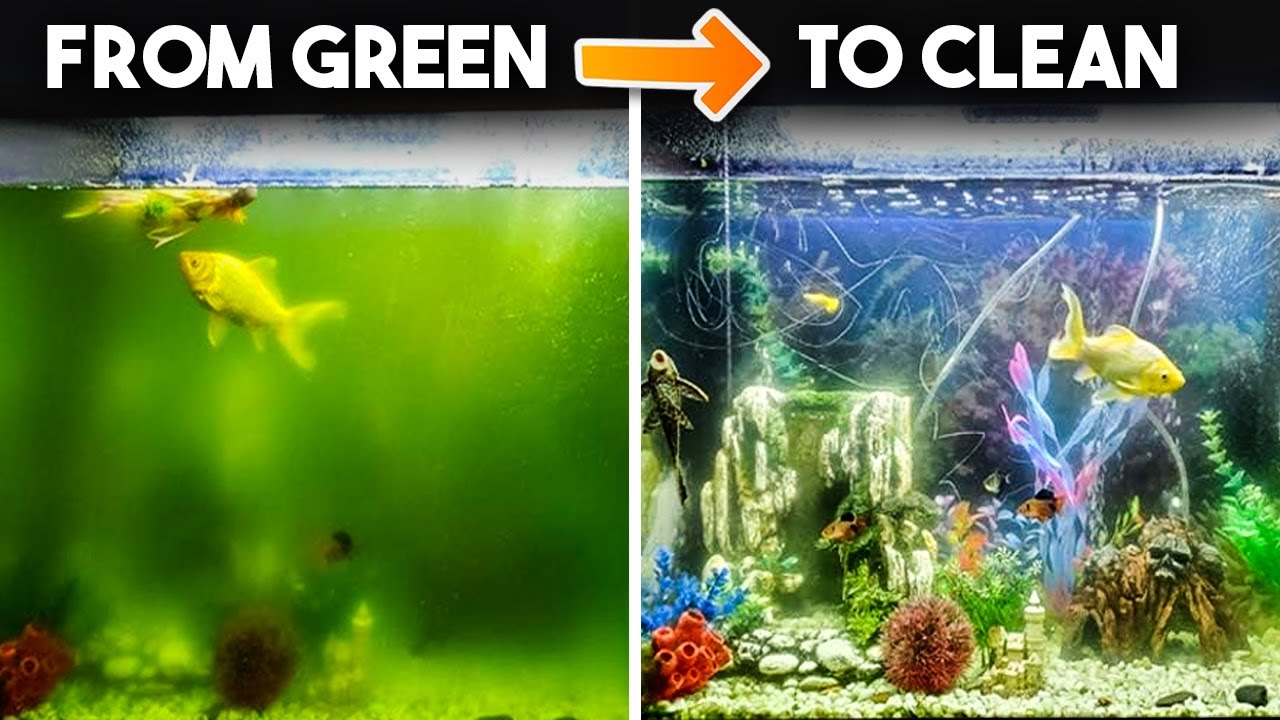
Once your water is clear, the goal is to keep it that way. Solving why my aquarium water turns green is one thing, but preventing it is the real win. True success is about creating a balanced ecosystem where algae doesn't have a chance to take over.
Here are some pro tips for long-term prevention:
- Add Live Plants: Live aquarium plants are your secret weapon. They compete directly with algae for the same nutrients (nitrates). A well-planted tank rarely has issues with green water because the plants absorb the excess nutrients before the algae can.
- Don't Overstock Your Tank: More fish means more waste and more nitrates. Research the proper stocking levels for your tank size and stick to them. It's always better to be understocked than overstocked.
- Use a UV Sterilizer: If you have a persistent problem, a UV sterilizer can be a powerful tool. Water is pumped past an ultraviolet light, which kills any free-floating algae and other microorganisms. This is more of a high-tech solution and isn't necessary for most tanks, but it's incredibly effective.
- Be Patient: Creating a stable, balanced aquarium takes time. Stick with your maintenance routine, and don't get discouraged if you have minor setbacks. Consistency is the key to a beautiful, clear aquarium.

Frequently Asked Questions
Is green aquarium water harmful to my fish?
No, the algae itself is not directly harmful to fish. However, it is a sign of poor water quality, and a severe bloom can cause oxygen levels to drop at night, which could stress your fish.
How long does it take to clear green water?
Using the blackout method, you can typically see significant improvement within 3 to 4 days. After the subsequent water change, your tank should be clear, but preventing its return depends on addressing the root cause.
Will an algaecide chemical fix my green water problem?
Chemical algaecides can kill the algae, but they don't fix the underlying issue of excess light or nutrients. The algae will likely return, and these chemicals can be stressful or even harmful to sensitive fish and invertebrates.
Can I just add an algae eater to fix green water?
Unfortunately, no. Most algae-eating fish and invertebrates, like plecos or snails, eat algae that grows on surfaces. They cannot consume the microscopic, free-floating algae that causes green water.
Why did my water turn green after a water change?
This can happen if your tap water is high in phosphates or nitrates. A large water change can inadvertently "feed" a potential bloom. It's also possible that stirring up the substrate released trapped nutrients.
Conclusion
Seeing your tank turn into a green swamp is disheartening, but it’s a common and fixable problem. The key is to remember that green water is just a symptom. By tackling the root causes—too much light and excess nutrients—you can not only clear up the bloom but also prevent it from ever coming back. A consistent maintenance routine, proper feeding, and controlled lighting are your best tools for a healthy, balanced aquarium.
Now you have a clear plan to reclaim your crystal-clear tank. Put these steps into action and enjoy the beautiful underwater world you've worked so hard to create. If you have any success stories or further questions, feel free to share them in the comments below