Cloudy Tank Water: What the Color Tells You and How to Fix It
Cloudy tank water has a funny way of triggering instant panic. I get DMs all the time that start with some version of “Why is my fish tank water cloudy?” followed by a frantic photo of what looks like a fog machine gone rogue. I’ve been there. My very first betta, Gerald, lived through a few homemade disasters before I understood what different kinds of cloudiness actually meant. Once you learn that cloudiness has colors, and those colors are clues, the mystery gets a lot less scary.
Most fishkeepers make things worse because they fix the wrong problem. They clean the filter when they shouldn’t. They dump in clarifiers they don’t need. They do giant water changes that reset the cycle. Each of those reactions can take a mild issue and crank it straight into full chaos.
What follows is a detective case you can walk through step by step. By the end, you’ll be able to look at your water, match the color and texture, and know exactly what to do.
The Color Code: White vs. Green vs. Gray vs. Yellow Cloudiness
Cloudiness always tells a story. The trick is figuring out which one you’re dealing with.
White Cloudiness
Classic swirling milk look. Usually harmless and linked to a bacterial bloom in new aquarium setups or in tanks that just had a big disruption. White cloudiness often shows up when beneficial bacteria are multiplying like crazy.
You might also see a thin white haze if:
– You rinsed the filter media too aggressively
– You replaced substrate
– Someone (possibly you or your roommate) overfed the fish
Green Cloudiness
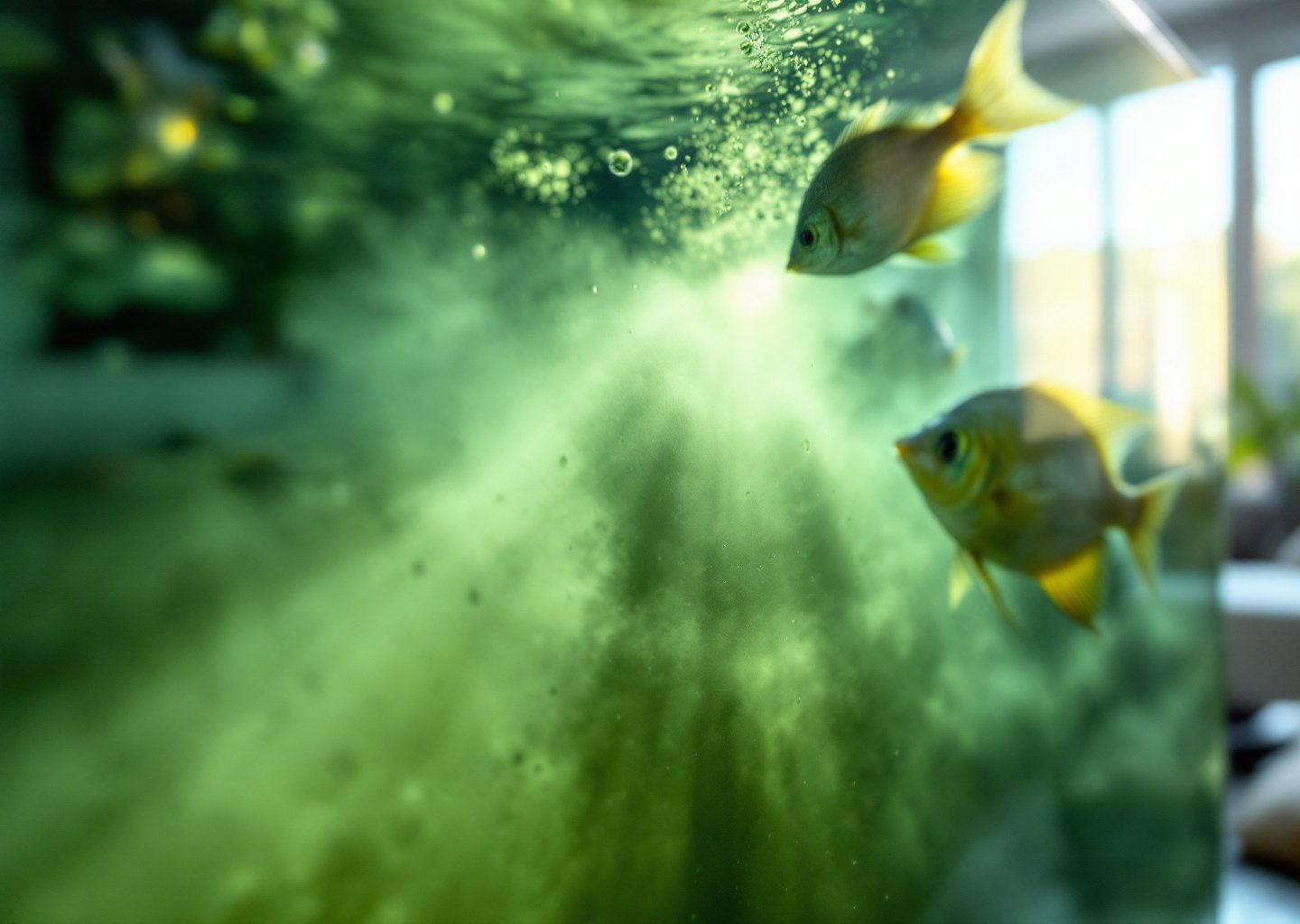
Algae soup. Literally free-floating algae cells that tint the water green. Windows and desk lamps can trigger this in days. I’ve had a 5-gallon tank go from crystal clear to lime Jell-O after one sunny afternoon.
Common triggers:
– Direct sunlight
– High nitrates
– Too many hours of light
– Old bulbs that shift spectrum
Looking for a green cloudy aquarium water fix? The solution is all about reducing light and nutrients, not scrubbing everything.
Gray Cloudiness
Gray usually points to a mechanical problem: dust from new substrate, disturbed detritus, or micro-particles that the filter can’t grab yet.
When does this happen?
– A tank is newly set up with unwashed substrate
– You uprooted plants or rescaping stirred everything up
– Filter sponges are clogged or way overdue for cleaning
Yellow or Tea-Colored Water
People misdiagnose this one constantly. Usually it’s tannins from driftwood or certain botanicals. Sometimes it’s dissolved organic compounds, bacterial blooms, certain medications, fish waste buildup, or decaying plant matter. I actually love this look in some scapes because it gives a soft, moody vibe that feels very Southeast Asia–inspired.
Causes include:
– Fresh driftwood
– Almond leaves
– Seed pods
– Overdue water changes
– Dissolved organic compounds
– Decaying plant matter
Want crystal clear water instead of tea water? Activated carbon or Purigen can help, but tannins are harmless.

New Tank Syndrome: Why Bacterial Blooms Are Good News and How Long They Really Last
Bacterial blooms in new tanks? Basically a rite of passage. I remember staring at my first cloudy tank thinking I’d ruined everything, but these blooms are actually a sign the nitrogen cycle is starting.
The bloom typically pops up:
– Within the first week
– After you add new fish
– After overfeeding
– After a big clean
In my experience, these blooms clear in about 2 to 7 days. If your filter is sized correctly and you avoid messing with it, the bloom clears all by itself.
How to clear bacterial bloom in freshwater tank setups:
– Stop overfeeding
– Do small water changes, typically in the 10 to 50 percent range depending on your specific situation
– Avoid replacing filter media
– Add more surface area for bacteria if your tank is tiny
Try to force-clear the water with chemicals? You’ll reset the bloom and drag the whole process out.
The Post-Water-Change Mystery: 4 Hidden Causes and Their Simple Fixes
Cloudy aquarium water after a water change still surprises beginners because you expect the water to look better, not worse. But cloudy water after a change has four sneaky causes.
1. Disturbed Substrate
A gravel vac cuts too deep. A hand slips. Boom, dust storm. Solution: Let the filter work and stop stirring things.
2. Minerals Reacting with Tap Water
Some city water causes temporary cloudiness when mixed with tank water. Usually clears fast.
3. Over-Cleaned Filters
People rinse filter media under tap water, killing the biofilm. You get a mini cycle spike and cloudiness. Solution: Swish media gently in old tank water only.
4. Chlorine or Chloramine Residues
Forget dechlorinator or don’t dose enough? The cloudiness shows up as a weird white haze. Solution: Dose the correct amount right away.
Wondering why your aquarium gets cloudy after a water change? It usually sits somewhere in this list.
Natural Clearing Methods That Actually Work, and the Chemical Shortcuts That Backfire
Look, I get the urge to dump in a product that promises crystal water in fifteen minutes. I’ve got a cabinet full of impulse buys from my early days. But after testing different methods in seven nano tanks, here’s what actually helps.
Natural Methods
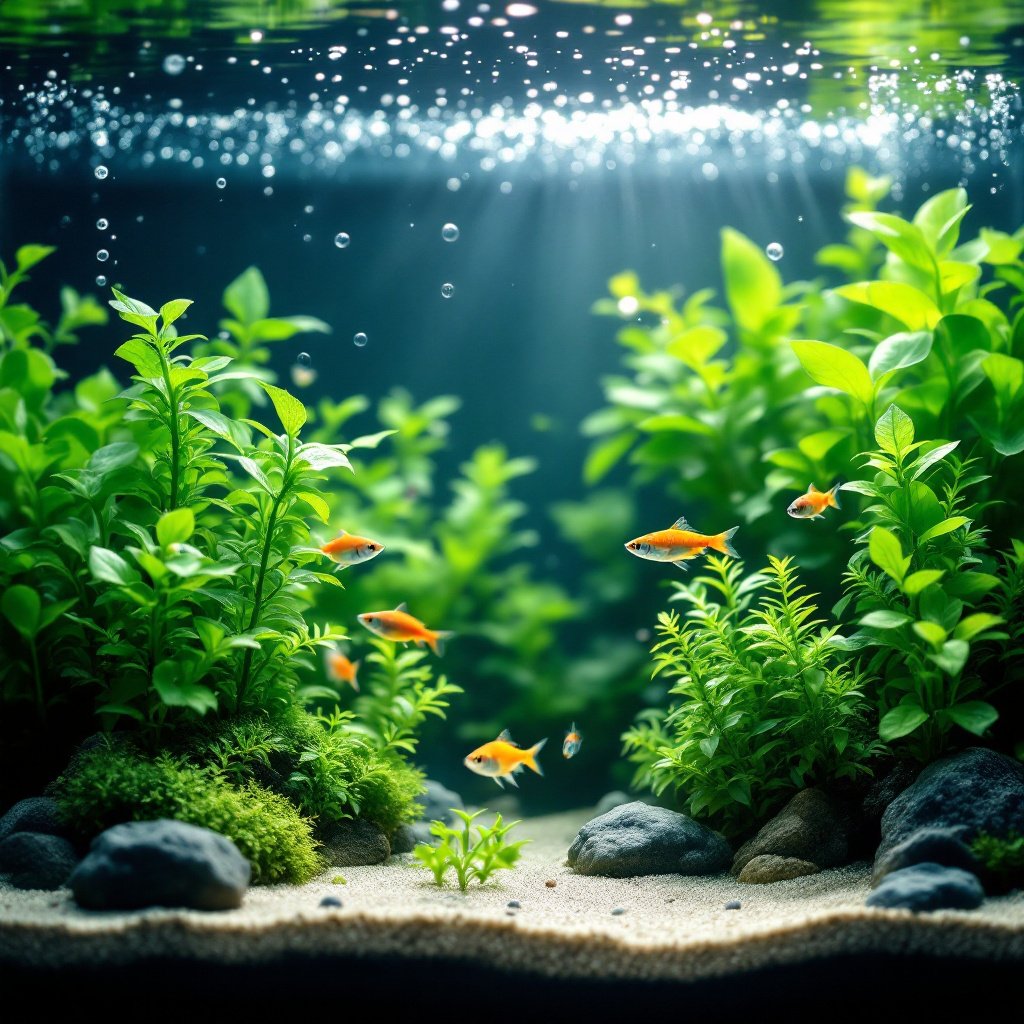
These are your safest options for fixing cloudy aquarium water naturally or clearing cloudy water without chemicals.
- Stop overfeeding. Seriously. Half the cases get fixed by this alone.
- Add more live plants. Fast growers suck up nutrients that algae love.
- Reduce light hours to six or eight.
- Use a fine polishing pad in the filter.
- Let the tank mature. Time is magic.
Methods That Backfire
Here’s what I see beginners reach for that makes everything worse.
- Full filter cleanings. You remove your beneficial bacteria and the tank freaks out.
- Constant water changes. Resets the stabilizing process.
- Overusing clarifiers. Many of these clump particles but gum up filters.
- Aquarium water clarifier vs. filter cleaning confusion. Clean filters gently, not aggressively, or the clarifier does nothing.
When Clarifiers Actually Help
A clarifier can be handy if guests are arriving in a few hours and the water is dusty from a rescape. But it’s a short-term bandage. Researching the best water clarifier for fish tanks? Look for something safe for shrimp if you keep them.
The Safety Check: How to Know If Your Cloudy Water Is Harming Your Fish Right Now
Cloudy water isn’t always an emergency. The water might look bad, but your fish might be totally fine. I always do a quick three-point check.
1. Are the Fish Breathing Fast at the Surface?
When yes, oxygen could be low or ammonia could be rising.
2. Is the Filter Running Normally?
Low flow means debris or gunk might be blocking oxygen exchange.
3. Do You Smell Anything Weird?
A sulfur or rotten smell hints at anaerobic pockets or major waste buildup.
Should any of these signs show up, test ammonia and nitrite immediately. Cloudy water plus ammonia means you need fast action. A bacterial bloom by itself isn’t harmful, but an ammonia spike absolutely is.
Cloudy water feels like a crisis, but once you learn the color clues, it gets a lot easier to handle without panicking.
Here’s your 48-hour action plan based on the cloudiness type:
- White cloudiness: Wait it out, feed lightly, and avoid messing with the filter.
- Green cloudiness: Cut lighting, increase plants, and reduce nutrients.
- Gray cloudiness: Improve mechanical filtration and stop stirring substrate.
- Yellow water: Add carbon or Purigen if you want clear water. Otherwise, relax.
When should you worry? Only if your fish are stressed, the smell changes, or tests show ammonia or nitrite. Everything else is part of the normal ups and downs of keeping a living underwater world.
Want to keep digging? Try cycling a new tank, aquarium lighting guide, or stocking ideas for nano tanks.