The Real Cost of Starting an Aquarium: What Three Years and Seven Tanks Taught Me
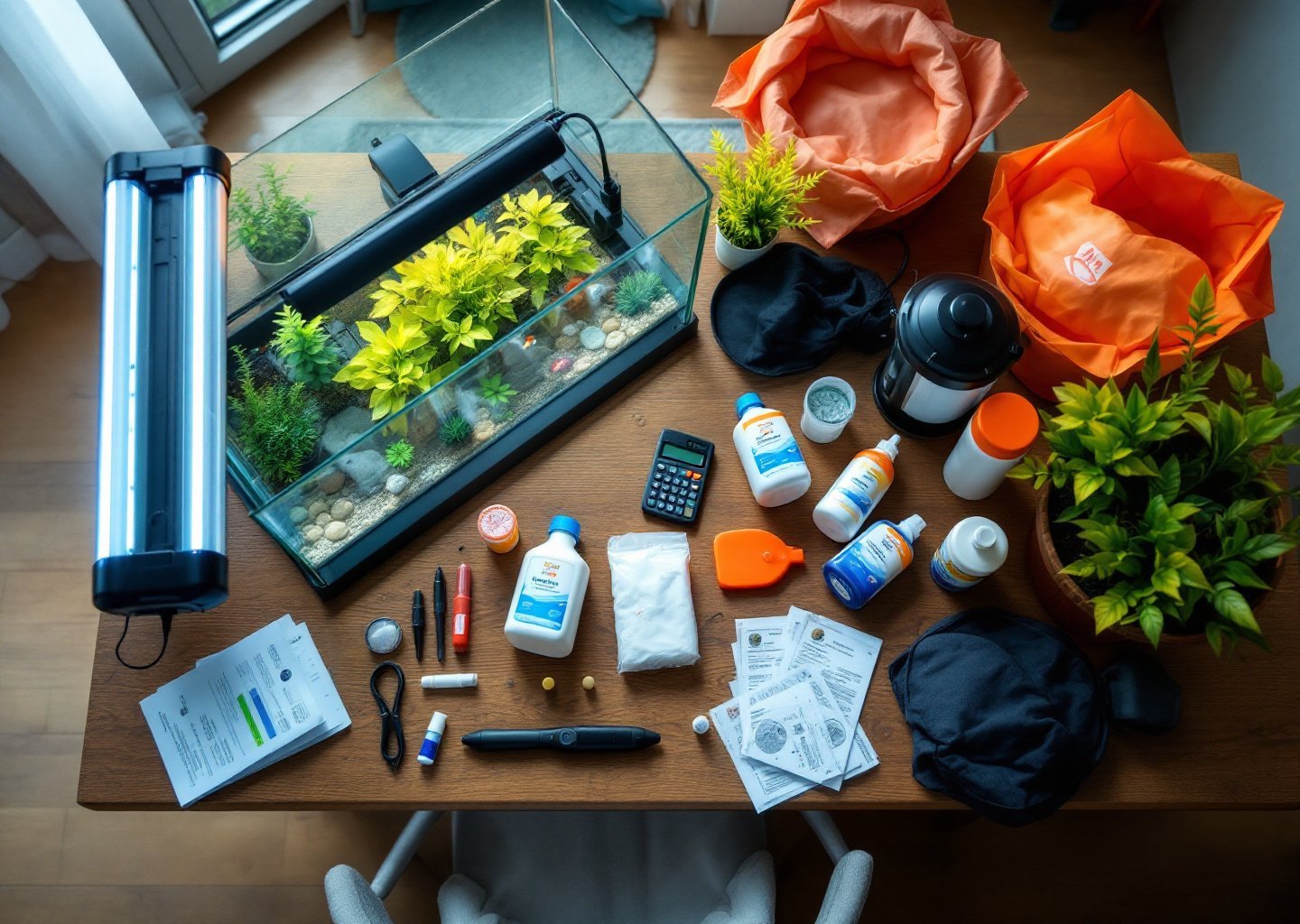
Let me tell you about the day I walked into my local fish store with $150, absolutely certain I was about to leave with a complete 10-gallon setup. I walked out with $287 on my credit card, no fish, and a growing sense of dread. That was three years and seven tanks ago. Now I’m writing this so you don’t repeat my expensive education.
Those “complete aquarium kit” prices you see online? They’re complete in the same way a frozen pizza is a complete meal. Technically true. Functionally insufficient.
When I set up my first tank after college, every beginner aquarium budget breakdown guide I found gave me sanitized numbers that ignored reality. Test kits didn’t get mentioned. Water conditioner got a footnote at best. And emergency funds? Forget it.
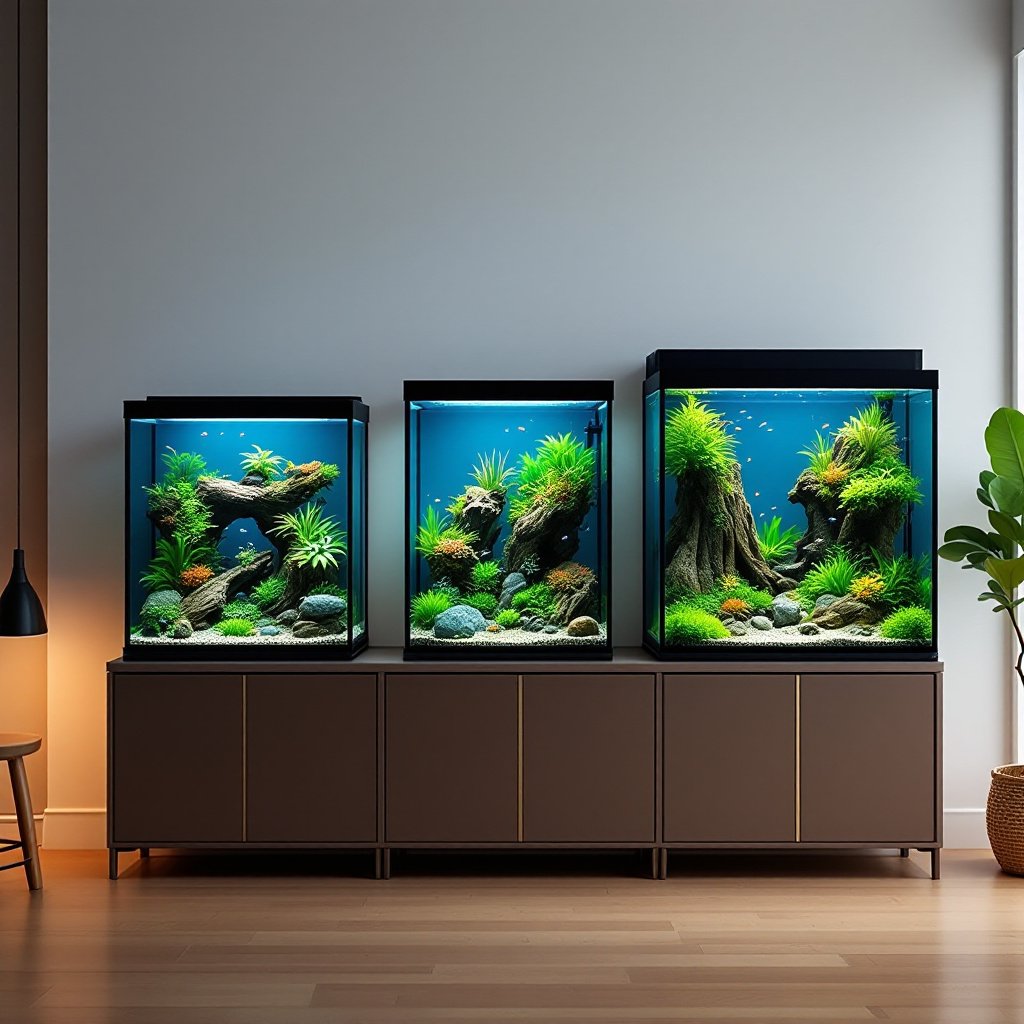
So I’m doing something different. Over the past year, I’ve documented every single expense across three tank sizes: a 10-gallon desk setup, a 20-gallon living room showpiece, and my pride and joy, a 55-gallon planted community tank. Real receipts. Real mistakes. Real numbers.
This is the beginner aquarium budget breakdown guide I desperately needed.
The Real 2024 Price Tags: 10 vs. 20 vs. 55-Gallon Complete Setup Costs
Let me walk you through the fish tank cost comparison (10-gallon vs. 55-gallon) that actually reflects what you’ll spend at checkout. I’ve broken these down by what most guides list versus what you’ll actually need.
The 10-Gallon Setup: The “Cheap” Option That Wasn’t
What the kit included (prices vary by retailer, but expect $45–80 or more):
– Glass tank with lid
– LED light strip
– Hang-on-back filter
– Small heater
What I had to add:
– Substrate (black sand): $18
– Liquid test kit: $32
– Water conditioner: $12
– Thermometer: $6
– Fish net: $4
– Bucket (dedicated, 5-gallon): $8
– Gravel vacuum: $14
– Driftwood piece: $22
– Live plants (starter pack): $35
– Bacteria starter: $14
– Food: $8
Actual total: $238–258
The 20-Gallon Long: Where Value Lives
When I wanted to know how much it actually costs to set up a 20-gallon aquarium properly, I couldn’t find honest answers. So here’s mine.
Kit price (varies by retailer and brand, typically $80–150+):
Additional necessities:
– Better-quality substrate: $28
– Test kit (already owned, but for you): $32
– Water conditioner (bigger bottle): $18
– Larger heater upgrade: $24
– Quality background: $12
– Hardscape (rocks + wood): $55
– Plants (proper planted tank): $65
– Fertilizer: $15
– Root tabs: $12
– Timer for lights: $12
Actual total: $358–393
The 55-Gallon: Where Things Get Interesting
Tank and stand combo (prices vary significantly by brand and retailer, typically $300–500+):
Equipment and supplies:
– Canister filter (finally!): prices range widely from $40–400+ depending on brand and capacity
– Upgraded LED (Fluval 3.0): prices vary by size, typically $85–250+ depending on the model length
– 300W heater: prices vary by brand, typically $25–60
– CO2 system (basic): $120
– Substrate (two types): $75
– Hardscape collection: $140
– Plants (full scape): $150
– Background: $18
– Python water changer: prices vary by size, typically $35–70+
– All maintenance supplies: $85
Actual total: $1,308–1,408
That’s the honest aquarium startup expenses list for each size. Notice how the difference between 10 and 20 gallons is about $100–150, but you get double the space? We’ll talk about why that matters.
7 Hidden Costs That Caught Me Off Guard
Most guides cover the obvious stuff and leave you scrambling at 2 AM when your fish are gasping and you don’t own a test kit. These are the hidden costs of starting a fish tank that blindsided me completely.
1. Water Conditioner Math
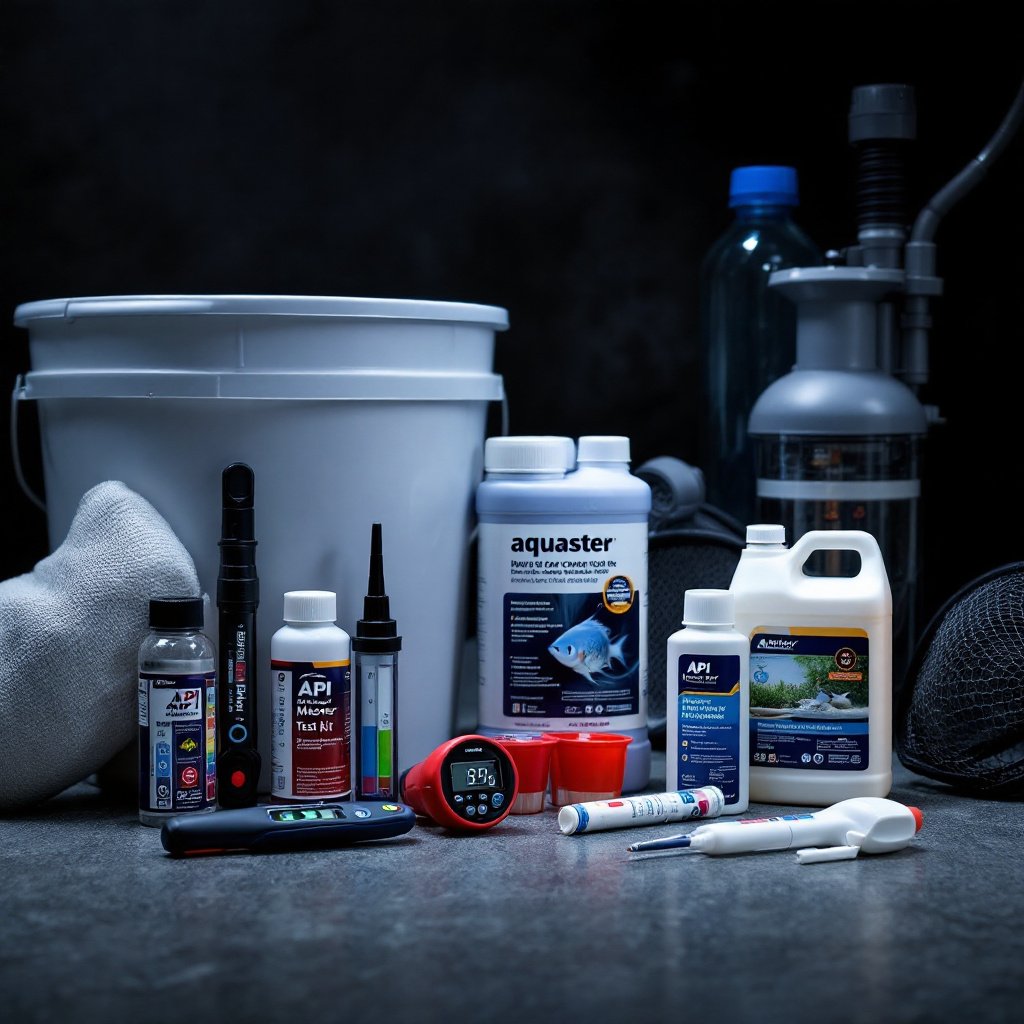
You’ll use this forever. Treatment rates vary dramatically by brand. A 16-ounce bottle of Seachem Prime treats about 8,000 gallons, while the same size of Tetra AquaSafe treats only about 474 gallons. API Tap Water Conditioner falls somewhere in between at around 960 gallons. Check your specific product’s dosing instructions. With weekly 25% water changes, even concentrated conditioners get used up eventually. Budget $50–80 annually.
2. The Test Kit You’ll Actually Use
Those strip tests? Garbage. After killing Gerald the betta (my first fish, RIP buddy, you deserved better than an uncycled tank), I learned that the API Master Test Kit is the one thing I won’t compromise on. It’s $32–38 but lasts hundreds of tests. Your fish’s lives depend on accurate readings.
3. Electricity Nobody Calculates
Running my 55-gallon costs about $8–12 monthly in power: heaters, filters, lights, CO2. All seven tanks in my apartment add roughly $35 to my electric bill. Factor this in before you commit.
4. The Emergency Fund Rule
At minimum, keep $50 per small tank and $100+ per large tank in mental reserve. Heaters fail. Filters die. Fish get sick and need medication. When my canister filter motor burned out, that $65 replacement wasn’t optional.
5. Replacement Filter Media
Those carbon cartridges need monthly swapping. But here’s a better approach: ditch them entirely for reusable sponge and bio media. Another $20–40 upfront investment, but it pays off within a year.
6. Plant Maintenance Costs
Live plants aren’t set-and-forget. Fertilizer runs $10–20 every few months. Root tabs add up. Scissors, tweezers, and planting tools cost $25–40 for a decent set. And when your plants grow? You’ll want more tanks. Believe me on this.
7. The “Just One More Fish” Phenomenon
You budget for six neon tetras. Then you see celestial pearl danios. Then panda corys. Then… yeah. Budget 20% extra for livestock expansion because self-control in a fish store is a myth.
Saltwater vs. Freshwater: The Price Gap That Changes Everything
I’ve focused on freshwater because that’s my world, but people ask about saltwater constantly. So let me break down the saltwater vs. freshwater tank setup price difference in stark terms.
Take my 55-gallon freshwater budget of roughly $1,350. A comparable saltwater setup requires significantly more investment:
Basic Saltwater 55-Gallon:
– Tank, stand, similar base: prices vary widely
– Protein skimmer: prices range from under $50 to over $1,000 depending on size and quality
– Quality lighting for corals: $300–600+
– Powerheads: $80–150
– Live rock: prices vary by amount and type (dry vs. live)
– Sand: $40–60
– Salt mix (ongoing): costs depend on brand, tank size, and water change frequency
– RO/DI unit: prices range from about $60 to $500+ depending on capacity
– Refractometer: $25
– Livestock (fish + corals): $300–800+
Total saltwater: significantly more than freshwater, often $800+ extra at minimum
That’s the real price gap between saltwater and freshwater right there. We’re talking substantially more investment before you even add fish. Plus, ongoing salt costs make freshwater look like a bargain.
If you’re just starting? freshwater vs saltwater aquarium guide for beginners Stick with freshwater. Learn the fundamentals. Your wallet will thank you.
The Cheapest Tank Size Myth: Why 20-Gallon Beats 10-Gallon Long-Term
This might be the most useful thing I tell you: the cheapest tank size to maintain long-term isn’t the smallest one.
I know. Counterintuitive. But here’s why my 10-gallon actually costs more headaches and money than my 20-gallon long.
Stability issues: Smaller water volumes swing faster. Temperature fluctuates. Ammonia spikes hit harder. One dead shrimp in a 10-gallon can crash your parameters. In a 20-gallon? You’ve got buffer time.
Stocking limitations: A 10-gallon severely limits your fish choices. Want a school of tetras? You can fit maybe 6–8. A 20-gallon long? That’s a comfortable home for 12–15 plus bottom dwellers.
Equipment efficiency: Heaters, filters, and lights for a 20-gallon cost maybe $15–25 more than 10-gallon equivalents. But you get double the tank.
Resale reality: When you eventually upgrade (you will), 20-gallon tanks hold value better.
For new hobbyists wondering about the cheapest tank size to maintain long-term, a 20-gallon long is my answer every time. It’s where forgiveness meets affordability.
Looking at how much a 10-gallon tank costs compared to a 55-gallon, you might think smaller means savings. But cost-per-gallon? Larger tanks always win. Economy of scale works here too.
Smart Money Moves: Where to Splurge, Where to Save, and What to Skip Entirely
After three years of mistakes and seven setups, here’s my money allocation philosophy.
Splurge On:
- Filtration: Overfilter everything. A filter rated for 30 gallons on your 20-gallon means cleaner water and less maintenance. Spending extra on my Fluval 307 canister was worth every penny.
- Heater quality: Cheap heaters kill fish. Period. Spend $30–40 on an adjustable heater from a reputable brand. best aquarium heaters for reliability
- Test kit: The API Master Test Kit. Absolutely essential. I can’t stress this enough after Gerald.
- Lighting (if planted): Plants need proper spectrum. A $60–80 LED outperforms a $20 strip and grows plants that actually thrive.
Save On:
- Decor: Thrift stores are goldmines. I’ve found beautiful pieces of driftwood, terracotta pots for caves, and interesting rocks for practically nothing. Just test for safety first.
- Substrate: Pool filter sand costs $8 for 50 pounds. It’s inert, looks clean, and plants grow fine in it with root tabs.
- Plants: Local aquarium clubs and r/aquaswap offer plant trimmings for shipping costs only. My entire stem plant collection started from $15 worth of clippings.
- Fish food: Those tiny $12 containers are overpriced. Buy larger bulk sizes online. They last forever in the freezer.
Skip Entirely:
- Carbon replacement cartridges: Reusable sponge media does better filtration anyway.
- “Starter bacteria” bottles: Unnecessary if you properly cycle with ammonia.
- Aquarium salt (for freshwater): You almost never need it.
- Most medications (preemptively): Buy when needed, not “just in case.” They expire.
Alright. Let me give you the takeaways from this complete cost guide for setting up different-size aquariums.
Realistic minimum budgets for 2024:
– 10-gallon properly equipped: $225–275
– 20-gallon planted setup: $350–400
– 55-gallon community tank: $1,200–1,400
Monthly ongoing costs:
– 10-gallon: $5–10 (food, occasional supplies)
– 20-gallon: $8–15
– 55-gallon: $15–30
Month-by-month expense timeline for a 20-gallon:
– Month 1: Equipment and cycling supplies ($350–400)
– Month 2: First fish ($30–50)
– Month 3: More fish, additional plants ($40–60)
– Months 4–6: Maintenance supplies restocking ($15–25/month)
– Month 6+: Steady-state running costs
Final advice? Start with a 20-gallon long, budget $450 total (including emergency reserve), and take your time. complete guide to cycling your first aquarium Cycle properly for 4–6 weeks. Add fish slowly.
I never expected watching shrimp graze on algae at 6 AM to become my meditation practice. Seven tanks scattered throughout my Portland apartment bring me genuine joy every single day. But that first tank didn’t need to cost $287 in surprises. With this beginner aquarium budget breakdown guide, yours won’t either.
Now if you’ll excuse me, I need to go convince my partner that we definitely have room for one more 5-gallon. I’ve already picked out the spot.