I Killed My First Betta With a Cheap Heater and Bad Math
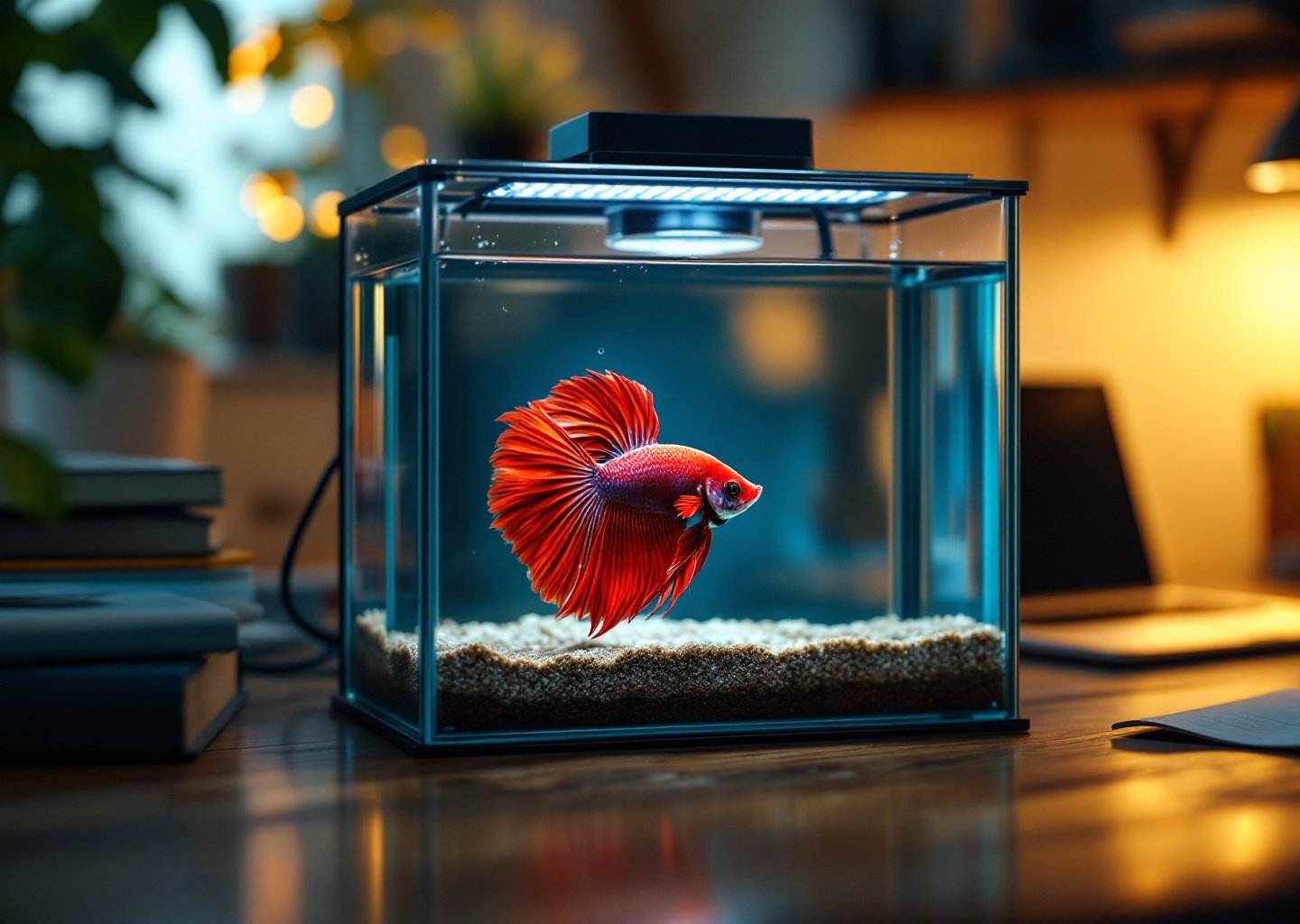
I killed Gerald with a cheap heater and bad math. There, I said it.
Gerald was my first betta, a gorgeous red crowntail who lived in a 5-gallon tank on my desk during my last year of design school. I grabbed a $12 preset heater because the package said it was “perfect for tanks up to 5 gallons.” What the package didn’t mention? My drafty Portland apartment regularly dipped into the low 60s at night. That little heater worked overtime trying to bridge a 20-degree temperature gap it was never designed to handle. The stress, combined with my rookie mistake of skipping the nitrogen cycle, was too much.
Gerald deserved better. And honestly? So do your fish.
Nobody at the pet store tells you this when you’re standing in the heater aisle: the standard “watts per gallon” charts plastered on product packaging are, at best, oversimplified. At worst, they’re setting you up for temperature swings that stress your fish into illness.
In this guide, I’m breaking down the actual formula you need for an aquarium heater wattage per gallon calculator that accounts for real-world variables. We’ll cover why the standard sizing charts fail, how to calculate wattage based on your specific room temperature, and when you genuinely need two heaters versus when that’s just overkill. By the end, you’ll have a 60-second checklist that’ll save you money and, more importantly, keep your fish alive.
Why the Standard Watts-Per-Gallon Chart Is Dangerously Incomplete
You’ve probably seen the tropical fish tank heater size chart that goes something like this: 5 watts per gallon for tanks under 20 gallons, 3 to 4 watts per gallon for larger setups. Simple, right?
Too simple.
That formula assumes your room temperature sits comfortably around 72 to 75°F. It assumes your tank isn’t near a window. It assumes you don’t live in a century-old apartment with single-pane glass and a landlord who considers 62°F “perfectly reasonable.” (Ask me how I know.)
The real question isn’t just how many watts per gallon aquarium heater guidelines suggest. What you should be asking is: how much temperature are you actually asking that heater to overcome?
A 50-watt heater in a 10-gallon tank works beautifully when your ambient room stays at 70°F and you’re heating to 78°F. That same heater in the same tank becomes tragically underpowered when your room drops to 58°F during a cold snap. It runs constantly, struggles to maintain temperature, and eventually either burns out or simply fails to keep up.
I’ve seen this play out in forums constantly. Someone posts asking why their fish keep getting ich or fungal infections despite “doing everything right.” Nine times out of ten, when you dig into their setup, there’s a temperature stability problem hiding underneath.
The Real Formula: Calculating Wattage Based on Temperature Differential
Let’s talk about how to calculate heater wattage for aquarium setups the way it should be done.
The key variable everyone ignores is temperature differential, meaning the gap between your coldest room temperature and your target tank temperature. So here’s how I actually do it:
Step 1: Determine the coldest your room gets. Not the average. The coldest. Check at night, check during winter, check when you’re away and the thermostat drops.
Step 2: Determine your target tank temperature. Most tropical fish need 76 to 80°F.
Step 3: Calculate the differential. If your room drops to 65°F and you need 78°F in the tank, your differential is 13°F.
Step 4: Apply the adjusted wattage.
My working formula looks like this:
- 0 to 10°F differential: 3 watts per gallon
- 10 to 15°F differential: 5 watts per gallon
- 15 to 20°F differential: 7 to 8 watts per gallon
- 20°F+ differential: Consider supplemental heating or insulating the tank
You won’t find this formula on heater packaging. But it’s the one that actually works in apartments with drafty windows, basements, or anywhere temperature fluctuates significantly.
maintaining stable aquarium temperature
Tank Size Breakdown (5 to 75+ Gallons) with Adjusted Recommendations
Let me break this down by common tank sizes, because I know that’s what you’re really here for.
Heater for Small Betta Tank (5 Gallon)
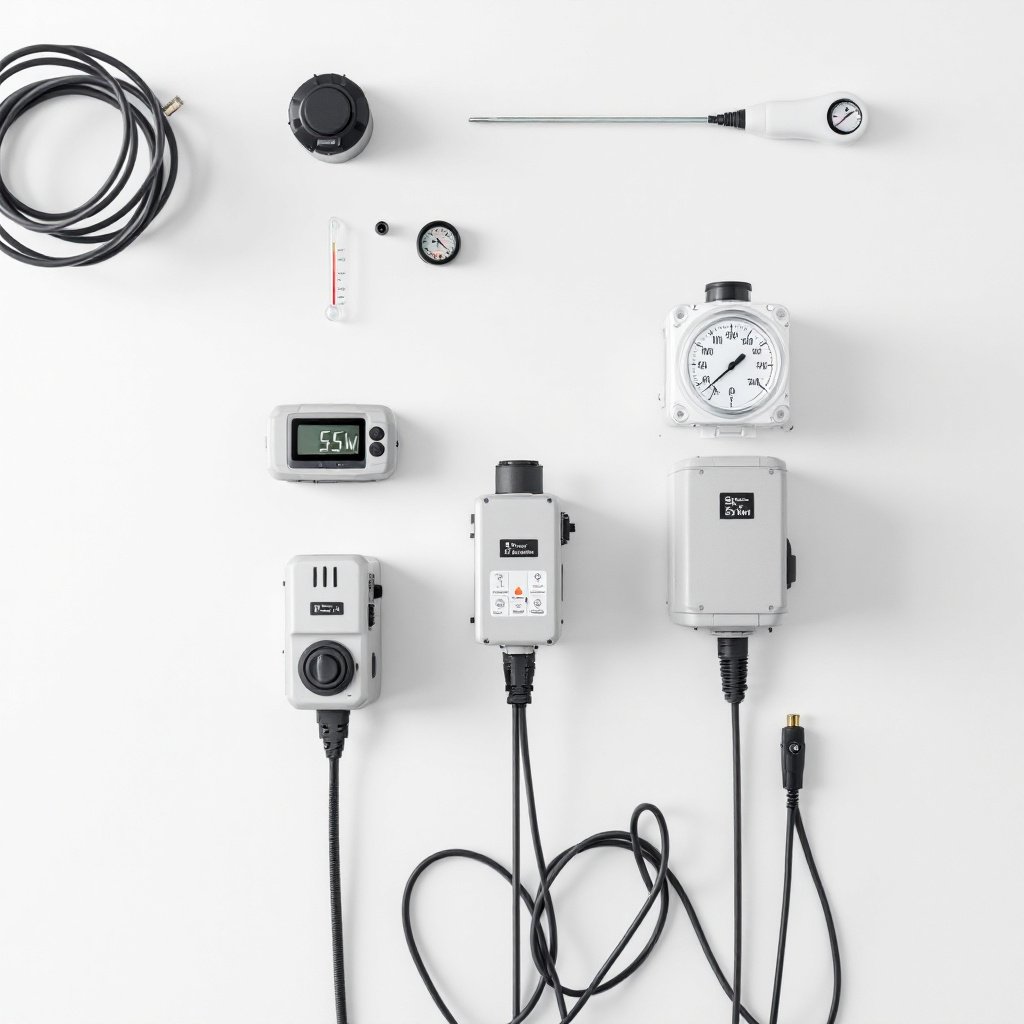
Most preset heaters for 5-gallon tanks range from 10 to 25 watts. A 25-watt adjustable heater handles most situations beautifully. But if your differential exceeds 15°F, jump to a 50-watt adjustable. Yes, it seems like overkill. It isn’t. A quality adjustable aquarium heater vs. preset temperature model gives you control, and control means stability.
My current betta tank runs a 50-watt Cobalt Neo-Therm in a 5-gallon. Overkill? Maybe. But that thing barely breaks a sweat keeping temps locked at 78°F, even when Portland decides to remind me that fall exists.
Best Aquarium Heater for 10-Gallon Tank
What’s the best heater for a 10-gallon tank? Under normal conditions, 50 watts. In high-differential situations (cold rooms, basements, near exterior walls), go 75 to 100 watts. And here’s a pro tip from my design brain: get a heater that matches your aquascape visually. Something flat and sleek like an Eheim Jager hides way better behind driftwood than those chunky glass tubes.
Best Heater for 20-Gallon Tank
We hit the sweet spot right here with a 100-watt aquarium heater. Standard conditions? 100 watts is perfect. Cold room? 150 watts. At this size you also start having placement options, so think about putting it near your filter outflow for better heat distribution.
What Size Heater for 55-Gallon Aquarium
Now we’re talking serious volume. What size heater for a 55-gallon aquarium? Start at 200 watts for normal differentials. Cold rooms or basement setups need 300 watts, and this is where the “one or two heaters” question becomes relevant.
Heater for 75-Gallon Fish Tank
Your 75-gallon fish tank needs 250 to 300 watts minimum. In cold environments? 400+ watts. At this size, I strongly recommend splitting your wattage across two heaters (more on that below).
One Heater vs. Two: The Honest Answer for Large Tanks
Do I need two heaters for a large aquarium setup? Honestly? It depends. But let me give you the factors that actually matter.
Go with two heaters when:
- Your tank is 40 gallons or larger
- You have fish that can’t tolerate temperature fluctuations (discus, I’m looking at you)
- Your tank is longer than 3 feet
- You want redundancy in case one heater fails
One heater is fine when:
- You’re under 40 gallons
- Your room temperature is stable
- You’re keeping hardier species
But here’s the real reason I use two heaters on my larger tanks: redundancy. A single heater failing on a cold night can cause significant temperature drops before you notice. With two heaters, each running at half the required wattage, one failing means the other can at least partially compensate.
So what does that look like practically? A 55-gallon might run two 100-watt heaters instead of one 200-watt. A 75-gallon could use two 150-watt or 200-watt units. Place them on opposite ends of the tank for even heat distribution.
Submersible vs. Hang-On Heaters: Which Sizing Rules Change?
Sizing formulas stay mostly the same regardless of heater type, but there are practical differences worth noting.
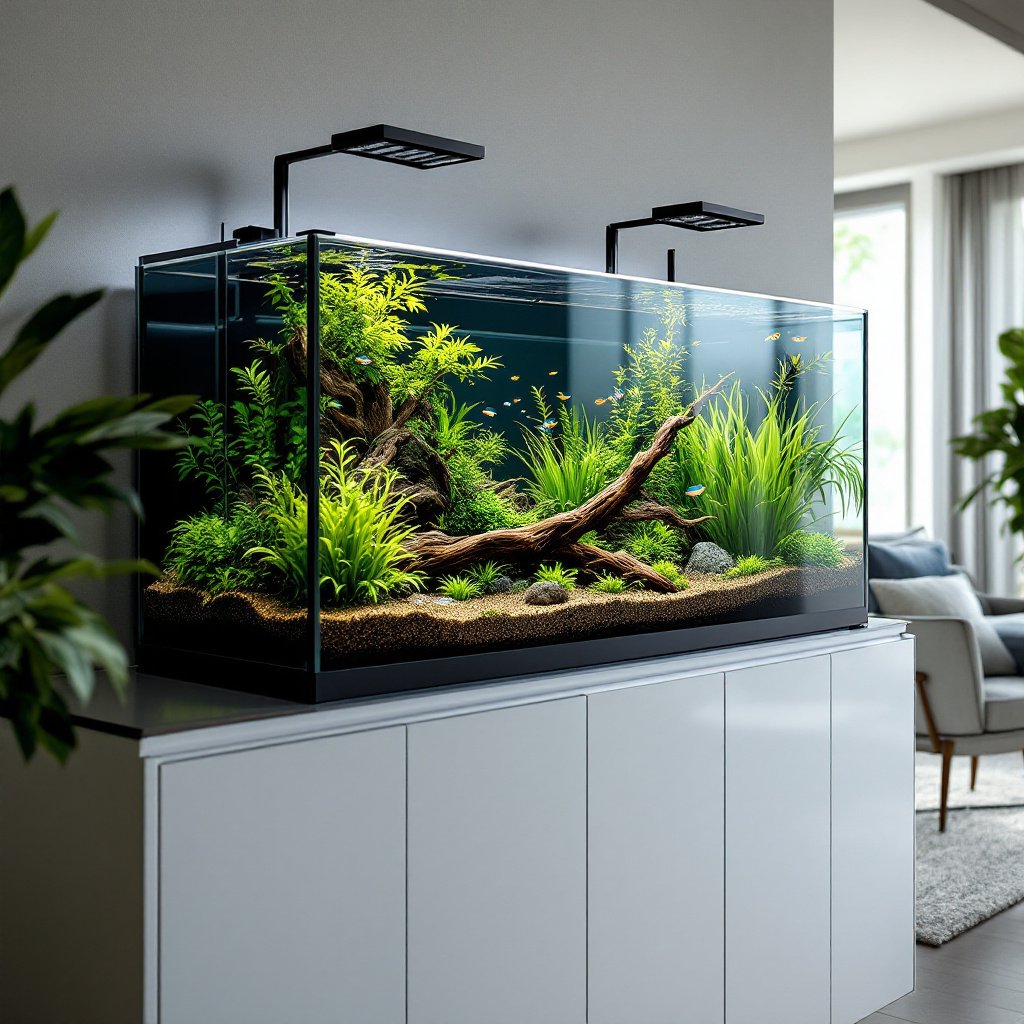
Submersible heaters can be positioned horizontally near the substrate for more even heating. They’re generally more efficient because the entire unit is underwater. Most modern aquarium heaters are fully submersible, and unless you’ve got a specific reason to go otherwise, this is what I recommend.
Hang-on heaters (also called “preset” or “mini” heaters) are convenient for nano tanks but tend to be less precise. They’re also more exposed to room air temperature at the top, making them slightly less efficient in cold rooms.
Inline heaters connect to your canister filter tubing and heat water as it passes through. These are fantastic for keeping equipment invisible in carefully scaped tanks (my designer heart loves them), but they’re more expensive and require a canister filter setup.
Sizing rules don’t change dramatically between types, but submersible units tend to perform closer to their rated wattage than hang-on models in my experience.
Interactive Calculator + Quick Reference Chart for Common Setups
Alright, let’s make this practical. Use this aquarium heater wattage per gallon calculator reference for common scenarios:
Quick Reference Chart
| Tank Size | Normal Room (68–72°F) | Cool Room (62–67°F) | Cold Room (Below 62°F) |
|---|---|---|---|
| 5 gallon | 25W | 50W | 50W (adjustable) |
| 10 gallon | 50W | 75–100W | 100W |
| 20 gallon | 100W | 150W | 150–200W |
| 29 gallon | 100–150W | 150–200W | 200W |
| 40 gallon | 150–200W | 200–250W | 300W (or 2×150W) |
| 55 gallon | 200W | 300W | 300–400W (or 2×200W) |
| 75 gallon | 250–300W | 400W | 400–500W (or 2×250W) |
The Quick Math
Take your tank gallons × watts per gallon from the differential guide above. Then round up to the nearest commonly available wattage.
Say you’ve got a 10-gallon tank in a room that drops to 60°F, targeting 78°F:
- Differential: 18°F (use 7 to 8 watts per gallon)
- 10 × 7.5 = 75 watts
- Nearest common wattage: 75W or 100W
- My recommendation: Go with 100W for headroom
Always round up. A slightly oversized heater with an adjustable thermostat runs less constantly and often lasts longer than an undersized heater working overtime.
aquarium heater reviews and recommendations
60-Second Checklist: Your Pre-Purchase Sanity Check
Before you grab that heater off the shelf, run through this quick checklist:
- What’s your coldest room temperature? Not average. Coldest. Check at night.
- What’s your target tank temperature? Most tropical setups need 76 to 80°F.
-
Calculate your differential. Subtract room temp from target temp.
-
Apply the right wattage multiplier. Use 3 to 8 watts per gallon based on that differential.
-
Consider splitting wattage on tanks 40+ gallons. Two heaters mean redundancy and better distribution.
-
Choose adjustable over preset. Always. Those few extra dollars are worth the control.
-
Buy a backup thermometer. Don’t trust the heater’s built-in gauge entirely.
Look, I can’t bring Gerald back. But I can tell you that every betta, tetra, and cory catfish I’ve kept since then has lived in properly heated water because I stopped trusting packaging guidelines and started doing the actual math.
Your fish are counting on you to get this right. Now you’ve got the formula to do exactly that.