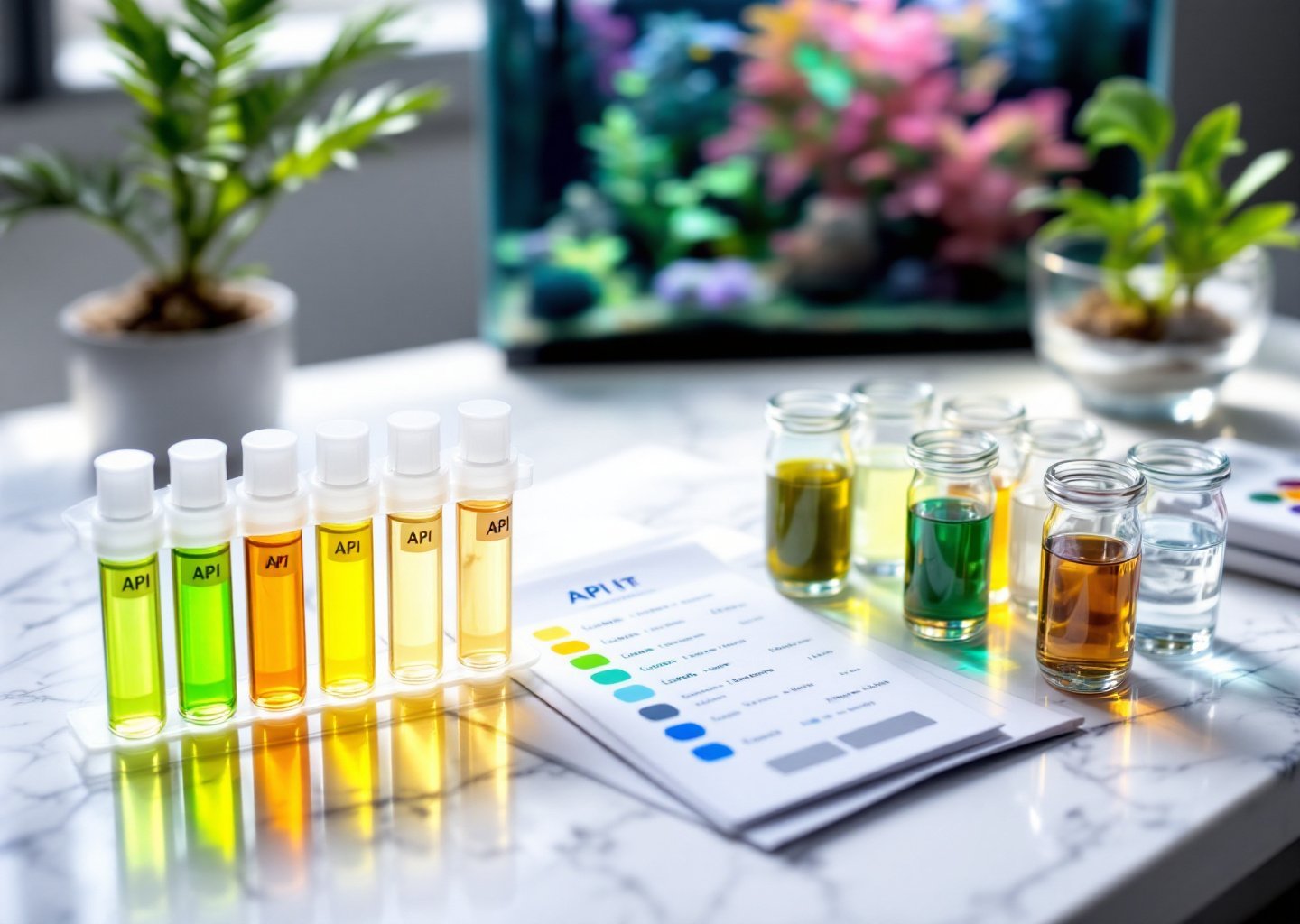
How to Test Aquarium Water Parameters Without Losing Your Mind
My name’s Sophie, and I used to be the queen of over-testing. When I first learned how to test aquarium water parameters, I treated my little five-gallon like it was a lab experiment. I checked ammonia three times a day. I stared at color cards under every light source in my apartment. Once I convinced myself my nitrate test was wrong, so I ran it again. Then again. Honestly? I wish someone had grabbed me by the shoulders and said: you can chill a little. Testing matters, but you don’t need to run a full panel every time you walk past your tank.
Feeling confused about water tests or guilty about not doing enough of them? You’re in the right place. Water chemistry gets framed as this giant scary monster, but here’s the thing: beginners only need to understand a few parameters and a simple routine. This guide breaks down what actually matters, how to use the gear without stressing, what your numbers should be, and how often to test fish tank water without losing your mind.
By the end, you’ll have a practical, minimal testing plan based on how established your tank is. Not some arbitrary schedule that keeps you chained to your test kit.
The Big Four: Which Parameters Actually Matter for Freshwater Tanks
Nobody tells beginners this secret: you only need to pay attention to four things in a normal freshwater tank.
- Ammonia
- Nitrite
- Nitrate
- pH
That’s it. Not GH, not KH, not dissolved oxygen, not phosphates. Those aren’t useless. They just aren’t part of the starter pack, and you can run a beautiful shrimp or community tank for years before touching them.
So why do these four matter? They tell you whether the nitrogen cycle is stable. And the nitrogen cycle is basically the beating heart of your aquarium. It decides whether fish live comfortably or gasp and weaken.
The logic’s pretty simple:
– Ammonia and nitrite should be zero.
– Nitrate should exist but not be high.
– pH should be stable, even if it’s not perfect.
Once I stopped chasing numbers and focused on consistency, aquascaping got a lot more relaxing. Trust me on this one.
API Master Test Kit Step by Step: Reading Colors Accurately Without Going Crazy
Almost every freshwater keeper starts with the API Master Test Kit. It’s affordable, it lasts forever, and it’s way more accurate than strips. But it can also make you question your eyesight. That yellow-green-blue situation in the ammonia test? It can feel like a personal attack.
Ever thought your test tube looked exactly between two colors? Welcome to the club. My method comes from years of squinting at test cards across my apartment.
1. Shake the bottles like you mean it
Some reagents settle, especially Nitrate Bottle #2. Shake it like you’re mixing paint. (Graphic design degree talking here. Pigments separate, so mix until your wrist hurts a little.)
2. Fill the tubes to the line, not past it
Too much water changes the concentration. Learned this the hard way in my early panic-testing phase.
3. Hold the tube against the white part of the card
Don’t look through the card. Hold the tube in front of the card with a sliver of white showing. Compare from there.
4. Use neutral lighting
Not warm yellow lamps. Not your phone flashlight. Not your LED tank light. Standing near a window works best for me. When testing at night, my kitchen light does the job since it’s cooler white.
5. The sanity saver? Apply the “close enough” principle
Your color sits somewhere within the safe range? You’re fine. Only the extremes matter. You don’t need to distinguish between 5 ppm nitrate and 10 ppm nitrate when your tank is stable and lightly stocked.
6. Take photos to compare over time
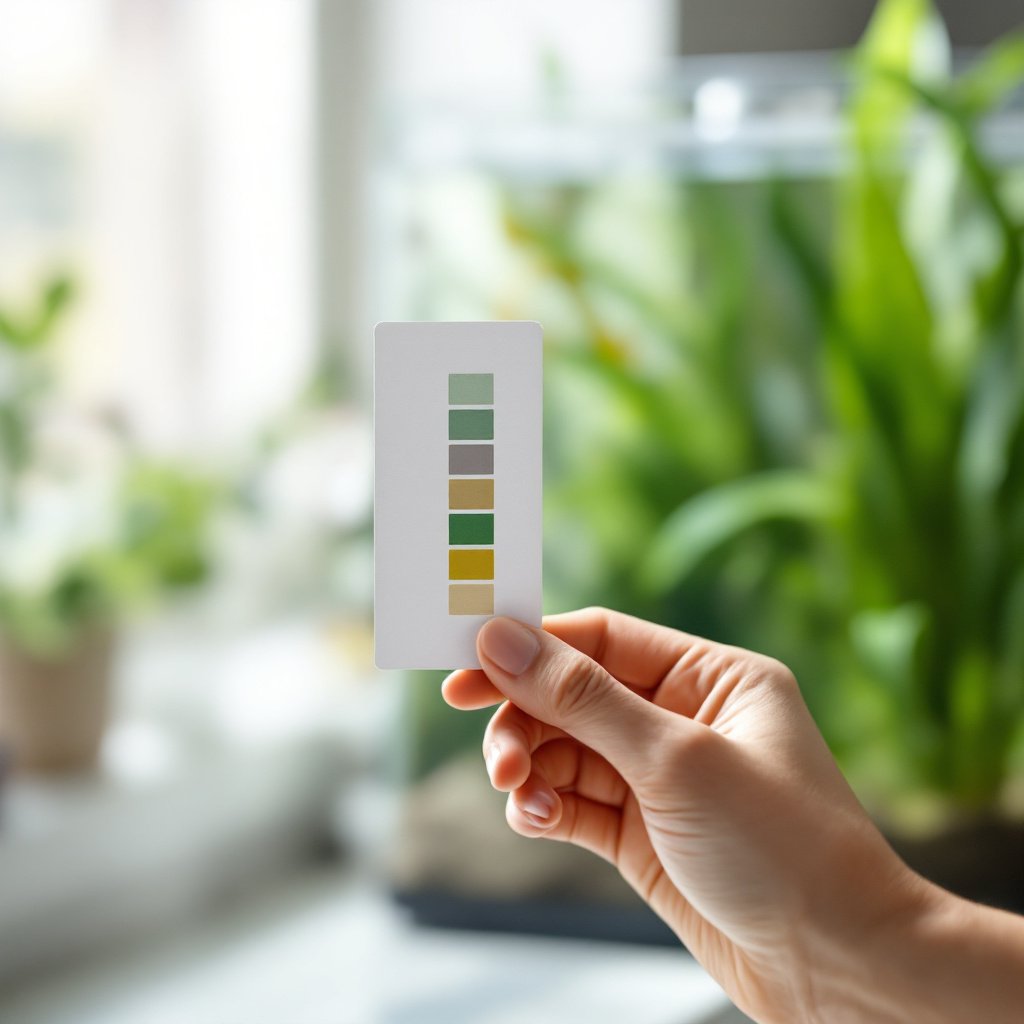
This is my favorite trick. A quick pic of the tube next to the card, then reference earlier photos. So much easier than trying to remember what your last test looked like.
The API Master Test Kit how-to-use step-by-step videos online help if you want a full walkthrough, but honestly the instructions are solid. Just don’t rush.
Liquid Test Kits vs. Strips vs. Digital Meters
People love to argue about the accuracy of aquarium water test kits vs. strips, and at this point I’ve got pretty strong opinions.
Liquid test kits
These are more accurate and better for cycling and troubleshooting. For my money, they’re the best freshwater aquarium test kit for beginners. The drawbacks? They’re slower, and color matching can be annoying. Worth it though.
Test strips
Fast and great for quick checks. No mixing bottles, and they’re often cheaper per individual test. But they’re less accurate and come with a mixture of parameters you don’t even need. They can give false highs or lows too.
Digital meters
Very precise and great for pH or TDS. The catch? Expensive, require calibration, and most beginners don’t need them.
When friends message me asking what to buy, my answer’s always the same: get the API Master Test Kit. Keep a pack of strips around for fast checks. Save digital meters for later if you get into plants or shrimp.
Your Testing Schedule Chart: How Often to Test Based on Tank Maturity
People always ask how often they should test. But the real answer depends on where your tank is in its life cycle.
A simple aquarium water testing schedule chart, written the way someone should’ve explained it to me:
Brand new tank (Weeks 1–3, cycling)
Ammonia daily. Nitrite every 2 days. Nitrate twice a week. pH weekly.
The goal? Watch ammonia rise, then fall as nitrite rises, then fall as nitrate rises.
Near end of cycle
Ammonia every 2 days. Nitrite every 2 days. Nitrate twice a week.
You’re looking for both ammonia and nitrite to hit zero within 24 hours after adding a little food or ammonia.
First month with fish (immature tank)
Ammonia twice a week. Nitrite twice a week. Nitrate weekly. pH weekly.
Established tank (stable for 2–3 months)
Nitrate every 1–2 weeks. Ammonia only if something seems off. Nitrite same as ammonia. pH monthly.
Problem-solving mode
Test daily until stable again.
Use this when a fish dies without explanation, you notice cloudy water, you accidentally overfeed, you cleaned the filter too aggressively, or you added new fish and things seem off.
Tank’s hazy and you’re thinking “why is my fish tank water cloudy after testing”? The test didn’t cause it. Cloudiness usually comes from bacterial blooms, substrate disturbance, or leftover food. Testing just happened on the same day.
Ammonia, Nitrite, and Nitrate Levels Explained: The Actual Numbers You Need
This is where the most confusion lives, so let me break down the practical ranges. No fluff.
Ammonia
Goal: 0 ppm
Anything above zero is a warning. See 0.25 ppm or more? Figure out why. Ammonia, especially un-ionized ammonia, is the most toxic compound in the nitrogen cycle and should be your top concern.
Nitrite
Goal: 0 ppm
Nitrite is also very harmful to fish since it interferes with oxygen transport in their blood. Same rule: anything above zero is a red flag.
Nitrate
Goal: 5–20 ppm for most tanks
Plants can handle more. Some aquascapers run 20–30 ppm intentionally. Staying around 10 ppm in my nano tanks works well for me. It keeps algae calmer.
pH
Goal: Stable
Chasing numbers isn’t my thing. A steady 7.8 beats a swinging 6.8–7.4 every time. Fish adapt to a consistent pH. It’s the sudden changes that hurt them.
When people ask what aquarium water parameters should be, this is the simple version. Everything else is more negotiable than you think.
Want the summary that matches ammonia nitrite nitrate levels explained perfectly? Zero, zero, some.
Feeling overwhelmed by testing? It gets easier. Promise. Here’s your first-month plan so you can stop guessing.
Your first-month testing action plan
- Get an API Master Test Kit
- Test ammonia daily during cycling
- Test nitrite every 2 days during cycling
- Test nitrate twice a week
- After adding fish, test twice a week for month one
- After that, relax into a once-weekly nitrate check
When to stop obsessing
Ammonia and nitrite have stayed at zero for several weeks? Nitrate sits in a predictable range? You can trust your tank. Someone should’ve told me that earlier. Would’ve saved me a lot of panicked retests and late-night color comparison rituals on my kitchen counter.
Want to keep learning? Try reading nitrogen cycle basics, beginner aquarium setup guide, or common cycling mistakes.
Testing isn’t the scary part of fishkeeping. You just need a simple routine and a few good habits. Then you can get back to the fun stuff, like choosing plants, arranging hardscape, or convincing yourself that yes, you definitely have room for one more five-gallon.